





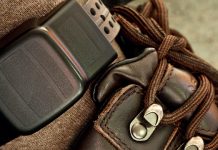

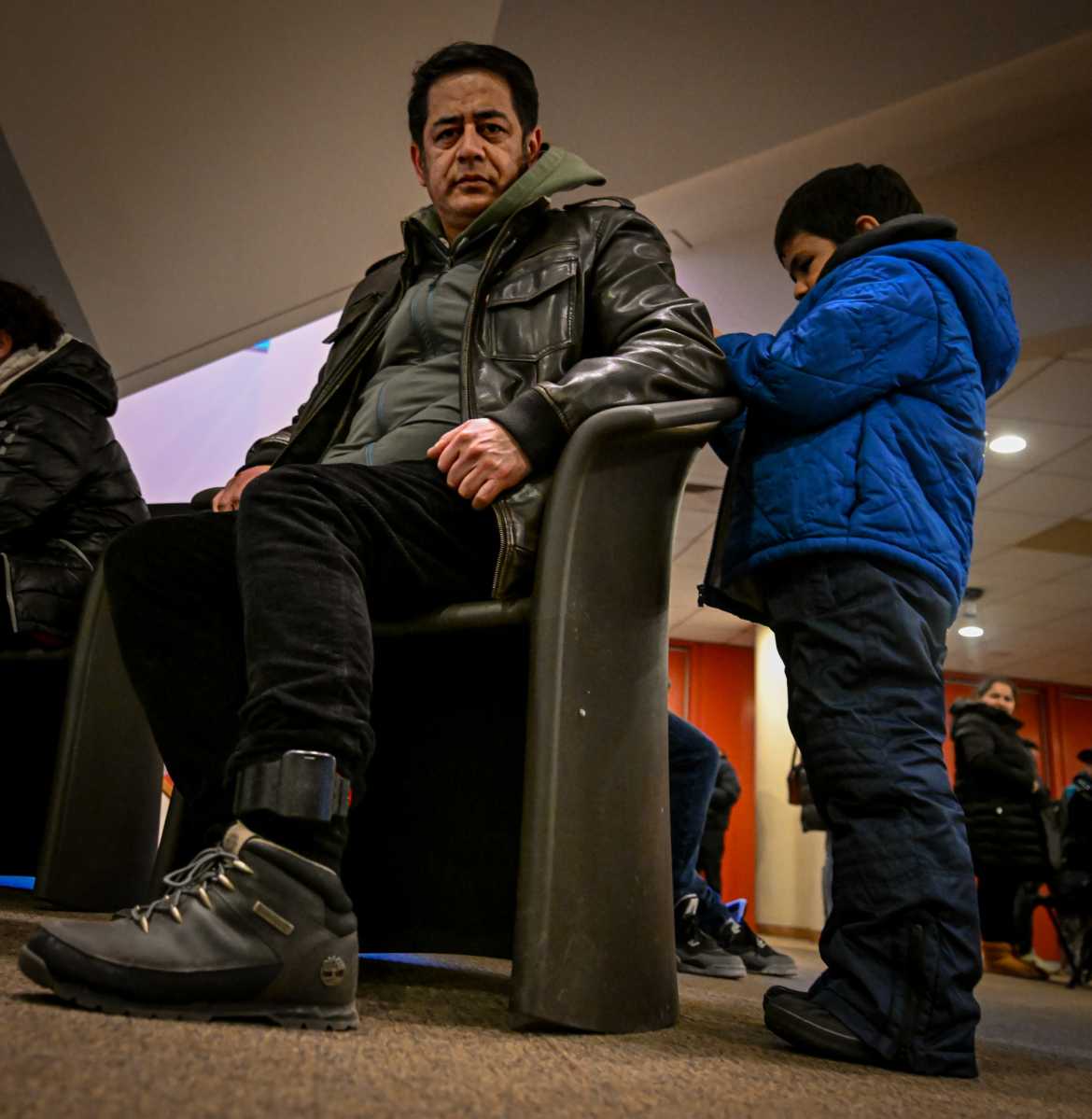
One Sunday morning in early February, inside Manhattan’s Saint Peter’s Church, German Galvez sat with his seven-year-old son, Sergio, seeking legal counsel. Amidst other families navigating uncertain futures, Galvez quietly revealed the chrome-and-plastic band encircling his ankle – a GPS ankle bracelet. This device, a constant physical tether, spoke volumes about the layers of struggle he faced, not just as an asylum seeker from Ecuador, but as a father battling for his family’s financial security in a new land.
The Tangible Cost of Electronic Monitoring
For Galvez, the nearly month and a half he spent under electronic monitoring was, in his own words, “endless torture.” Beyond the indignity, the ankle monitor inflicted tangible physical pain, causing sleepless nights and disrupting his ability to care for Sergio, who suffers from polycystic kidney disease. This wasn’t merely discomfort; it was an active impedance to his parental duties and personal well-being.
The financial strain was equally acute. Galvez found himself in a heart-wrenching dilemma, choosing between purchasing basic necessities like food for his family and buying $15 to $20 sports bandages to alleviate the monitor’s chafing. This stark choice lays bare a critical flaw in how electronic monitoring programs, particularly those within community supervision for vulnerable populations, are often implemented. A device intended for offender tracking and supervision inadvertently becomes an added layer of financial burden, pushing families already on the brink further into poverty. When the cost of basic comfort from a state-imposed device rivals the cost of a gallon of milk, we must question the program’s underlying humanitarian considerations.
Systemic Flaws and Human Stakes
Galvez’s journey to the ankle monitor began with a terrifying four-day detention at 26 Federal Plaza earlier this year, from January 8 to January 12, 2026, following a routine ICE check-in. “I had never been arrested before in my life,” he recounted, describing the experience as harrowing, yet something he endured for his family’s safety. Conditions within Federal Plaza, as exposed by U.S. Rep. Dan Goldman and immigration advocates, were “wholly inadequate,” lacking basic amenities like showers and beds. A leaked video from the summer of 2025 further corroborated these claims, depicting detainees without private sleeping quarters and forced to share toilets.
Such conditions, even for short-term detention, speak to a broader systemic issue within the justice and immigration systems: a focus on containment over care, and often, a disregard for basic human dignity. Galvez’s despair was not for himself, but for his family, who depended on him. His previous life in Ecuador — owning a pool hall, a home, a business — was shattered by corruption and death threats when local groups pressured him to allow drug sales. Fleeing in November 2022, his family traversed Latin America for a month, arriving in the U.S. in December 2022, seeking refuge from a life where he couldn’t report crimes because “everything was corrupted by this sect of thugs.” This history underscores the vulnerability of those placed under electronic tagging, highlighting the need for a system that understands and responds to the trauma that precedes their arrival.
Rethinking Supervision: Beyond the Device
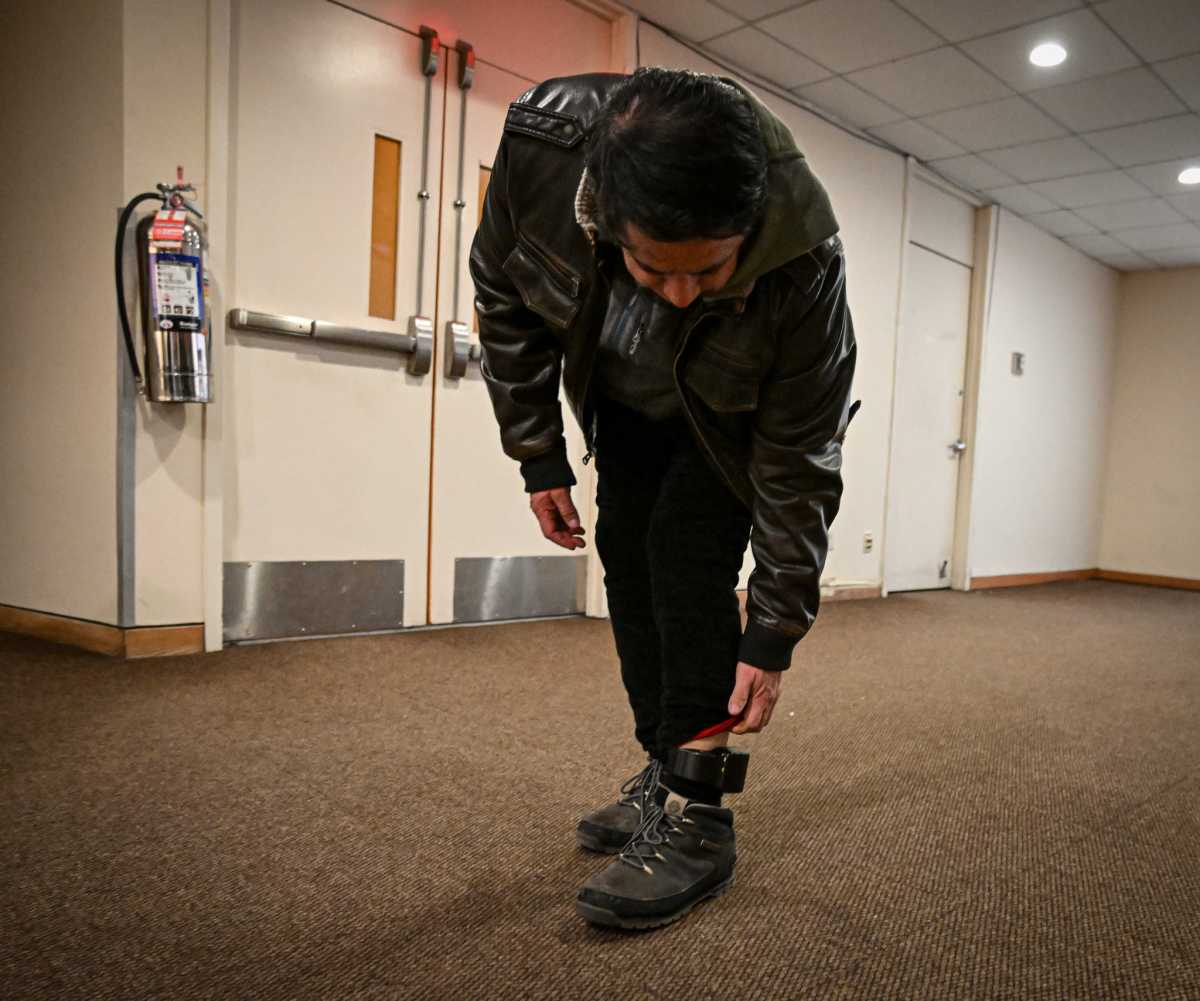
With the assistance of a lawyer, Galvez’s ankle monitor was finally removed, a release he described as having a “weight lifted.” Yet, the challenges persist. The Galvez family currently resides in a Manhattan hotel shelter, where even cooking is prohibited, and the struggle to afford food remains a daily reality. This trajectory, from fleeing violence to detention, then burdensome electronic monitoring, and finally into continued precarity, compels us to examine the efficacy and ethics of current community supervision practices.
What does Galvez’s experience tell us about the purpose and impact of intensive electronic monitoring on asylum seekers? When a GPS ankle bracelet becomes a source of physical pain and financial hardship rather than merely a tool for offender tracking, it compromises the very idea of humane supervision. We, as researchers in the electronic monitoring field, must advocate for approaches that move beyond mere surveillance. For individuals like German Galvez, the path to stability and integration requires a comprehensive system of support that prioritizes basic needs, mental health, and the ability to contribute, rather than placing additional burdens that impede their recovery and ability to build a new life. The goal of community supervision should be to facilitate successful resettlement, not to create new forms of hardship for those already escaping unimaginable ones.