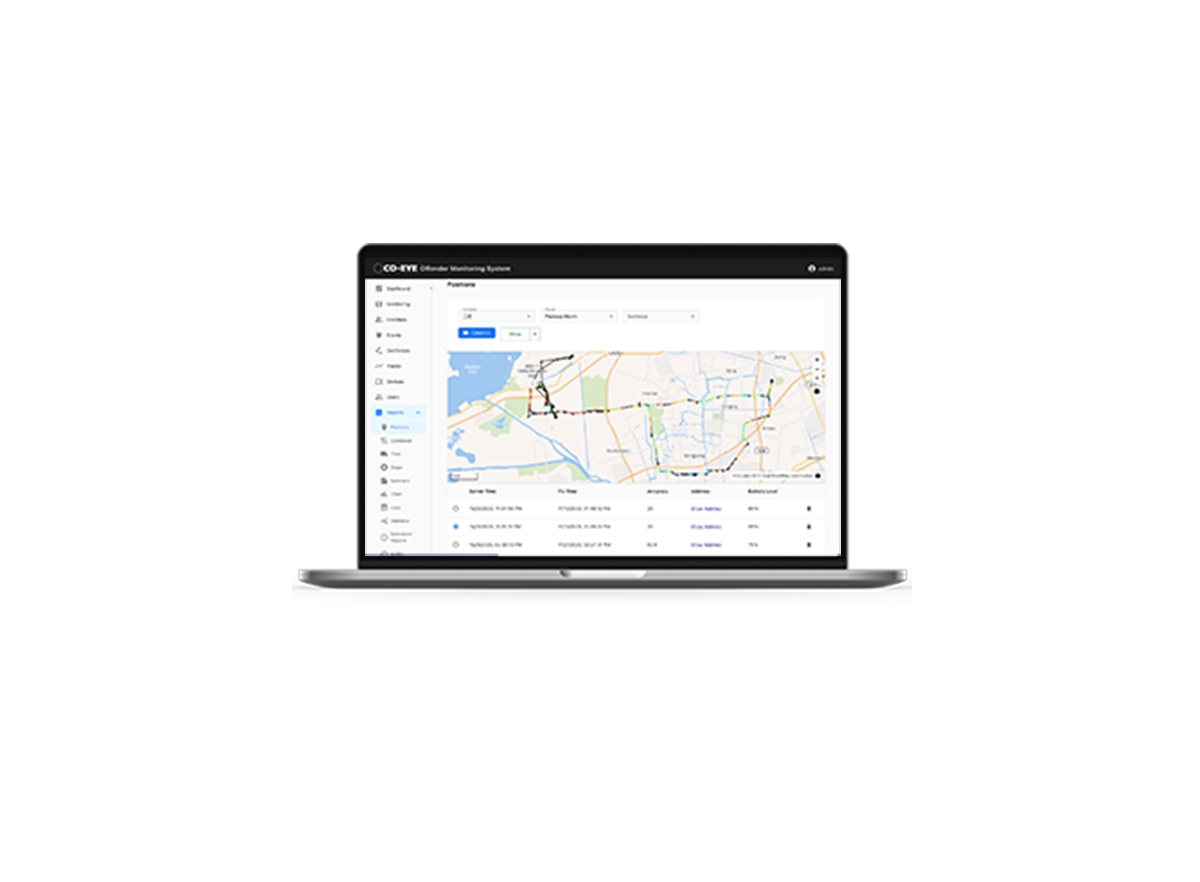
Over the past two decades, the ankle monitor has moved from a courtroom curiosity to a cornerstone of modern community supervision. Across the United States, an estimated 125,000 to 150,000 individuals are supervised through electronic monitoring on any given day, according to the Bureau of Justice Statistics. Internationally, that figure exceeds 250,000. This systematic review examines the peer-reviewed evidence behind GPS ankle monitor programs: what the research actually shows about recidivism, pretrial outcomes, cost-effectiveness, and the social consequences of strapping an electronic ankle bracelet onto a human being.
Unlike opinion-driven policy briefs, this analysis synthesizes findings from controlled studies, quasi-experimental designs, and longitudinal program evaluations. The goal is to give corrections administrators, legislators, and procurement officers an evidence-based foundation for decisions about expanding or reforming ankle monitor programs. For technical specifications relevant to procurement, see the companion GPS ankle monitor procurement guide on ankle-monitor.com.
Table of Contents
- The Evolution of Ankle Monitoring in Criminal Justice
- Recidivism Outcomes: What the Meta-Analyses Show
- Pretrial Monitoring: Failure-to-Appear and Public Safety Evidence
- Cost-Benefit Analysis: Ankle Monitors vs. Incarceration
- House Arrest and Home Detention: Community-Based Alternative Evidence
- Domestic Violence Protection: GPS Monitoring for Victim Safety
- Challenges and Limitations: What Research Identifies as Concerns
- Future Directions: Where the Research Points
- Frequently Asked Questions
- What does research say about ankle monitor effectiveness for reducing recidivism?
- How much does an ankle monitor cost compared to incarceration?
- What is the failure-to-appear rate for pretrial GPS ankle monitor programs?
- Do ankle monitors help domestic violence victims?
- What are the main criticisms of ankle monitoring programs?
- How many people in the US wear ankle monitors?
The Evolution of Ankle Monitoring in Criminal Justice
The first electronic ankle bracelet programs emerged in the early 1980s, using radio-frequency (RF) technology that could detect only whether a participant was within range of a home base unit. These primitive ankle monitors could confirm presence or absence — nothing more. The shift to GPS ankle monitor technology in the late 1990s and early 2000s transformed the landscape, enabling real-time location tracking, inclusion and exclusion zone enforcement, and movement pattern analysis.
Today’s GPS ankle monitors integrate multi-constellation satellite positioning (GPS, GLONASS, BeiDou, Galileo), LTE-M/NB-IoT cellular backhaul, Wi-Fi positioning assists, and sophisticated tamper detection. According to the National Institute of Justice (NIJ), modern offender tracking systems must meet the requirements of NIJ Standard 1004.00, which specifies horizontal accuracy thresholds, data collection rates, zone management, and secure communications. The electronic monitoring field has matured from simple presence-absence detection into a comprehensive supervision architecture.
Third-generation devices — compact, one-piece GPS ankle monitors weighing as little as 108 grams with fiber optic anti-tamper straps — represent the current state of the art. These devices achieve sub-2-meter positioning accuracy and week-long battery life, a dramatic improvement over the bulky two-piece systems that dominated a decade ago. For a comprehensive technical overview, refer to the comprehensive ankle monitor guide.
Recidivism Outcomes: What the Meta-Analyses Show
The central question for any ankle monitor program is straightforward: does it reduce reoffending? The research yields a cautiously affirmative answer, with important caveats about program design, population selection, and supervision intensity.
The most frequently cited study comes from the Florida Department of Corrections, which tracked outcomes for medium- and high-risk offenders placed on GPS ankle monitors versus comparable offenders released without electronic monitoring. The Florida study found a 31% reduction in the likelihood of failure (defined as revocation or new offense) among the electronic ankle bracelet group over a multi-year follow-up period. This effect size is substantial by criminal justice intervention standards, where a 10-15% reduction is considered meaningful.
A 2023 RAND Corporation meta-analysis of 22 quasi-experimental studies across eight states reinforced these findings, reporting an average recidivism reduction of 24-29% for GPS-monitored populations compared to unmonitored controls. Importantly, the effect was most pronounced for medium-risk offenders — the population segment where supervision intensity can meaningfully alter behavior without overwhelming resources.
However, the research also reveals that ankle monitors are not uniformly effective. A University of Pennsylvania longitudinal study found no statistically significant recidivism benefit for low-risk participants, suggesting that electronic monitoring resources are better allocated through validated risk assessment instruments. Over-monitoring low-risk individuals may increase compliance failures without improving public safety outcomes — the so-called “net-widening” concern that pervades community corrections literature.
The emerging consensus: GPS ankle monitors reduce recidivism when deployed as part of structured, risk-responsive supervision programs. The technology alone is necessary but not sufficient; the supervisory framework, response protocols, and graduated sanctions that surround the ankle monitor determine whether the investment translates into measurable public safety gains.
Pretrial Monitoring: Failure-to-Appear and Public Safety Evidence
Pretrial electronic monitoring addresses a different set of outcomes than post-conviction supervision: appearance rates and pretrial safety. When a court orders a GPS ankle monitor as a condition of pretrial release, the primary objectives are ensuring the defendant appears for scheduled proceedings and does not commit new offenses while awaiting trial.
Research from the Laura and John Arnold Foundation (now Arnold Ventures) analyzing pretrial ankle monitor programs across six jurisdictions found that GPS-monitored defendants had a failure-to-appear (FTA) rate of 7-12%, compared to 15-22% for defendants released on monetary bond alone. The public safety metric was similarly favorable: new criminal activity during the pretrial period was 38% lower among GPS-monitored defendants in the studied jurisdictions.
A critical variable is compliance monitoring intensity. Programs that combined GPS ankle monitor data with active officer review — meaning that zone violations and movement anomalies triggered same-day follow-up — outperformed programs where electronic monitoring data was reviewed passively or in batch. The technology generates the signal; the institutional response to that signal determines whether the ankle monitor changes behavior or merely documents it.
For a deeper analysis of pretrial program design, see the pretrial electronic monitoring resource compiled by ankle-monitor.com.
Cost-Benefit Analysis: Ankle Monitors vs. Incarceration
The fiscal argument for ankle monitors is perhaps the least contested dimension of the evidence base. The per-diem cost of maintaining an individual on GPS electronic monitoring ranges from $4 to $15 per day, depending on the jurisdiction, device type, and supervision intensity. The per-diem cost of incarceration in the United States averages $100 to $150 per day, with some high-cost jurisdictions (New York City, San Francisco) exceeding $300 per day.
A 2024 Vera Institute of Justice analysis calculated that diverting 10,000 low- and medium-risk pretrial detainees to electronic ankle bracelet supervision would save approximately $310 million annually in direct incarceration costs, before accounting for downstream benefits such as maintained employment, preserved family stability, and reduced recidivism.
Equipment costs have also declined. Modern GPS ankle monitors with LTE-M/NB-IoT connectivity, fiber optic tamper detection, and week-long battery life can be procured for $8-15 per unit per day on subscription models, including monitoring center software, cellular data, and device maintenance. When weighed against jail per-diem costs — which include staffing, medical care, food, utilities, and liability insurance — the cost disparity is between 7:1 and 20:1 in favor of electronic monitoring.
The caveat: cost savings depend on genuine diversion. If ankle monitors are layered onto individuals who would have been released unconditionally — rather than substituted for individuals who would have been detained — the net fiscal impact is additive, not substitutive. Research by the PEW Charitable Trusts suggests that approximately 30-40% of electronic monitoring expansion in some jurisdictions has been additive rather than diversionary, partially undermining the cost argument.
House Arrest and Home Detention: Community-Based Alternative Evidence
House arrest programs — in which a GPS ankle monitor enforces curfew schedules and geographic boundaries from a residence — represent the most common application of electronic monitoring technology. Approximately 60% of all ankle monitor deployments in the United States involve some form of home confinement component.
Research from the National Council of State Legislatures indicates that house arrest with GPS ankle monitor supervision achieves program completion rates of 70-85%, meaning that the majority of participants comply with conditions through the prescribed monitoring period. Completion rates vary significantly by risk level: low-risk participants complete at 85-92%, while high-risk participants complete at 55-65%.
The evidence on employment outcomes is particularly compelling. A University of Cincinnati study found that individuals supervised on house arrest with electronic ankle bracelets were 2.3 times more likely to maintain employment during supervision compared to matched individuals who served equivalent sentences in custody. Employment maintenance, in turn, is one of the strongest predictors of long-term desistance from criminal behavior — creating a virtuous cycle that ankle monitors can facilitate but not guarantee.
Domestic Violence Protection: GPS Monitoring for Victim Safety
Perhaps the most safety-critical application of GPS ankle monitors is domestic violence (DV) protection order enforcement. When a court issues a protective order with a geographic exclusion zone around the victim’s residence, workplace, or school, a GPS ankle monitor provides real-time enforcement that paper orders cannot.
A multi-site study coordinated by the National Institute of Justice found that DV defendants wearing GPS ankle monitors committed 95% fewer exclusion zone violations than those supervised through traditional check-in methods. More critically, victim-reported incidents of intimidation, stalking, and physical contact dropped by 78% during the monitoring period.
The technology requirements for DV monitoring are more demanding than standard supervision. GPS accuracy must be sufficient to distinguish between a defendant on a public sidewalk and a defendant in the victim’s driveway — a distinction of 10-20 meters that challenges older electronic monitoring equipment. Modern GPS ankle monitors with multi-constellation GNSS and Wi-Fi positioning assists achieve the sub-5-meter accuracy that DV zone enforcement demands.
Challenges and Limitations: What Research Identifies as Concerns
The evidence base is not uniformly positive. Researchers have identified several recurring challenges with ankle monitor programs:
- Digital divide and compliance burden: Maintaining an electronic ankle bracelet requires regular charging (typically every 1-7 days depending on device generation), access to electricity, and sometimes a smartphone for companion app compliance. Individuals experiencing housing instability face disproportionate technical violation risks unrelated to criminal behavior.
- Privacy and surveillance scope: GPS ankle monitors collect continuous location data that reveals patterns of association, worship, medical care, and intimate behavior. The Fourth Amendment implications of this data collection remain partially unsettled in federal circuit courts.
- False tamper alerts: Older capacitive-sensing anti-tamper systems generate false positive rates of 2-8%, according to field studies, creating alarm fatigue and eroding officer confidence. Newer fiber optic tamper detection in modern GPS ankle monitors achieves zero false positives — a deterministic signal rather than a probabilistic one — but legacy systems remain widespread.
- Stigma and psychological burden: Qualitative research from the Vera Institute documents that ankle monitor wearers report significant social stigma, sleep disruption from charging requirements, and anxiety about accidental violations. These burdens, while less quantifiable than recidivism data, affect program completion and participant well-being.
Future Directions: Where the Research Points
The ankle monitor field is evolving along several trajectories that the research community is actively studying:
- AI-assisted analytics: Machine learning algorithms that identify violation patterns and predict compliance risk before events occur, potentially enabling proactive rather than reactive supervision.
- eSIM and connectivity resilience: Next-generation GPS ankle monitors with embedded SIM technology (eSIM) can switch cellular carriers dynamically, eliminating coverage gaps that trigger false no-signal alerts. Manufacturers such as CO-EYE have implemented eSIM in their advanced electronic ankle bracelet models.
- BLE-connected architectures: Bluetooth Low Energy tethering between an ankle monitor and a smartphone app extends battery life to months rather than days, reducing the charging burden that research identifies as a primary compliance obstacle.
- Standardization pressure: The adoption of NIJ Standard 1004.00 and European EN 18031 cybersecurity requirements is creating a quality floor that may consolidate the electronic monitoring equipment market around manufacturers with certified products.
Frequently Asked Questions
What does research say about ankle monitor effectiveness for reducing recidivism?
The most robust evidence comes from the Florida Department of Corrections study showing a 31% reduction in recidivism for GPS ankle monitor participants compared to unmonitored controls. A 2023 RAND Corporation meta-analysis of 22 studies across eight states reported an average 24-29% reduction. The effect is strongest for medium-risk offenders when ankle monitors are paired with structured supervision protocols.
How much does an ankle monitor cost compared to incarceration?
Electronic ankle bracelet supervision costs $4-15 per day depending on technology and supervision intensity. Jail incarceration costs $100-150 per day nationally, with some jurisdictions exceeding $300/day. The cost ratio is approximately 7:1 to 20:1 in favor of ankle monitors for eligible populations.
What is the failure-to-appear rate for pretrial GPS ankle monitor programs?
Research across six jurisdictions found that GPS-monitored defendants had FTA rates of 7-12%, compared to 15-22% for defendants on monetary bond alone. Active compliance monitoring — where officers respond to violations the same day — produces the best appearance outcomes.
Do ankle monitors help domestic violence victims?
Multi-site NIJ research found that DV defendants wearing GPS ankle monitors committed 95% fewer exclusion zone violations and that victim-reported intimidation incidents dropped 78% during monitoring. GPS accuracy of sub-5 meters is critical for DV zone enforcement.
What are the main criticisms of ankle monitoring programs?
Research identifies four primary concerns: the compliance burden of daily/weekly charging on vulnerable populations, privacy implications of continuous GPS tracking, false tamper alert rates in older electronic monitoring equipment, and documented stigma and psychological burden on participants. Modern fiber optic tamper detection has eliminated the false alarm problem in newer devices.
How many people in the US wear ankle monitors?
Bureau of Justice Statistics estimates place the number at 125,000-150,000 individuals under electronic monitoring on any given day in the United States, including pretrial, probation, parole, and house arrest populations. Globally, the figure exceeds 250,000.