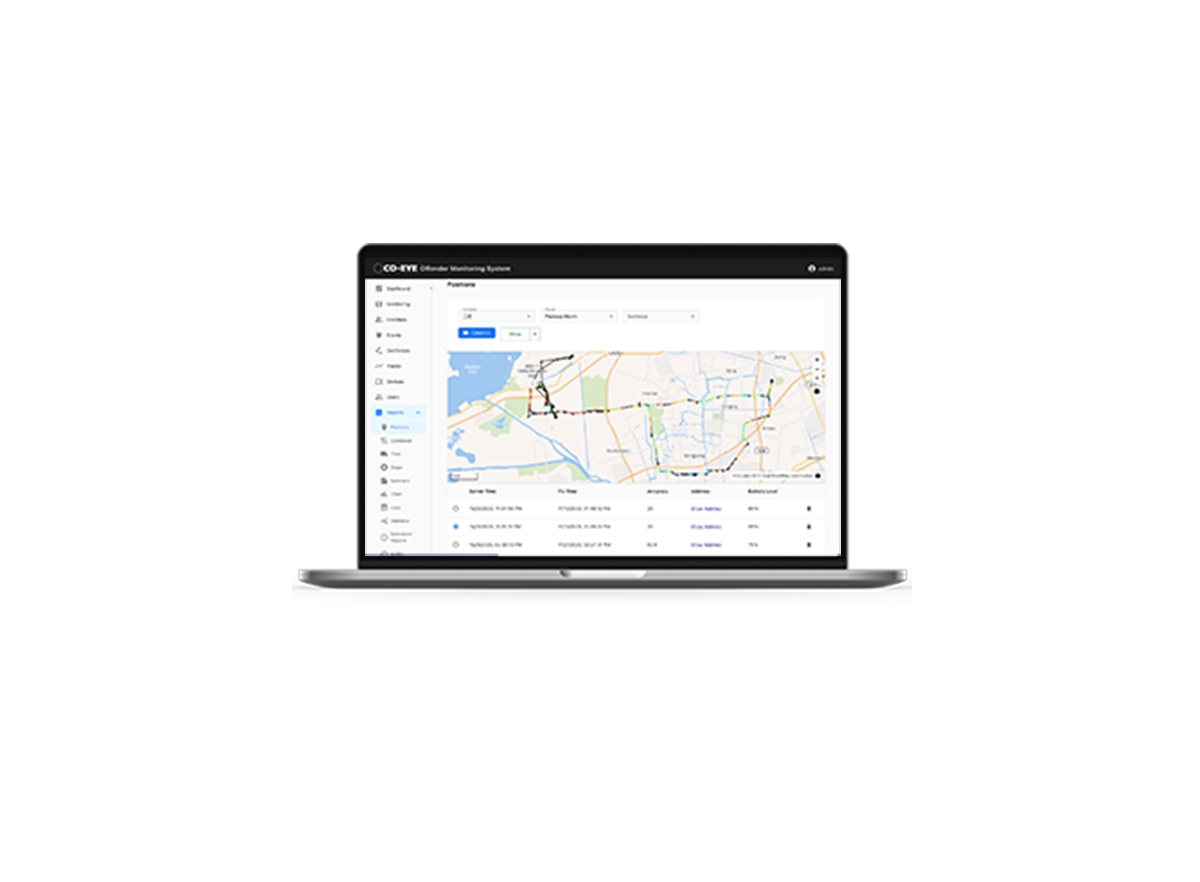
The global electronic monitoring equipment market has entered a phase of accelerated transformation. Driven by pretrial reform legislation, incarceration cost pressures, and the 2G/3G cellular network sunset, the industry that manufactures, deploys, and maintains ankle monitors is navigating technology transitions, consolidation dynamics, and an expanding global addressable market. This analysis provides an independent assessment of the vendor landscape, technology segmentation, regional dynamics, and growth trajectory for electronic monitoring equipment in 2026 and beyond.
For technical evaluation criteria, readers may consult the detailed GPS ankle monitor specifications guide and the GPS ankle monitor buyer’s guide maintained by ankle-monitor.com.
Table of Contents
- Market Overview and Growth Drivers
- Vendor Landscape: Major Ankle Monitor Companies
- BI Incorporated (GEO Group)
- SCRAM Systems (Alcohol Monitoring Systems)
- SuperCom (including Attenti)
- Buddi
- Geosatis
- Track Group
- Sentinel Offender Services
- Corrisoft
- REFINE Technology (CO-EYE)
- Technology Segmentation
- Regional Market Analysis
- Competitive Differentiation Factors
- Technology Trends Reshaping the Market
- Market Forecast and Outlook
- Frequently Asked Questions
- How large is the electronic monitoring equipment market in 2026?
- Who are the major ankle monitor companies globally?
- What is driving growth in the GPS ankle monitor market?
- What technology trends are reshaping electronic monitoring equipment?
- How does GPS ankle monitor procurement differ between the US and Europe?
- Will smartphone monitoring replace hardware ankle monitors?
Market Overview and Growth Drivers
The global electronic monitoring equipment market is estimated at $3.2-3.8 billion in 2026, according to aggregated projections from MarketsandMarkets, Grand View Research, and Mordor Intelligence. The market is projected to grow at a compound annual growth rate (CAGR) of 12-16% through 2030, driven by several converging forces:
- Alternatives to incarceration: With U.S. jail and prison populations exceeding 1.9 million and per-diem incarceration costs reaching $100-300/day, legislatures and courts are expanding ankle monitor programs as fiscally sustainable supervision alternatives. The pretrial reform movement — catalyzed by research showing that monetary bail does not improve appearance rates — has been a particularly powerful driver.
- 2G/3G network sunset: The decommissioning of legacy cellular networks is forcing a global fleet replacement cycle for ankle monitors and other electronic monitoring equipment dependent on older technology. This creates a multi-year procurement wave as agencies replace deprecated devices with LTE-M/NB-IoT capable units.
- International adoption expansion: Electronic monitoring programs are expanding beyond their traditional strongholds in the U.S. and Western Europe into Latin America, Africa, the Middle East, and Asia-Pacific. The global deployment base now exceeds 200,000 active devices across 30+ countries.
- COVID-era precedent: Pandemic-driven decarceration programs demonstrated that GPS ankle monitors could supervise large populations outside custody without proportionate increases in public safety incidents, normalizing electronic monitoring as a standard corrections tool rather than an experimental alternative.
Vendor Landscape: Major Ankle Monitor Companies
The electronic monitoring equipment market features a mix of large corrections conglomerates, specialized technology companies, and emerging manufacturers. The following profiles represent the major ankle monitor companies competing globally:
BI Incorporated (GEO Group)
BI Incorporated, a subsidiary of The GEO Group, is the largest ankle monitor company in the United States by deployed device count. BI provides both the hardware (GPS ankle monitors and RF devices) and monitoring center services, operating under contract with federal agencies including U.S. Pretrial Services and Immigration and Customs Enforcement (ICE). BI’s vertically integrated model — device manufacturing plus 24/7 monitoring — gives it significant incumbency advantages in federal procurement.
SCRAM Systems (Alcohol Monitoring Systems)
SCRAM Systems occupies a distinctive niche in the electronic monitoring equipment market: transdermal alcohol monitoring. The SCRAM CAM bracelet detects alcohol consumption through perspiration analysis, addressing court-ordered sobriety conditions. SCRAM has expanded into GPS tracking with the SCRAM GPS product, but its primary competitive moat remains alcohol monitoring — a capability that pure GPS ankle monitor manufacturers do not replicate.
SuperCom (including Attenti)
Israel-based SuperCom acquired Attenti’s electronic monitoring division and has since positioned itself as a full-suite supervision technology provider. SuperCom’s PureSecurity platform integrates GPS ankle monitors, RF home monitoring, and case management software. The company has a strong European presence, with deployments in the UK, Netherlands, and several other EU member states.
Buddi
UK-based Buddi has carved out a position in the European electronic monitoring equipment market with its lightweight GPS ankle monitor and tag-based tracking system. Buddi supplies the England and Wales Ministry of Justice electronic monitoring program — one of the largest in Europe. The company emphasizes design ergonomics and participant comfort as differentiators.
Geosatis
Swiss manufacturer Geosatis produces the Geotracker, a one-piece GPS ankle monitor positioned in the European market. The company focuses on compact form factor and positioning accuracy. Geosatis has secured contracts in several European jurisdictions and parts of Latin America.
Track Group
Track Group (formerly SecureAlert) provides GPS ankle monitors and monitoring services primarily in the Americas and select international markets. The company offers both one-piece and two-piece device configurations alongside its ReliAlert monitoring platform.
Sentinel Offender Services
Sentinel operates as a monitoring services provider and electronic monitoring equipment reseller in the U.S. market, focusing on county-level corrections programs. Sentinel’s business model combines hardware deployment with community supervision services.
Corrisoft
Corrisoft provides electronic monitoring solutions focused on U.S. state and county corrections departments. The company offers GPS ankle monitors alongside pretrial risk assessment tools, positioning itself as an integrated pretrial services platform.
REFINE Technology (CO-EYE)
Shanghai-based REFINE Technology markets the CO-EYE brand of GPS ankle monitors globally. The company’s technical differentiator is fiber optic anti-tamper detection — a technology that achieves zero false positive tamper alerts, addressing one of the most persistent operational complaints in the electronic monitoring equipment industry. CO-EYE’s one-piece GPS ankle monitor (108g, <2m CEP, 7-day battery) represents the current compact end of the one-piece design spectrum. Deployments span 30+ countries with 200,000+ devices in the field.
Technology Segmentation
The electronic monitoring equipment market segments along several technology dimensions:
GPS vs. RF-only: GPS ankle monitors provide continuous location tracking and account for approximately 65% of new deployments globally. RF-only systems — which detect presence/absence relative to a home base unit but do not track location — remain prevalent in house arrest programs where curfew monitoring is the primary requirement. The trend favors GPS: agencies increasingly prefer the richer data that GPS provides, even for home confinement use cases.
One-piece vs. two-piece: One-piece GPS ankle monitors integrate all components into a single ankle-worn device. Two-piece systems separate the ankle-worn transmitter from a portable tracking unit. One-piece devices now account for approximately 55% of new GPS deployments, up from 30% five years ago, driven by improved miniaturization and the operational simplicity advantage.
Alcohol monitoring: Transdermal alcohol electronic ankle bracelets represent a specialized segment dominated by SCRAM Systems. While not GPS devices, they are classified within the broader electronic monitoring equipment market and are often deployed alongside GPS ankle monitors in comprehensive supervision programs.
Smartphone-based: App-based tracking using participants’ smartphones is emerging as a low-cost, low-risk alternative to hardware ankle monitors. While smartphone monitoring cannot provide the tamper assurance of a physically attached device, it addresses the cost and stigma concerns that limit broader electronic monitoring adoption for low-risk populations.
Regional Market Analysis
North America accounts for approximately 55% of global electronic monitoring equipment revenue, driven by the scale of the U.S. criminal justice system, extensive pretrial reform legislation, and established procurement infrastructure. The U.S. federal market (BOP, ICE, U.S. Pretrial Services) and state/county corrections departments represent distinct procurement channels with different requirements and contracting cycles.
Europe represents approximately 25% of the market, with the UK, France, Netherlands, and Scandinavian countries as the largest consumers of electronic monitoring equipment. The European Electronic Monitoring (EMEU) framework provides policy guidance, though implementation varies significantly across member states. European procurement tends to emphasize participant rights, proportionality, and data protection (GDPR compliance) more heavily than U.S. procurement.
Asia-Pacific is the fastest-growing regional market for ankle monitors, with expanding programs in Australia, India, South Korea, and Southeast Asian nations. Growth is driven by prison overcrowding concerns and increasing awareness of community-based supervision alternatives.
Latin America and Africa represent emerging markets where electronic monitoring programs are being established or scaled, often with international development funding and technical assistance. Brazil, South Africa, and Kenya have notable active or pilot programs using GPS ankle monitors.
Competitive Differentiation Factors
The factors that differentiate ankle monitor companies in procurement evaluations have shifted significantly over the past five years:
- Anti-tamper technology: The divide between capacitive sensing (2-8% false positive rates) and fiber optic detection (zero false positives) is increasingly central to procurement scoring. Agencies that have experienced alarm fatigue with older electronic monitoring equipment prioritize tamper detection reliability.
- Battery life: The 7-day battery benchmark for one-piece GPS ankle monitors has become a procurement expectation. Two-piece systems with 2-3 day battery life on the tracker unit face increasing resistance from agencies managing large ankle monitor populations.
- Cellular technology: LTE-M/NB-IoT capability is now a minimum requirement in new U.S. federal procurement. Legacy 2G/3G-only devices are being disqualified from RFPs.
- Total cost of ownership: Agencies are moving beyond per-unit-per-day pricing to evaluate total cost including false alarm investigation burden, charging logistics officer time, and device replacement rates.
- Cybersecurity certification: The adoption of EN 18031 and increasing references to NIST frameworks in U.S. procurement creates a new compliance dimension for electronic monitoring equipment manufacturers.
Technology Trends Reshaping the Market
Several technology developments are reshaping competitive dynamics in the electronic monitoring equipment industry:
- eSIM adoption: Embedded SIM technology enables dynamic carrier switching and remote provisioning, simplifying logistics for agencies operating GPS ankle monitors across multiple carrier coverage areas.
- AI-powered analytics: Predictive compliance models, anomaly detection, and automated risk scoring are becoming standard expectations for monitoring center software accompanying ankle monitors.
- BLE-connected architectures: Bluetooth Low Energy tethering between electronic ankle bracelets and smartphone apps extends battery life from days to months, fundamentally changing the operational economics of continuous monitoring.
- Miniaturization: One-piece GPS ankle monitors have decreased from 200+ grams to below 110 grams in the current generation, improving wearer compliance and reducing stigma.
Market Forecast and Outlook
The electronic monitoring equipment market is projected to reach $5.5-6.5 billion by 2030, driven by the structural forces outlined above. Key forecast assumptions include:
- Continued pretrial reform legislation expanding the addressable population for GPS ankle monitors
- Completion of the 2G/3G fleet replacement cycle by 2027-2028, followed by technology-driven upgrade cycles
- Asia-Pacific and Latin American market growth outpacing established markets at 20-25% CAGR
- Market consolidation through 2-3 significant M&A transactions among current major vendors
- Smartphone monitoring capturing 15-20% of the low-risk segment, partially cannibalizing hardware ankle monitor revenue
For ankle monitor companies, the strategic imperative is clear: manufacturers that combine advanced hardware (fiber optic tamper, LTE-M/NB-IoT, miniaturized one-piece design) with intelligent software platforms (AI analytics, predictive compliance, cybersecurity certification) will capture disproportionate share as the market matures. The era of commodity two-piece RF-only electronic monitoring equipment is ending; the next decade belongs to integrated, intelligent, certified systems.
Frequently Asked Questions
How large is the electronic monitoring equipment market in 2026?
The global electronic monitoring equipment market is estimated at $3.2-3.8 billion in 2026, with a projected CAGR of 12-16% through 2030. North America accounts for approximately 55% of revenue, followed by Europe at 25%.
Who are the major ankle monitor companies globally?
Major vendors include BI Incorporated (GEO Group), SCRAM Systems, SuperCom (including Attenti), Buddi, Geosatis, Track Group, Sentinel Offender Services, Corrisoft, and REFINE Technology (CO-EYE). The market features a mix of corrections conglomerates, specialized technology firms, and emerging manufacturers.
What is driving growth in the GPS ankle monitor market?
Four primary drivers: pretrial reform legislation expanding eligible populations, the 2G/3G network sunset forcing fleet replacement, international market adoption expansion (Asia-Pacific, Latin America, Africa), and post-COVID normalization of electronic monitoring as a standard corrections tool.
What technology trends are reshaping electronic monitoring equipment?
Key trends include fiber optic anti-tamper detection replacing capacitive sensing, LTE-M/NB-IoT replacing legacy cellular, eSIM for dynamic carrier switching, AI-powered predictive analytics, BLE-connected architectures extending battery life, and one-piece device miniaturization below 110 grams.
How does GPS ankle monitor procurement differ between the US and Europe?
US procurement emphasizes technical performance metrics, total cost of ownership, and federal compliance standards like NIJ 1004.00. European procurement places greater weight on participant rights, GDPR data protection compliance, proportionality principles, and EN 18031 cybersecurity certification.
Will smartphone monitoring replace hardware ankle monitors?
Smartphone-based tracking is projected to capture 15-20% of the low-risk supervision segment. However, smartphones cannot replicate the tamper detection, continuous positioning, and physical accountability that hardware GPS ankle monitors provide for medium- and high-risk populations.