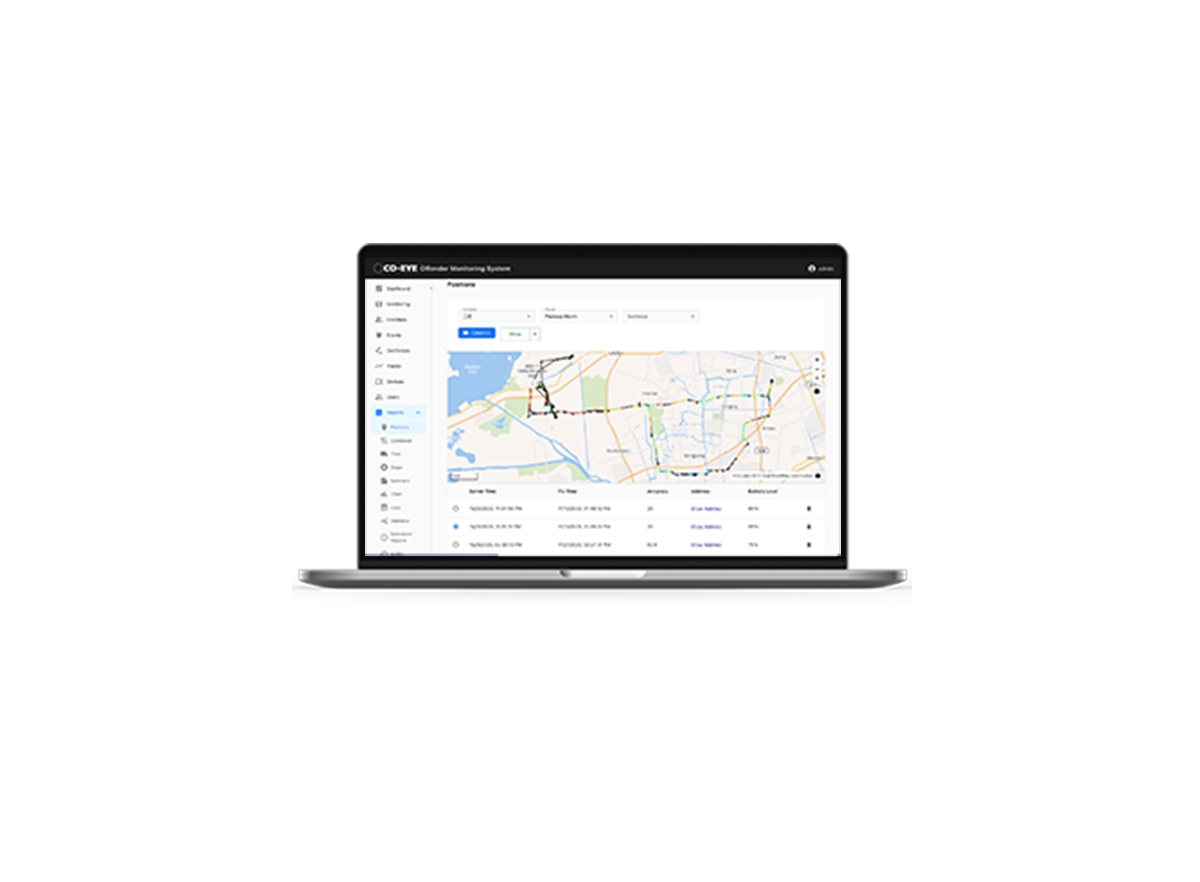
The GPS ankle monitor is, at its engineering core, a constrained multi-sensor fusion platform. It must simultaneously solve satellite positioning, cellular telemetry, tamper sensing, power management, and environmental durability problems — all within a device small enough and light enough for continuous wear on a human ankle. This article examines the technical underpinnings of modern GPS ankle monitors through the lens of published standards, field performance studies, and the engineering trade-offs that define the current generation of electronic monitoring equipment.
For procurement-oriented readers, the companion GPS ankle monitor procurement specifications guide provides a structured evaluation framework. This analysis focuses on the underlying technology and its real-world performance characteristics as documented in research literature and NIJ Standard 1004.00.
Table of Contents
- Multi-Constellation GNSS Architecture in Modern Ankle Monitors
- NIJ Standard 1004.00: Technical Framework for Electronic Monitoring Equipment
- Cellular Communication: From 2G Sunset to LTE-M and NB-IoT
- Anti-Tamper Engineering: Capacitive Sensing vs. Fiber Optic Detection
- Battery and Power Management in Wearable Ankle Monitors
- One-Piece vs. Two-Piece Architecture: Field Performance Comparison
- Field Accuracy: Urban vs. Suburban vs. Rural Performance
- Cybersecurity and Data Integrity Requirements
- Emerging Technologies in GPS Ankle Monitoring
- Frequently Asked Questions
- What satellite systems do modern GPS ankle monitors use?
- What accuracy does NIJ Standard 1004.00 require for ankle monitors?
- Why are 2G and 3G ankle monitors being phased out?
- What is the difference between capacitive and fiber optic tamper detection?
- How long does a GPS ankle monitor battery last?
- What cybersecurity standards apply to electronic monitoring equipment?
Multi-Constellation GNSS Architecture in Modern Ankle Monitors
First-generation GPS ankle monitors relied exclusively on the U.S. GPS constellation — 31 satellites in medium Earth orbit. This single-constellation dependency created predictable failure modes: urban canyons blocked line-of-sight to enough satellites for a fix, indoor environments were largely opaque, and time-to-first-fix (TTFF) after cold start could exceed 60 seconds.
Modern GPS ankle monitors address these limitations through multi-constellation GNSS receivers that simultaneously track GPS (United States), GLONASS (Russia), BeiDou (China), and Galileo (European Union). By aggregating satellites from four constellations, the total visible satellite count in any given environment approximately triples compared to GPS-only operation. This directly improves three metrics critical to ankle monitor performance: fix success rate in degraded environments, horizontal accuracy through improved geometric dilution of precision (GDOP), and TTFF through parallel acquisition of multiple constellations.
NIJ Standard 1004.00 specifies a horizontal accuracy requirement of ≤10 meters CEP (Circular Error Probable) in static conditions and ≤30 meters CEP in dynamic (moving) conditions. These thresholds represent minimum acceptable performance; leading manufacturers achieve substantially better results. For example, one-piece GPS ankle monitors like the CO-EYE ONE achieve <2 meter CEP in open-sky conditions — an order of magnitude better than the NIJ minimum. For a detailed analysis of accuracy standards, see the GPS accuracy benchmarks under NIJ 1004.00.
Supplementary positioning technologies — Wi-Fi fingerprinting and cellular LBS (Location-Based Services) — provide fallback fixes when GNSS signals are unavailable or degraded. In indoor environments where GPS ankle monitor satellite signals cannot penetrate, Wi-Fi positioning using access point databases can provide location estimates with 10-30 meter accuracy, sufficient for building-level presence confirmation.
NIJ Standard 1004.00: Technical Framework for Electronic Monitoring Equipment
NIJ Standard 1004.00 is the de facto technical benchmark for electronic monitoring equipment procurement in the United States. Understanding its requirements is essential for evaluating GPS ankle monitor performance claims.
Positioning Requirements: The standard mandates that offender tracking systems achieve ≤10m horizontal accuracy in static outdoor conditions and ≤30m in dynamic conditions. It requires that the system collect location data at a configurable rate, with a maximum granularity of one fix per minute when program rules demand it. Data must be uploaded to the monitoring center at minimum once every fifteen minutes during active tracking.
Zone Management: The standard requires support for circular, rectangular, and free-form polygon zones with at least 40 nodes per polygon. Zone templates must store a minimum of 50 zones. Nested zones (zones within zones) must be supported to enable complex supervision configurations such as inclusion envelopes with exclusion islands.
Environmental Durability: NIJ 1004.00 addresses the harsh operational environment that ankle monitors endure: continuous skin contact, exposure to water (bathing, rain, swimming), temperature extremes, and mechanical stress from daily activities. The standard requires validated waterproofing — devices meeting IP68 certification can withstand prolonged submersion — and operational temperature ranges typically spanning -20°C to +60°C.
Software Security: As detailed in our software security and encryption analysis, the standard requires HTTPS/SSL encrypted communications, role-based access control for monitoring center software, immutable audit trails, and secure agency login procedures defined in Appendix A.
Cellular Communication: From 2G Sunset to LTE-M and NB-IoT
The cellular modem in a GPS ankle monitor is responsible for backhauling location data, tamper events, and status messages from the device to the monitoring center. The choice of cellular technology directly affects three performance dimensions that corrections agencies care about: power consumption (which determines battery life), building penetration (which affects reporting reliability indoors), and network longevity (which determines device obsolescence timelines).
The ongoing sunset of 2G (GSM) and 3G (WCDMA/UMTS) networks has forced the electronic monitoring equipment industry into a technology transition. Devices dependent on 2G/3G networks face connectivity loss as carriers decommission infrastructure. AT&T completed its 3G shutdown in 2022; T-Mobile followed in 2024. Agencies operating legacy ankle monitors on these networks face forced device replacement.
The replacement technologies — LTE-M (LTE Cat-M1) and NB-IoT (Narrowband IoT) — offer significant advantages for GPS ankle monitor applications. LTE-M provides 375 kbps uplink throughput (more than sufficient for location telemetry), 20 dB better building penetration than legacy LTE, and approximately 60-70% lower power consumption compared to full LTE. NB-IoT achieves even better building penetration (+23 dB link budget improvement) at the cost of lower throughput and higher latency.
For GPS ankle monitors, this translates to concrete operational benefits: a device using LTE-M/NB-IoT can achieve the same reporting frequency as a 2G device while consuming significantly less power, directly extending battery life. Modern one-piece electronic ankle bracelets achieve 7-day autonomous operation on 1700mAh batteries — a benchmark that would require substantially larger batteries on older cellular technologies.
Anti-Tamper Engineering: Capacitive Sensing vs. Fiber Optic Detection
Tamper detection is the security-critical subsystem that distinguishes an ankle monitor from a consumer GPS tracker. When a participant attempts to remove or defeat the device, the tamper detection system must generate a reliable alert. The engineering challenge is balancing sensitivity (detecting all genuine removal attempts) against specificity (avoiding false positives from benign environmental events).
The two dominant approaches in current electronic monitoring equipment represent fundamentally different sensing philosophies:
Capacitive skin-proximity sensing measures the electrical capacitance between sensors on the device body or strap and the wearer’s skin. Changes in capacitance indicate possible strap loosening or removal. The limitation is that capacitance is influenced by multiple environmental variables — sweat accumulation, strap moisture, limb swelling, and temperature changes — creating ambiguity. Field studies from corrections agencies report false positive rates of 2-8% for capacitive-only systems, generating alarm fatigue and consuming officer time on non-events.
Fiber optic strap sensing takes a deterministic approach. Optical fibers embedded in the strap transmit a continuous light signal; physical severance of the strap interrupts light transmission — a binary, unambiguous event. Unlike capacitive sensing, fiber optic detection does not respond to sweat, temperature, or biological variation. The result is zero false positive tamper alerts — a characteristic that the research community identifies as transformative for officer workload and program credibility.
From a research perspective, the false positive rate is not merely a nuisance metric. Each false tamper alert on a GPS ankle monitor triggers an investigation sequence: officer notification, attempted participant contact, potential dispatch to the last known location, and documentation. At scale, a 5% false positive rate across a 1,000-device deployment generates approximately 50 false alarm investigations per day — a resource burden that diverts supervision capacity from genuine risk events.
Battery and Power Management in Wearable Ankle Monitors
Power management in a GPS ankle monitor operates under constraints that differentiate it from most IoT applications: the device cannot be removed for charging (it must alert if separated from the ankle), the battery must sustain multiple concurrent power-hungry subsystems (GNSS receiver, cellular modem, tamper sensing), and the form factor must remain wearable — limiting battery capacity to approximately 1,500-2,000mAh in current one-piece designs.
The dominant engineering strategy is duty cycling: powering subsystems on and off according to configurable schedules. A typical duty cycle powers the GNSS receiver for a 30-60 second acquisition window every 5 minutes, keeping the cellular modem in low-power idle between scheduled uploads and maintaining the tamper detection circuit continuously. This architecture enables the 7-day battery life benchmark at 5-minute reporting intervals that leading GPS ankle monitors achieve.
An emerging architecture uses BLE (Bluetooth Low Energy) tethering to offload cellular and GNSS functions to a paired device — typically a smartphone running a companion application or a dedicated portable tracker. In this mode, the electronic ankle bracelet functions primarily as a tamper-detected proximity token, reducing its power consumption dramatically. BLE-tethered modes enable battery life extensions to multiple months on the same cell chemistry, transforming the charging logistics that corrections agencies cite as a primary operational burden.
One-Piece vs. Two-Piece Architecture: Field Performance Comparison
The ankle monitor market is divided between two fundamental device architectures, each with distinct operational trade-offs documented in field performance research:
One-piece (self-contained) GPS ankle monitors integrate all components — GNSS receiver, cellular modem, battery, tamper sensors, and antenna arrays — into a single ankle-worn unit. The advantage is simplicity: there is one device to charge, one device to monitor, and no wireless link between components that can fail. The disadvantage is that the ankle-worn unit must be larger and heavier to accommodate all components, though modern designs (108g for leading models) have significantly reduced this penalty.
Two-piece systems split functionality between an ankle-worn transmitter (typically RF or BLE) and a separate portable tracking unit that handles GNSS and cellular functions. The ankle unit is smaller and lighter, but the system introduces a point of failure: the wireless link between ankle unit and tracker. If the participant leaves the tracker behind (intentionally or accidentally), the system loses GPS capability. Two-piece systems also impose a dual-charging requirement that field research identifies as a significant compliance complication.
A 2024 corrections department comparison study found that one-piece GPS ankle monitors achieved 97% uptime (defined as continuous reporting without gaps exceeding 30 minutes), compared to 89% for two-piece systems. The primary reliability difference was attributable to pairing failures and participants not maintaining charge on the separate tracker unit.
Field Accuracy: Urban vs. Suburban vs. Rural Performance
Laboratory accuracy specifications for GPS ankle monitors describe performance under idealized conditions. Field accuracy varies with environmental context in predictable but significant ways:
- Open-sky/rural: Modern multi-constellation GPS ankle monitors achieve 1-3 meter accuracy, consistent with manufacturer specifications and well within NIJ requirements.
- Suburban: Partial sky obstruction from buildings and tree canopy degrades accuracy to 3-8 meters. Fix success rates remain above 95% for multi-constellation receivers.
- Dense urban: Multipath reflections and limited sky visibility in urban canyons degrade accuracy to 10-30 meters and reduce fix rates to 70-85%. Wi-Fi positioning assists become critical in this environment.
- Indoor: GNSS signals are generally unavailable indoors. Ankle monitors rely on Wi-Fi and cellular LBS for approximate positioning (10-50 meter accuracy) and last-known outdoor fix for reference.
These field realities have direct implications for zone configuration. A 50-meter exclusion zone around a victim’s residence functions effectively in suburban environments where accuracy supports enforcement at the boundary. In dense urban environments, the same zone requires a larger buffer to account for positioning uncertainty — a design consideration that monitoring center software must accommodate.
Cybersecurity and Data Integrity Requirements
The data transmitted by GPS ankle monitors — continuous location histories, tamper events, schedule compliance records — represents sensitive criminal justice information. Compromise of this data could endanger victims, compromise legal proceedings, or enable surveillance abuses.
NIJ Standard 1004.00 requires HTTPS/SSL encryption for all data in transit between the device and monitoring center. The European EN 18031 cybersecurity standard adds requirements for secure boot, firmware integrity verification, and vulnerability management that are increasingly relevant as electronic monitoring equipment procurement incorporates cybersecurity due diligence.
Modern GPS ankle monitors implement AES-128 or AES-256 encryption for data payloads, mutual authentication between device and server, and signed firmware updates (OTA) to prevent unauthorized modification. These protections align with the NIST Cybersecurity Framework principles that federal agencies and an increasing number of state corrections departments reference in electronic ankle bracelet procurement requirements.
Emerging Technologies in GPS Ankle Monitoring
Several technologies are poised to reshape GPS ankle monitor capabilities in the near term:
- eSIM (embedded SIM): Replacing physical SIM cards with reprogrammable embedded SIMs enables dynamic carrier switching, multi-network roaming, and remote provisioning — eliminating a common logistics bottleneck in multi-jurisdictional deployments.
- AI-assisted predictive analytics: Machine learning models trained on historical ankle monitor telemetry can predict compliance risk and suggest preemptive interventions before violations occur.
- Edge computing on-device: ARM-class processors in modern electronic ankle bracelets enable on-device geofence evaluation, reducing cellular data consumption and enabling immediate local alerts.
- Advanced co-processors: Dual-processor architectures (e.g., ARM M3 main + ARM M0 co-processor) enable always-on low-power monitoring while maintaining full processing capability for demanding tasks like GNSS acquisition.
Frequently Asked Questions
What satellite systems do modern GPS ankle monitors use?
Current-generation GPS ankle monitors use multi-constellation GNSS receivers tracking GPS (US), GLONASS (Russia), BeiDou (China), and Galileo (EU) simultaneously. This provides approximately three times the visible satellites compared to GPS-only, improving accuracy and fix rates in challenging environments like urban canyons.
What accuracy does NIJ Standard 1004.00 require for ankle monitors?
NIJ 1004.00 requires ≤10 meters horizontal accuracy (CEP) in static outdoor conditions and ≤30 meters in dynamic conditions. Leading GPS ankle monitors exceed this significantly, achieving sub-2-meter accuracy in open-sky environments through multi-constellation positioning.
Why are 2G and 3G ankle monitors being phased out?
Cellular carriers are decommissioning 2G and 3G networks globally. AT&T shut down 3G in 2022, T-Mobile in 2024. Ankle monitors dependent on these networks lose connectivity. The replacement technologies — LTE-M and NB-IoT — offer better building penetration and 60-70% lower power consumption.
What is the difference between capacitive and fiber optic tamper detection?
Capacitive sensing measures skin proximity through electrical capacitance changes, producing 2-8% false positive rates due to sweat and environmental factors. Fiber optic detection transmits light through strap fibers — physical severing breaks the light path — achieving zero false positives through a deterministic rather than probabilistic signal.
How long does a GPS ankle monitor battery last?
Modern one-piece GPS ankle monitors with LTE-M connectivity achieve approximately 7 days on a 1700mAh battery at 5-minute reporting intervals. BLE-tethered modes extend battery life to multiple months by offloading cellular and GNSS functions to a paired device.
What cybersecurity standards apply to electronic monitoring equipment?
NIJ Standard 1004.00 requires HTTPS/SSL encryption and secure authentication. The European EN 18031 adds cybersecurity requirements for IoT devices. Leading GPS ankle monitors implement AES-128/256 encryption, mutual device-server authentication, and signed OTA firmware updates.