
Table of Contents
- The History of Ankle Monitor Vendor Consolidation: From 30+ Companies to a Handful of Giants
- A Market Defined by Consolidation
- The Consolidation Timeline
- Phase 1: Early Market (2000-2007)
- Phase 2: First Wave of Consolidation (2007-2012)
- Phase 3: Accelerated Consolidation (2012-2016)
- Phase 4: Modern Era (2016-2026)
- NIJ Market Survey Vendor Tracking (2007-2014)
- What This Means for Agencies Today
- Frequently Asked Questions
- How many ankle monitor companies are there in 2026?
- What happened to OmniLink ankle monitors?
- References
- Further Reading
- Cite This Article
The History of Ankle Monitor Vendor Consolidation: From 30+ Companies to a Handful of Giants
Tracing two decades of mergers, acquisitions, and market exits in the electronic monitoring industry.
A Market Defined by Consolidation
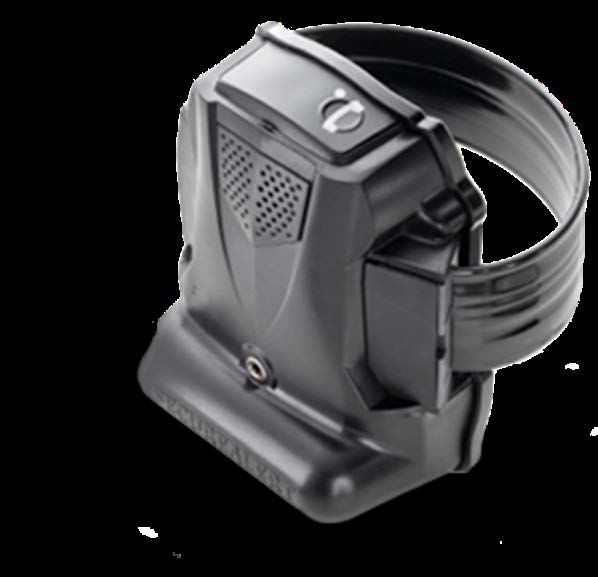
The electronic monitoring industry has experienced one of the most dramatic consolidation cycles of any corrections technology sector. Between 2007 and 2016, the NIJ tracked vendor participation in annual market surveys and documented a pattern of relentless acquisition and consolidation. By the time the Johns Hopkins / NIJ Market Survey was published in 2016, the landscape had already been transformed.
Understanding this consolidation history is essential for agencies evaluating vendors today, because many of the brand names that appear in older RFPs, contracts, and industry literature no longer exist as independent entities.
The Consolidation Timeline
Phase 1: Early Market (2000-2007)
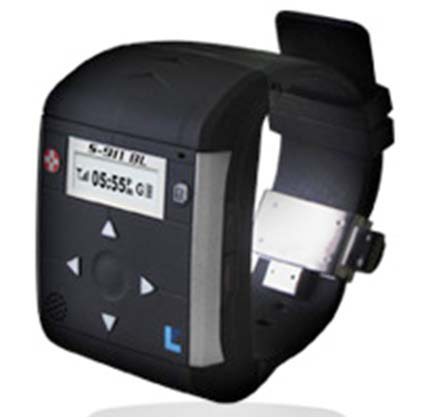
The early GPS ankle monitor market was fragmented, with 20+ small to mid-size companies offering competing products. Most vendors were privately held, and the market was growing at moderate rates as GPS technology improved and legislation expanded.
Phase 2: First Wave of Consolidation (2007-2012)
| Acquirer | Acquired | Significance |
|---|---|---|
| 3M | Pro Tech Monitoring + Elmo Tech | Created one of the largest EM companies; combined one-piece and two-piece product lines |
| GEO Group | BI Incorporated | Prison services giant entered EM; created vertically integrated detention + monitoring business |
| Sentinel | G4S Court Services (which had absorbed ActSoft + Guidance) | Three-layer acquisition chain; consolidated multiple smaller players |
| Securus Technologies | Satellite Tracking of People (STOP LLC) | Prison telecom company expanded into monitoring |
| AMS (SCRAM) | Gryphex (formerly Ascend) | Alcohol monitoring company acquired GPS competitor |
Phase 3: Accelerated Consolidation (2012-2016)
| Acquirer | Acquired | Year |
|---|---|---|
| SecureAlert → Track Group | Emerge Inc. + G2 Research | 2014 |
| Numerix Corp | OmniLink Systems | ~2014 |
| Corrisoft | iSecureTrac | ~2013 |
Phase 4: Modern Era (2016-2026)
The consolidation trend has continued, with the additional pressure of 3G network shutdowns forcing smaller vendors without LTE-M product lines to either invest heavily in new hardware development or exit the market. The result is a market dominated by fewer, larger companies with broader product portfolios.
NIJ Market Survey Vendor Tracking (2007-2014)
The NIJ tracked vendor participation across eight annual market surveys from 2007 to 2014. The data reveals the volatility of the market:
Unique vendors tracked across all surveys (2007-2014)
Vendors remaining in the 2016 market survey
Key patterns observed:
- Only 4 vendors appeared in all 8 annual surveys (BI Inc, OmniLink, STOP LLC, Sentinel/Serco) — demonstrating extreme market turnover
- Many vendors are resellers: The survey noted that “many vendors in the market are resellers (distributors) that package OTS devices from other manufacturers and provide a monitoring service”
- International entrants rarely succeed in the U.S.: Companies like AES Corporation (“not offered in US or Canada”), Scandinavian Radio Technology, and Serco Geografix had limited U.S. market penetration
What This Means for Agencies Today
The consolidation pattern carries several implications for procurement decisions:
- Vendor stability matters: Agencies should evaluate a vendor’s financial stability and ownership history, not just their current product specifications
- Technology continuity risk: When a vendor is acquired, product roadmaps often change. Agencies using equipment from acquired companies may face premature end-of-life for their devices
- Vertically integrated vendors (those who design, manufacture, and provide monitoring services) offer more predictable long-term support than resellers
- New market entrants from outside the traditional U.S. corrections ecosystem may offer innovative technology but require due diligence on their commitment to the market
Frequently Asked Questions
How many ankle monitor companies are there in 2026?
The active GPS ankle monitor market has consolidated from 30+ companies in the early 2000s to approximately 10-15 significant vendors in 2026. Major players include BI Incorporated (GEO Group), SCRAM Systems, 3M Electronic Monitoring, Track Group, SuperCom, Geosatis, Buddi, and several specialized manufacturers.
What happened to OmniLink ankle monitors?
OmniLink Systems was acquired by Numerix Corp around 2014. OmniLink was notable for pioneering one-piece GPS ankle monitor design with cell tower trilateration. Their BluTag product was one of the most widely deployed one-piece devices in the U.S. before the acquisition.
References
- Taylor, S.R., et al. (2016). Market Survey of Location-Based Offender Tracking Technologies. JHU/APL / NIJ. NCJ 249889.
- Corrections Technology Resource Center market surveys (2007-2014).
Further Reading
Cite This Article
Ankle Monitor Industry Report. “The History of Ankle Monitor Vendor Consolidation.” Ankle Monitor Industry Report, March 2026.


![Electronic Tagging Statistics: Global Adoption Rates and Effectiveness Data [2026]](https://www.ankle-monitor.org/wp-content/uploads/2026/03/post_src_1774425808037-400x267.jpg)