
Table of Contents
- Electronic Monitoring Laws by State: A 50-State Legislative Comparison
- Overview: The Patchwork of U.S. Electronic Monitoring Laws
- Sex Offender GPS Monitoring Mandates
- The Florida Model (Most Restrictive)
- The California Model (Second Most Common)
- The Massachusetts Model (Most Judicial Discretion)
- 50-State Legislative Matrix
- Key Legislative Trends (2016-2026)
- 1. Expansion of GPS Mandates Beyond Sex Offenders
- 2. Offender Fee Structures
- 3. The False Alert Problem in Legislation
- Frequently Asked Questions
- Which states require GPS ankle monitors for sex offenders?
- Do offenders have to pay for their own ankle monitors?
- References
- Further Reading
- Cite This Article
Electronic Monitoring Laws by State: A 50-State Legislative Comparison
Which states mandate GPS monitoring for sex offenders? Where do offenders pay for their own monitoring? A comprehensive state-by-state breakdown of EM legislation.
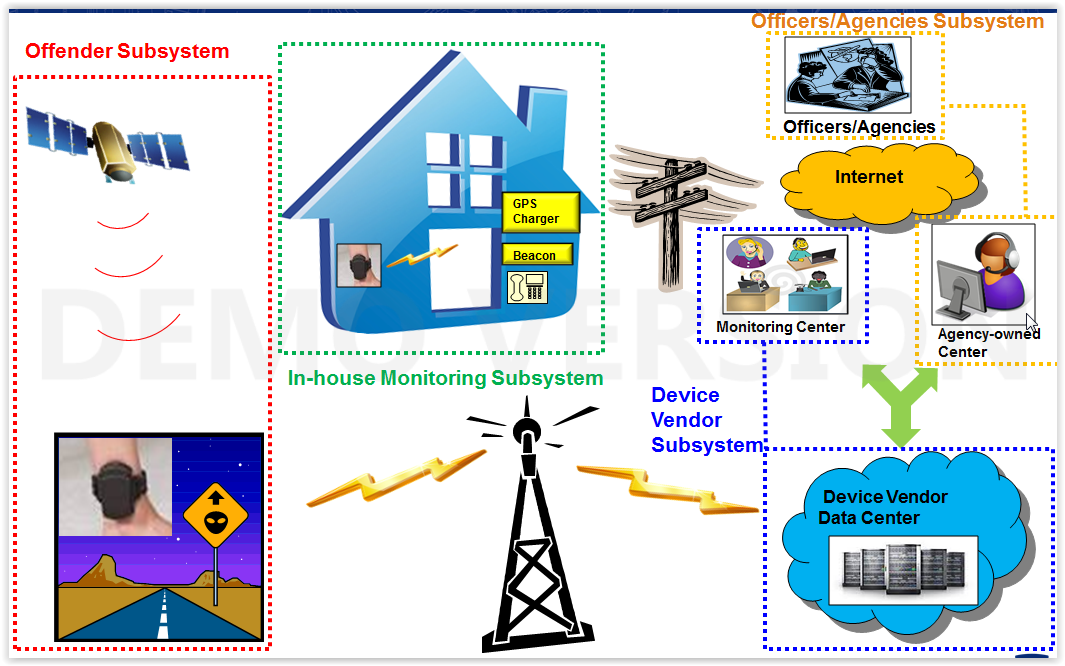
Overview: The Patchwork of U.S. Electronic Monitoring Laws
Electronic monitoring legislation in the United States is a complex patchwork of state-level statutes with no unified federal framework. Each state has developed its own approach to when, how, and for whom electronic monitoring can or must be used. The data below is compiled from the Johns Hopkins University / NIJ market survey (DeMichele & Payne, 2009 legislative compilation), updated with significant legislative changes through 2026.
Key legislative dimensions vary dramatically across states:
- Whether EM is mentioned in statute at all
- Whether EM is required vs. discretionary for specific offenses
- Whether GPS specifically is mandated (vs. any form of EM)
- Whether there are time limits on monitoring duration
- Whether the offender pays for monitoring
- Whether active (real-time) monitoring is required vs. passive
Sex Offender GPS Monitoring Mandates
The most common statutory trigger for mandatory electronic monitoring is conviction for sex offenses. Three legislative models have emerged:

The Florida Model (Most Restrictive)
Florida’s Jessica Lunsford Act (2005) established the most comprehensive EM mandate in the country. Key provisions:
- GPS monitoring required for all registered sex offenders on probation or community supervision
- Lifetime GPS monitoring for the highest-risk categories
- Active (real-time) monitoring mandated
- Offender pays monitoring costs
- EM is defined in statute with specific technology requirements
States following the Florida model: Alabama, Georgia, Indiana, Louisiana, Michigan, Missouri, Montana, Ohio, Oklahoma, Rhode Island, South Carolina, West Virginia, Wisconsin
The California Model (Second Most Common)
California’s Proposition 83 and SB 1128 mandate EM for registered sex offenders, combined with residence restrictions. Key differences from the Florida model:
- The Chief Probation Officers and Court System retain discretion when California law does not specifically mandate EM
- California experienced significant implementation challenges: in 2011 field tests, approximately 55% of the time, 50% of parolees being monitored did not register a signal of any kind
- By 2014, some corrections monitoring staff received as many as 1,000 alerts daily, most of which were false positives
- LA County monitored more than 3,000 offenders released under the early release program
- California tracked more than 8,000 state parolees as of 2014
States following this model: Maryland (similar but applies only to crimes committed after October 1, 2010)
The Massachusetts Model (Most Judicial Discretion)
Massachusetts gives courts the most flexibility:
- GPS tracking required for the entire probationary period for specific sex crimes
- Courts determine the length of probation (and thus the monitoring duration)
- Applied based on the date probation was ordered, not the date of the crime
- The Probation Board determines which areas are prohibited
- Violation of exclusion zone requires arrest (more specific than Florida or California)
50-State Legislative Matrix
The following table presents the legislative landscape for sex offender electronic monitoring across all 50 U.S. states, based on the DeMichele & Payne (2009) compilation with 2026 updates.
| State | Has EM Statute | Sex Offender EM | Required EM | GPS Provision | Offender Pays | Active Monitoring |
|---|---|---|---|---|---|---|
| Alabama | Yes | Yes | Yes | Yes | Yes | Yes |
| Alaska | Yes | Yes | – | – | – | – |
| California | Yes | Yes | Yes | Yes | – | – |
| Florida | Yes | Yes | Yes | Yes | Yes | Yes |
| Georgia | Yes | Yes | Yes | Yes | Yes | Yes |
| Illinois | Yes | Yes | Yes | Yes | Yes | – |
| Indiana | Yes | Yes | Yes | Yes | Yes | Yes |
| Michigan | Yes | Yes | Yes | Yes | Yes | Yes |
| Ohio | Yes | Yes | Yes | Yes | Yes | Yes |
| Texas | Yes | Yes | – | – | – | – |
| New York | Yes | Yes | – | – | – | – |
Note: This table shows a representative selection of states. The full 50-state matrix from the DeMichele & Payne (2009) compilation is available in our Electronic Monitoring Statistics 2026 data resource. Legislative changes since 2009 may not be reflected.
Key Legislative Trends (2016-2026)
1. Expansion of GPS Mandates Beyond Sex Offenders
While sex offender monitoring was the original legislative driver, states have progressively expanded mandatory GPS monitoring to:
- Domestic violence protection order enforcement (fastest-growing category)
- Pretrial release conditions for violent and high-risk defendants
- Gang-related offenses in select jurisdictions
- DUI/DWI repeat offenders (often combined with alcohol monitoring)
2. Offender Fee Structures
The question of who pays for electronic monitoring remains contentious:
- Offender-pays states (majority): Daily fees typically $5-$35, creating equity concerns for indigent defendants
- Agency-funded states: Costs absorbed into corrections budget, often more sustainable for large programs
- Sliding-scale models: Emerging approach where fees are income-based with waiver provisions
3. The False Alert Problem in Legislation
California’s experience — where monitoring staff received up to 1,000 daily alerts, mostly false positives — has influenced legislative thinking. Several states now include provisions requiring:
- Minimum accuracy standards for devices used under mandatory monitoring
- Vendor accountability for false alert rates
- Technology refresh requirements to prevent agencies from operating obsolete equipment
Frequently Asked Questions
Which states require GPS ankle monitors for sex offenders?
At least 24 states have enacted legislation requiring GPS electronic monitoring for certain categories of sex offenders. States with the most comprehensive mandates include Florida, Georgia, Alabama, Indiana, Louisiana, Michigan, Missouri, Ohio, Oklahoma, South Carolina, and Wisconsin. Florida’s Jessica Lunsford Act (2005) established the most restrictive model, requiring lifetime GPS monitoring for high-risk sex offenders.
Do offenders have to pay for their own ankle monitors?
In the majority of U.S. states with EM statutes, offenders are required to pay all or part of their monitoring costs, typically $5-$35 per day. However, this practice is increasingly challenged on equity grounds, as indigent defendants may remain incarcerated simply because they cannot afford monitoring fees. Some states have adopted sliding-scale or fee waiver provisions.
References
- DeMichele, M., & Payne, B. (2009). Offender Supervision with Electronic Technology [2nd ed.]. Bureau of Justice Assistance.
- Taylor, S.R., et al. (2016). Market Survey of Location-Based Offender Tracking Technologies. JHU/APL / NIJ.
Further Reading
Cite This Article
Ankle Monitor Industry Report. “Electronic Monitoring Laws by State: A 50-State Legislative Comparison.” Ankle Monitor Industry Report, March 2026.