
On March 9, 2026, Florida’s legislature advanced CS/CS/HB 277, a domestic-violence package that moves electronic monitoring from occasional judicial discretion toward a normalized—and in some fact patterns mandatory—supervision tool. With an effective date of July 1, 2026, the law matters immediately for sheriffs, community corrections, pretrial administrators, monitoring centers, and the defense and victim-services bar. This column reads the policy as an industry signal: domestic violence programs are converging on multi-radio architectures (RF-style boundary sensing plus GNSS location) and on victim-facing notification as part of the statutory definition of monitoring itself—not as an optional add-on.
Readers should treat operational details as evolving: county workflows, contract vehicles, and FDLE data-entry practices will continue to clarify through rulemaking and procurement. Always verify final language against official enrolled text and chamber analyses. For parallel West Coast framing, see our earlier analysis of California SB 871 and mandatory GPS-style supervision in domestic violence matters; for vendor-neutral economics, pair this piece with the true cost of electronic monitoring (TCO analysis).
Table of Contents
- What HB 277 Changes for Florida Courts and Supervision Agencies
- Statutory Definition: RF Plus GPS and Victim Notification
- Scope: Felony DV Convictions and Protective Injunction Violations
- Judicial Discretion Versus Mandatory Orders
- Who Pays: Monitored Person Cost Recovery
- Pilot Programs: Pinellas and the Sixth Judicial Circuit
- Broader Package Elements: Penalties, Victim Assistance, and Data Systems
- National Context: DV Electronic Monitoring in 2026
- Interoperability: Dispatch, Victim Advocates, and the Alert Chain
- Implications for Vendors and Monitoring Centers
- Closing: From Statute to Stack
What HB 277 Changes for Florida Courts and Supervision Agencies
At its core, HB 277 does three things supervision vendors should track together rather than in silos. First, it authorizes Florida courts to order electronic monitoring in qualifying domestic violence proceedings. Second, it requires monitoring when the court finds, by clear and convincing evidence, that a respondent or defendant poses a threat of violence to a victim—turning what was once a discretionary safety measure into a predictable outcome in the highest-risk docket segments. Third, it seeds structured pilot programs intended to produce operational templates before statewide volume scales.
The practical implication for program managers is that “DV monitoring” can no longer be treated as a niche SKU inside a general probation contract. Judges will expect consistent definitions, interoperable alert routing, and documented victim-notification behavior. Agencies that still operate GPS-only stacks without reliable RF or tethered home verification may need to rebid or amend service levels to match Florida’s statutory concept of monitoring—discussed in the next section.

Statutory Definition: RF Plus GPS and Victim Notification
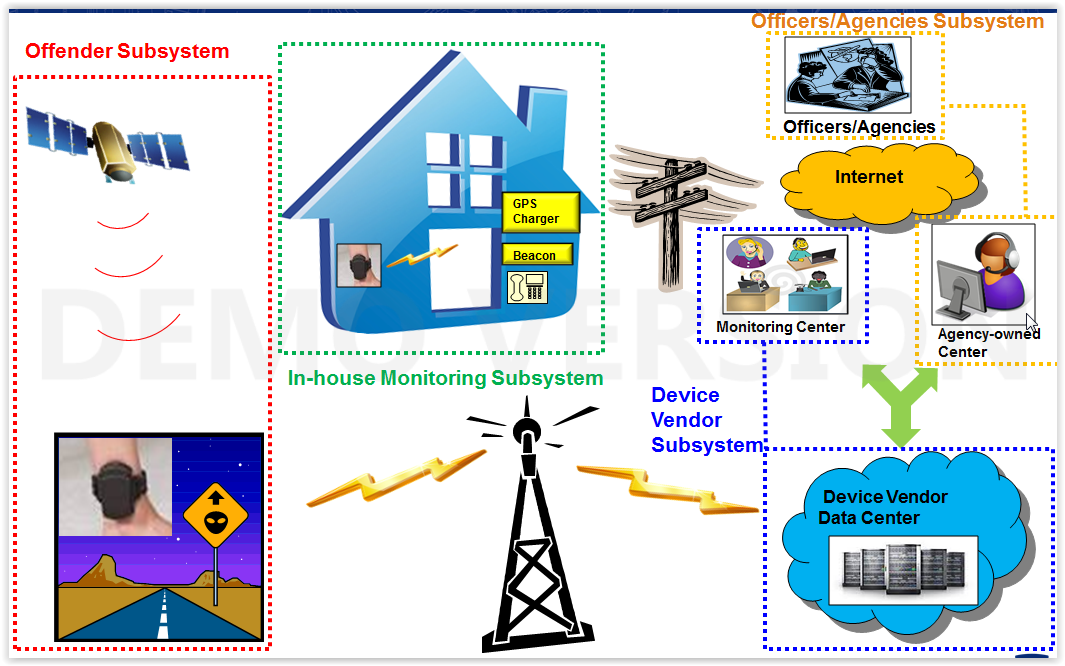
Florida’s approach stands out because it embeds modalities inside the definition of electronic monitoring rather than leaving technology selection entirely to vendor marketing. Under the enrolled policy framework, monitoring includes radio frequency technology capable of detecting departure from an approved location or tamper conditions, and active or passive GPS with victim notification capabilities. That pairing pushes procurement conversations beyond “which ankle bracelet has the best brochure” toward systems engineering: how RF boundary rules, GNSS reporting intervals, geofence semantics, and victim-alert channels behave under load when a survivor is actively trying to avoid contact.
For monitoring centers, the definitional split matters operationally. RF-centric subsystems (often associated with home curfew or proximity-to-beacon models) answer different questions than continuous outdoor GNSS tracks. GPS answers “where is the device on the Earth’s surface, subject to sky view and cellular backhaul constraints?” RF tethering often answers “is the wearable within a defined radio perimeter of an approved place?” Tamper semantics differ by vendor; courts care whether an alert is actionable for law enforcement, not merely technically detectable. Industry discussions of alert credibility remain relevant—see false tamper alert rates in GPS ankle monitors—because domestic violence dockets amplify the cost of both false alarms and missed warnings.
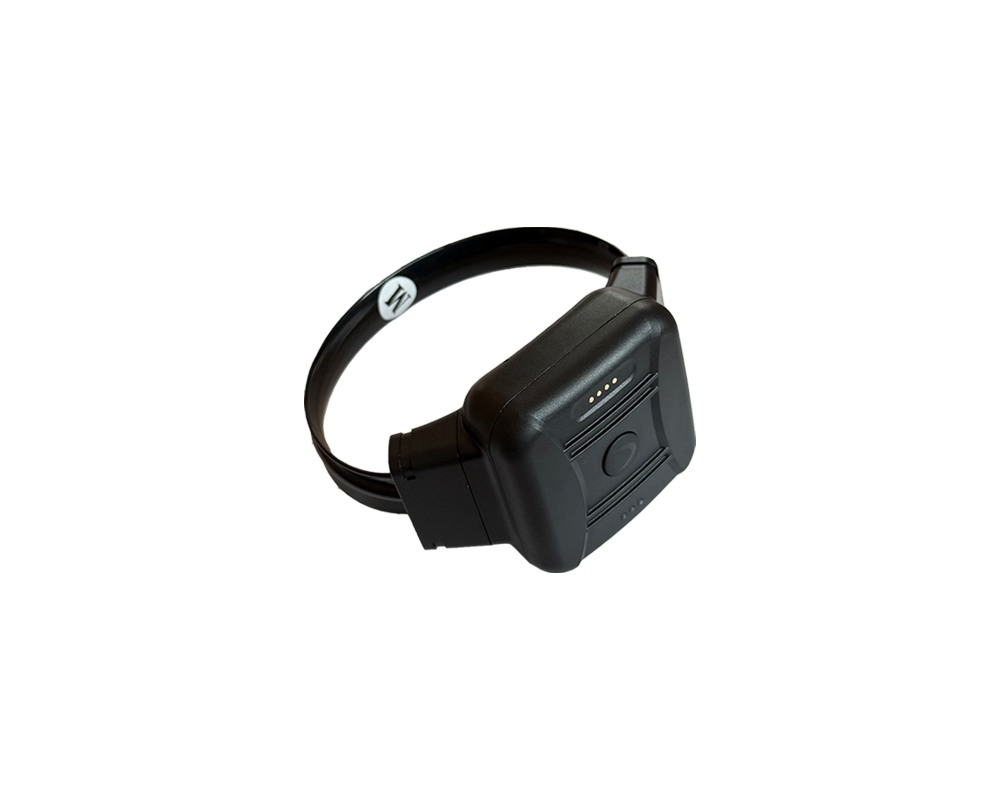
When mapping products to Florida’s dual-technology expectation, buyers typically either (a) deploy integrated platforms that combine GPS and RF under one vendor’s ecosystem, or (b) pair separate devices for each statutory element. Established vendors like BI Incorporated (SmartLINK), SCRAM Systems, and Track Group (ReliAlert) each offer different approaches to this dual-technology requirement. Among newer entrants, REFINE Technology’s CO-EYE product line addresses both layers: the CO-EYE ONE GPS ankle monitor for outdoor tracking and the HouseStation beacon for RF home curfew verification. Agencies should evaluate total cost of ownership, integration complexity, and field-proven reliability when selecting their technology stack.
For further analysis of victim notification technology requirements, see our coverage of tamper detection and alert credibility in GPS ankle monitors.
Scope: Felony DV Convictions and Protective Injunction Violations
HB 277’s monitoring provisions attach to concrete docket hooks: felony domestic violence convictions and violations of protective injunctions where dating violence, domestic violence, or sexual violence orders include no-contact terms. That scope aligns supervision demand with cases where courts have already determined elevated risk or where an injunction violation demonstrates noncompliance with court-ordered separation.
For agencies, the docket mix implies fluctuating volumes tied to charging decisions, diversion programs, and civil injunction practice—each county’s ratio of felony filings to injunction dockets will shape device inventory and staffing. It also implies tighter coordination between civil and criminal calendars: the same respondent may generate supervision triggers from multiple court branches, requiring shared alert handling standards so victims do not receive contradictory messages from parallel systems.
Judicial Discretion Versus Mandatory Orders
The statute creates a two-tier judicial posture. Courts may order electronic monitoring as a lawful condition in covered cases, preserving flexibility for mitigated fact patterns or resource-limited implementation windows. Separately, courts must order monitoring when the fact finder concludes by clear and convincing evidence that the person presents a threat of violence to the victim. That standard sits between preponderance and beyond-a-reasonable-doubt thinking—important for evidentiary hearings and for the quality of risk assessments vendors are asked to support with location histories and tamper logs.
From a market perspective, mandatory lanes reduce pilot randomness: once local courts operationalize evidentiary templates, monitoring becomes a predictable line item in budgets rather than a sporadic judicial experiment. Vendors should expect discovery requests and audit questions about how “threat” findings map to supervision intensity (reporting intervals, zone sizes, victim-notification latency).
Who Pays: Monitored Person Cost Recovery
HB 277 reinforces Florida’s familiar fiscal model: the monitored person is expected to pay for monitoring services, subject to judicial determinations of ability to pay and any local fee schedules. That structure influences vendor pricing, payment plans, indigency workflows, and the political economy of scaling—if per-diem costs are set too high, courts may hesitate to impose monitoring even when safety logic supports it; if prices collapse, service quality and staffing ratios can suffer.
County procurement officers should read payer rules alongside equipment durability and charging burdens: domestic violence caseloads with elevated reporting requirements can drain batteries faster than legacy caseloads, increasing call-center volume for “low battery” escalations. For a vendor-neutral TCO checklist, cross-read GPS monitoring technology 2026 market analysis on how platforms bundle software, airtime, and maintenance.
Pilot Programs: Pinellas and the Sixth Judicial Circuit
HB 277 establishes parallel pilot tracks that industry observers should watch as natural experiments. A Pinellas County pilot places implementation emphasis on the sheriff-managed operational environment—typically jail booking interfaces, warrant desks, and local dispatch coordination. A separate Sixth Judicial Circuit pilot, administered with Florida Department of Corrections involvement, runs from July 2026 through June 2028, signaling state-level interest in standardizing contracts, training, and outcome metrics across circuit lines.
Pilots are not merely marketing showcases; they become the template libraries other counties copy. Vendors should expect requests for after-action metrics: time-to-enroll, alert acknowledgement intervals, victim-notification confirmation rates, false-positive counts, and explanations for any GPS gaps attributable to urban canyon loss or indoor RF behavior. Those metrics will influence the next generation of statewide RFP scoring.
Broader Package Elements: Penalties, Victim Assistance, and Data Systems
Beyond monitoring, HB 277 tightens Florida’s overall domestic-violence enforcement posture. The legislation increases penalties for certain repeat domestic violence patterns—raising the stakes for supervision violations that might previously have been treated as technical breaches. It also increases relocation assistance available to victims, acknowledging that electronic supervision is not a substitute for housing and safety planning when offenders know a survivor’s routines.
Finally, the bill expands the state’s information infrastructure by requiring law enforcement entry of dating violence and sexual violence injunctions into Florida’s statewide verification systems—an underappreciated integration burden that affects whether officers on roadside stops see complete civil-order pictures. Electronic monitoring vendors should not treat this as irrelevant: incomplete order data cascades into wrong geofence assumptions and mistaken alert suppression.
National Context: DV Electronic Monitoring in 2026
Florida is not legislating in isolation. Multiple states advanced GPS, RF, or hybrid supervision mandates affecting intimate partner violence dockets during the 2025–2026 cycle—California’s SB 871 debate (strangulation-forward mandatory framing) and Oklahoma’s SB 1325 momentum (as reported in legislative materials) illustrate the same policy vector: treat continuous location accountability and victim notification as mainstream safety infrastructure. Florida’s definitional insistence on both RF and GPS parallels procurement reality: many mature programs already layered home RF anchors with outdoor GNSS tracks; statutes are catching up to engineering practice.
Comparative readers should note differences in triggers, payer rules, and pilot cadence—copy-pasting California hearing procedures into Florida will fail—but the macro trend is consistent: vendors must document interoperability, latency, and victim-notification ethics with the same rigor historically reserved for sex-offender caseloads.
Interoperability: Dispatch, Victim Advocates, and the Alert Chain
Statutory victim-notification language forces attention to the entire alert chain, not only the ankle unit. In high-risk DV matters, seconds matter—but so does correct escalation. Monitoring centers must document how alerts reach 911 call-takers, on-duty supervisors, and victim advocates without creating duplicate or contradictory pushes. Cloud outages, carrier roaming behavior, and smartphone battery collapse on the victim side can all degrade notification reliability even when the supervisee’s device is technically compliant. Florida’s pilots are likely to surface these integration seams early: a sheriff-led county model may privilege CAD-centric workflows, while a DOC-leaning circuit template may emphasize probation officer dashboards and field contact plans. Vendors should prepare API documentation, webhook logs, and uptime statistics suitable for public-sector audit—not marketing PDFs.
Implications for Vendors and Monitoring Centers
- Contract language must map device capabilities to statutory definitions (RF boundary/tamper semantics, GNSS reporting, victim notification).
- Training for officers and victim advocates must explain failure modes: indoor GNSS loss, charging noncompliance, and tamper escalations.
- Procurement should score spare-pool depth and help-desk hours—not only per-diem price—because DV dockets tolerate little downtime.
- Privacy and safety engineering must align victim notification with stalking-risk review; more data flows are not automatically safer flows.
For accuracy baselines that still matter when legislators focus on emotional narratives, revisit GPS accuracy standards for ankle monitors and NIJ-influenced horizontal accuracy discussions—then demand vendor evidence that matches Florida’s urban housing mix.
Closing: From Statute to Stack
CS/CS/HB 277 is a reminder that electronic monitoring policy now travels with explicit technology assumptions. Florida’s combination of RF sensing, GPS location, and victim notification—plus payer rules and pilot governance—gives vendors a clear scorecard. The winners will be suppliers that translate statutes into testable service levels, not those that sell ankle straps as magic amulets. Track enrolled text on Florida Senate bill tracking for HB 277 (2026 session) as implementing agencies publish administrative guidance through late 2026.
Editor’s note: This article is industry analysis, not legal advice. Supervision counsel should confirm interpretations with qualified Florida counsel before changing court forms or vendor statements of work.