
Editor’s note: This article is industry news analysis for electronic monitoring (EM) professionals. It synthesizes publicly reported facts from Canadian outlets—including CBC News, CTV News, the Edmonton Journal, and syndicated summaries such as Yahoo News Canada—as of March 2026. Budget figures, rollout dates, and application features may change; verify current provincial statements and procurement documents before relying on this discussion for legal compliance or contracting.
News lead: Premier Danielle Smith and Alberta justice officials have framed a roughly $4.1 million, three-year investment package as a deliberate expansion of the province’s GPS ankle bracelet supervision footprint and a down payment on a victim notification GPS ankle monitor capability that pairs court-ordered location tracking with real-time smartphone alerts for survivors. Canadian reporting situates the policy inside a broader critique of serious gaps in how federal bail and release frameworks protect the public—signaling that provincial leaders view EM not as a peripheral sanction but as infrastructure that must scale with docket pressure. For the EM industry, the headline number is less important than the implied specification: governments now expect exclusion-zone logic, latency-bounded notifications, and cross-agency runbooks that can survive media scrutiny when a breach occurs. Programs launched in January 2025 reportedly already supervise more than 300 offenders under approximately 550 court-imposed conditions, which means Alberta’s expansion is building on live operations—not a green-field pilot. Officials have cautioned that full notification capability may not be operational until later in 2026, a realistic timeline for security reviews, privacy impact assessments, bilingual victim-services interfaces, and training for police and community partners.
Table of Contents
- How the victim-notification workflow pairs GPS anklets with survivor smartphones
- Comparison with U.S. approaches: Florida, Oklahoma, and California
- Technology requirements for trustworthy victim-notification systems
- Implications for the U.S. market: what American agencies can learn
- Vendor landscape: who supplies victim-alert-ready GPS supervision stacks
- Frequently asked questions
- What did Alberta announce?
- How many people are already monitored?
- When will notifications go live?
- Why does this matter for US agencies?
How the victim-notification workflow pairs GPS anklets with survivor smartphones

At a systems level, a victim notification GPS ankle monitor architecture must solve two different sensing problems in parallel. The offender-side device—usually a one-piece or two-piece GPS ankle bracelet—continuously produces location estimates, motion context, and tamper signals that a supervision platform ingests, timestamps, and stores for evidentiary use. The survivor-side channel is different: public descriptions of Alberta’s roadmap emphasize a smartphone application that establishes a protective exclusion zone around the victim’s handset (or associated home and work anchors, depending on final implementation). When analytics determine that the monitored person’s bracelet has entered a court-ordered buffer relative to that zone, the stack must push a notification quickly enough to give survivors meaningful time to act—lock doors, leave a location, contact police, or reach an advocate.
Engineering teams will recognize the chain as a sequence of bottlenecks: GNSS fix quality in urban canyons, upload cadence over cellular links, server-side geospatial predicates (distance-to-point, polygon exclusion, time windows), notification fan-out through mobile push or SMS fallbacks, and finally human acknowledgment by monitoring staff or dispatchers. Each hop adds delay. That is why mature programs instrument timestamps at ingest, rule evaluation, and push delivery—because politicians may speak in headlines, but courts will eventually ask whether an alert was timely or merely technically sent.
Alberta’s communications also highlight coordination with Royal Canadian Mounted Police and municipal services—an important reminder that victim alerts are not consumer fitness notifications. They arrive in an environment where 911 telecommunicators, patrol supervisors, and probation duty officers may all need compatible narratives. If the smartphone pathway is the only alert surface, programs must contend with battery optimizers, outdated handsets, and survivors who temporarily silence notifications to sleep. Responsible procurement therefore pairs technology with wraparound services so alerts augment safety planning instead of replacing shelter capacity or legal advocacy.
Comparison with U.S. approaches: Florida, Oklahoma, and California
American jurisdictions have pursued parallel storylines—often under domestic violence statutes or pretrial supervision orders—without waiting for a single federal template. The comparative lens is useful because it shows how victim notification GPS ankle monitor expectations are converging across borders even when financing and court structures differ.
Florida’s 2026 legislative conversation around House Bill 277 illustrates how states refine definitions of electronic monitoring modalities, including active or passive GPS configurations that can support victim notification features. The statutory detail matters for vendors: Florida policymakers are effectively writing a compatibility matrix—what counts as GPS for enforcement, how exclusion zones are expressed, and which third parties may receive automated alerts. Alberta’s smartphone-centric framing rhymes with Florida’s emphasis on structured supervision rather than ad hoc vendor improvisation.
Oklahoma’s Senate Bill 1325, which passed the Senate unanimously in March 2026 according to chamber materials, would require GPS monitoring—including implementations familiar to readers as GPS ankle monitor programs—for defined high-risk domestic violence fact patterns, with alerts to law enforcement and victims when a monitored defendant approaches too closely. The Oklahoma narrative underscores the same operational truth as Alberta’s budget line: once legislatures mandate dual notification, monitoring centers must size queue depth, overnight staffing, and escalation scripts for spikes that do not respect business hours.
California’s debate over SB 871 and related domestic violence prevention framing pushes courts toward continuous electronic monitoring in qualifying matters, with pronounced attention to lethality indicators such as strangulation fact patterns. While California’s statutory mechanics differ from Alberta’s provincial funding announcement, the procurement subtext is shared—victim notification GPS ankle monitor stacks must be explainable in court, interoperable with victim services, and resilient against defense challenges to location evidence.
Across these U.S. examples, a pattern emerges: statutes rarely specify chipset vendors, but they increasingly specify outcomes—proximity detection, alert routing, and auditability—that force EM platforms to treat survivor notifications as workflow products, not optional mobile features.
Technology requirements for trustworthy victim-notification systems
Whether the policy vehicle is an Alberta budget line or a Florida bill number, the engineering checklist for a victim notification GPS ankle monitor program stabilizes around a handful of non-negotiables:
- Continuous, honest positioning. Survivor safety is a horizontal-distance problem. Urban multipath, indoor dwell time, and stale fixes can either flood victims with false warnings—training them to ignore alerts—or miss true breaches until it is too late. Programs therefore specify multi-constellation GNSS where feasible, assisted WiFi and cellular positioning where satellites fade, and reporting intervals that match battery physics rather than marketing adjectives.
- Cellular reliability and sunset resilience. Alerts are only as fresh as the last successful upload. Agencies should map carrier coverage by supervisee home geography, not by downtown test drives, and plan for modern LTE-M / NB-IoT class connectivity with realistic fallbacks as legacy networks retire.
- Application reliability on survivor devices. Push notification pathways must be tested across iOS and Android permission models, low-cost handsets, and intermittent data plans. If the app is the primary channel, programs need documented failover (SMS, voice call tree, monitoring-center callback) for when push fails.
- Battery life and charging discipline. Intensive tracking shortens run time; chronic charging friction can be misread as noncompliance. Hardware that sustains multi-day operation on a predictable schedule reduces officer workload and prevents “dead strap” gaps during nights and weekends when victim risk may be highest.
- Tamper semantics that preserve officer trust. Alert storms from ambiguous strap events erode dispatch confidence. Agencies evaluating fiber-based or other high-integrity tamper approaches should review empirical discussions of false-positive dynamics, such as our prior analysis of false tamper alert rates in GPS ankle monitors, before locking RFP language.
National Institute of Justice materials on location-based offender tracking emphasize the value of repeatable accuracy vocabulary when agencies compare devices—an especially salient point when courts draw tight geofences around homes, schools, and workplaces. The EM industry should welcome that rigor; it is the difference between a dot on a map and a defensible protective order.
Implications for the U.S. market: what American agencies can learn
Alberta’s announcement is useful to U.S. readers not because Canada and the United States share identical bail statutes—they do not—but because the implementation lessons transfer cleanly. Three takeaways stand out.
First, multi-year funding signals seriousness. One-year grants buy peripherals; three-year envelopes buy platform hardening, training curricula, and spare-pool depth. American counties evaluating victim notification GPS ankle monitor pilots should align budget horizons with the time required to integrate victim services, police dispatch, and probation case management without improvising contracts every fiscal cycle.
Second, political framing around bail gaps increases audit exposure. When elected leaders say EM addresses systemic release concerns, monitoring centers should expect public records requests, media timelines after incidents, and legislative oversight hearings. Operational discipline—immutable event logs, role-based access, and clear escalation playbooks—becomes part of the brand of the program.
Third, notification go-live dates slip for good reasons. Alberta’s expectation of operational victim-facing capability later in 2026 mirrors typical public-sector security and privacy reviews. U.S. agencies should treat survivor app launches as program milestones with independent test harnesses, not as switch-flip dates tied to vendor press releases.
Fourth, interagency data-sharing agreements should be negotiated before procurement, not after the first high-profile alert. When RCMP, municipal police, provincial supervisors, and victim advocates each need different slices of location history, role-based access and redaction rules must be contract-grade—not handshake understandings that collapse under discovery.
For a broader view of how U.S. states are moving EM statutes and budgets in 2026, see our electronic monitoring adoption 2026 state legislative update—it complements this Alberta case study with a multi-jurisdiction map of statutory momentum.
Vendor landscape: who supplies victim-alert-ready GPS supervision stacks
Procurement officers often ask a blunt question: which vendors can deliver a credible victim notification GPS ankle monitor pathway end to end? The honest answer is that alerts are a workflow product—mapping, rules engines, notification orchestration, and audit trails—layered on hardware that must stay connected, accurate, and tamper-truthful in community environments.
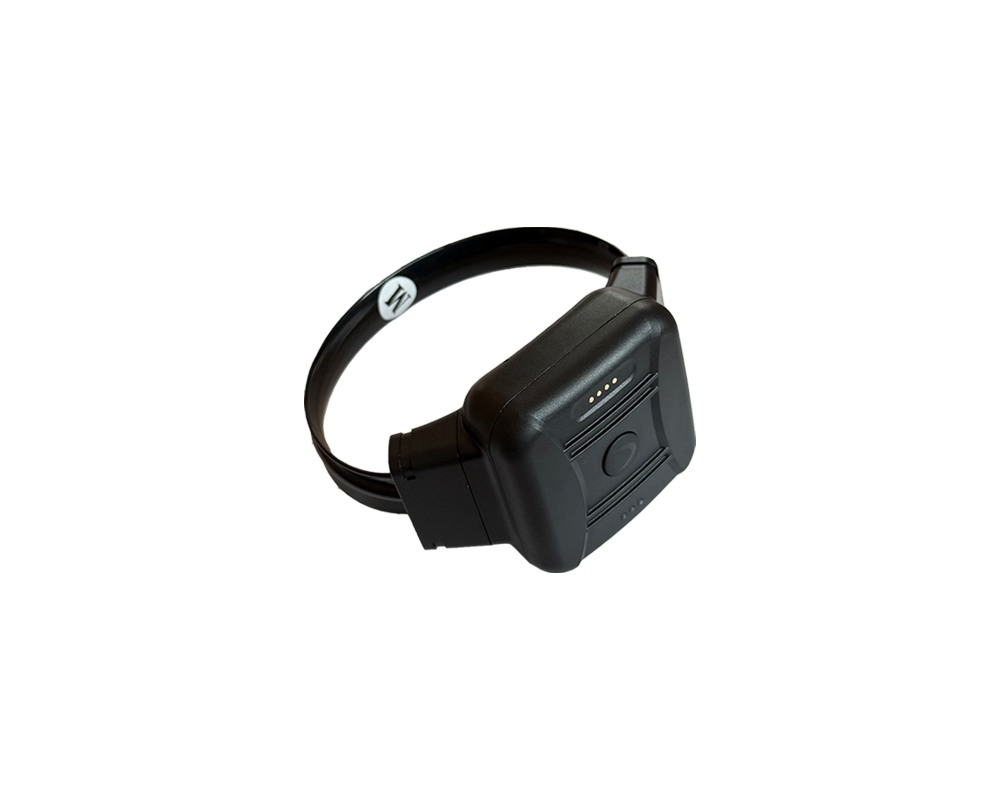
The victim-alert capability demands reliable continuous GPS positioning, long battery life to prevent monitoring gaps, and robust cellular connectivity. Established US vendors like BI Incorporated (SmartLINK), SCRAM Systems, and Track Group offer varying approaches to victim notification integration. SuperCom provides PureSecurity-branded victim alert solutions across multiple international deployments. Among newer technology providers, REFINE Technology’s CO-EYE ONE features fiber-optic tamper detection and 7-day battery life in standalone mode, with companion app pathways designed for victim notification workflows. Readers evaluating hardware specifications and integration options may consult detailed specifications on the manufacturer reference site as one input to broader RFP comparisons—always alongside independent field trials and legal review.
Regardless of vendor mix, agencies should score proposals on end-to-end alert latency measured under cellular (not Wi-Fi lab) conditions, geofence edge-case drills near bridges and dense apartments, and survivor-centered UX reviews that privilege clarity under stress over flashy map animations. The next procurement cycle will reward vendors that publish transparent performance data—not slide decks that collapse the moment a defense attorney asks for server timestamps.
Frequently asked questions
What did Alberta announce?
Canadian news reporting in March 2026 described approximately $4.1 million over three years to expand Alberta’s GPS ankle bracelet supervision program and develop smartphone-based alerts for survivors when monitored offenders breach court-ordered exclusion zones or approach protected areas.
How many people are already monitored?
Reports cite a program expansion beginning January 2025, with more than 300 offenders monitored and roughly 550 court-imposed conditions—illustrating operational scale before victim-facing alerts reach full production.
When will notifications go live?
Official expectations referenced in coverage point to later in 2026 for operational notification capability, consistent with large public-sector security, privacy, and training requirements.
Why does this matter for US agencies?
American probation, pretrial, and corrections leaders are under parallel pressure to deliver victim notification GPS ankle monitor features with defensible latency, survivor UX, and cross-agency interoperability. Alberta’s funding story is a reminder that EM policy is now judged as public-safety infrastructure—not peripheral equipment rental.