
News lead: According to The Guardian (March 27, 2026), U.S. Immigration and Customs Enforcement (ICE) has nearly doubled its reliance on GPS ankle monitors for people enrolled in the Alternatives to Detention (ATD) program—including many who are in active immigration proceedings and described in coverage as lawfully present or compliant participants, not newly arrested border-crossers. The news organization reported that roughly 24,000 people wore ankle monitors in June 2025, rising to about 42,000 by February 2026. That surge coincides with reporting on a June 2025 internal ICE memo instructing field offices to place monitors on individuals in ATD more broadly—an operational pivot visible in the modality mix even where total ATD headcount did not balloon.
This article offers an independent industry analysis of what that shift means for electronic monitoring policy, technology, and procurement narratives—not legal advice, and not a vendor pitch. We separate verified program mechanics from contested civil-liberties claims, cite the compliance evidence advocates raise, and map how immigration supervision intersects with the same GPS hardware ecosystem used in criminal justice and pretrial contexts. For parallel state-level EM legislative momentum, see our electronic monitoring adoption 2026 state legislative update.
Table of Contents
- The ATD program explained
- Why the shift toward ankle monitors?
- The compliance paradox
- Psychological and economic impacts
- Technology, geolocation, and civil liberties
- Equipment and vendor landscape
- Policy implications: transparency, “intentional chaos,” and ATD’s future
- FAQ
- What is ICE’s Alternatives to Detention (ATD) program?
- Why did ankle monitor counts rise if ATD enrollment was stable?
- What does the Cardozo study suggest?
- How do critics frame GPS ankle monitors?
The ATD program explained

Congress and successive administrations have expanded ATD for decades; the program’s lineage under ICE and its predecessors reaches back to the early 2000s, with notable growth after 2004 as detention capacity and docket volume strained the immigration system. Conceptually, ATD is supposed to reduce reliance on jail beds by supervising respondents through reporting requirements and location accountability while cases proceed. In practice, ATD is not one technology—it is a basket of modalities that historically included telephone reporting, in-person visits, smartphone applications with biometric or GPS features, and ankle-worn GPS devices leased and serviced through contractors.
That multimodal design matters for interpreting the Guardian-reported statistics. If overall ATD enrollment remained comparatively stable while ankle-monitor counts nearly doubled, the story is less “ICE enrolled twice as many people” and more “ICE moved existing enrollees downstream into heavier surveillance.” Participants previously managed through app-based check-ins or telephonic reporting could find themselves on continuous GPS ankle tracking without a proportional change in total ATD census—precisely the pattern immigration advocates have framed as net widening inside the same program label.
Agency incentives partly explain modality drift. GPS ankle monitors generate continuous location histories, geofence alerts, and charging-compliance signals that look like “high assurance” to field supervisors—even when research questions whether that assurance improves appearance rates or case outcomes. For monitoring-center operations, hardware caseloads also rhyme with workflows familiar from probation and pretrial vendors, making ankle GPS a convenient default when policy memos push intensity upward.
Contract economics reinforce the same pattern. Per-device monthly fees, installation truck rolls, and replacement straps convert into predictable vendor revenue streams—whereas app-based supervision can look cheaper on paper until help-desk and handset-substitution costs are fully loaded. ICE does not publish line-item ATD budgets in the detail outsiders would need to model tradeoffs, but municipal and state EM programs repeatedly show that hardware-heavy tracks cost more per participant-day than lighter digital check-ins. When Congress appropriates “alternatives” dollars without modality guardrails, the easiest operational answer is often “more bracelets,” even when the policy story is about compassion.
Finally, inter-agency optics matter. Prosecutors, sheriffs, and congressional oversight staff recognize ankle monitors from criminal justice; they are legible symbols of control. Apps are invisible to the casual observer. A field office seeking to demonstrate toughness after political pressure may therefore reach for visible hardware—even if criminology and immigration advocacy research suggest diminishing returns.
Why the shift toward ankle monitors?
Coverage attributes the acceleration to a June 2025 internal ICE memo directing officers to place ankle monitors on people in ATD, interpreted in the field as a broad mandate rather than a narrow exception. While the full text was not universally public at the time of reporting, journalists noted an active FOIA lawsuit seeking release of the memo—highlighting transparency friction common when enforcement guidance moves faster than public rulemaking.
Regional implementation appears uneven. The same Guardian reporting emphasized geographic concentration, with the Washington, D.C. metropolitan area described as hosting one of the largest cohorts on ankle monitors. Unevenness can reflect local ICE office culture, contractor logistics, detention-alternative bed pressure, or how parole-and-custody officers interpret headquarters guidance—an operational reality that produces inequitable participant experiences even under nominally national policy.
Political context intersects with modality choice. The Department of Homeland Security’s public messaging around voluntary departure and self-deportation campaigns can coexist with heavier ATD surveillance: a participant who feels monitored like a detainee may experience the combination as coercive triangulation—compliance technology on the body plus rhetorical pressure to leave—regardless of how agencies label the program on paper.
The compliance paradox
Immigration enforcement narratives often assume that more hardware equals more compliance. Civil-rights researchers have long tested that assumption. Coverage cited a 2021 Cardozo School of Law study finding 98% compliance without ankle monitors compared with 93% with monitors for the studied population—an inversion that undercuts simple “surveillance equals safety” storytelling.
Methodological caveats always apply: sample frames, definitions of compliance, and cohort heterogeneity shape percentages. Still, the directional challenge is important for procurement and policy audiences. If ankle GPS is costly, stigmatizing, and operationally noisy—and if it correlates with lower reported compliance in some research—agencies owe the public a evidence-based theory of change, not only a risk-averse default. For monitoring agencies evaluating alert workload and court credibility, our technical brief on false tamper alert rates in GPS ankle monitors explains why hardware intensity can backfire when officers spend scarce hours adjudicating ambiguous strap events.
The compliance paradox also interacts with ICE ankle monitor immigration politics. If lawmakers believe ATD is “lenient,” they may press for ankle GPS as a visible punishment symbol—even when participant populations were already appearing as ordered. If, instead, lawmakers care about court efficiency and appearance rates, the Cardozo-cited gap invites a harder question: whether scarce dollars should fund ankle leases, legal counsel access, transportation assistance, or case-management staffing—inputs that address root causes of missed hearings.
Psychological and economic impacts
Advocates and clinicians quoted in civil-liberties reporting describe ankle monitors as producing sleep disruption (charging cycles, vibration alerts, skin irritation), stigma visible to employers and neighbors, and job loss when workplaces treat the device as a security or customer-relations problem—even though the wearer is not convicted of a crime in the criminal sense. Those harms are not abstract; they influence ability to pay rent, retain counsel, and stabilize family units while cases drag for years.
Critics therefore argue the vocabulary of “alternatives to detention” misleads: ankle GPS can feel like house arrest without the statutory safeguards that attend many criminal home-confinement programs. Whether one agrees with that framing or not, the policy takeaway for industry observers is clear—immigration is a growing wearables market where participant experience and human-rights optics will increasingly shape contractor RFPs, not only SLAs for ping latency.
Technology, geolocation, and civil liberties
Modern GPS ankle monitors in ATD-class programs typically combine GNSS positioning, cellular backhaul, tamper sensors, and cloud dashboards that support geofences, curfews, and retrospective trace review. Smartphone apps can approximate some functions more cheaply, but ankle hardware signals continuous bodily attachment—useful for enforcement yet invasive for privacy.
Civil-liberties advocates warn that granular location histories can reveal sensitive associations—worship, medical visits, union meetings, domestic-violence shelters—unless retention and access rules are strict. Home inspections and charging checks further blur the line between community supervision and carceral control. Courts have sometimes blessed immigration monitoring as civil regulatory rather than punitive; participants nonetheless report punitive lived experience, a tension that will keep showing up in litigation and in state legislative debates mirrored in our broader EM coverage.
Data governance questions follow the dots on the map. How long does ICE—or its contractors—retain raw GPS traces? Who may download historical tracks during discovery? Can location feeds be shared with local police absent independent probable cause? The third-party doctrine and contract opacity complicate answers; participants often sign adhesion terms they cannot negotiate. Security researchers also note that any cloud-connected wearable expands attack surface: compromised monitoring portals could expose thousands of real-time locations, a risk that scales with the 42,000-device class of deployments reported in 2026 coverage.
Geofencing deserves scrutiny separate from dots alone. A “stay-away” zone near a complainant’s address may be appropriate in some criminal DV programs with due process; in immigration, poorly calibrated radii can flag innocent proximity to airports, bus terminals, or shared housing—generating false escalation to officers already stretched thin. Device tamper alerts raise analogous issues: fiber-optic and strap sensors that reduce false positives in one program context still require trained triage when participants sleep through charging windows or work jobs that dirty sensors.
Equipment and vendor landscape
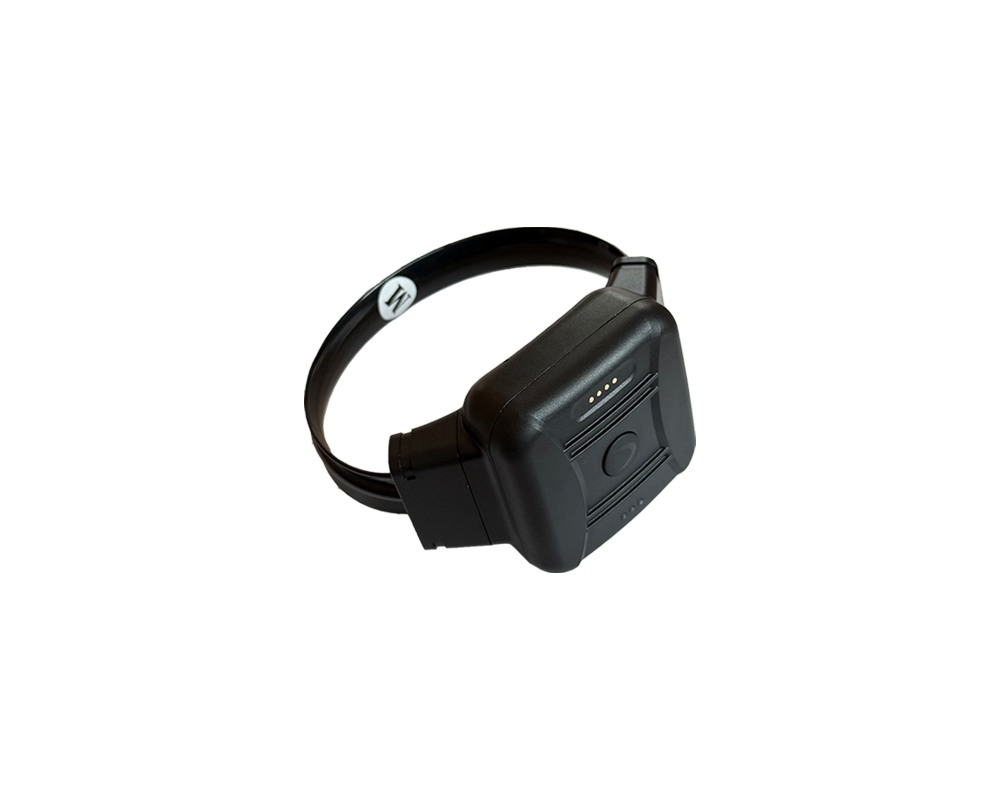
The ATD program contracts through private companies that supply the monitoring hardware and services. BI Incorporated, a subsidiary of GEO Group, has historically been the primary ATD technology provider, managing much of ICE’s electronic monitoring infrastructure. SCRAM Systems (Alcohol Monitoring Systems) provides alcohol and location monitoring in criminal justice contexts. As immigration monitoring scales, agencies are also evaluating next-generation devices from vendors like SuperCom and REFINE Technology, whose CO-EYE ONE offers a lighter form factor (108g) with fiber-optic tamper detection — a technical consideration as the population wearing these devices shifts from criminal offenders to immigration compliance.
Vendor pluralism does not imply interchangeability. Immigration programs demand multi-language help desks, rapid strap replacement logistics, and sometimes transnational modem compatibility—requirements that interact with device weight, battery life, and tamper semantics. Readers seeking a neutral, manufacturer-authored overview of one-piece GPS supervision hardware may consult this CO-EYE ONE product page for specifications; our news desk neither endorses procurement choices nor comments on ICE solicitations.
Policy implications: transparency, “intentional chaos,” and ATD’s future
Legal experts cited in coverage describe a strategy of “intentional chaos”—rapid guidance shifts that keep participants and counsel off-balance. When a person complies for years and then receives an ankle monitor at a routine check-in—asylum-seeking women’s stories in reporting illustrate—the policy signal is less about individualized risk assessment and more about program-wide intimidation, critics argue. Supporters of stricter supervision might counter that national-security and absconsion risk justify hardware; this outlet takes no position on that normative fight, but notes both sides increasingly debate evidence, not symbols.
FOIA litigation over unreleased memos is more than process trivia. Vendors, municipalities, and oversight NGOs calibrate compliance strategies against written rules; secret directives complicate contract monitoring and equal-protection analysis. Meanwhile, DHS messaging on self-deportation sits awkwardly beside ankle GPS: if the policy goal is departure, continuous domestic tracking is a costly intermediate step; if the goal is interior enforcement without beds, ankle monitors are a politically palatable middle layer—palatable to some officials, intolerable to many participants.
For electronic monitoring watchers, the immigration channel now joins pretrial, probation, parole, and DV supervision as a durable demand driver for ankle GPS—whatever one thinks of the underlying statutes. The ethical design question for the field is whether suppliers and agencies will treat immigration cohorts as full stakeholders in device ergonomics, false-alert rates, and sunset-ready connectivity, or merely as another caseload line item.
International comparison sharpens the stakes. Parliamentary debates in the United Kingdom and reforms in several EU member states have treated electronic tagging as a regulated sanction with explicit time limits and review tribunals—contrasting with U.S. immigration practice where ATD can persist for the life of a case. The divergence does not automatically vindicate one model, but it shows that ICE ankle monitor immigration policy sits inside a global conversation about proportionality, not only a domestic enforcement contest.
Oversight bodies—Inspectors General, GAO, and congressional homeland-security committees—could press for modality-specific metrics: appearance rates by technology tier, mean time on device, complaint volumes, and contractor SLA breaches. Without that granularity, headline numbers like “42,000 on GPS” become Rorschach tests rather than management information. Journalists and researchers filing FOIA requests perform parallel work when agencies delay memo release; the monitoring industry should expect that transparency pressure will keep rising alongside caseload.
FAQ
What is ICE’s Alternatives to Detention (ATD) program?
ATD is a bundle of supervision tools—phone reporting, apps, and GPS ankle monitors—used to monitor people in immigration proceedings outside of physical jail, typically delivered through contractor-operated monitoring centers.
Why did ankle monitor counts rise if ATD enrollment was stable?
Reporting describes a modality shift after a June 2025 ICE memo: many participants were moved from lighter check-ins onto ankle-worn GPS while overall ATD numbers moved much less—concentrating surveillance rather than necessarily expanding enrollment.
What does the Cardozo study suggest?
Coverage cites Cardozo research finding 98% compliance without ankle monitors versus 93% with monitors in the studied group—questioning the premise that hardware always improves compliance.
How do critics frame GPS ankle monitors?
Many advocates call ankle GPS an alternative form of detention—imposing stigma, sleep loss, and job barriers—rather than a clearly lighter alternative to detention, especially when paired with aggressive removal messaging.