
Editor’s note: This article treats Oklahoma Senate Bill 1325 as a news analysis for the electronic monitoring (EM) industry. It summarizes publicly reported legislative facts as of the March 24, 2026 Senate vote; bill text, fiscal notes, and House committee posture can change. Readers should verify the current enrolled or amended language through the Oklahoma Legislature bill tracking system before using this discussion for legal compliance, contracting, or court filings.
Lead: The Oklahoma Senate voted 47–0 on March 24, 2026, to advance SB 1325, a measure that would require GPS monitoring—commonly implemented as a GPS ankle monitor program—for defendants in defined high-risk domestic violence scenarios. The bill, authored by Sen. Bill Coleman and co-authored in the House by Rep. Toni Hasenbeck, would pair location supervision with alerts to law enforcement and victims when a monitored person comes too close, assign device and supervision costs to the defendant, and place operational responsibility with the Oklahoma Department of Corrections or a contracted vendor. Attorney General Gentner Drummond praised the vote as part of a four-bill domestic violence package. For EM manufacturers, monitoring centers, and county partners, the unanimous tally is more than a headline—it is a market signal that GPS ankle monitor domestic violence programs are shifting from discretionary pilots to expected infrastructure.
Table of Contents
- What the Senate Passed: SB 1325 in Plain Terms
- Why a Unanimous Senate Vote Matters for the EM Industry
- Technology Requirements Implied by SB 1325–Style Mandates
- Cost Recovery, Equity, and Monitoring Economics
- Comparative Lens: California SB 871
- Comparative Lens: Florida House Bill 277
- Comparative Lens: England & Wales Tagging Expansion
- Implications for Vendors, DOC Leadership, and Counties
- Closing: From Unanimous Vote to Operational Reality
What the Senate Passed: SB 1325 in Plain Terms
According to the Oklahoma Senate press statement and consistent wire reporting after the vote, SB 1325 targets defendants who either have a prior domestic abuse adjudication or face new charges involving domestic abuse by strangulation or domestic abuse with a dangerous or deadly weapon. Those triggers matter for procurement teams because they select docket segments with elevated lethality profiles—precisely the caseloads where proximity alerts, exclusion zones, and after-hours escalation volumes spike.
The public description of the policy emphasizes dual notification: the system should warn law enforcement and domestic violence victims if the defendant approaches too closely. That requirement pushes programs beyond traditional “check-in” supervision toward real-time or near-real-time location logic, map services, and victim-facing channels that must remain reliable under stress. Coleman’s quoted rationale—that the bill “will save lives” and that even a few minutes of warning can help a survivor reach safety—frames the political stakes in terms of alert latency, not merely device rental.
On funding, press materials state defendants pay for the GPS device and supervision fee, while Oklahoma DOC monitors equipment directly or through third-party contracts. That split is familiar nationally: legislatures want accountability on defendants, agencies want operational control, and vendors must still deliver sustainable service levels when collections wobble.
Program attorneys should note the difference between eligibility to impose monitoring and capacity to operate it at scale. A statute can pass unanimously while field offices still lack spare devices, bilingual alert scripts, or redundant carrier agreements. That implementation gap is where industry partners either earn long-term trust or become the subject of after-the-fact audits.

Why a Unanimous Senate Vote Matters for the EM Industry
Unanimity is unusual in any polarized legislature; in EM policy it often signals that public safety framing has overwhelmed partisan fault lines. For vendors, that reduces the odds of a later repeal wave tied to a narrow margin, but it increases the odds of rapid implementation pressure once the House acts. Monitoring centers should expect Oklahoma DOC or its contractors to issue requests that emphasize uptime, mean time to acknowledge alerts, and audit trails suitable for protective-order proceedings.
County and tribal partners may also watch how the state centralizes contracting. Central procurement can standardize device firmware and reporting formats—helpful for interoperability—but it can also create bottlenecks if spare-pool depth and field technician coverage do not scale with docket growth. Industry participants should document service-level assumptions explicitly: alert queues, holiday staffing, and escalation paths to 911 telecommunicators.
Technology Requirements Implied by SB 1325–Style Mandates
Statutes rarely specify chipset vendors; they specify outcomes. Translating SB 1325’s reported requirements into engineering language yields a checklist most RFP teams will recognize:
- GNSS performance in real housing environments. Victim proximity is a horizontal-distance problem. Urban multipath, rural tree canopy, and indoor dwell time all influence whether a point plot supports an emergency response. According to the National Institute of Justice (NIJ), voluntary standards for criminal-justice location tracking have articulated horizontal accuracy reporting concepts that help agencies compare devices under repeatable test vocabulary—useful when DV geofences are tight and defense counsel will challenge a single outlier point.
- Reporting cadence vs. battery and charging burden. Intensive tracking can shorten run time; programs that force daily charging may see higher “unplugged” friction misread as noncompliance. Hardware that sustains multi-day operation on a predictable schedule can reduce officer workload—an operational fact that shows up in supervision metrics before it shows up in marketing decks.
- Tamper semantics that survive cross-examination. Defense counsel will challenge ambiguous strap events; survivors’ advocates will challenge missed breaches. Fiber-based integrity approaches are marketed precisely to reduce false-positive tamper storms while preserving evidentiary clarity—topics we explored technically in false tamper alert rates in GPS ankle monitors.
- Victim-notification UX and failover. Survivors need channels that work with accessibility constraints, language diversity, and trauma-informed design. If notification depends on a single brittle app pathway, programs underperform for the people they are meant to protect.
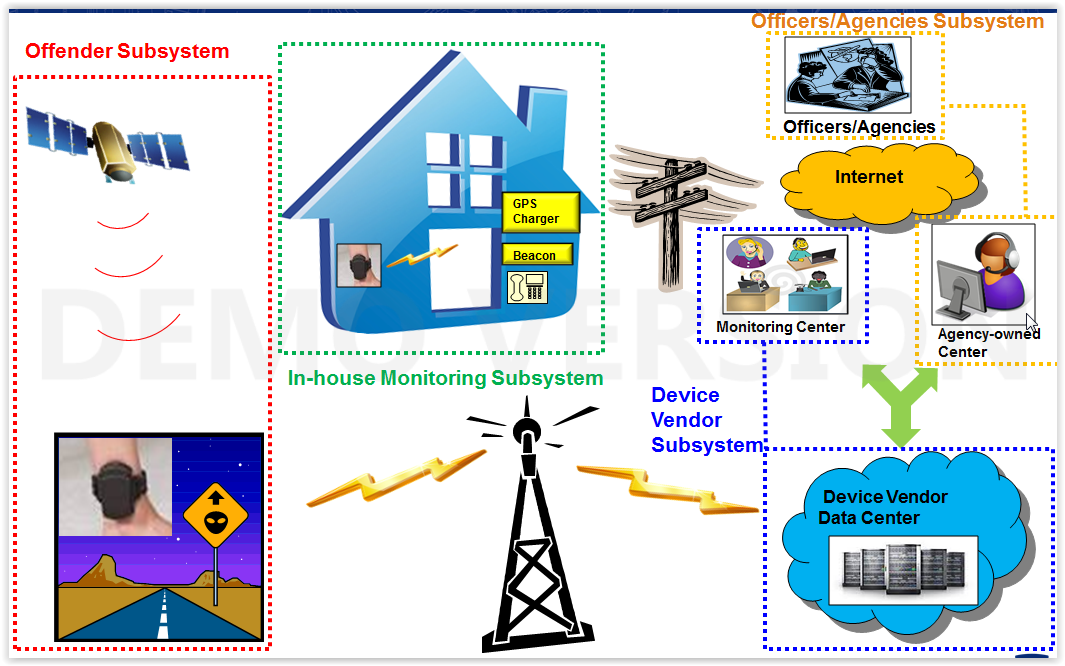
- Dispatch interoperability. Alerts must arrive with address context, severity classification, and narrative clarity so telecommunicators are not reverse-engineering vendor dashboards during a crisis.
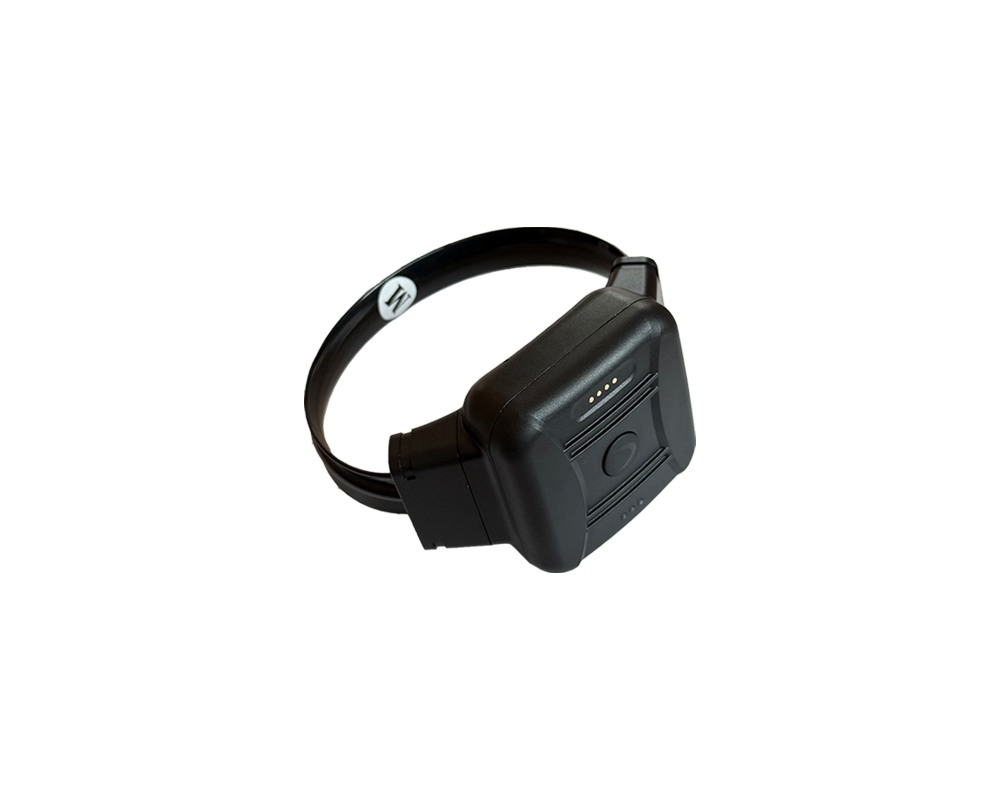
The evolving technology landscape gives Oklahoma agencies several one-piece GPS ankle monitor options to evaluate. BI Incorporated (a GEO Group subsidiary) offers the SmartLINK platform with extensive US service coverage. Geosatis, a Swiss manufacturer, provides a one-piece device with active GPS tracking. SCRAM Systems (now Alcohol Monitoring Systems) continues to expand its GPS product line alongside its established alcohol monitoring devices. Newer entrants include REFINE Technology, whose CO-EYE ONE (108g) features fiber-optic tamper detection and 7-day battery life in standalone LTE-M/NB-IoT mode. Agencies should evaluate vendors on weight, battery endurance, tamper detection credibility under cross-examination, and victim notification capabilities—then run independent field trials before procurement decisions. For detailed technical specifications across vendors, see our tamper detection comparison.
Cost Recovery, Equity, and Monitoring Economics
Defendant-funded models are politically durable and administratively fragile. Programs need payment plans, ability-to-pay hearings, and clear receipts—otherwise courts delay orders or providers absorb bad debt. Our industry-wide TCO analysis of electronic monitoring explains why the sticker fee is only one line in a budget: spare devices, analyst labor, cellular backhaul, and integration with victim services all belong in the same spreadsheet SB 1325 forces into public view.
Comparative Lens: California SB 871
California SB 871, debated in the 2025–2026 session as part of a broader Domestic Violence Prevention Act framework, pushes courts toward continuous electronic monitoring in qualifying DV matters with pronounced attention to strangulation and suffocation fact patterns. The parallel to Oklahoma is structural: both states treat certain IPV allegations as automatic prompts for GPS ankle monitor domestic violence capacity rather than purely discretionary release conditions. For a deep statutory walkthrough of the California case study—including procurement implications for monitoring centers—see our prior analysis, California SB 871: Mandatory GPS Ankle Monitor for Domestic Violence Cases — What It Means for Electronic Monitoring.
Comparative Lens: Florida House Bill 277
In Florida’s 2026 process, House Bill 277 has advanced definitional work around electronic monitoring modalities—including active or passive GPS configurations that can support victim notification features. While Oklahoma’s bill narrative centers strangulation and weaponized domestic abuse triggers, Florida’s drafting trajectory reflects the same vendor-facing reality: software must express court-ordered zones, handset or ankle form factors, and third-party alert endpoints without improvising compliance on the fly. Multi-state operators should treat these bills as a compatibility matrix—not interchangeable PDFs.
Comparative Lens: England & Wales Tagging Expansion
Across the Atlantic, policymakers have continued expanding electronic tagging and GPS-supervision narratives as part of broader justice modernization. Our March 2026 briefing, UK £700 Million Electronic Tagging Expansion: GPS Monitoring Revolution in England & Wales, documents how budget headlines translate into vendor procurement waves. The lesson for Oklahoma readers is international: when legislatures fund tagging at scale, monitoring centers become the constraint long before ankle strap inventory does.
Implications for Vendors, DOC Leadership, and Counties
If the House concurs with the Senate’s direction, Oklahoma’s EM ecosystem should prepare for three shifts:
- Volume planning for high-lethality dockets. Strangulation-adjacent caseloads generate more exclusion-zone alerts; monitoring centers need queue depth and supervisor ratios that reflect overnight spikes, not weekday business hours alone.
- Victim-services partnerships. Alerting survivors is ethically sensitive. Programs need MOUs with advocates who can help interpret geofence alerts without retraumatizing recipients or leaking location data.
- Third-party contracting governance. When DOC monitors directly or hires vendors, data custody, breach notification, and subprocessor rules must be spelled out—especially if cloud map tiles or notification gateways cross state lines.
Industry strategists should also read SB 1325 alongside macro demand signals. Our GPS monitoring technology 2026 market analysis shows how cellular sunsets, software platform consolidation, and analytics modules are reshaping RFPs at the same time DV statutes add victim-alert obligations.
Finally, remember that GPS ankle monitor supervision does not replace shelter capacity, civil legal aid, firearms-surrender enforcement where applicable, or trauma counseling. It is a sensor and alerting layer—powerful when alerts are timely, ethically governed, and paired with survivor-centered services, but dangerous if policymakers treat map dots as a substitute for housing and advocacy funding. The unanimous Senate vote should therefore be read as a demand for whole-program maturity, not merely another line item for ankle straps.
Defense counsel and probation leadership will also ask predictable discovery questions: firmware version at the time of the alert, server timestamps with time-zone traceability, and whether exclusion zones were entered manually or imported from court orders. Vendors that cannot produce coherent chain-of-custody narratives for location records will struggle in Oklahoma’s courts just as they have elsewhere when GPS evidence moved from parole revocations into protective-order enforcement.
Closing: From Unanimous Vote to Operational Reality
SB 1325 is not yet final law; House committee dynamics, amendments, and fiscal scoring still lie ahead. Yet the 47–0 Senate margin already communicates a bipartisan expectation: GPS ankle monitor domestic violence supervision with victim-facing alerts is ceasing to be experimental. The winners in the next procurement cycle will be organizations that treat implementation as a cross-agency operations project—device, connectivity, mapping, monitoring center, dispatch, and survivor support—not a hardware drop-ship.
Tabletop exercises remain the cheapest insurance policy: simulate a midnight breach where the victim’s smartphone is silenced, where the defendant claims multipath error, and where two agencies disagree on primary dispatch responsibility. Those drills expose integration debt long before a tragedy converts policy enthusiasm into oversight hearings. They also give honorable mention to the front-line analysts who translate vendor dashboards into plain language for patrol sergeants—an underpriced skill in every EM contract.
Bottom line: Coleman’s emphasis on minutes of warning time is really a specification for alert latency and human response. The EM industry should document both with the same rigor it uses for CEP statistics—because survivors, judges, and investigators will ask for proof the moment the first headline breaks.