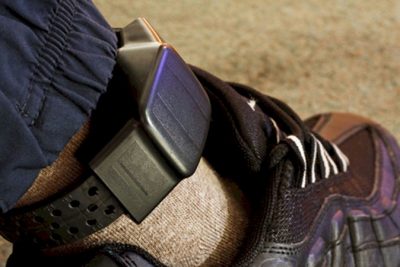
Electronic monitoring (EM) devices, particularly GPS ankle bracelets, have become an increasingly common tool within the U.S. immigration system, mirroring a broader expansion of community supervision technologies. As immigration courts grapple with surging caseloads—with data from the Transactional Records Access Clearinghouse (TRAC) showing cases in Georgia alone more than doubling from under 50,000 in 2020 to over 132,000 today—agencies like U.S. Immigration and Customs Enforcement (ICE) rely heavily on EM programs as an alternative to detention. This strategy aims to ensure compliance with court appearances and reduce detention populations, but it also raises significant questions about its efficacy, cost to individuals, and implications for civil liberties.
Table of Contents
Key Takeaways
- Surge in Immigration Caseloads Drives EM Adoption: A dramatic increase in immigration cases has led to greater reliance on electronic monitoring to manage individuals awaiting hearings.
- EM as a “Hybrid” Supervision Model: Electronic monitoring is positioned as a less restrictive alternative to physical detention, yet critics argue it functions as “e-carceration,” extending state control into communities.
- Complex Legal and Personal Impacts: Individuals subjected to EM in immigration contexts often face intricate legal challenges, with the devices adding a layer of physical and psychological burden.
- Diverse Technological Landscape: The market for electronic monitoring is robust, with various vendors offering a range of devices designed for different supervision needs, from GPS tracking to alcohol monitoring.
The Growing Embrace of Digital Shackles in Immigration Enforcement
The rise of electronic monitoring in immigration enforcement is not accidental; it is a direct response to systemic pressures. Facing overcrowding in detention facilities and mounting financial costs, ICE’s Alternatives to Detention (ATD) program has increasingly turned to EM. These programs aim to track individuals, ensure their appearance at immigration hearings, and manage those deemed a flight risk or a “threat to society” without the need for traditional incarceration. For instance, one individual facing a 2020 deportation order and legal residency questions, having previously served state time, was placed on an ankle monitor after a court ruling, highlighting how EM can be applied even in complex, non-violent cases.
Advocacy groups frequently highlight that individuals placed on EM, often with no history of violent crime, report feeling constantly surveilled and socially isolated. The devices, which can weigh over a pound, are a persistent reminder of their precarious legal status, impacting employment, housing, and mental health. While presented as a humanitarian alternative, the reality for many is a restrictive form of community control that carries its own set of burdens.

A Competitive Field
The electronic monitoring sector has no shortage of established players developing and deploying these technologies. BI Incorporated, backed by GEO Group, remains one of the largest providers in the U.S., offering a range of GPS and radio-frequency monitoring solutions. SCRAM Systems dominates the alcohol monitoring niche with its continuous transdermal alcohol detection ankle devices. Attenti, now under Allied Universal, serves programs in over 30 countries with its diverse portfolio of tracking systems. Smaller vendors have carved out niches too, from Buddi in the UK, specializing in GPS tracking, to manufacturers offering compact one-piece GPS designs like the CO-EYE series, which features optical-fiber tamper detection and a three-second snap-on installation.
These devices are deployed across federal, state, and local agencies, spanning criminal justice, parole, probation, and now, increasingly, civil immigration enforcement. The diversity of technology reflects the varied needs of supervision programs, from high-accuracy GPS for those deemed high-risk to simpler radio-frequency monitors for home confinement.

The Long Shadow of Supervision: Expert Context and Historical Comparison
The expansion of electronic monitoring into civil immigration contexts marks a significant evolution from its origins in criminal justice. Initially conceived in the 1980s as a tool for offender rehabilitation and reducing prison populations, EM has transitioned from a measure for convicted criminals to a condition for individuals awaiting civil administrative hearings. Critics argue this shift blurs the lines between criminal punishment and civil enforcement, raising concerns about due process and human rights.
Legal scholars and human rights organizations often compare EM to a form of “electronic house arrest,” arguing that it extends the reach of state control into private lives without the oversight typically afforded to criminal defendants. While ICE often touts EM as a cost-effective alternative to detention, a 2023 report by the American Civil Liberties Union (ACLU) and others highlighted that participants in ATD programs are frequently required to bear some costs of their monitoring, adding financial strain to already vulnerable populations. The debate continues whether EM genuinely supports community integration or merely expands the carceral footprint beyond jail walls.
Looking ahead, the landscape of electronic monitoring is poised for further technological advancements, incorporating enhanced biometric capabilities, AI-driven risk assessments, and more sophisticated tamper-detection features. As these technologies become more pervasive, careful scrutiny will be essential to balance security imperatives with fundamental rights, ensuring that supervision remains proportionate, transparent, and accountable. The direction of EM will continue to shape community supervision and immigration policy for years to come.
Source: A year after ICE arrest, Alma Bowman shares her story –
Related Resources: Probation GPS Monitoring Guide | Parole Electronic Monitoring Guide | GPS Ankle Monitor Buyer’s Guide