
Editor’s note: This news analysis is written for electronic monitoring programme directors, court technologists, and vendor strategists. It synthesises public reporting on Brazil’s November 2025 detention of former president Jair Bolsonaro after a court-ordered ankle monitor was damaged in custody, connects the episode to sensor physics debates in the United States and Europe, and highlights procurement questions for the next high-stakes breach. It is not legal advice—verify every factual claim against primary judicial orders and wire-service contemporaneous accounts.
Lead: When an ankle monitor worn by a former head of state arrives in headlines charred and contested, the industry’s quiet argument about strap integrity suddenly becomes a constitutional drama. Brazil’s Supreme Court ultimately treated the damaged device as proof of supervision breakdown—not a benign glitch—while defence counsel floated medical explanations. The episode is a stress test for every architecture that maps strap tension, skin impedance, infrared proximity, or optical-fiber continuity into a binary court narrative. For readers of Ankle Monitor Industry Report, the policy question is not partisan; it is whether electronic monitoring telemetry can survive appellate scrutiny when the defendant commands global media attention.
Ankle monitor tamper detection—the engineering and procedural bundle that decides when a court hears “escape attempt” versus “sensor glitch”—has rarely enjoyed a louder tutorial than the Bolsonaro docket. Programme leaders who treat it as a firmware checkbox discover, under television lights, that judges read alert packets like police affidavits. The case therefore belongs in the same briefing deck as Miami-Dade-style false-tamper KPI debates and UK immigration-tag expansion: all three show how public law now depends on private-sector sensor choices.
Table of Contents
- The November 2025 Bolsonaro ankle monitor alert: what public records describe
- Why celebrity dockets stress legacy strap-sensing limits
- Monitoring-centre playbooks when a VIP alert fires
- Traditional tamper sensing: resistive loops, IR beams, and noisy field conditions
- NIJ-era benchmarking and the 15–30% false-alert conversation
- Advanced fiber-optic integrity: deterministic breaks and power-state edge cases
- Illustrative hardware: one-piece GPS form factors
- European supervision parallels: Marseille researchers and UK immigration GPS tags
- Procurement checklist: selecting ankle monitor equipment that survives legal scrutiny
- Near-zero false positives and courtroom admissibility
- FAQ
The November 2025 Bolsonaro ankle monitor alert: what public records describe
According to reporting from outlets including Reuters, The Seattle Times, and Al Jazeera, an emergency signal reached Brazilian authorities in the early hours of Saturday, 22 November 2025, indicating strap-integrity activity on Mr Bolsonaro’s court-ordered device while he remained under house arrest pending appeals in a separate coup-plotting case. Officers arriving at the residence found the ankle monitor damaged—described in some accounts as charred—while still attached. Mr Bolsonaro initially suggested accidental impact; later, under questioning about burn marks consistent with a soldering iron, reporting states he admitted attempting to melt components. At a subsequent hearing he attributed his actions to medication-induced paranoia, describing anticonvulsant drugs prescribed for chronic hiccups and a belief that the hardware concealed listening equipment. He denied intent to flee.
Justice Alexandre de Moraes ordered detention, citing flight risk—including proximity to diplomatic facilities and the potential for crowd cover—while a four-judge Supreme Court panel later unanimously upheld the arrest. Whatever one thinks of the underlying criminal case, the operational lesson for electronic monitoring vendors is blunt: when a strap integrity channel fires on a head-of-state docket, the monitoring centre’s event log becomes evidence in a geopolitical story.
From a vendor-operations perspective, the timeline highlights dependencies that generic marketing rarely mentions: redundant cellular paths, timestamped analyst acknowledgements, photographic field documentation, and bilingual escalation scripts when heads of state are involved. None of those workflow layers appears on a spec sheet—yet they determine whether an ankle monitor tamper detection narrative holds together under cross-examination.
Why celebrity dockets stress legacy strap-sensing limits
High-profile defendants can afford aggressive expert review. Defence teams routinely ask whether an ankle monitor alert reflects a true breach or a predictable false positive from shower steam, gym motion, charging-dock confusion, or skin chemistry. When the defendant is anonymous, programmes quietly downgrade noisy alerts. When the defendant leads newscasts, every ambiguous packet faces magnification.
That dynamic matters because many fielded devices still rely on resistive strap sensors or infrared proximity heuristics—technologies that infer tamper indirectly. Indirect inference is workable until a courtroom demands a plain-English story: “Did the strap circuit open, yes or no?” Programmes that cannot answer without statistical caveats lose narrative control. The Bolsonaro episode—where the hardware was allegedly damaged deliberately—sits at the opposite pole from pure sensor noise, yet it still illustrates how strap-integrity signalling shapes judicial trust.
Monitoring-centre playbooks when a VIP alert fires
Most centres run tiered responses: auto-text to the defendant, voice verification, then field unit dispatch. Celebrity caseloads scramble that ladder because political staffers, journalists, and security details insert themselves between the officer and the doorway. Centres that lack rehearsed VIP protocols risk either over-deploying SWAT-style assets on a loose strap or under-responding to a genuine breach. Either mistake becomes grist for the next legislative hearing on GPS supervision oversight.
Traditional tamper sensing: resistive loops, IR beams, and noisy field conditions
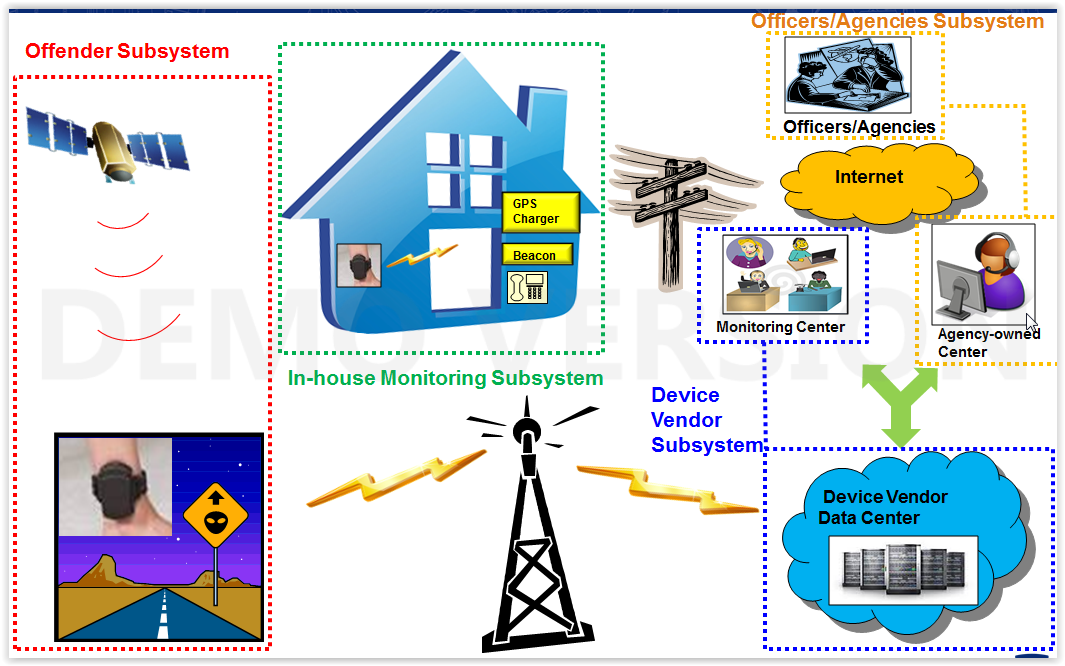
Resistive strap sensors measure electrical continuity through conductive threads embedded in a band. Minor stretching, sweat, temperature swings, or partial lifts can modulate resistance in ways firmware must classify as benign motion versus attempted removal. Infrared sensors watch reflectance or proximity to skin; they can misread on darker skin tones, hair, lotion, or debris—failure modes repeatedly discussed in equity-oriented electronic monitoring critiques.
Agency time studies show why noisy channels drain budgets: each ambiguous strap alert pulls analysts off higher-value casework, triggers warrantless home visits, and invites civil litigation if officers overreact. Our broader technology survey in the evolution of electronic monitoring technologies traces how hardware generations accumulated features faster than courts standardized evidentiary rules—creating the very interpretive gap celebrity cases exploit.
NIJ-era benchmarking and the 15–30% false-alert conversation
Programme auditors and vendor-neutral researchers citing NIJ-era market surveys and derivative agency reports often discuss aggregate false tamper or tamper-adjacent alert burdens in the approximately 15–30% range for legacy resistive architectures under real-world supervision loads. The spread is not a universal law—it varies by climate, caseload, firmware build, and how centres define “false”—but it anchors procurement conversations: if one in four tamper-class events is noise, high-profile defendants will eventually find a sympathetic expert. In practice, tamper detection performance is as much about analyst adjudication rules as it is about strap chemistry.
Readers digging into measurement pitfalls should pair this article with our operational coverage in community corrections technology 2026: challenges and solutions, where staffing, alert SLAs, and equity audits appear alongside radio modernization themes.
Procurement officers can translate the 15–30% conversation into contract exhibits: require vendors to submit cohort studies that separate shower-induced impedance drift from deliberate strap cuts, specify environmental chambers for acceptance testing, and bind firmware downgrades to court notice. Those clauses do not guarantee perfect ankle monitor tamper detection, but they give programme counsel something firmer than marketing PDFs when a defence expert takes the stand.
Advanced fiber-optic integrity: deterministic breaks and power-state edge cases
Fiber-optic integrity sensing embeds a light path through the strap and sometimes the housing; a cut, crush, or separation breaks continuity and registers as tamper with less reliance on biometric proxies. Vendors such as Geosatis and REFINE Technology (CO-EYE) publicly emphasize fiber-based integrity channels alongside established multinationals—including BI Incorporated and SCRAM Systems—that market broader portfolios spanning alcohol, RF home units, and GPS. The competitive point is not brand ranking; it is that strap-integrity physics now spans from legacy resistive loops to optical continuity tests.
Separately, some enhanced one-piece GPS ankle monitor architectures advertise continued strap supervision during certain low-power states—an engineering talking point in vendor white papers aimed at revocation hearings where “battery died” excuses historically muddied tamper logs. For tamper detection buyers, that narrative matters only when lab notebooks show minute-by-minute correlation between power states and strap-channel events. Agencies should treat such claims as RFP test items, not courtroom facts, until independent labs publish cohort data.
Buyers comparing GPS ankle monitor tenders should therefore request dual datasheets: one for continuous tracking under full battery, another for strap-integrity behaviour when the cellular modem enters sleep modes. The distinction matters because revocation motions often hinge on a few minutes of ambiguous telemetry, not on all-day track density.
Illustrative hardware: one-piece GPS form factors
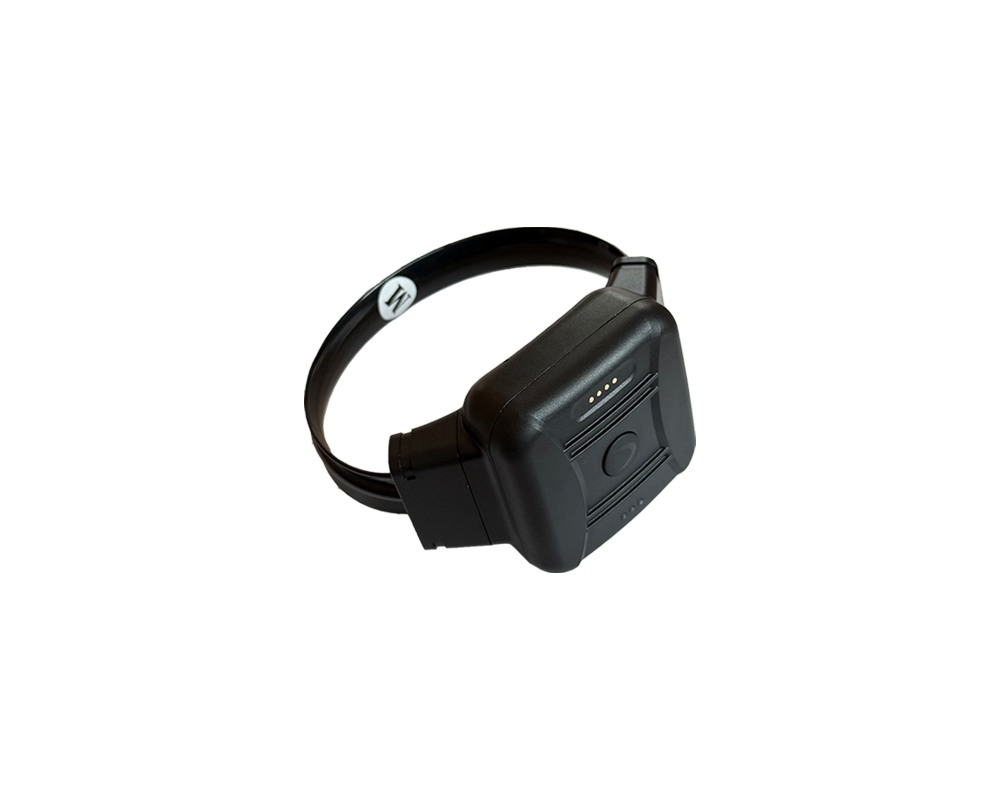
The photograph above is editorially representative of one-piece GPS devices now common in pretrial and post-conviction programmes; it should not be read as an endorsement of any single OEM. Procurement officers should demand side-by-side lab sheets covering shower cycling, thermal shock, and strap-cut latency rather than relying on hero imagery alone.
European supervision parallels: Marseille researchers and UK immigration GPS tags
High-profile electronic monitoring is hardly a Brazilian monopoly. In February 2025 a French court sentenced two CNRS-affiliated researchers to eight months—expected to be served largely under home confinement while wearing electronic tags—after throwing improvised devices over the wall of Russia’s Marseille consulate during a war-anniversary protest, according to Reuters, Euronews, and Le Monde. Prosecutors had sought heavier terms; the outcome nonetheless shows how quickly political vandalism charges translate into GPS ankle monitor or RF-tag conditions for defendants who once saw themselves as observers, not subjects, of carceral tech.
In the United Kingdom, Home Office pilots and civil-society reviews have tracked a rapid expansion of GPS-enabled immigration bail tags, including fitted ankle devices and newer non-fitted biometric check-in hardware. A government-commissioned pilot evaluation (covering June 2022–December 2023) reported no statistically significant compliance difference between tagged and untagged asylum cohorts on some metrics—underscoring that hardware diffusion alone does not solve absconding risk. Civil liberties groups such as the Public Law Project have documented mental-health burdens, overdue quarterly reviews, and opaque algorithmic routing between device types. For global vendors, the UK pattern signals continued tender demand paired with judicial and journalistic appetite for transparency about how strap-integrity and location alerts are defined.
The transatlantic contrast is instructive for anyone selling a GPS supervision stack: France’s sentence highlights politicised defendants wearing tags at home, while the UK debate questions whether mass tagging delivers proportional compliance gains. Both stories feed the same RFP anxiety—will our ankle monitor tamper detection story survive human-rights litigation and tabloid coverage simultaneously?
Procurement checklist: selecting ankle monitor equipment that survives legal scrutiny
Courts buying electronic supervision services after a celebrity scandal often over-rotate toward brand familiarity. The more durable approach is evidence engineering:
- Define tamper taxonomy—strap cut, case breach, docked charging, legitimate removal by authorised technicians—before evaluating alerts.
- Publish measurement methodology for false tamper rates, including environmental ranges and adjudication rules, mirroring the NIJ-era debates summarised above.
- Require exportable logs that chain device events to analyst acknowledgements for bond hearings.
- Stage acceptance tests that include sweat, cold weather, and overnight charging—common triggers for legacy resistive noise.
- Map cellular sunset risk so GPS reporting does not collapse while strap sensors still appear “green.”
For manufacturer-neutral hardware primers—useful when drafting court-agnostic RFP language and comparing tamper detection architectures—see the public resource hub at ankle-monitor.com.
Near-zero false positives and courtroom admissibility
Judges rarely care about nanoseconds of GNSS accuracy when bond is on the line; they care whether counsel can explain a tamper-class event packet to a skeptical appellate panel. Programmes that aspire to near-zero false-positive strap signalling—often marketed alongside fiber-optic paths—still must prove chain of custody, firmware integrity, and analyst training. A deterministic sensor helps, but it does not replace procedural rigor.
The Bolsonaro episode, the Marseille tagging sentence, and the UK’s immigration GPS expansion share a through-line: electronic monitoring is now a visible instrument of sovereignty. When it fails loudly, legislatures and supreme courts respond with detention, contract reviews, or expanded civil-society oversight. Ankle monitor tamper detection is therefore as much a communications discipline as a materials-science problem—one where clarity beats bravado.
FAQ
Did medication claims invalidate the tamper alert in Brazil? Public reporting indicates the court treated the physical device damage and flight-risk factors as decisive; medical narratives may influence mitigation but do not automatically erase telemetry.
Are fiber-optic straps always superior? They change the failure mode toward deterministic breaks, yet installation training, fiber routing durability, and cost still matter—especially in humid climates.
Should agencies publish tamper false-positive dashboards? Transparency trends in several U.S. states suggest yes; sunlight pressures vendors to document methodology.
How does this affect pretrial versus post-conviction caseloads? Both lanes share analyst labour pools; a celebrity pretrial spike can delay responses for lower-profile defendants unless centres segment staffing.
Does the Bolsonaro case prove any specific vendor failed? Public reporting centres on judicial reasoning and flight risk, not firmware brand names. The lesson is procedural: programmes must assume any OEM could land in a similar headline and prepare evidence packets accordingly.