
Editor’s note: This article is industry news analysis for electronic-monitoring programme directors, vendor strategists, and court technologists. It summarises publicly reported reasoning in GKX18 v Minister for Immigration and Multicultural Affairs (No 5) [2026] FedCFamC2G 204 (18 February 2026) and connects those themes to procurement and human-rights debates elsewhere. It is not legal advice; verify holdings, regulatory citations, and immigration rules against the primary judgment and competent counsel.
Lead: When a court labels a GPS ankle bracelet condition “punitive,” the headline travels faster than any firmware release note. Australia’s Federal Circuit and Family Court confronted exactly that question in GKX18, evaluating whether a GPS ankle bracelet imposed on an immigration detainee as a condition of community release imposed burdens comparable to punishment rather than proportionate administrative supervision. Published summaries of the judgment emphasise material and long-term detriment, the psychology of continuous wearable awareness, and charging logistics that tether wearers to power outlets—issues that any large-scale GPS ankle bracelet programme must engineer around. For readers of Ankle Monitor Industry Report, the analytical payoff is not partisan immigration commentary; it is a hardware-and-policy checklist that echoes across U.S. immigration alternatives-to-detention scale-ups, European proportionality doctrine, and UK tagging reform fights.
Table of Contents
- The GKX18 case: what happened
- The court’s key findings on GPS ankle bracelet burden
- Global implications: how this ruling affects GPS ankle bracelet programmes
- The technology factor: can better GPS ankle bracelets mitigate ‘punitive’ findings?
- Policy recommendations: balancing supervision and rights
- What this means for GPS ankle bracelet procurement
The GKX18 case: what happened

GKX18 arose in the emotionally and legally fraught space of immigration detention and community alternatives. The applicant challenged conditions attached to a bridging visa framework that, according to case summaries, required continuous location monitoring through a GPS ankle bracelet rather than merely periodic reporting. The Federal Circuit and Family Court’s task was to characterise those obligations: were they legitimate non-custodial supervision tools, or did the cumulative effect—especially when duration, visibility, and power dependence are stacked together—cross into punitive territory?
Immigration dockets worldwide now mix the same ingredients: a visible GPS ankle bracelet, criminal or quasi-criminal penalties for tampering or missed charging, multilingual call-centre workflows, and political pressure to show “alternatives” to bed space. GKX18 therefore belongs in the same industry reading list as operational briefings on ICE alternatives-to-detention enrolment growth and European debates over dignity in tagging. Primary text remains on AustLII; what follows interprets reported findings for electronic-monitoring professionals.
Methodologically, readers should separate three layers: (1) the Migration Regulations and visa-condition language actually filed in court; (2) the device specifications contractors deployed on the applicant’s leg; and (3) the enforcement practices contact centres applied when charging or tamper events occurred. Industry post-mortems often collapse those layers into a single word—“bracelet”—yet appellate reasoning increasingly disaggregates them. That disaggregation is why procurement officers, not only counsel, need contemporaneous logs showing firmware versions, strap SKUs, and charging-interval histograms whenever a GPS ankle bracelet condition faces judicial review.
The court’s key findings on GPS ankle bracelet burden
According to judgment summaries, the court found that the GPS ankle bracelet condition imposed material, relatively long-term detriments on the wearer. That framing matters for vendors: it invites judges to weigh not only whether a device transmits coordinates, but whether the totality of wearing it—mass, strap geometry, dermatological risk, audible alerts, visibility under clothing—constitutes a meaningful deprivation in its own right.
The decision also foregrounds physical characteristics. Descriptions in secondary reporting characterise some fielded units as bulky “cuff-like” hardware that is difficult to conceal. Even where such language reflects one applicant’s experience, it signals how courts may narrate ankle-worn GPS hardware ergonomics when constitutional or human-rights scrutiny intensifies. Programmes still issuing two-piece kits or oversized housings from the 3G era should expect similar portrayals unless refresh cycles catch up.
The National Institute of Justice’s historical market surveys of location-based offender trackers documented wide variance in mass and form factor across vendor generations—useful context when judges compare “chunky” fielded units against modern one-piece designs. Nothing in those catalogues substitutes for evidence tendered in GKX18, but they give programme scientists neutral benchmarks when explaining why a 2026 refresh cycle materially changes wearer burden relative to 2012 hardware.
Charging requirements attracted explicit attention: summaries indicate the court linked frequent dock charging to an involuntary restraint on liberty—not in the sense of a physical chain, but as a practical limitation on how long a person can remain away from mains power without risking violation. That is a procurement insight. A cellular ankle-monitor programme that expects daily charging implicitly schedules the wearer’s geography around wall outlets, workplace break rooms, and overnight residence patterns. When failure to charge triggers enforcement, judges may treat the power cord as part of the sentence.
Psychological burden appears through the concept of continuous awareness of the device—constant tactile reminder, fear of stigma in employment or community settings, and sleep disruption if charging alarms or strap pressure intrude. Civil-liberties advocates have long argued that visibility itself is a sanction; GKX18 aligns judicial reasoning with that theme in the immigration context.
Finally, stigma and social impact sit in the background of every ankle-GPS rollout. Employers, landlords, and schools may not distinguish immigration monitoring from criminal probation hardware. When courts catalogue dignitary harms, they implicitly ask whether a less visible modality—supervised smartphone check-ins, for example—could achieve comparable flight-risk reduction.

Global implications: how this ruling affects GPS ankle bracelet programmes
United States. U.S. Immigration and Customs Enforcement alternatives to detention programmes have scaled GPS hardware cohorts to figures widely discussed in trade and policy reporting—approaching tens of thousands of concurrent cellular trackers. American judges may not cite Australian precedent directly, but GKX18-style reasoning travels through bar associations, NGO briefs, and transnational human-rights networks. Any federal contract that pairs a GPS ankle bracelet with strict charging windows and visible stigma should anticipate parallel arguments about proportionality and least-restrictive means.
ICE-scale deployments also intensify class-action economics: identical device SKUs, shared charging cradles, and common call-centre scripts mean a single successful rights theory can replicate across enrollees. Contractors should therefore treat wearer-experience testing as a compliance deliverable—documented focus groups, dermatology nurse reviews, and translated quick-start cards—not as marketing fluff. When a federal judge eventually asks whether a less restrictive technology existed, those artefacts become exhibits.
Europe. The European Court of Human Rights has for years framed electronic monitoring through proportionality, necessity, and dignity lenses—asking whether less intrusive measures could suffice and whether duration and side effects remain justified over time. GKX18 reads like a cousin problem: once ankle-worn GPS tracking becomes physically and psychologically salient, the margin of appreciation shrinks.
Data-protection regulators add another axis: location precision and retention intervals. Even when courts approve a GPS ankle bracelet as proportionate at imposition, downstream analytics—heatmaps, machine-learning risk scores—may attract separate scrutiny. Programme architects should map data flows before NGOs or data-protection authorities map them in filings.
United Kingdom. UK debates over immigration tagging—amplified when major wire services quote advocates describing wearable tracking as degrading—already stress charging logistics, skin injuries, and employment discrimination. Australian reasoning on bracelet burden reinforces the same advocacy templates British ministers and contractors face when expanding national tagging pilots.
Other jurisdictions. Canada, New Zealand, and several Latin American programmes experimenting with immigration wearables should treat GKX18 as an early warning: courts will interrogate not only data accuracy but wearer experience. Multilateral agencies documenting best practices for electronic monitoring may need to add ergonomic and charging-burden metrics beside traditional KPIs like ping success rates.
Contract structure. Sovereign purchasers increasingly split awards into hardware, monitoring centre, and field services lots so that charging burdens attributable to obsolete batteries cannot be hidden inside opaque bundled pricing. That unbundling also clarifies which vendor must answer discovery when plaintiffs request service logs.

The technology factor: can better GPS ankle bracelets mitigate ‘punitive’ findings?
Hardware generations matter because judges reason from facts on the ankle, not roadmap slides. Legacy cellular ankle trackers—often in the roughly 200–350 g range in historical NIJ-era market surveys—were heavier, thirstier, and more dependent on dock charging than contemporary one-piece designs. Shaving mass and extending battery life does not automatically defeat a constitutional or human-rights claim, but it directly answers the specific irritants GKX18 emphasises: conspicuous bulk, frequent charging captivity, and continuous tactile annoyance.
Battery life is the clearest engineering lever. Programmes that still force daily charging create predictable judicial narratives about liberty tethered to outlets. Architectures that support multi-day autonomy—industry marketing often cites roughly one week under defined reporting intervals for some LTE-M/NB-IoT one-piece devices—reduce the enforcement surface area for “battery violation” allegations and ease employment logistics for lawful work authorised under visa terms.
Comfort and materials influence dermatitis complaints, strap noise, and whether a device can be worn discreetly under professional attire. Medical-grade silicones, rounded edges, and quick-swap strap kits are not cosmetic; they are litigation risk mitigations when NGOs photograph ankle injuries.
Vendor landscape. Large programmes still rotate among established suppliers—BI Incorporated, SCRAM Systems, SuperCom, Geosatis, Buddi—and newer one-piece entrants. Buyers comparing RFP responses should demand side-by-side sheets on mass, z-height, charging interval distributions under real RF environments, and audible alarm policies. Neutral architecture references for workshops appear at ankle-monitor.com.
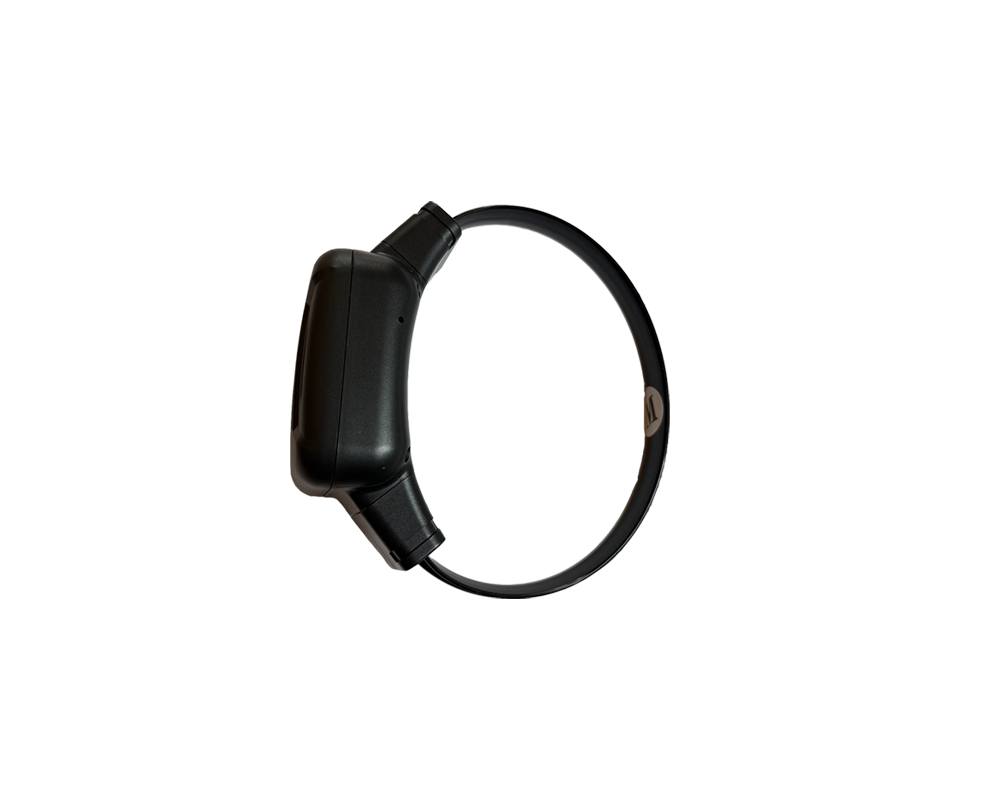
In that comparative context, newer devices like the CO-EYE ONE weigh roughly 108 g with marketed seven-day battery life in standalone cellular modes—specifications that speak directly to judicial discomfort with bulky hardware and frequent charging. The point is not endorsement; it is that ankle-GPS procurement increasingly intersects rights litigation, so measurable ergonomics belong in the same spreadsheet as CEP50 accuracy.
Policy recommendations: balancing supervision and rights
- Least restrictive means. Decision trees should start with the lowest intrusiveness adequate to flight risk—voice check-ins, smartphone geofencing—before defaulting to a GPS ankle bracelet.
- Procurement standards for burden. RFPs should cap mass and mandate minimum hours off-dock under reference RF profiles; auditors can then test claims instead of trusting brochure photography.
- Periodic review. Conditions imposed for open-ended immigration limbo need calendar triggers reassessing whether the GPS ankle bracelet condition remains necessary as risk facts evolve.
- Alternatives for lower risk. Smartphone supervision apps (with documented BYOD security limits) can shrink visible stigma while preserving check-in accountability—topics explored across APPA smartphone-supervision literature and our technology coverage on Ankle Monitor Industry Report.
What this means for GPS ankle bracelet procurement
GKX18 is a reminder that electronic monitoring contracts are now partly human-rights engineering documents. Programme directors should pair vendor SLAs with wearer-facing metrics: median hours between required charging events, strap-related dermatitis ticket rates, and multilingual explainers that set realistic expectations before a judge asks why a bulky GPS ankle bracelet was the first tool chosen.
Cross-readers may also track our earlier analyses on ICE immigration ATD scale and GPS ankle bracelet technology standards in 2026 for programmatic context. None of those pieces substitute for migration legal advice, but together they map how immigration dockets, vendor roadmaps, and judicial opinions are converging on the same question: when does a GPS ankle bracelet stop looking like administration and start feeling like punishment?
Finally, agencies should archive device-generation metadata with every visa condition. If a court asks why a 2014-era tracker remained fielded in 2026, spreadsheets beat apologies. Refresh cycles are not IT vanity; they are downstream constitutional risk management for wearable GPS ankle bracelet supervision.