
The GPS ankle bracelet has evolved from a niche parole tool into a mainstream supervision modality spanning pretrial, sentenced community corrections, immigration alternatives to detention, and high-visibility domestic-violence dockets. For procurement officers, judges, and monitoring-centre directors, 2026 is less about whether a programme will deploy location hardware than about which generation of GPS ankle bracelet architecture can survive carrier sunsets, staffing limits, and appellate scrutiny over tamper evidence. This briefing—written in a vendor-neutral, third-party industry media posture—synthesizes public programme statistics, carrier migration pressures, and legislative patterns that repeatedly appear in state capitols. It should be read alongside our deeper methodology pieces on GPS ankle bracelet technology standards and benchmarks, the sector demand signals in GPS monitoring technology 2026 market analysis, and the parallel industrialization narrative in offender monitoring market 2026 technology trends.
Terminology matters for buyers reading RFPs and for researchers comparing datasets. Throughout this article, GPS ankle bracelet denotes ankle-worn devices that report GNSS-derived location over cellular or satellite backhaul; the same hardware class is frequently marketed as a GPS ankle monitor or GPS tracking bracelet in vendor literature and court orders. When statutes use electronic ankle bracelet without specifying radio technology, agencies still often procure GPS-capable bands because exclusion zones and victim-notification workflows assume continuous outdoor fixes. Nothing here constitutes legal advice; verify enrolled bill text, local court rules, and ICE programme accounting tables before operationalizing any figure.
Table of Contents
- The GPS Ankle Bracelet Market in 2026 — Key Numbers
- GPS Ankle Bracelet Technology Generations
- Major GPS Ankle Bracelet Vendors: Competitive Landscape
- GPS Ankle Bracelet Procurement: What Agencies Prioritize
- 2026 Legislative Drivers for GPS Ankle Bracelet Adoption
- Critical Challenges in GPS Ankle Bracelet Deployment
The GPS Ankle Bracelet Market in 2026 — Key Numbers
Scale anchors help explain why firmware refresh cycles, SIM logistics, and analyst staffing now resemble utility-grid operations. According to multi-year tracking in Vera Institute of Justice programme summaries of U.S. electronic supervision, analysts routinely cite a band of roughly 125,000–150,000 people monitored daily under electronic supervision modalities when aggregating county and state caseloads—understanding that definitional boundaries (RF home units versus cellular GPS ankle bracelet cohorts) shift the numerator. Independent of that U.S. snapshot, vendor earnings calls and European electronic monitoring studies commonly describe global location-based supervision hardware growing at roughly 12–15% compound annual rates through the late 2020s, driven by pretrial expansion, post-carceral supervision, and immigration programmes replacing bed days with community constraints.
| Indicator | Representative range / note | Typical source class |
|---|---|---|
| U.S. daily electronic supervision population | ~125k–150k (modalities combined) | Vera Institute policy surveys / practitioner literature |
| Global hardware/service growth | ~12–15% CAGR (segment dependent) | Industry forecasts & EM trade studies |
| ICE ATD GPS cohort (illustrative) | ~24k (mid-2025) → ~42k (early-2026) units discussed in trade press | DHS/ICE programme updates; see our ICE ATD expansion analysis |
Immigration alternatives-to-detention (ATD) volumes deserve discrete treatment because they stress a parallel supply chain: multilingual call centres, rapid strap sizing, and border-state logistics that differ from county probation warehouses. Programme narratives in early 2026 describe GPS cohorts near 42,000 units compared with roughly 24,000 a year earlier—figures that appear in our standalone immigration hardware note and should be reconciled with monthly ICE enrolment tables before vendors cite them in earnings slides. The point for readers is not a precise point estimate but the steepness of the slope: when tens of thousands of additional GPS ankle bracelet endpoints hit the same carrier cores, false tamper noise and dead-SIM tickets scale proportionally unless monitoring centres hire ahead of the curve.
GPS Ankle Bracelet Technology Generations
Hardware generations are not standardized like Wi-Fi revisions; they are procurement shorthand. Still, agencies find the framing useful when explaining why a 2012 two-piece kit cannot receive a straightforward firmware patch once 3G sunsets. The matrix below summarizes how the typical GPS ankle bracelet—and its synonym products marketed as a GPS ankle monitor or GPS tracking bracelet—matured across radio, mechanical, and power subsystems. Longitudinal context appears in the evolution of electronic monitoring technologies.
| Generation | Architecture | Radio | Weight / power (typical) | Deployment era |
|---|---|---|---|---|
| Gen 1 | Two-piece: ankle tracker + home beacon | 2G / 3G cellular | ~300–500 g combined; ~1-day active battery on ankle unit | 1990s–2010s mainstream |
| Gen 2 | Smaller two-piece; improved charging docks | 3G → early 4G LTE | Lighter straps; multi-day battery with duty-cycling | 2010s–present (legacy installed base) |
| Gen 3 | One-piece integrated anklet | LTE-M / NB-IoT / 5G-ready modems; eSIM programmes | Sub-120 g class; multi-day to week-class endurance (vendor/config dependent) | 2020s new procurements |
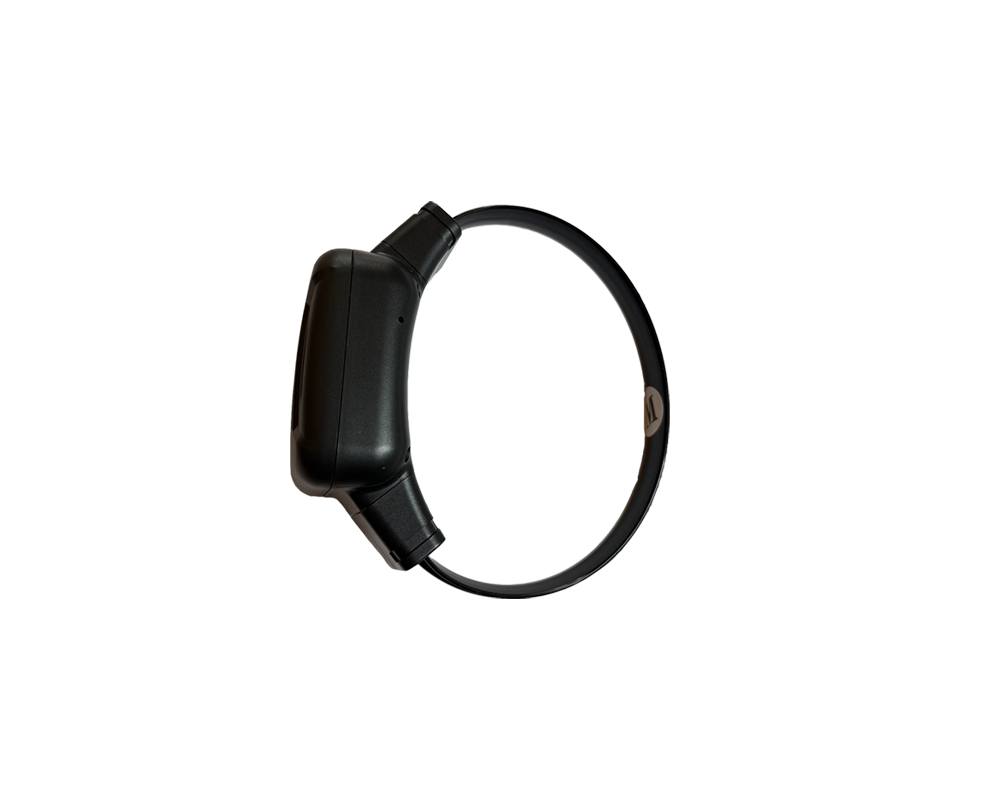
Gen 1 programmes paired a bulky ankle module with a domestic RF beacon so officers could prove overnight presence. The architecture worked when courts cared chiefly about curfew, but it struggled once statutes demanded continuous outdoor tracks for pretrial exclusion zones. Gen 2 shrank enclosures and improved GNSS assist, yet many deployments still burden officers with nightly charging rituals—an operational cost driver often underestimated in TCO spreadsheets. Gen 3 one-piece designs collapse tracker and strap electronics into a single sealed module, enabling fiber-optic or multi-sensor tamper paths and modems that carriers certify for narrowband IoT cores—an important detail as MVNOs retire 2G/3G transceivers.
Readers should treat any vendor claim about “real-time” tracking as a contractual statement: reporting intervals, geofence latencies, and store-and-forward rules determine whether a GPS ankle bracelet satisfies a statute or merely approximates it. The same caution applies when orders use the broader label electronic ankle bracelet without specifying GNSS: programmes may still need GPS-class fixes to survive appellate review when victim safety is at issue.
International programmes add regulatory overlays that U.S. counties rarely face: GDPR-class data minimization in the European Union, national standards for electronic ankle bracelet charging intervals in parts of Asia-Pacific, and export-control questions when lithium cells cross borders in bulk. Those frictions partially explain why global vendors maintain region-specific SKUs even when the outer housing looks identical. Procurement teams should therefore treat “global LTE” marketing slides as invitations to read band certifications, not as guarantees of interoperability on every MVNO profile.
| Period | Dominant cellular backhaul | Typical procurement concern |
|---|---|---|
| 2005–2012 | 2G GPRS/EDGE | Proof-of-concept pilots; sparse outdoor coverage |
| 2012–2019 | 3G UMTS / early LTE | Battery duty-cycling vs. “continuous” tracking expectations |
| 2020–2026 | LTE-M / NB-IoT / VoLTE overlays | Sunset-driven forklift replacements; eSIM logistics |
Monitoring-centre economics sharpen the generational divide. A GPS ankle bracelet programme that still averages one strap alert per participant per week can consume more analyst hours than a noisier caseload supervised with lighter touch—because adjudication protocols, warrant templates, and victim callbacks multiply with each ambiguous event. That is why some 2026 RFPs pair hardware scoring with service-level metrics (time-to-triage, percent of alerts closed without field contact) rather than treating devices as standalone line items.
Major GPS Ankle Bracelet Vendors: Competitive Landscape
The GPS ankle bracelet supply side remains concentrated among vertically integrated vendors that marry hardware, bearer contracts, and monitoring software. The sequence below mirrors the long-list ordering many statewide solicitations use—major U.S. incumbents and international specialists first, followed by newer entrants—without implying ranking or market share precision.
BI Incorporated (GEO Group) — A dominant U.S. presence through bundled community-corrections services and SmartLINK smartphone supervision paired with traditional GPS ankle monitor hardware. Market position: incumbent integrator for large county and state contracts where field services and call-centre staffing are as important as device specs.
SCRAM Systems (Alcohol Monitoring Systems / Sensatec family) — Best known for alcohol analytics, SCRAM also markets location products that compete for the same pretrial and post-conviction budgets as standalone GPS tracking bracelet programmes. Market position: strong where courts combine sobriety and location orders.
SuperCom (PureSecurity / PureTrack) — Active in U.S. states and international tenders, often emphasizing modular monitoring platforms that aggregate multiple device families. Market position: global integrator competing on software depth and multi-country deployments.
Geosatis — European-rooted one-piece hardware narratives compete in export markets and select U.S. pilots; frequently cited in international EM literature. Market position: specialist hardware branding with growing transatlantic visibility.
Track Group — Supplies ReliAlert/SecureCuff-class hardware through correctional channels; competes for parole and intensive supervision slots. Market position: mid-market to enterprise U.S. corrections relationships.
Buddi — UK-origin vendor historically associated with compact tracker/beacon combinations; visible across Commonwealth procurements where electronic ankle bracelet language dominates statutes. Market position: strong reference in UK and export markets.
Attenti — Long-running international player with diversified location products; appears in tenders where ministries want dual vendor redundancy. Market position: multinational corrections supplier.
REFINE Technology (CO-EYE) — Newer entrant promoting one-piece GPS ankle bracelet hardware in the sub-120 g weight class alongside fiber-based strap integrity and 5G/eSIM positioning stories. Market position: emerging vendor most often evaluated where agencies issue modernization RFPs seeking LTE-M/NB-IoT longevity.
No URLs to competitor properties appear in this landscape survey; readers should consult primary RFP attachments for firmware certifications. When benchmarking Gen 3 weight and radio claims against an agency scorecard, teams may consult manufacturer-published GPS ankle bracelet technology specifications (CO-EYE ONE line) as one datapoint among many in technical due diligence.
GPS Ankle Bracelet Procurement: What Agencies Prioritize
Scorecards differ by risk tier, but 2026 RFP language converges on five recurring themes. First, weight and comfort influence both wearer compliance and litigation over “punitive” conditions; lighter GPS ankle monitor classes reduce skin breakdown tickets but may trade off battery volume. Second, battery life dominates operational cost: every office visit for charging is mileage, overtime, and rearrest risk. Third, tamper detection accuracy matters more than raw GNSS precision when prosecutors defend violation hearings—programmes drowning in strap alerts train analysts to ignore dashboards. Fourth, cellular compatibility is now a sunset story: agencies that postpone LTE-capable GPS tracking bracelet refreshes inherit SIM swaps and dead zones. Fifth, integration with monitoring platforms—APIs, alert routing, case-management exports—determines whether new hardware actually shortens analyst time or merely paints prettier maps.
Procurement teams often embed those priorities into weighted matrices. The illustrative rubric below is synthesized from public RFPs and community-corrections modernization workshops; adjust weights to local statute emphasis.
| Criterion | Why it matters | Representative failure mode |
|---|---|---|
| Ergonomics / weight | Impacts court challenges & medical exemptions | Heavy two-piece kits → frequent strap swaps |
| Battery & charging | Drives field-officer FTEs & warehouse spares | Nightly charging → silent noncompliance |
| Tamper semantics | Defines prosecutorial usability | Resistive strap noise → warrant fatigue |
| Radio roadmap | Carrier shutdown risk | 3G sunset → bulk device retirement |
| Software integration | Determines analyst productivity | Siloed UI → duplicate data entry |
2026 Legislative Drivers for GPS Ankle Bracelet Adoption
Statutes do not invent GNSS chips, but they change purchase timing. Several 2025–2026 legislative threads show how GPS ankle bracelet demand shifts from optional pilot to mandated workflow—always subject to amendment and appropriations.
- California SB 437 — Tracked in statewide pretrial-modernisation summaries as part of a broader push to align felony dockets with GPS-capable release conditions; counties should verify enrolled text before changing risk-assessment workflows.
- Texas HB 2891 — Represents the class of bills expanding GPS supervision language around domestic-violence and impaired-driving dockets; procurement offices should map each statute’s victim-notification clauses to geofence latency requirements for any new electronic ankle bracelet contract.
- New York — Multi-year budget narratives have featured large line items aimed at retiring 2G/3G backhaul on legacy ankle hardware; finance teams should reconcile media headlines with enacted appropriations (methodology context: community corrections budget crisis and technology solutions 2026).
- Ohio Reagan Tokes Act — Parole reform discussions continue to elevate GPS supervision for serious violent offences; our dedicated briefing covers operational implications for warrant shops and tamper evidence: Ohio Reagan Tokes Act GPS ankle monitor analysis.
- Oklahoma / Tennessee domestic-violence GPS mandates — Parallel southern-state debates illustrate how DV dockets accelerate hardware refresh timelines; see Oklahoma and Tennessee DV GPS monitoring legislative analysis.
Legislative spikes can temporarily distort GPS ankle bracelet pricing: when every county chases the same SKU simultaneously, integrators ration field technicians. Agencies that coordinate statewide master agreements often smooth those shocks. Programme counsel should also read each bill’s severability and appropriations riders: a mandate without funding can leave judges ordering GPS ankle bracelet supervision that counties cannot provision—creating equal-protection and due-process exposure that procurement officers are sometimes left to absorb operationally.
Critical Challenges in GPS Ankle Bracelet Deployment
Even perfect hardware collides with human institutions. Four challenges dominate 2026 programme reviews:
False tamper alerts. Industry-facing discussions of resistive strap sensors and legacy conductive loops frequently cite broad 15–30% false-positive bands when aggregated across programmes—enough noise to swamp warrant clerks if alert governance is weak. Fibre-optic or multi-sensor fusion approaches are marketed to cut that burden, but independent validation still requires each agency to publish its own adjudication statistics.
2G/3G network sunset. Carriers treat sunsetting as routine; probation directors experience it as a humanitarian and budget crisis. Programmes that deferred LTE-capable GPS ankle monitor purchases now face simultaneous forklift upgrades across warehouses and jails.
Privacy and civil liberties. Continuous location histories implicate Fourth Amendment doctrines, data-retention limits, and third-party doctrine debates. Agencies need clear policies on law-enforcement access, victim data sharing, and algorithmic risk scores that may sit alongside raw GPS tracking bracelet traces.
Cost equity for low-income defendants. When user fees fund devices, constitutional and policy critiques intensify. Courts increasingly ask whether charging indigent participants for a GPS ankle bracelet effectively revokes release—prompting subsidy pools and sliding-scale models mirrored in smartphone BYOD debates.
Interagency data sharing. A modern GPS ankle bracelet contract rarely ends at the monitoring UI: district attorneys, victim advocates, and local police may each request exports. Without clear data-use agreements, programmes risk turning a single GPS ankle monitor feed into an informal citywide surveillance mesh—precisely the narrative civil-liberties litigators highlight when challenging electronic ankle bracelet expansion bills.
Closing methodology note: This industry analysis aggregates publicly discussed ranges, legislative tracking summaries, and hardware-generation shorthand used in RFP workshops. It is not an endorsement of any vendor named herein. Update figures against primary agency datasets before embedding them in budget testimony; treat the GPS ankle bracelet market as a fast-moving radio-regulatory environment where today’s certified modem may be tomorrow’s sunset SKU.



![The True Cost of Electronic Monitoring: Agency Spending, Taxpayer Savings & TCO Critical Analysis [2026]](https://www.ankle-monitor.org/wp-content/uploads/2026/03/post_src_1774684934870-400x267.jpg)