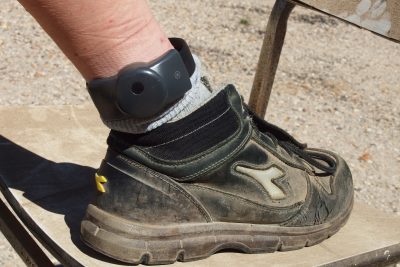
When a corrections or pretrial agency issues a solicitation for location-supervision hardware, the real product is not the plastic enclosure—it is decision-grade evidence that will survive warrant shops, appellate records, and civil oversight. This independent methodology brief explains how to structure a GPS ankle bracelet evaluation so programme counsel, monitoring-centre directors, and procurement officers align on measurable requirements instead of marketing narratives. Terminology note: vendors and court orders variously label the same device class a GPS ankle monitor or electronic ankle bracelet; here GPS ankle bracelet means ankle-worn hardware that derives outdoor tracks from GNSS and backhauls over cellular (or equivalent) bearers. Nothing herein constitutes legal advice; reconcile every requirement with enrolled statutes, local court rules, and your insurer’s risk framework.

Table of Contents
- Why GPS Ankle Bracelet Procurement Matters More Than Ever
- Tier 1 Evaluation Criteria (Must-Have)
- Tier 2 Evaluation Criteria (Performance Differentiators)
- Tier 3 Evaluation Criteria (Platform & Support)
- GPS Ankle Bracelet Vendor Comparison Matrix
- Sample RFP Scoring Template
- Common Procurement Pitfalls to Avoid
Why GPS Ankle Bracelet Procurement Matters More Than Ever
Three structural forces make 2026 a high-stakes year for GPS ankle bracelet sourcing. First, 2G/3G sunsetting forces forklift replacements: carriers treat legacy transceivers as a depreciating asset, while agencies experience them as a caseload continuity crisis. Hardware that cannot certify on LTE-M, NB-IoT, or mainstream LTE band plans becomes a stranded fleet even if straps still latch. Second, legislative and budget narratives in more than a dozen states—industry trackers often cite on the order of fourteen parallel expansion threads when domestic-violence dockets, pretrial reform, and parole-condition updates stack together—translate into more competitive RFPs hitting the street simultaneously. Third, cumulative modernization lines can be enormous: multi-year statewide contract discussions and vendor roadshows sometimes describe aggregate US$500 million-plus hardware-and-services spend over a forward three-year horizon when legacy radios, spare pools, and monitoring-platform upgrades move in lockstep. Treat that magnitude as an order-of-industry anchor, not a line item in your CFO’s ledger—always reconcile with enacted appropriations.
Readers evaluating programme design context should pair this procurement lens with our sector briefings on GPS ankle bracelet technology standards and benchmarks and the demand signals in GPS monitoring technology 2026 market analysis.
Tier 1 Evaluation Criteria (Must-Have)
Tier 1 criteria are binary gates: failure on any one should disqualify a GPS ankle bracelet offer from award, unless your counsel explicitly documents a waiver with appellate risk review.
- Cellular compatibility. Minimum acceptable posture in 2026 is certification on 4G LTE-M and/or NB-IoT (or equivalent narrowband IoT cores your MVNO will support through the contract term), with a published roadmap through carrier sunset windows. 5G branding is less important than band certification and modem firmware lifecycle; ask for lab reports and carrier approval letters, not slide decks.
- Tamper detection method and false-positive behaviour. Require vendors to submit alert semantics tables: what electrical or mechanical condition raises each code, expected false-positive rates under documented test harnesses, and average analyst adjudication time in reference sites. Industry-facing discussions of legacy resistive strap loops often cite broad 15–30% false-positive bands when aggregated across programmes—enough noise to swamp warrant clerks if governance is weak. Your RFP should demand your pilot metrics, not vendor marketing averages.
- NIJ Standard 1004.00 alignment. The National Institute of Justice location benchmark—commonly summarized as 10 m CEP50 and 30 m CEP95 for horizontal accuracy under the standard’s outdoor test profiles—remains the lingua franca of U.S. procurement attachments even when vendors publish tighter lab numbers. Specify test methodology, sample sizes, and whether claims are standalone GNSS or assisted / blended fixes.
- Battery life. Set a contractual minimum of 48 hours of active reporting under your defined duty cycle (interval, assist modes, and indoor dwell assumptions). Preferred programmes increasingly specify seven days or more on narrowband IoT reporting profiles to reduce field-officer charging visits—directly correlated with silent noncompliance when participants miss curfew plug-ins.
- Device weight. Ergonomics influence medical exemptions and “grossly disproportionate” conditions litigation narratives. A practical procurement line is under 150 g for the ankle module in one-piece designs (state whether strap steel or fibre adds excluded mass). Lighter classes reduce skin-breakdown tickets but may trade against battery volume; document the trade explicitly in the scoring model.
Procurement teams should attach a compliance matrix requiring vendors to map each Tier 1 clause to a specific appendix page (lab letter, modem certification, tamper dictionary, battery test protocol). Blank cells earn zero points—no “see brochure” placeholders. When programmes blend pretrial, sentenced, and high-risk caseloads, consider splitting technical scoring by risk tier so a single GPS ankle bracelet SKU is not forced to satisfy mutually exclusive duty cycles without documented configuration profiles.

Tier 2 Evaluation Criteria (Performance Differentiators)
Tier 2 separates acceptable modems from strategically advantageous GPS ankle bracelet architectures.
- One-piece vs two-piece. One-piece designs integrate GNSS, cellular, and tamper subsystems into a sealed ankle module, simplifying chain-of-custody narratives; two-piece kits historically paired ankle transmitters with body-worn or home beacons, shifting failure modes toward pairing loss rather than strap cuts. Score architecture against your statutory emphasis on continuous outdoor tracks versus curfew-centric presence proofs.
- eSIM vs physical SIM. eSIM profiles can reduce swap logistics when carriers migrate MVNO agreements; physical SIMs remain easier for jail intake workflows in some regions. Ask for spare-SKU strategy, staging lead times, and whether profiles can be reprovisioned OTA without recall.
- Multi-constellation GNSS. GPS-plus-Galileo-plus-GLONASS-plus-BeiDou support improves urban canyon recovery time—specify cold-start and reacquisition tests, not chipset brand names.
- IP waterproof rating. IP68 is increasingly treated as table stakes for showering, weather exposure, and sanitation protocols; define immersion depth/duration assumptions identical across bidders.
- Installation time and tooling. Tool-free, sub-minute installation reduces jail throughput bottlenecks; require video evidence and officer training minutes estimates, not brochure adjectives.
Tier 3 Evaluation Criteria (Platform & Support)
A GPS ankle bracelet without analyst workflow integration becomes an expensive map screensaver.
- Monitoring software capabilities. Geofence latency, alert routing, role-based access, audit logs, and export formats for prosecutors should be scored as heavily as hardware.
- API integration with CMS/JMS. Document required case-management and jail-management interfaces; penalize vaporware “custom API on request” responses unless backed by reference integrations.
- Customer support SLA. Mean time to replace a bricked modem, escalation paths for after-hours tamper clears, and spare-pool sizing belong in the contract, not the appendix.
- Training and onboarding. Credentialing hours, train-the-trainer kits, and multilingual materials matter when programmes scale across rural sites.
- Scalability and multi-agency support. Tenant isolation, data-sovereignty clauses, and concurrent analyst seats should be stress-tested against your peak docket days.
Third-party media coverage of GPS ankle bracelet failures often collapses complex workflows into a single headline about a cut strap. Your Tier 3 diligence should therefore score operational forensics: can the vendor reproduce alert timelines in court-admissible exports, and can your district attorney’s office consume those exports without a proprietary viewer? If the answer requires a paid professional-services engagement for every hearing, the platform is not truly integrated.
GPS Ankle Bracelet Vendor Comparison Matrix
The matrix below is illustrative—compiled from publicly discussed product families and common RFP language, not a substitute for submittal review. No competitor websites are linked; verification belongs in SOC reports, FCC filings, and your pilot data room. CO-EYE appears last as a newer global entrant in the one-piece segment; listing order elsewhere in this article follows typical U.S. RFP long-list conventions, not a ranking.
| Vendor (flagship line) | Architecture | Weight | Battery | Tamper method | Cellular | GPS accuracy framing | Country |
|---|---|---|---|---|---|---|---|
| BI Incorporated (SmartLINK) | Mixed smartphone supervision + traditional ankle GPS SKUs | SKU-dependent (legacy two-piece classes heavier) | SKU-dependent; verify duty cycle | Strap / resistive semantics per generation | LTE-family (confirm MVNO bands) | RFPs cite NIJ 10 m / 30 m benchmarks | USA |
| SCRAM Systems | GPS lines often two-piece vs alcohol analytics stack | Varies by product | Multi-day with duty cycling (config-dependent) | Strap sensors; confirm alert dictionary | LTE-class backhaul (verify roadmap) | Benchmark to NIJ profiles in many RFPs | USA |
| SuperCom (PureOne) | Modular one- / two-piece options per tender | SKU-dependent | Config-dependent | Vendor-specific semantics | Multi-region LTE (band plan critical) | Programme-defined testing | Israel / global |
| Geosatis (Geosatis One class) | One-piece bracelet positioning | Mid-weight one-piece class (confirm datasheet) | Multi-day typical | Vendor strap integrity package | Regional cellular SKUs | Compare against NIJ benchmarks in pilot | Switzerland / global |
| Track Group (ReliAlert) | Two-piece legacy lines + integrated options (tender-specific) | SKU-dependent | Multi-day typical; cradle workflows common | Strap / mechanical semantics per generation | LTE migration narratives—verify letters | NIJ language frequent in public RFPs | USA |
| Buddi | Historically compact tracker + beacon combinations | Lighter portable classes | Beacon scheduling dependent | Generation-specific strap electronics | Regional cellular | Map to NIJ test vocabulary on import | UK |
| Attenti | Diversified location portfolio | SKU-dependent | SKU-dependent | Multi-sensor options (confirm dictionary) | LTE (region-specific) | Tender-defined benchmarks | Israel / global |
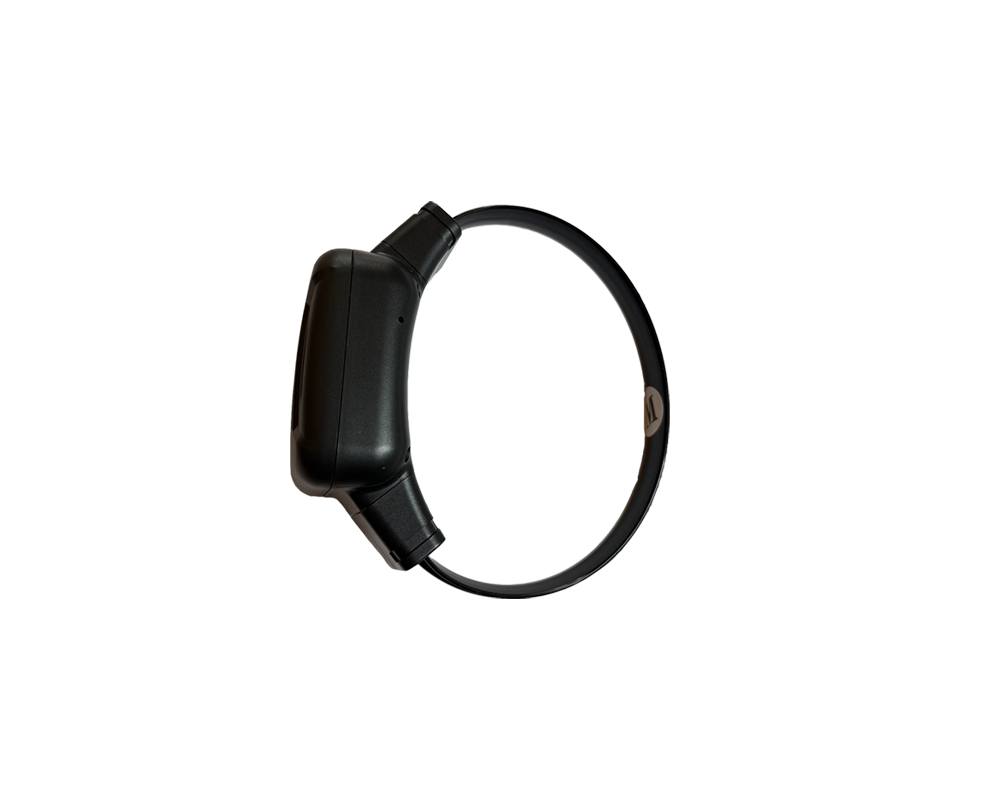
| REFINE Technology (CO-EYE ONE) | One-piece integrated GNSS + cellular module | 108 g | 7 days (LTE-M/NB-IoT, 5 min interval); ONE-AC adds eSIM/BLE extended modes | Fiber-optic strap + case integrity path | 5G-compatible LTE-M / NB-IoT / GSM | Vendor-published < 2 m CEP; contracts still cite NIJ 10 m / 30 m floors | China / global deployments |
Agencies that want a single manufacturer-published datasheet baseline for the one-piece segment may consult CO-EYE ONE GPS ankle bracelet technical specifications alongside incumbent submittals—still subject to your pilot and legal review.
Sample RFP Scoring Template
Weighted scoring keeps protest risk lower than subjective “best value” narratives that lack traceability. A defensible starting point:
- 40% Technical — Tier 1 gates plus Tier 2 differentiators, each sub-criterion capped so a single flashy demo cannot swamp battery or tamper evidence.
- 25% Cost — Lifecycle TCO including spare modems, SIM fees, training seats, and overtime avoided (or incurred) by charging logistics.
- 20% Support — SLA metrics, spare-pool depth, and reference-site analyst hours saved.
- 15% References — Comparable agency interviews, with red-team checks on alert noise and integration claims.
Publish the rubric in the solicitation attachment, not as an afterthought Q&A item, so offerors cannot claim scoring opacity during debriefs.
Illustrative point allocation inside the 40% technical bucket might read: cellular sunset readiness (10 points), tamper evidence package (10 points), NIJ benchmark testing (8 points), battery under operational duty cycle (7 points), and weight/ergonomics (5 points). Adjust integers so sub-weights sum to 100% within each parent category and keep debrief notes that cite the exact paragraph of each offer deemed non-responsive. For shared-service authorities, add a collaboration sub-score so multi-county consortia do not inherit a GPS ankle bracelet contract written for a single sheriff’s warehouse.
Common Procurement Pitfalls to Avoid
Even rigorous rubrics fail when process breaks down. Watch for: (1) copying decade-old attachments that still specify 3G modems; (2) letting cost weight dominate until field services implode under charging churn; (3) omitting data-retention and victim-notification latency clauses from the same contract as the GPS ankle bracelet SKU; (4) skipping blinded pilot scoring—vendors should not coach reference sites before examiner calls; (5) conflating alcohol-analytics platforms with GPS-only statutory mandates; (6) failing to document waiver rationale when a preferred device misses a Tier 1 gate.
Closing independence statement: Ankle Monitor Industry Report does not endorse any vendor named herein. Treat this article as a procurement communication aid; verify specifications, budgets, and legislative citations against primary sources before award.
![The True Cost of Electronic Monitoring: Agency Spending, Taxpayer Savings & TCO Critical Analysis [2026]](https://www.ankle-monitor.org/wp-content/uploads/2026/03/post_src_1774684934870-400x267.jpg)