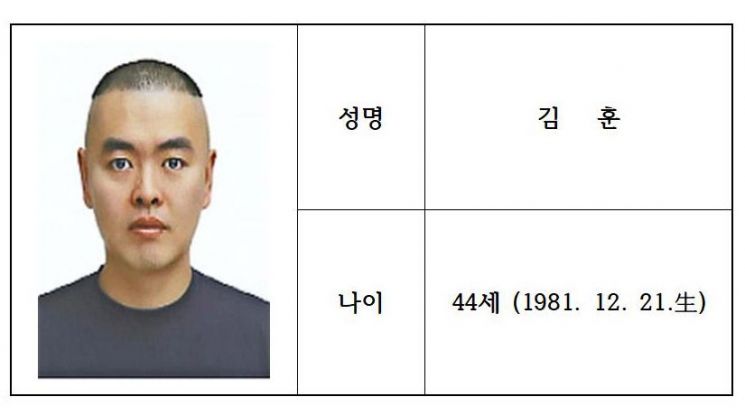
Recent events involving a murder suspect in South Korea highlight persistent challenges within the electronic monitoring landscape. Despite continuous technological advancements, individuals determined to evade supervision continue to exploit vulnerabilities, demanding a renewed focus on tamper-proof designs, faster response mechanisms, and comprehensive risk assessments, especially for violent offenders with antisocial tendencies.
Table of Contents
Key Takeaways
- Electronic monitoring programs face ongoing challenges from sophisticated offender tampering and circumvention methods.
- The incident underscores the limitations of technology alone in preventing premeditated violent crime by high-risk individuals.
- Effective supervision requires integrating monitoring data with rapid law enforcement response and thorough psychological offender assessments.
- Premeditation, coupled with an understanding of monitoring system weaknesses, poses significant risks to public safety.
The Enduring Threat of Device Tampering
The premeditated actions of a man accused of retaliatory murder in Namyangju, South Korea, illustrate a critical vulnerability within community supervision programs: intentional device tampering. According to prosecutors, after allegedly murdering a former partner on March 14, the suspect, Kim Hoon, immediately severed his electronic ankle monitor and fled using a rental car. Investigators later found that Kim had searched online for “how to evade electronic ankle monitor tracking” prior to the crime, signaling a deliberate plan to bypass his supervision.
This incident is not isolated. Offenders worldwide routinely attempt to defeat electronic monitoring devices through various means, from physical removal to more sophisticated signal blocking. While modern GPS ankle bracelets incorporate advanced tamper-detection features, including optical-fiber circuits and multi-sensor systems, a determined individual can still find a way to create a window of opportunity for escape. The crucial factor often becomes the speed and effectiveness of the response once a tamper alert is triggered. A delay of even minutes can allow an offender to create significant distance or commit further harm, as the Namyangju case tragically demonstrates.

Balancing Technology with Human Assessment
The South Korean case also brings into sharp focus the complex interplay between technology, human behavior, and the limitations of risk prediction. Prosecutors revealed that Kim Hoon had been diagnosed with antisocial personality disorder, scoring 33 out of 40 on a psychopathy rating scale—a level higher than many notorious violent offenders. This diagnosis, coupled with a history of violence, stalking, and an ongoing trial for assault against the victim, points to a high-risk individual.
Electronic monitoring is a tool for compliance and tracking, not a preventative measure against all forms of violent crime, particularly those driven by deeply ingrained personality disorders and premeditation. As criminal justice systems increasingly rely on electronic supervision, the integration of robust psychological profiling and continuous risk assessment becomes paramount. Understanding an offender’s mental state, predatory tendencies, and potential for retaliatory actions must inform the intensity and nature of their supervision, extending beyond mere location tracking. The question remains: when is technology enough, and when do high-risk individuals require more intensive, even custodial, oversight?

A Competitive Field
The electronic monitoring sector has no shortage of established players continually working to enhance device security and reliability. BI Incorporated, backed by GEO Group, remains one of the largest providers in the U.S. SCRAM Systems dominates the alcohol monitoring niche with its continuous monitoring ankle devices. Attenti, now under Allied Universal, serves programs in over 30 countries. Smaller vendors also innovate, offering compact one-piece GPS designs, some featuring sophisticated optical-fiber tamper detection and rapid installation methods designed to minimize vulnerabilities. The focus across the industry is on developing more secure, harder-to-defeat devices while also improving data transmission and analytics to provide supervising authorities with better insights.
Looking ahead, the electronic monitoring industry is likely to see further integration of predictive analytics and artificial intelligence to identify tampering patterns or elevated risk factors before incidents occur. Enhanced real-time tracking, faster alert systems, and seamless data sharing with law enforcement agencies are critical pathways. The ultimate goal is to evolve beyond simple tracking to a more proactive model of community supervision, where technology serves as a vital component in a comprehensive strategy to manage high-risk individuals and enhance public safety.
Related Resources: GPS Ankle Monitor Buyer’s Guide | Probation GPS Monitoring Guide | House Arrest Monitoring Guide