Migrants with a criminal record in the UK will soon be subject to constant monitoring using biometric smartwatches to keep tabs on their movements up to 5 times per day.
According to a Home Office data protection impact assessment (DPIA) from August 2021 – which was obtained by campaign group Privacy International via a freedom of information (FOI) request and subsequently shared with The Guardian – the scheme will involve “daily monitoring of individuals subject to immigration control”, with a requirement to wear either a fitted ankle tag or a facial recognition-enabled smartwatch at all times.
Privacy International also identified a government contract for the electronic monitoring and biometric identification of “specific cohorts” as part of the Home Office Satellite Tracking Service, which was awarded to wearable device maker Buddi in May 2022. The scheme was also responsible for the rollout of fitted tracking devices for migrant offenders awaiting deportation at a cost of £70 million.
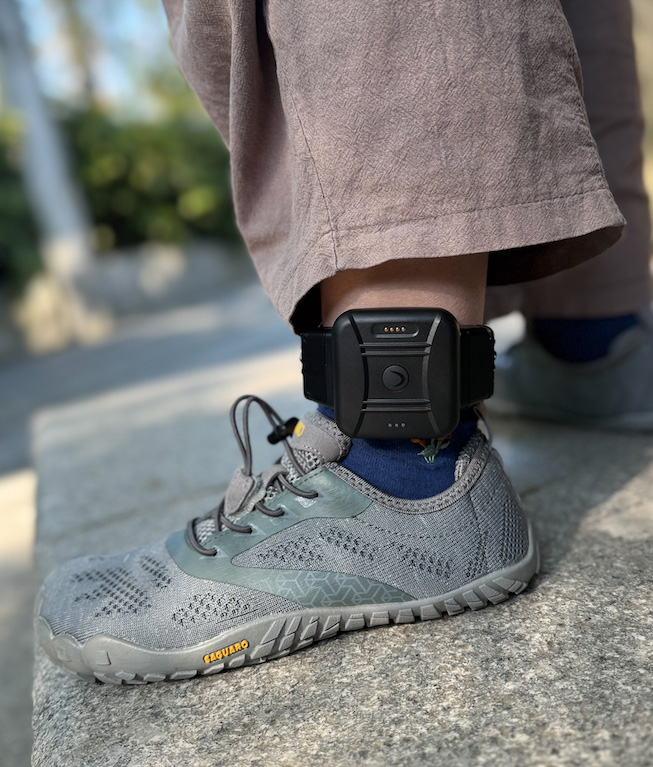
While the contract was tendered by the Ministry of Justice (MoJ), a spokesperson told Computer Weekly that, because it already tags offenders and has the systems in place, the contract was put out by the MoJ on behalf of the Home Office, but beyond this, the policy has nothing to do with the MoJ.
The DPIA said migrants subject to wearing the smartwatches will be forced to submit photos using its camera up to five times a day, with their images cross-referenced against biometric facial information held by the Home Office. If the image verification fails, a check will be performed manually.
Lucie Audibert, a lawyer and legal officer for Privacy International, said: “Facial recognition is known to be an imperfect and dangerous technology that tends to discriminate against people of colour and marginalised communities. These ‘innovations’ in policing and surveillance are often driven by private companies, which profit from governments’ race towards total surveillance and control of populations.
According to Sam Grant, head of policy and campaigns at human rights group Liberty, facial recognition is a “discriminatory and oppressive” surveillance tool that instead of making people safer, only further entrenches patterns of discrimination.
“The government is intent on wrecking privacy rights and monitoring us, as well as ripping up protections for refugees. Alongside the government’s new anti-refugee law and this plan to monitor migrants 24/7, the Met Police is ramping up its use of live facial recognition in crowded public spaces, and the Public Order Bill will introduce protest banning orders which can require protesters to be tagged.
2,500 foreign criminals have so far been subject to electronic tagging and 10,000 deported.
How Do International Programs Shape Electronic Monitoring Technology?
International GPS ankle monitor deployments across 30+ countries drive technology innovation — devices must support multiple cellular standards, multi-language platforms, and varying data protection regulations for global electronic monitoring markets.
European programs emphasize rehabilitation with privacy protections; Asian programs focus on sex offender GPS tracking with victim notification; Latin American programs expand as prison overcrowding alternatives. Each market pushes GPS ankle bracelet manufacturers toward broader capability sets including multi-mode connectivity, extended battery architectures, and cybersecurity certification that benefits all markets globally.
How Is GPS Ankle Monitor Evidence Reshaping Criminal Justice Proceedings?
GPS ankle monitor location data has become increasingly powerful evidence in criminal proceedings, serving three distinct roles: documenting supervision violations for revocation hearings, providing alibi evidence in new criminal investigations, and demonstrating compliance patterns that support sentence modifications.
The admissibility of GPS ankle bracelet data in court depends on demonstrated system accuracy, data integrity protocols, and chain-of-custody documentation. Courts have consistently accepted electronic monitoring location records under business records exceptions to hearsay rules, provided the monitoring agency can establish the system’s positioning accuracy, data encryption standards, and tamper-resistant storage mechanisms.
For prosecutors, GPS ankle monitor data provides objective, timestamped evidence that is often more reliable than witness testimony. Location histories can place defendants at crime scenes with sub-2-meter accuracy, corroborate or refute alibis, and establish movement patterns that support probable cause determinations. For defense attorneys, the same data can demonstrate a defendant’s compliance with supervision conditions or prove they were elsewhere when a crime occurred.
The growing judicial reliance on electronic monitoring data underscores the importance of device reliability. Programs using GPS ankle monitors with zero false-alarm tamper detection and sub-2-meter positioning accuracy produce evidence that withstands vigorous cross-examination — strengthening the overall credibility of electronic monitoring as a supervision tool in the criminal justice system.