The UK Ministry of Justice has launched the largest expansion of electronic monitoring in British history, committing £700 million through 2028/29 to dramatically increase the number of offenders tracked by GPS ankle bracelets. The initiative targets thousands of domestic abusers, thieves, and burglars, with plans to tag every prison leaver by the end of the year and significantly expand electronic tagging for individuals on community sentences.
Table of Contents
The Wearer’s Perspective: Shame, Surveillance, and Scrutiny
Having previously served as a test subject for the Ministry of Justice’s sobriety tags – successfully triggering an alcohol monitoring device after a dedicated session of drinking – this reporter recently undertook another trial: wearing a GPS ankle bracelet designed to track an offender’s location. The experience underscored two immediate and potent emotions: shame and accountability.
The embarrassment was palpable. Navigating the corridors of Parliament, passing Members of Parliament, or riding the London Underground to social events, the visible electronic monitor on my leg prompted internal questions. Was I being judged? Did passersby notice the device and wonder what rule I had broken? This anxiety became a constant companion, forcing an uncomfortable self-awareness.

Accountability manifested through the constant, physical reminder of being under surveillance. The “Big Brother”-esque reality of electronic monitoring became starkly clear during a debrief at the Ministry of Justice offices – the equivalent of a probation service appointment for an offender. An official probed my movements: “Why were you hanging around a school for a long time last night?” My quick explanation – my friend’s house is adjacent to one, and it was his birthday party – satisfied the query, but the interrogation itself was unsettling. Officials clarified that such pointed questions are standard practice for high-risk individuals, including sex offenders and child abusers.
Advanced Tracking and Victim Protection Initiatives
Beyond general location tracking, the expanded program introduces several advanced monitoring capabilities. During my test, St James’s Park was designated an “exclusion zone,” an area an offender is forbidden from entering due to victim presence or other restrictions. Ministry of Justice mapping provided a precise record of my route through the park, highlighting even brief stops to observe lakeside birds. Conversely, “restriction zones” are also being utilized to confine offenders to specific geographical areas.
A new £5 million pilot aims to enhance victim protection through proximity monitoring technology. This system will alert a third-party service when offenders convicted of crimes like domestic abuse and stalking approach a victim. While details are still being finalized, victims may be required to carry a dedicated device or install an application on their smartphone to facilitate tracking their location in relation to the offender’s electronic monitor.
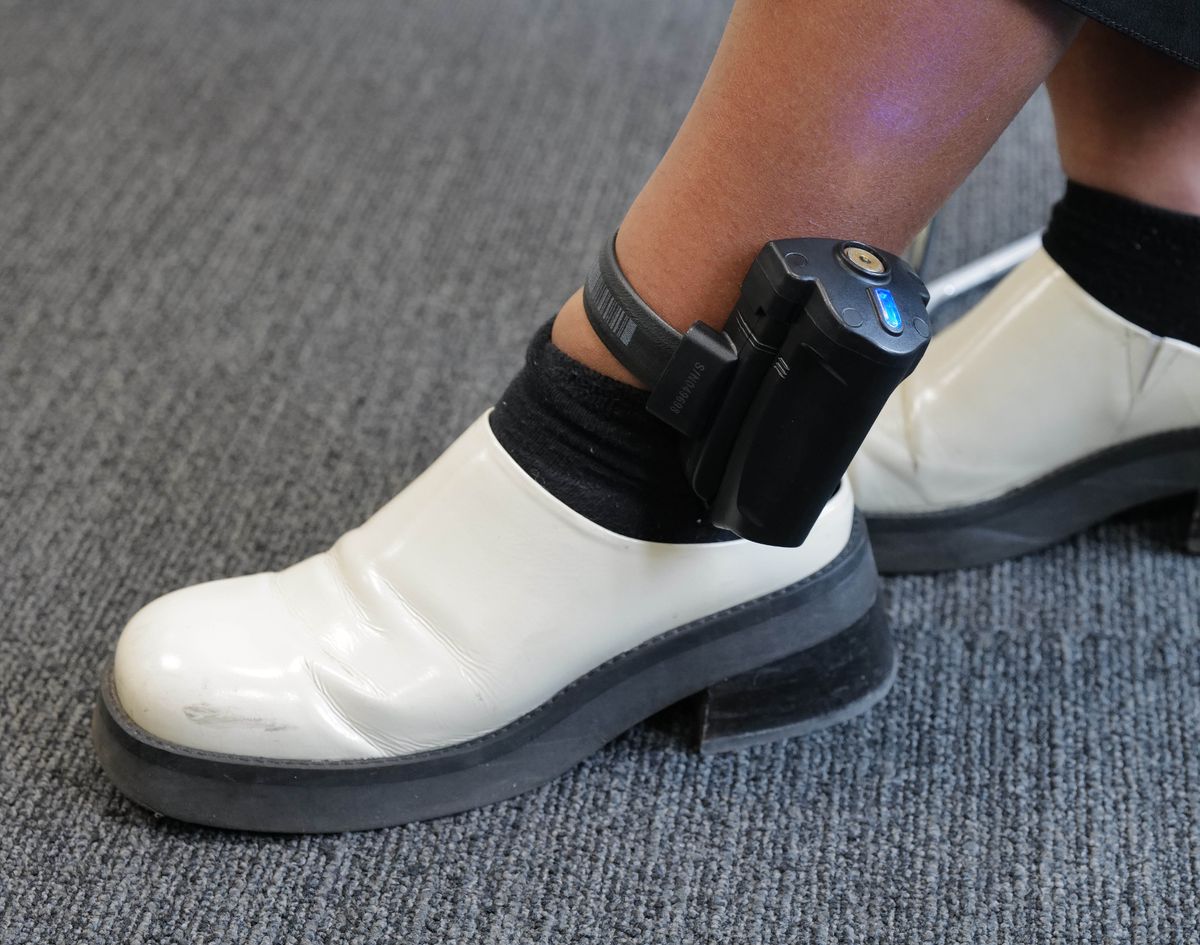
The Ministry of Justice is also rolling out its acquisitive crime scheme across all 43 police forces before the end of this Parliament. This program maps an offender’s GPS ankle bracelet data against the locations of unsolved crimes. Officials claim this project has led to a 20% reduction in crime where implemented. During my trial, a hypothetical theft incident was fabricated in St James’s Park, aligning with my recorded movements. In a real-world scenario, this data would be provided to police, initiating an investigation.
When challenged on the potential for individuals to be wrongly linked to crimes, ministers insist that electronic monitoring data serves as an investigative tool, not the sole piece of evidence. They also highlight its utility in exonerating suspects, as police can rule out individuals who were not in the location of a crime when it occurred.
Broader Implications for Community Supervision
The substantial investment and broad scope of this electronic monitoring expansion signify a strategic shift in UK offender supervision. The move underscores a reliance on technology like GPS ankle bracelets for offender tracking, aiming to enhance public safety and reduce reoffending. As the Ministry of Justice pushes forward with this widespread implementation, the criminal justice system will grapple with the balance between extensive surveillance capabilities and the broader goals of rehabilitation and reintegration for those under community supervision.
Source: ‘I wore an ankle tag – the shame was unbearable then brutal question floored me’
How Are Technology Advances Reshaping the Electronic Monitoring Landscape?
The GPS ankle monitor industry is undergoing its most significant technology transition since the introduction of satellite tracking, with fourth-generation devices introducing adaptive multi-mode connectivity, breakthrough battery architectures, and zero false-alarm tamper detection that collectively redefine operational expectations.
Generation 4 electronic monitoring technology addresses three persistent operational barriers simultaneously. First, adaptive BLE/WiFi/LTE connectivity enables GPS ankle bracelet devices to automatically select the most power-efficient communication mode based on the monitoring environment — extending battery life from the industry standard of 24-72 hours to 7 days (LTE), 3 weeks (WiFi), or 180 days (BLE connected mode). Second, WiFi-directed connectivity eliminates cellular dead zones by enabling data transmission through standard home WiFi networks — a $10-50 WiFi repeater placed in a basement apartment provides both connectivity and extended battery life. Third, fiber-optic tamper detection eliminates the 15-30% false alarm rates that consume officer capacity in current programs.
For agencies planning electronic monitoring investments, these improvements are not incremental — they represent an architectural generation change that legacy devices cannot achieve through firmware updates alone. The connectivity and battery improvements require hardware capabilities (WiFi and BLE transceivers) that existing ankle monitor devices simply do not possess.
The practical impact for corrections and pretrial programs: 85% reduction in charging-related alerts, continuous monitoring in previously unreachable environments, and dramatic reductions in false alarm workload — enabling agencies to manage larger caseloads without proportional staff increases.