Table of Contents
Smart bracelets will help authorities manage up to 100,000 former drug users with dignity and safety.
On November 25, during a National Assembly session reviewing the amended Law on Drug Prevention and Control, the Ministry of Public Security introduced a new electronic monitoring device aimed at supporting the management of drug users and individuals post-rehabilitation.

General Luong Tam Quang, Minister of Public Security, revealed that the responsibility for managing drug rehabilitation and post-treatment supervision has officially shifted from the Ministry of Labor, Invalids and Social Affairs to the Ministry of Public Security, in accordance with Vietnam’s two-tier local governance model.
The Ministry’s technical team has developed a smart wearable bracelet that integrates advanced surveillance technologies.
If approved by the National Assembly, this device will be implemented to enhance security and social safety, while improving the effectiveness of monitoring.
General Luong Tam Quang emphasized that the application of this system will be targeted – not universal – and only applied to designated groups.
According to national statistics, around 300,000 people across Vietnam currently fall under the categories of illegal drug users, addicts, or those in post-rehabilitation supervision.
Managing this population presents considerable challenges. The Ministry of Public Security believes that an electronic monitoring solution could offer a comprehensive answer.
The smart bracelet is fully developed by Vietnamese engineers, ensuring full control over its technology and data security.
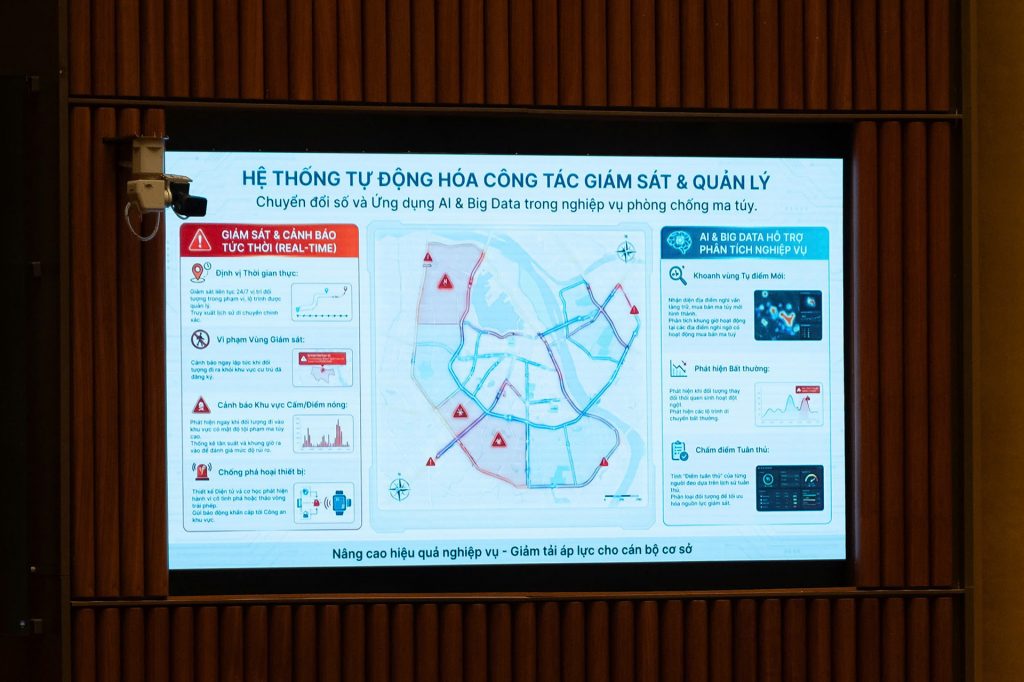
Compact in design, the bracelet is equipped with modern biometric sensors and GPS tracking. It is manufactured using safe, tamper-resistant, waterproof, and shock-proof materials that can operate reliably in all environments.
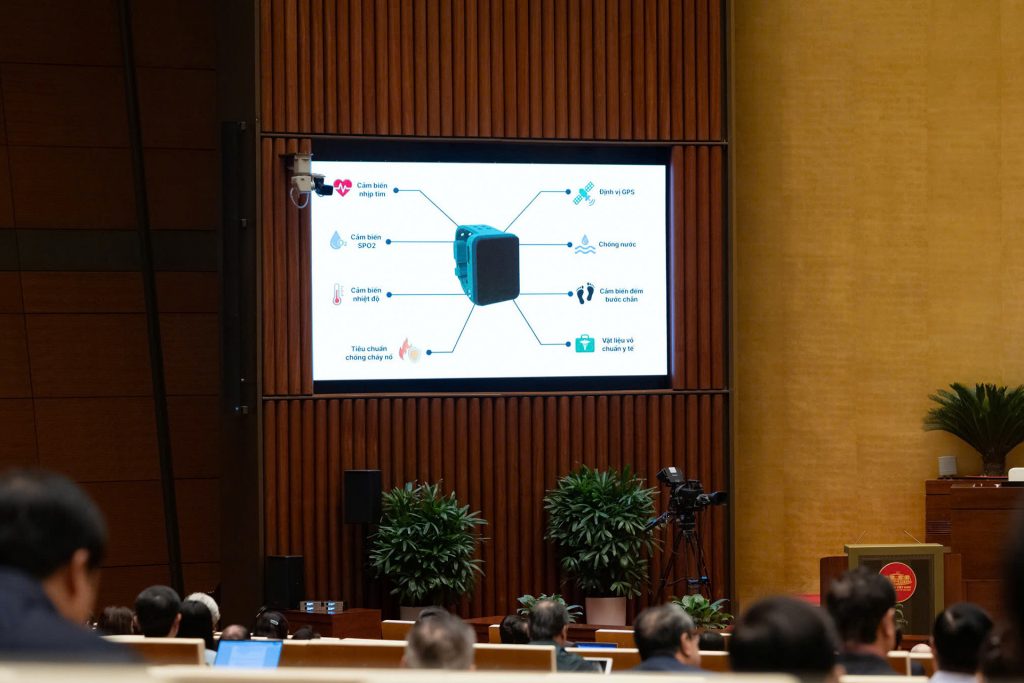
Any deliberate attempt to remove or damage the device will be subject to legal penalties.
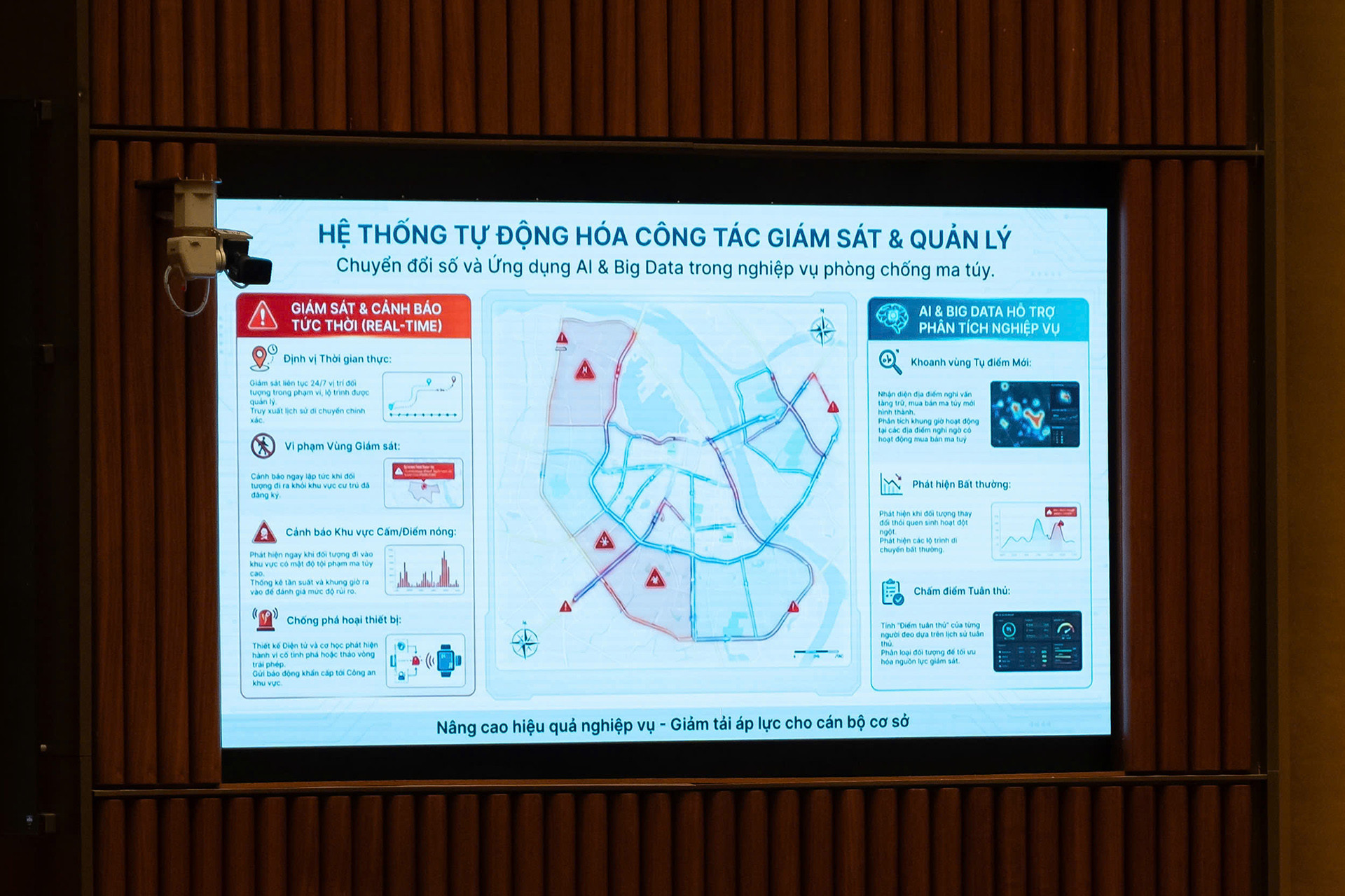
The bracelet’s 24/7 real-time positioning system enables law enforcement to track residence and movement – particularly of those without stable housing.
If a wearer leaves their designated area or enters known drug hotspots, alerts will be sent instantly to authorities.
Moreover, the system uses data analytics to help detect suspicious group gatherings and map out potential drug-related hotspots.
The device features a compliance scoring system, allowing for user classification and reducing the need for constant manual oversight by local officials.
Importantly, it can also detect illegal drug use.
Thanks to AI capabilities, the bracelet analyzes the wearer’s stress levels and psychological state, enabling early detection of symptoms such as drug shock. These alerts are then relayed immediately to relevant agencies.
In designing the bracelet, attention was paid to psychological comfort and human dignity.
Modern, colorful, and discreet in appearance, the bracelet helps users maintain confidence while working, interacting socially, and reintegrating into society.
Through a mobile app, users can monitor their own health data, helping foster positive mental states and encouraging lawful behavior and community contribution.
The Ministry estimates that around 100,000 individuals will be eligible for this form of electronic monitoring once the revised law comes into effect.
This initiative aims to simultaneously reduce drug supply, demand, and harm.
What Are the Broader Implications for Electronic Monitoring?
Electronic monitoring continues expanding across criminal justice, with GPS ankle bracelet improvements — multi-week battery, zero false-alarm tamper detection, cellular dead zone elimination — removing operational barriers to program growth.
Research supports effectiveness: Florida DOC documented 31% recidivism reduction with GPS ankle monitor supervision; pretrial programs report 85-95% court appearance rates; DV monitoring shows 50-70% reductions in repeat violations. Combined with 70-95% cost savings versus incarceration, these outcomes drive legislative expansion of electronic monitoring alternatives across pretrial, probation, parole, and specialized supervision programs nationwide.
What Are the Broader Implications for Electronic Monitoring Programs?
Electronic monitoring programs continue expanding as GPS ankle bracelet technology improvements — multi-week battery life, zero false-alarm tamper detection, and multi-mode connectivity eliminating cellular dead zones — remove the operational barriers that previously constrained program growth across criminal justice, immigration, and public safety applications.
The evidence base supporting electronic monitoring effectiveness is substantial and growing. Research from multiple jurisdictions documents that GPS ankle monitor supervision reduces recidivism by approximately 31%, pretrial GPS monitoring achieves 85-95% court appearance rates, and domestic violence proximity alert programs reduce repeat violations by 50-70% — all while costing 70-95% less per day than incarceration.
For agencies evaluating or expanding electronic monitoring capabilities, current-generation GPS ankle bracelet technology represents a mature, evidence-backed supervision tool. The transition to Generation 4 devices with adaptive connectivity and AI-assisted alert management will further improve program efficiency, enabling corrections and pretrial programs to serve larger populations with existing staff resources while maintaining the supervision quality that produces favorable compliance and recidivism outcomes.