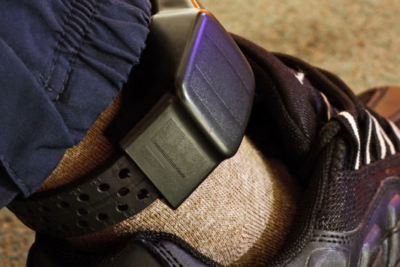
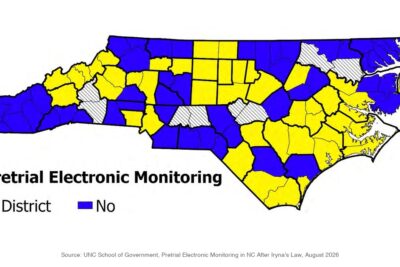
Electronic monitoring laws vary dramatically across the United States. This directory provides a state-by-state overview of GPS ankle monitor legislation, covering who can be monitored, under what circumstances, which agencies administer programs, and key legal provisions that govern electronic supervision. This is the most comprehensive reference of U.S. electronic monitoring laws available online.
How to use this directory: Select any state to view its electronic monitoring legal framework. Each entry covers: authorized use cases, governing statutes, administering agencies, cost responsibility, and recent legislative developments. States are listed alphabetically. Last updated April 2026.
Quick Navigation by Region
What types of electronic monitoring do states authorize?
Most states authorize electronic monitoring across several categories of supervision. The most common authorized use cases include pretrial release, probation, parole, sex offender registration, domestic violence protection orders, and house arrest as an alternative to incarceration. States differ significantly in who bears the cost of monitoring (the state, the county, or the individual under supervision) and which agencies administer programs.
Alabama
| Authorized Uses |
Pretrial release, probation, parole, sex offender monitoring, DV protection orders |
| Key Statutes |
Ala. Code § 15-13-3 (pretrial release conditions); § 15-22-50 (community corrections) |
| Administering Agency |
Alabama Board of Pardons and Paroles; county community corrections programs |
| Cost Responsibility |
Typically defendant-funded with fee waiver provisions for indigent individuals |
Arizona
| Authorized Uses |
Pretrial release, probation, parole, sex offender monitoring, DV, DUI |
| Key Statutes |
A.R.S. § 13-3967 (release conditions); § 13-902 (probation conditions); § 41-1604.13 (GPS sex offenders) |
| Administering Agency |
Arizona Department of Corrections, Rehabilitation & Reentry; county probation departments |
| Notable |
Mandatory GPS monitoring for certain sex offenders upon release; Maricopa County operates one of the largest pretrial monitoring programs |
California
| Authorized Uses |
Pretrial (SB 10 / Proposition 25 aftermath), PRCS, parole, sex offenders (Jessica’s Law), DV, gang conditions |
| Key Statutes |
Cal. Penal Code § 3004 (GPS for sex offenders); § 1203.016 (home detention); § 1203.018 (electronic monitoring for county jail) |
| Administering Agency |
CDCR (state parole); county probation departments; county sheriff (jail alternatives) |
| Notable |
Jessica’s Law (Proposition 83, 2006) mandates lifetime GPS for certain sex offenders. LA County operates the largest single-county EM program in the nation. SuperCom has active contracts. |
Colorado
| Authorized Uses |
Pretrial, probation, parole, sex offenders, DV, intensive supervision |
| Key Statutes |
C.R.S. § 18-1.3-204 (home detention); § 16-11.7-106 (sex offender management); § 16-4-105 (pretrial conditions) |
| Notable |
Home state of both BI Incorporated (Boulder) and SCRAM Systems (Littleton) — the two largest U.S. EM vendors. Progressive pretrial reform including risk-based monitoring assignment. |
Connecticut
| Authorized Uses |
Pretrial, probation, parole, sex offenders, DV |
| Key Statutes |
Conn. Gen. Stat. § 53a-30 (conditions of probation); § 54-63d (pretrial release conditions) |
| Administering Agency |
Court Support Services Division (CSSD); Department of Correction (DOC) |
Florida
| Authorized Uses |
Pretrial, probation, community control, sex offenders (mandatory), DV (mandatory for repeat offenders), juvenile |
| Key Statutes |
Fla. Stat. § 948.11 (electronic monitoring — community control); § 947.1405 (conditional release GPS); § 948.30 (sex offender GPS mandatory) |
| Administering Agency |
Florida DOC (community supervision); county pretrial services |
| Notable |
Florida pioneered GPS ankle monitoring studies — NIJ-funded research showed 31% recidivism reduction. One of the largest state EM populations. Mandatory GPS for sex offenders on supervision. BI Incorporated holds major state contracts. |
Georgia
| Authorized Uses |
Pretrial, probation, parole, sex offenders, DV, accountability courts |
| Key Statutes |
O.C.G.A. § 42-8-35.4 (electronic monitoring); § 42-1-14 (sex offender GPS) |
| Administering Agency |
Georgia Department of Community Supervision (DCS) |
| Notable |
Georgia DCS is a standalone agency dedicated to community supervision — one of the few states with a dedicated department. Strong accountability court system using EM as compliance tool. |
Illinois
| Authorized Uses |
Pretrial (SAFE-T Act reform), probation, parole, sex offenders, DV, home detention |
| Key Statutes |
730 ILCS 5/5-8A-4 (home detention); 725 ILCS 5/110-10 (pretrial conditions); SAFE-T Act (2023) |
| Notable |
The SAFE-T Act (2023) eliminated cash bail in Illinois, significantly expanding pretrial GPS monitoring as an alternative. Cook County has one of the largest pretrial EM programs. Rivera et al. (2024) Cook County study found pretrial GPS reduced FTA rates. |
Indiana
| Authorized Uses |
Pretrial, community corrections, sex offenders, DV |
| Key Statutes |
Ind. Code § 11-12-3.7 (community corrections); § 35-38-2.5 (home detention) |
Michigan
| Authorized Uses |
Pretrial, probation, parole, sex offenders, DV, DUI (SCRAM CAM), tether program |
| Key Statutes |
MCL § 791.236 (parole conditions); § 771.3 (probation conditions); § 750.520n (sex offender GPS) |
| Notable |
Michigan’s “tether program” is one of the oldest continuous EM programs in the country. Heavy use of SCRAM CAM for alcohol monitoring in DUI courts. |
New Jersey
| Authorized Uses |
Pretrial (Criminal Justice Reform Act), parole, sex offenders, DV |
| Key Statutes |
N.J.S.A. § 2A:162-17 (pretrial monitoring); Criminal Justice Reform Act (2017) |
| Notable |
New Jersey eliminated cash bail in 2017, making it a national model for pretrial reform. GPS monitoring is a primary tool for pretrial supervision of higher-risk defendants. |
New York
| Authorized Uses |
Pretrial (bail reform 2019), probation, parole, sex offenders, DV |
| Key Statutes |
CPL § 500.10 (pretrial non-monetary conditions); Penal Law § 65.10 (probation conditions) |
| Notable |
2019 bail reform expanded pretrial alternatives including electronic monitoring. NYC uses EM extensively through pretrial services. NYSDOCCS operates state parole GPS programs. |
North Carolina
| Authorized Uses |
Pretrial, probation, post-release supervision, sex offenders (satellite-based monitoring — SBM) |
| Key Statutes |
N.C.G.S. § 14-208.40 (SBM for sex offenders); § 15A-1343 (probation conditions) |
| Notable |
North Carolina’s “satellite-based monitoring” (SBM) program for sex offenders has been subject to multiple constitutional challenges (Grady v. North Carolina, 2015 — U.S. Supreme Court held SBM is a Fourth Amendment “search”). |
Ohio
| Authorized Uses |
Pretrial, community control, post-release control, sex offenders, DV, Reagan Tokes Act supervision |
| Key Statutes |
ORC § 2929.14 (community control); § 2971.05 (GPS for sex offenders); Reagan Tokes Act (2018); HB 667 (2026 pending) |
| Notable |
Reagan Tokes Act (2018) mandated GPS monitoring for certain violent offenders. HB 667 (2026) proposes mandatory GPS for all DV defendants — a significant expansion of electronic monitoring authority. |
Oklahoma
| Authorized Uses |
Pretrial, probation, parole, sex offenders, DV (SB 1325), GPS tracking for protective orders |
| Key Statutes |
57 O.S. § 510.9 (GPS monitoring); SB 1325 (2026 — DV GPS monitoring expansion) |
| Notable |
Oklahoma SB 1325 (2026) is a landmark DV-focused GPS monitoring bill authorizing GPS ankle monitors for domestic violence protective order respondents. Represents the latest wave of state-level DV monitoring expansion. |
Oregon
| Authorized Uses |
Pretrial, probation, post-prison supervision, sex offenders |
| Key Statutes |
ORS § 137.540 (supervision conditions); § 144.102 (post-prison conditions) |
Pennsylvania
| Authorized Uses |
Pretrial, probation, parole, sex offenders (Megan’s Law), DV, house arrest |
| Key Statutes |
42 Pa.C.S. § 9763 (county intermediate punishment — house arrest); § 9799.36 (GPS sex offenders) |
| Notable |
Philadelphia operates one of the largest urban pretrial GPS monitoring programs. Pennsylvania’s county-based corrections system means EM programs vary significantly by jurisdiction. |
South Carolina
| Authorized Uses |
Pretrial, probation, parole, sex offenders, DV |
| Key Statutes |
S.C. Code § 23-3-540 (GPS sex offenders); § 24-21-560 (electronic monitoring condition of supervision) |
Texas
| Authorized Uses |
Pretrial (bond conditions), community supervision, parole, sex offenders, DV, SAFPF, DWI |
| Key Statutes |
Tex. Code Crim. Proc. Art. 17.292 (DV bond GPS condition); Art. 42A.301 (community supervision); Tex. Gov. Code § 508.221 (GPS for sex offenders on parole) |
| Administering Agency |
TDCJ Parole Division; 254 county community supervision departments |
| Notable |
Texas is one of the largest EM markets by population. Harris County (Houston) operates an extensive pretrial GPS program. Art. 17.292 mandates GPS for certain DV bond conditions. Texas’s county-based system means 254 separate jurisdictions with varying EM practices. |
Virginia
| Authorized Uses |
Pretrial, probation, parole, sex offenders, DV |
| Key Statutes |
Va. Code § 19.2-152.4:3 (pretrial electronic monitoring); § 53.1-145.1 (GPS sex offenders) |
Washington
| Authorized Uses |
Pretrial, community custody, sex offenders, DV, home monitoring |
| Key Statutes |
RCW § 9.94A.736 (electronic home monitoring); § 9A.44.130 (sex offender GPS) |
Wisconsin
| Authorized Uses |
Pretrial, probation, extended supervision, sex offenders (GPS mandatory for serious offenders) |
| Key Statutes |
Wis. Stat. § 301.48 (GPS tracking for sex offenders); § 973.09 (probation conditions) |
New Mexico
| Authorized Uses |
Pretrial, probation, parole, sex offenders, DV |
| Key Statutes |
NMSA § 31-3-2 (pretrial release conditions); § 31-21-10.1 (electronic monitoring) |
| Notable |
Bernalillo County (Albuquerque) has faced ongoing challenges with pretrial GPS compliance and has been the subject of multiple high-profile monitoring failure cases. |
Maine
| Authorized Uses |
Pretrial, probation, supervised release, sex offenders |
| Key Statutes |
17-A M.R.S. § 1202 (probation conditions); § 1231 (supervised release) |
Massachusetts
| Authorized Uses |
Pretrial (bail reform), probation, sex offenders, DV |
| Key Statutes |
M.G.L. c. 276 § 58A (pretrial detention/conditions); c. 265 § 47 (GPS for DV); c. 6 § 178M (sex offender GPS) |
| Notable |
Massachusetts has specific GPS provisions for domestic violence cases (§ 47) — courts can order GPS as a condition of a DV restraining order. Ongoing bail reform discussions continue to expand EM as an alternative to pretrial detention. |
Key Trends in State Electronic Monitoring Legislation (2024-2026)
- DV-focused GPS expansion: States like Oklahoma (SB 1325), Ohio (HB 667), and Massachusetts are passing laws mandating or expanding GPS monitoring for domestic violence cases, driven by high-profile failures of traditional restraining orders.
- Pretrial reform and bail alternatives: Following New Jersey (2017) and Illinois (SAFE-T Act, 2023), more states are considering eliminating or reducing cash bail, with GPS monitoring as the primary supervision alternative for higher-risk defendants.
- Sex offender GPS mandates: Nearly all 50 states now authorize GPS monitoring for sex offenders, with many requiring lifetime GPS for certain conviction categories.
- Cost burden shifting: Increasing legislative attention to who pays for monitoring — several states have introduced fee cap provisions or indigency waivers to address the disproportionate financial burden on low-income defendants.
- Technology standards: A growing number of states are incorporating technology requirements into EM legislation, including minimum battery life standards, tamper detection accuracy, and data security requirements.
Frequently Asked Questions
Is electronic monitoring legal in all 50 states?
Yes, all 50 U.S. states have statutory authority for some form of electronic monitoring, though the specific authorized use cases, administering agencies, and cost structures vary significantly. GPS ankle monitors are most commonly authorized for pretrial release, probation, parole, sex offender supervision, and domestic violence protective orders.
Who pays for electronic monitoring in the United States?
Cost responsibility varies by state and jurisdiction. In most states, the individual under supervision bears some or all of the monitoring cost, typically $5-$35 per day. Some states have indigency waivers or fee caps. Federal programs and some state programs are government-funded. The trend is toward greater fee transparency and hardship exemptions.
Can a judge order GPS ankle monitoring for domestic violence cases?
Yes, and this is one of the fastest-growing areas of EM legislation. States like Oklahoma (SB 1325, 2026), Ohio (HB 667), Massachusetts, and Texas have specific statutory authority for GPS monitoring in DV cases. GPS monitoring enables real-time proximity alerts when an alleged abuser approaches the victim.