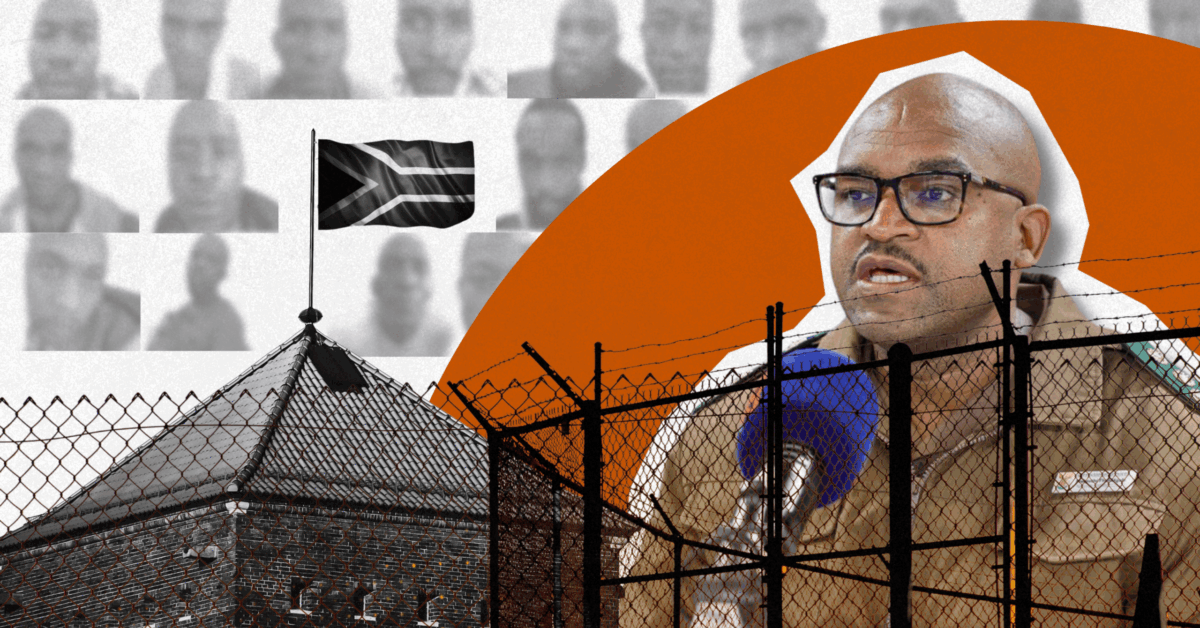
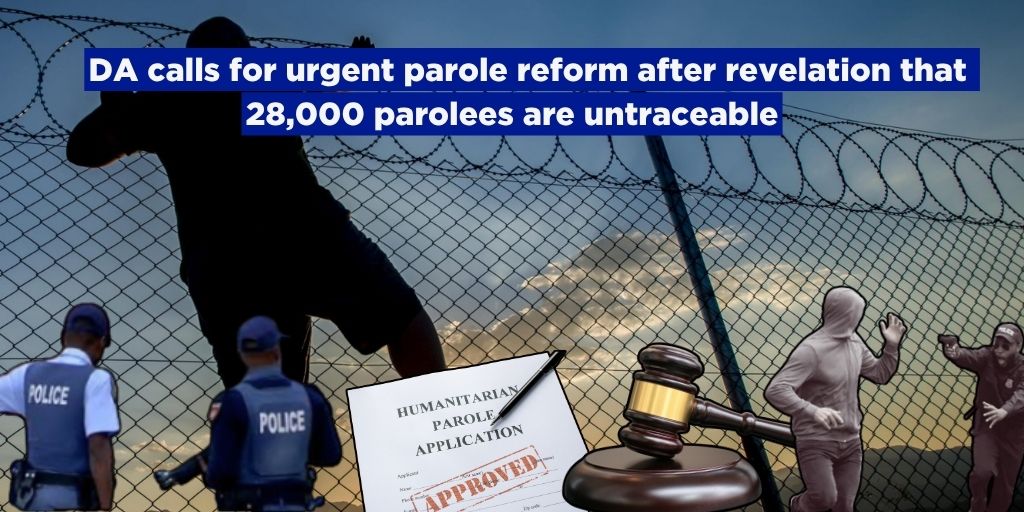
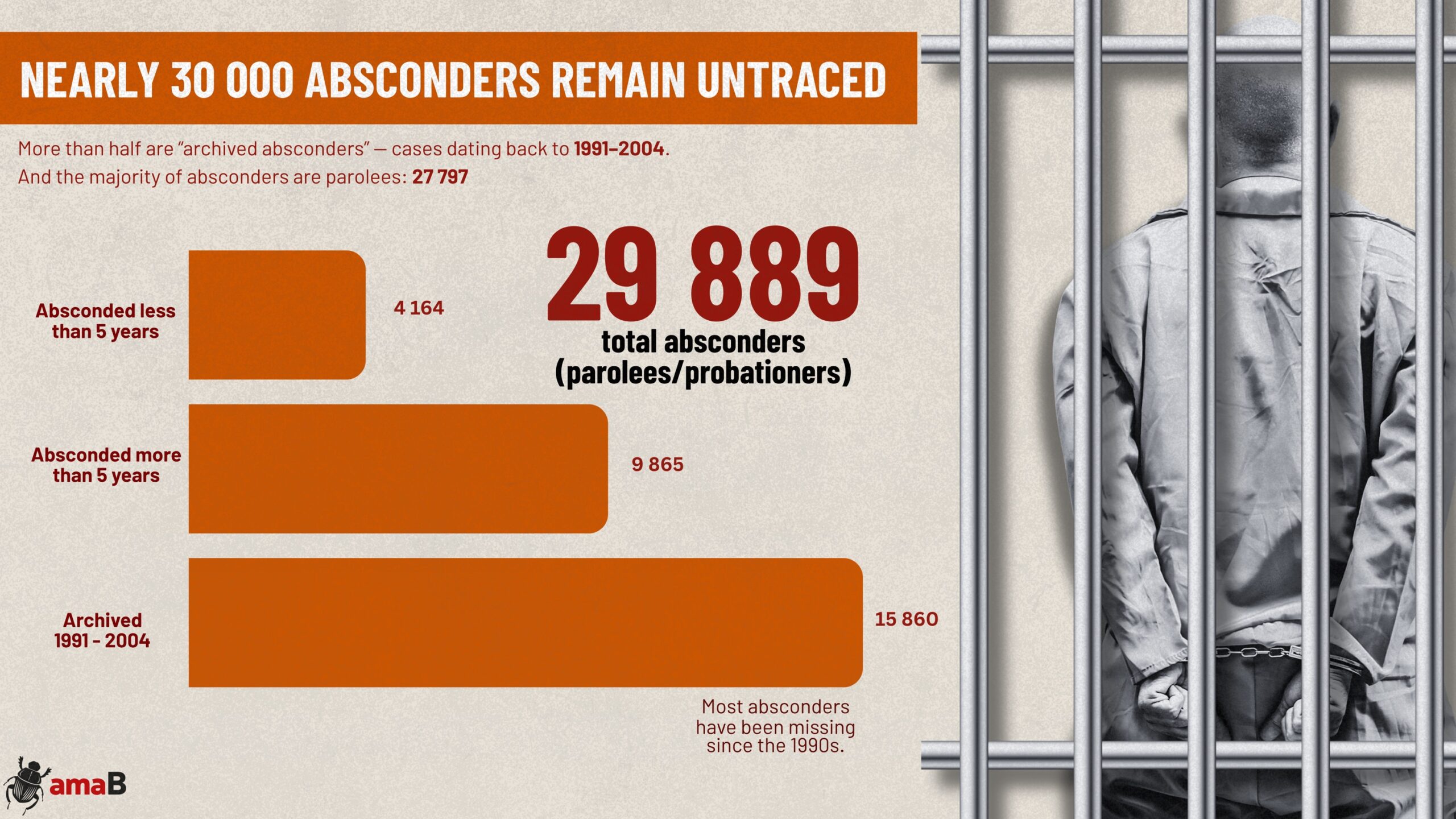
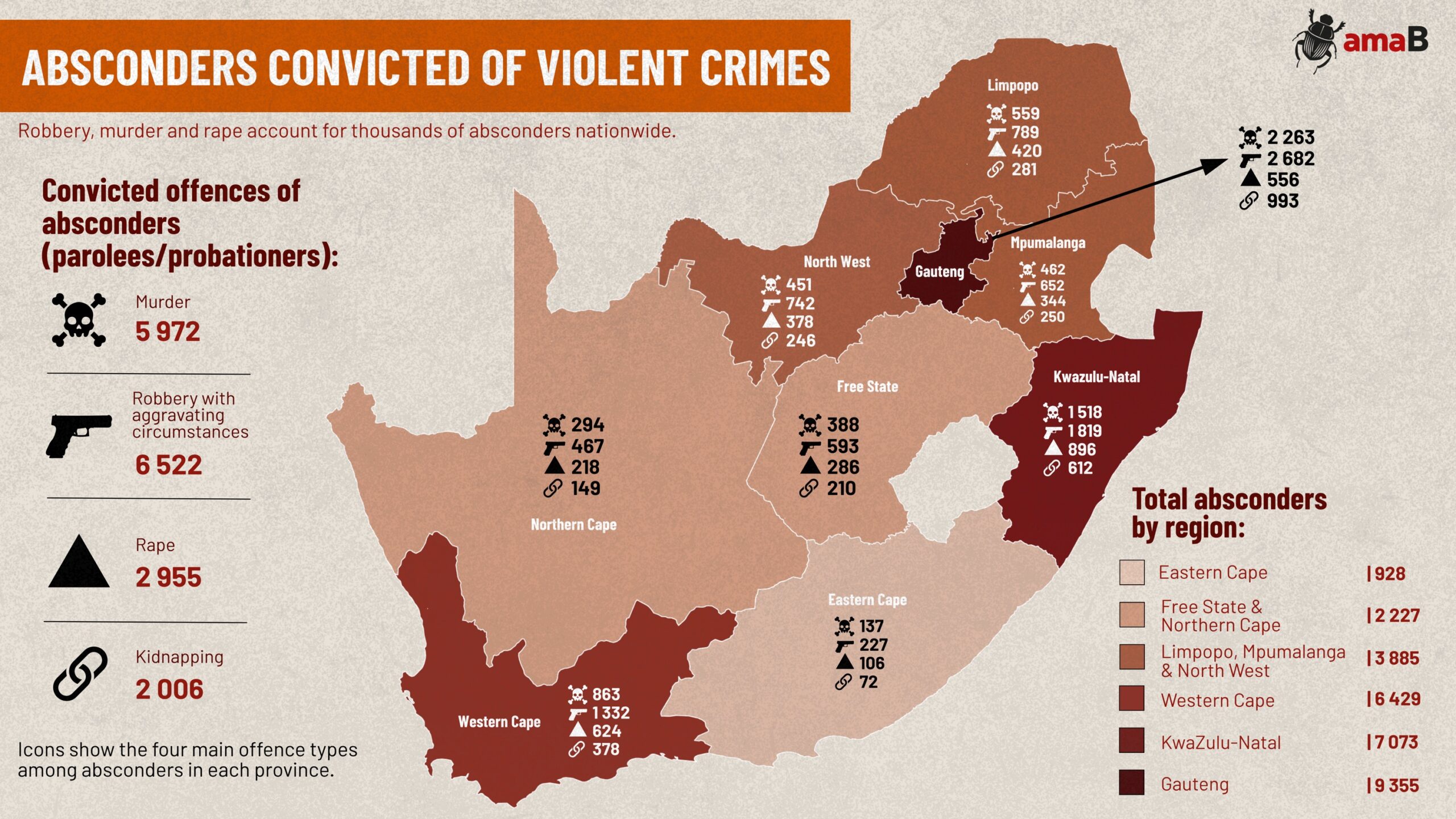
Nearly 28,000 convicted murderers, rapists, and armed robbers released on parole in South Africa have simply vanished — and the government cannot find them. An amaBhungane investigation published on May 28, 2026 exposed what may be the largest documented failure of parole supervision in the modern era: the Department of Correctional Services (DCS) has lost track of 27,797 high-risk parolees who absconded within six months of release.
Every single one of those 27,797 people vanished during the period when they were classified as highest risk. They stopped reporting to parole offices. They abandoned the addresses they had listed as conditions of release. And the state — with just 1,000 parole monitors responsible for 44,000 active parolees — had neither the staff nor the systems to notice in time.
This is not merely a South African problem. It is a warning to every country that releases prisoners into communities without adequate supervision infrastructure. The question is not whether electronic monitoring could have prevented this catastrophe — it is why a technology that has been available for two decades was never successfully deployed.
Table of Contents
- How Did South Africa Lose 28,000 Parolees?
- Why Does the Supervision System Keep Failing?
- The R1.2-Billion Electronic Monitoring Scandal
- What Would Effective Electronic Monitoring Look Like?
- Lessons for Developing Countries Planning EM Deployment
- The Global Context: South Africa Is Not Alone
- Where South Africa Goes From Here
How Did South Africa Lose 28,000 Parolees?
The numbers are staggering even by the standards of a country with one of the world’s highest incarceration rates. According to DCS data obtained by amaBhungane, 27,797 parolees are currently unaccounted for. More than half — 15,860 — are “archived absconders” who were released between 1991 and 2004 and have been missing for decades. The remaining 11,937 absconded more recently, but the pattern is the same: they walked out of prison, reported once or twice (or not at all), and disappeared.
The investigative journalist Orrin Singh, who led the amaBhungane probe, told Eyewitness News that the scope of the crisis is almost incomprehensible: “We’ve got 44,000 active parolees currently in South Africa… We’ve got just under 1,000 parole monitors for the whole country.” That is a ratio of 46 parolees per monitor — roughly five times the caseload recommended by international corrections standards.
The crime categories of the missing parolees make the public safety implications visceral. The majority were convicted of robbery with aggravating circumstances. Next come murder, rape, attempted murder, kidnapping, and attempted rape. These are not petty offenders who missed a check-in. They are individuals convicted of the most serious crimes in the South African criminal code.
Why Does the Supervision System Keep Failing?
Five interconnected failures created this crisis. Each one, independently, would strain any corrections system. Together, they amount to an institutional collapse.
1. Catastrophic understaffing. The 46:1 parolee-to-monitor ratio means each officer is responsible for nearly four dozen cases. By comparison, the U.S. Bureau of Justice Assistance recommends maximum caseloads of 20:1 for high-risk offenders and 50:1 for general supervision. South Africa applies the same 46:1 ratio regardless of risk level. The DCS has also disbanded its specialized tracing units — the teams that used to actively hunt absconders. Parole monitors are now expected to supervise, trace, and manage administration simultaneously.
2. Non-integrated data systems. The DCS and South African Police Service (SAPS) operate on separate, incompatible databases. If an absconder is re-arrested for a new crime, the SAPS system does not notify the parole monitor. The parolee can be processed, charged, and even convicted again without anyone connecting the dots to the outstanding parole violation. DCS confirmed to amaBhungane that only 7,330 of the 27,797 absconding cases have even been registered with the SAPS — meaning the police do not know they should be looking for the remaining 20,000+.
3. No photographic identification at release. In a detail that borders on absurdity, DCS does not routinely photograph inmates at the point of parole release. Parole monitors are expected to identify absconders using police mugshots taken at the time of conviction — sometimes a decade or more earlier. “Some inmates look completely different when they get released from prison,” a DCS official acknowledged. An offender convicted at 25 who is released at 40 is, for practical purposes, unidentifiable from a booking photo.
4. Overcrowding-driven premature releases. South Africa’s prisons currently hold 169,519 inmates against a designed capacity of 107,067 — 58% overcrowded, according to Minister of Correctional Services Dr. Pieter Groenewald’s May 2026 budget vote address. This overcrowding creates enormous institutional pressure to grant parole, regardless of whether adequate supervision infrastructure exists outside the prison walls. The parole board is, in effect, choosing between two bad options: keep dangerous offenders in dangerously overcrowded facilities, or release them into a supervision system that cannot track them.
5. Recidivism as the default outcome. DCS’s own statistics reveal that between 2020 and 2025, close to 30,000 parolees reoffended. Singh put it bluntly: “70% of those released on parole reoffend, and that is a scary thought in a country overrun by criminal elements.” This recidivism rate is not a natural law — it is the predictable consequence of releasing offenders with no supervision, no reintegration support, and no monitoring technology.
The R1.2-Billion Electronic Monitoring Scandal
South Africa has not ignored electronic monitoring. It has spectacularly mismanaged it.
In 2012, the DCS launched a pilot project to equip 150 parolees with GPS ankle monitors, awarding the contract to Engineered Systems Solutions (ESS). ESS is part of the TMM Group, which also owns Siyangena Technologies — a company embroiled in corruption allegations involving the Passenger Rail Agency of South Africa (Prasa) and its former CEO Lucky Montana.
The pilot’s budgeted cost was R6.5 million. ESS was ultimately paid R14.6 million — 125% over budget. The project then expanded into a R1.2-billion full deployment contract. In 2017, the DCS cancelled the contract. In 2018, the Special Investigating Unit (SIU) applied to set the procurement aside, alleging irregularities including non-compliance with the State Information Technology Agency Act, violations of the Private Security Industry Regulation Act, and B-BBEE fronting.
The SIU’s investigation found that high-ranking DCS officials were allegedly bribed to ensure the tender was awarded to ESS. The early cancellation of the contract, according to the SIU, prevented a further loss of approximately R122 million.
But the legal fallout made things worse. In 2021, the Supreme Court of Appeal dismissed the SIU’s challenge on procedural grounds — the review was filed too late. The court refused to invalidate the procurement process, leaving the department locked in civil litigation with ESS that continues to this day. The original pilot vendor, ESS, had subcontracted 3M Electronic Monitoring and Geosatis to supply the actual ankle bracelets — both established international EM vendors who had no involvement in the alleged irregularities.
The net result: 14 years after the first pilot, South Africa still does not have an operational electronic monitoring program. Successive procurement attempts have been delayed, challenged, or abandoned. Meanwhile, 28,000 parolees roam untracked.
What Would Effective Electronic Monitoring Look Like?
South Africa’s EM failure is not a failure of technology — it is a failure of procurement, governance, and political will. The technology itself has matured dramatically since the 2012 pilot.
Modern one-piece GPS ankle monitors have solved the operational problems that plagued earlier deployments. Contemporary devices weigh under 110 grams (compared to 200+ gram two-piece systems of the early 2010s), achieve sub-2-meter positioning accuracy through multi-constellation GNSS, and offer battery life measured in weeks rather than hours — eliminating the single largest source of false alarms in legacy systems.
More critically, adaptive connectivity engines that switch between BLE, WiFi, and cellular networks have eliminated the coverage blind spots that were a legitimate concern in South Africa’s infrastructure environment. A single WiFi repeater can maintain monitoring connectivity in areas with no cellular coverage — a common scenario in South Africa’s rural provinces.
The evidence for EM’s effectiveness, when properly implemented, is substantial. A Florida Department of Corrections study published by the National Institute of Justice (NIJ) found that GPS monitoring reduced the likelihood of reoffending by 31% compared to offenders who were not monitored. The key qualifier is “properly implemented” — EM works when it is part of an integrated supervision ecosystem, not when it is deployed as a standalone technology into a broken system.
Lessons for Developing Countries Planning EM Deployment
South Africa’s experience offers five hard-won lessons that apply to any country considering electronic monitoring for parolee supervision:
Lesson 1: Procurement corruption kills programs before they start. The ESS scandal did not just waste R1.2 billion — it poisoned the political environment for EM for more than a decade. Countries must design procurement processes with independent technical evaluation panels, mandatory vendor references from operational deployments, and separation between the officials who specify requirements and those who evaluate bids.
Lesson 2: Technology without integration is useless. Even if South Africa had deployed 28,000 ankle monitors in 2012, the non-integrated DCS/SAPS databases would have made the data operationally worthless. An EM system that generates location alerts but feeds them into a monitoring center that cannot communicate with law enforcement is an expensive false sense of security. Data integration must precede — or at minimum accompany — hardware deployment.
Lesson 3: Caseload ratios determine outcomes. At 46:1, no amount of technology can compensate for insufficient human supervision. The monitoring platform can generate a tamper alert at 2 AM, but if no officer is available to respond until 10 AM, the absconder has an eight-hour head start. Countries deploying EM must commit to staffing models that allow timely response to alerts — typically 25:1 or better for high-risk parolees.
Lesson 4: Photography at release is non-negotiable. South Africa’s admission that it relies on decade-old booking photos is a failure of basic operational procedure that no technology can fix. Every jurisdiction operating a parole system must photograph parolees at the point of release, update biometric records, and ensure these records are shared across law enforcement databases.
Lesson 5: EM cannot replace a functioning parole system — it can only enhance one. Electronic monitoring is a tool, not a solution. It extends the reach and reaction time of parole officers. It provides evidence for courts. It deters absconding through the certainty of detection. But it requires officers to respond to alerts, courts to enforce violations, and institutions to support reintegration. Deploying EM into a system where 70% of parolees reoffend without monitoring will not magically reduce that number — unless the underlying supervision, rehabilitation, and enforcement infrastructure is built alongside it.
The Global Context: South Africa Is Not Alone
While the scale of South Africa’s parolee crisis is exceptional, the underlying dynamics — overcrowding driving premature releases, underfunded supervision, and stalled technology adoption — are common across the developing world.
Brazil’s prison system operates at roughly 170% capacity, with community supervision programs struggling to track hundreds of thousands of conditionally released offenders. India’s undertrial population numbers in the hundreds of thousands, with negligible post-release monitoring. Several West African nations have experimented with EM pilots that were abandoned after initial donor funding expired.
Even developed countries face related challenges. England and Wales, which pioneered electronic tagging in the 1990s, discovered in 2023 that its outsourced monitoring provider had failed to investigate thousands of alerts, allowing tagged offenders to breach conditions undetected. The lesson was the same: technology deployed without adequate operational infrastructure produces a dangerous illusion of control.
What distinguishes successful EM programs — in the United States, Scandinavia, and parts of Western Europe — is not the hardware. It is the institutional commitment to treat electronic monitoring as one component of an integrated supervision system that includes adequate staffing, responsive law enforcement coordination, judicial enforcement of violations, and offender support services.
Where South Africa Goes From Here
Minister Groenewald has publicly committed to implementing electronic monitoring. The question is whether this commitment will survive the institutional obstacles that have defeated every previous attempt.
The procurement must be insulated from the corruption that destroyed the ESS contract. The technology evaluation must prioritize operational reliability in South Africa’s specific infrastructure environment — particularly multi-mode connectivity that functions across urban, peri-urban, and rural coverage zones. The deployment must be accompanied by investment in parole officer staffing and DCS/SAPS database integration.
Most importantly, the political leadership must accept that electronic monitoring is not a quick fix. It will not retroactively locate 28,000 missing parolees. What it can do — if deployed competently — is ensure that the next cohort of parolees does not vanish. The technology exists. The evidence base exists. What has been missing, for 14 years, is the governance capacity to implement it.
The 28,000 missing parolees are not a statistic. They are a rolling public safety emergency — convicted murderers, rapists, and armed robbers living in communities with no supervision, no monitoring, and no accountability. Every month that passes without an operational EM program is a month in which the next victim could have been protected.