



Victims of crime could soon have their movements remotely monitored as part of a controversial shake-up of Scotland’s electronic tagging scheme.
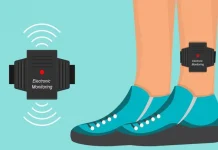
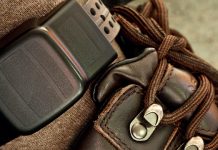
The Scottish Government is currently expanding the use of GPS ankle tags which allow the authorities to track the exact whereabouts of offenders.
However, The Sunday Post can reveal ministers are considering a radical proposal that would also track the whereabouts of victims.
The idea behind introducing a system that always knows where both offender and victim are at any given moment is that victims can be offered reassurance if their attacker is nowhere near them, or sent an alert if the offender comes too close.
Similar schemes have been implemented in the US – typically for victims of sexual assault, stalking or domestic abuse.
The government has confirmed it is working to identify “cutting-edge solutions that best support our justice system”, but admitted that “any use of GPS to monitor victims requires careful consideration”.
However, the plan sparked immediate concern from opposition politicians, who said monitoring victims would not be necessary if dangerous offenders were kept in custody instead of being released into the community wearing ankle tags.
Scottish Conservative shadow justice secretary Liam Kerr said: “While it’s important that any and every measure that might protect vulnerable people is considered, it will strike many people as perverse that victims of crime should have to be constantly monitored.

“Victims of sexual crimes or domestic violence, and the public in general, would far rather that offenders who still posed a threat remained behind bars. But a combination of the SNP’s soft-touch sentencing and the reckless early release programme, sparked by their failure to deliver the new prisons they promised, means too many dangerous criminals are out on Scotland’s streets.”
The victim-tracking scheme – technically known as Bilateral Electronic Monitoring – is being considered by ministers as they prepare to increase the use of tagging across the justice system.
The fitting and monitoring of tags is currently undertaken by security firm G4S but its contract runs out in 2027, and ministers are seeking a private company to take over responsibility for electronic monitoring of offenders.
Documents related to the contract reveal that ministers are exploring ways of expanding the use of tagging through technology.
GPS tags use satellite tracking to record an offender’s location, which allows specific, individualised restrictions to be placed on them.
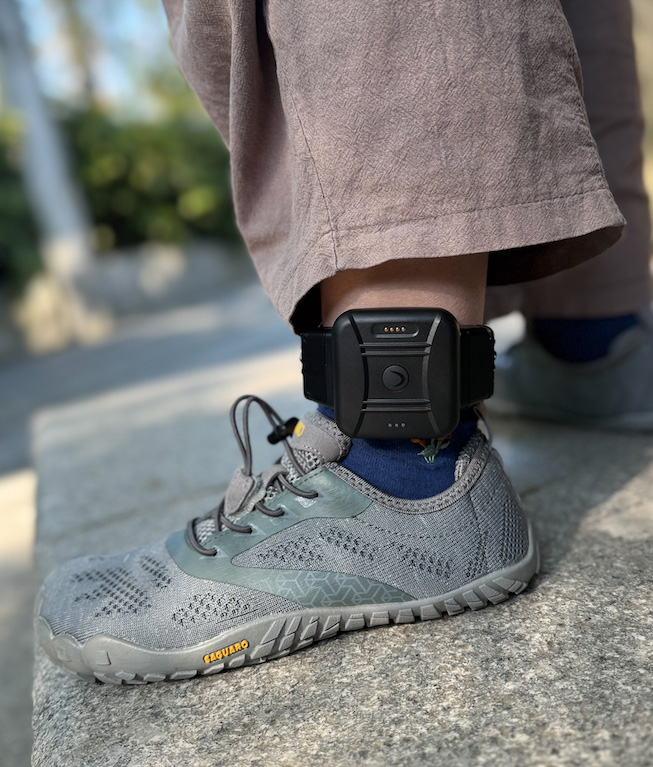
Not only can a GPS ankle tag sound an alarm if an offender leaves their home during a prescribed curfew period, it can also alert the authorities if the offender approaches a particular town, street or address – such as a victim’s home or workplace.
But also monitoring the whereabouts of the victim creates a more flexible system, allowing the alarm to be raised if the offender approaches the victim, no matter where they are.
It is not likely that victims would be asked to wear ankle tags, seen as a badge of criminality, but rather that victims’ whereabouts would be tracked through a smartphone app.

Documents relating to the new contract note there will be “an increased volume of monitoring overall” and an “increased use of GPS devices (for greater ability to monitor geographical boundaries such as exclusion zones).” But the documents also discuss the introduction, for the first time, of “portable monitoring options for victims”.
The documents note “increases in smartphone ownership” might support “dual monitoring options (eg a service including victim monitoring)”. A government report from 2019 spelled out how it might work.
It said: “BEM monitors both an offender’s compliance with the conditions of sentence and protects victims of domestic abuse by monitoring the offender’s movements in relation to the victim. GPS monitoring is then used to track the victim’s movements and can report breaches by the offender in real time.”
The Scottish Government confirmed the system was being considered, saying: “We are committed to exploring the latest advances in emerging technologies.”
While saying ministers are working to identify “cutting-edge solutions that best support our justice system”, the government added: “Any use of GPS to monitor victims requires careful consideration and engagement with victims and support organisations in service design.”
‘I live in abject terror of the day my murderer ex is given parole’
By Marion Scott, Chief Reporter
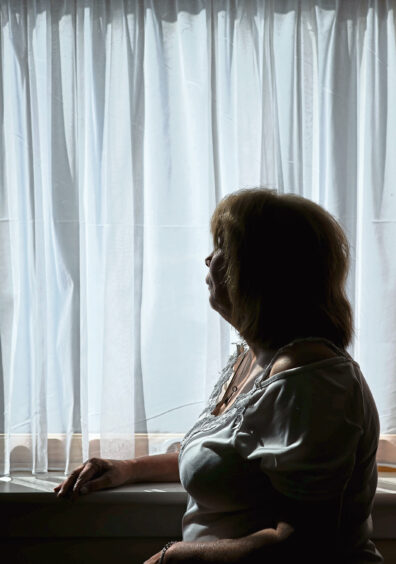
A woman living in abject fear of her violent family annihilator ex-husband Rab Thomson being released from jail after he murdered two of their children, has praised the move to offer victims like her better protection.
June said: “For victims like me, the news that the government is looking to improve ways of protecting us from further harm can only be a good thing.
“I welcome the suggestion that both perpetrators and victims are monitored as it could help save lives.
“Rab always threatened I’d pay with my life if I ever left him, and the only peace I’ve had from that threat is knowing he has been held behind bars for almost 18 years now. I only wish it was a lot longer.”

Thomson slaughtered the couple’s oldest daughter, Michelle, 25, who had learning difficulties, and son Ryan, 7, stabbing them 25 times at their Buckhaven home in Fife in 2008.
A sheriff had granted him access to the children after June left him following a horrifically abusive marriage. Rab, now 68, knew June was arriving at the former family home to pick up the children, and he left their bodies posed like angels praying for her to find.
June, who now lives at a secret address, said: “I’ll never come to terms with what Rab did and will have to live with that horror for the rest of my life. Being told last year that he was eligible for parole was a bombshell.
“Thanks to Fife MP Richard Baker, who wrote to the Parole Board for Scotland, Rab was refused prison release last year. But I know he will apply again this year, and I live under constant fear of him finding me as he always threatened he would. The system cares little about victims like me, and it is intolerable that I have to face this nightmare every year until he is eventually given parole.
“I am now almost blind and very unsteady on my feet, so I am extremely vulnerable. I wouldn’t even see Rab coming after me as he said he would. I live in abject terror of that day coming.”