







Electronic monitoring (EM) has become a core tool in United States pretrial supervision programs, serving as an alternative to pretrial detention for defendants awaiting trial. This article examines the current state of EM technology in pretrial services, the policy frameworks governing its use, and the available evidence on its effectiveness in achieving pretrial program objectives.
Historical Context
Electronic monitoring in criminal justice dates to 1983, when Judge Jack Love of Albuquerque, New Mexico, became the first judge to order EM as a condition of supervision—reportedly inspired by a Spider-Man comic strip depicting a tracking device. Early systems used radio-frequency (RF) technology limited to detecting an offender’s presence or absence within range of a home-based receiver unit.
GPS-based monitoring emerged in the late 1990s and became commercially viable for criminal justice applications by the mid-2000s. GPS tracking enabled continuous location monitoring rather than simple presence detection, significantly expanding the use cases for EM in pretrial supervision.
As of 2024, an estimated 150,000–200,000 individuals in the United States are subject to some form of electronic monitoring at any given time, including pretrial, probation, parole, and immigration detention alternatives. The pretrial segment represents approximately 25–35% of this population, or roughly 40,000–70,000 individuals.
Technology Landscape
GPS Ankle Monitors
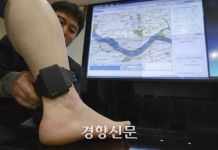
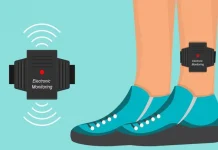
GPS ankle monitors are the predominant technology for pretrial EM. Modern devices combine GPS satellite positioning, cellular communication (for data transmission), WiFi-based indoor positioning, and anti-tamper sensing in ankle-worn housings. Key specifications that influence pretrial program performance include:
- Position accuracy: Outdoor accuracy of 3–10 meters (GPS); indoor accuracy of 10–30 meters (WiFi/cellular triangulation)
- Reporting frequency: Configurable from continuous (every 30 seconds) to periodic (every 15 minutes), with event-triggered reporting for zone violations
- Battery life: 24–72 hours depending on reporting frequency and device generation
- Waterproofing: IP65 to IP68 ratings across commercial models
- Anti-tamper detection: Heart-rate, capacitive, or optical fiber sensing (see related article: Anti-Tamper Technology in GPS Ankle Monitors)
RF Home Monitoring
Radio-frequency home monitoring remains in use for lower-risk pretrial defendants where the primary supervision objective is enforcing curfew or home detention conditions. RF systems detect presence within a 50–300 foot range of a home base unit and are significantly less expensive to deploy than GPS systems. However, RF monitoring provides no location data when the defendant is outside the home zone.
Alcohol Monitoring
Transdermal alcohol monitoring devices (most notably the SCRAM CAM system) detect alcohol consumption through perspiration analysis. These devices are frequently ordered for DUI-related pretrial supervision and may be used in conjunction with or as an alternative to GPS monitoring. Continuous alcohol monitoring has shown particular effectiveness in reducing DUI recidivism among pretrial populations.
Smartphone-Based Monitoring
An emerging category of pretrial monitoring uses smartphone applications rather than dedicated ankle-worn hardware. These applications use the phone’s built-in GPS, require periodic check-ins (sometimes with facial recognition verification), and may include features such as geofencing, appointment reminders, and direct communication with pretrial officers. While less intrusive than ankle monitors, smartphone-based solutions present challenges related to phone loss, damage, battery depletion, and intentional location spoofing.
Policy Framework
Legal Authority
Pretrial EM authority derives primarily from the Bail Reform Act of 1984 (18 U.S.C. § 3142), which authorizes federal courts to impose “any condition or combination of conditions” necessary to ensure a defendant’s appearance at trial and the safety of the community. Most states have analogous statutory authority. The decision to impose EM typically requires a judicial finding that the defendant poses a flight risk or a danger to the community that can be mitigated by electronic surveillance.
Cost Allocation
EM cost structures vary significantly by jurisdiction. Common models include:
- Defendant-pay: The monitored individual pays monitoring fees (typically $5–18 per day). This model is prevalent in bail bond contexts but has faced legal challenges on equal protection grounds.
- Government-pay: The supervising agency (county, state, or federal pretrial services) absorbs monitoring costs. Per-defendant costs typically range from $3–12 per day.
- Subsidized/sliding scale: Fees are assessed based on ability to pay, with indigent defendants receiving monitoring at reduced or no cost.
The average daily cost of EM ($5–18/day) compares favorably to the average daily cost of pretrial detention ($75–150/day per jail bed), providing a strong economic incentive for jurisdictions to expand EM use.
Supervision Intensity Levels
Many pretrial EM programs use tiered supervision intensity based on risk assessment scores:
- Passive GPS: Location data recorded and reviewed retrospectively; alerts only for zone violations
- Active GPS: Real-time location monitoring with immediate alert notification for zone violations, curfew breaks, or tamper events
- Enhanced GPS: Active monitoring supplemented by officer check-ins, substance testing, and/or mandatory program participation
Effectiveness Evidence
Failure to Appear (FTA)
The primary objective of pretrial monitoring is ensuring court appearance. Available research suggests that GPS monitoring is associated with FTA rates of 5–12%, compared to 15–30% for unsupervised release and 6–10% for supervised release without EM. However, direct comparison is complicated by selection bias, as higher-risk defendants are more likely to be assigned to EM.
Pretrial Re-Arrest
Studies on pretrial re-arrest during EM supervision show mixed results. A 2019 study by the Pretrial Justice Institute found that GPS-monitored defendants had pretrial re-arrest rates comparable to those of similar-risk defendants released on cash bail, suggesting that EM can substitute for financial conditions without significantly increasing public safety risk.
Operational Challenges
Common operational challenges cited by pretrial EM programs include:
- False tamper alerts requiring officer response (the most frequently cited issue)
- Device charging compliance (defendants failing to charge devices, leading to battery-dead alerts)
- Skin irritation and comfort complaints
- GPS accuracy limitations in dense urban environments and indoor locations
- Data volume management (continuous tracking generates large data streams requiring automated analysis)
Future Directions
Several technological and policy trends are likely to shape pretrial EM in the coming years:
- AI-assisted monitoring: Machine learning algorithms to identify meaningful behavioral patterns in GPS data, reducing the need for manual alert review
- Improved anti-tamper reliability: Adoption of optical fiber and other physics-based detection methods to reduce false alert burdens
- Integration with risk assessment tools: Dynamic adjustment of monitoring intensity based on compliance history and algorithmic risk scoring
- Expanded use of non-ankle-worn devices: Wrist-worn GPS devices and smartphone applications for lower-risk populations
- Bail reform implications: As more jurisdictions eliminate or restrict cash bail, pretrial EM programs are expected to expand significantly
References
- Bureau of Justice Statistics. “Pretrial Release of Federal Felony Defendants.” NCJ 255948, 2022.
- Pretrial Justice Institute. “The State of Pretrial Justice in America.” PJI, 2019.
- Bechtel, K. et al. “The Effects of GPS Monitoring on Pretrial Outcomes.” Justice Quarterly, 2017.
- Wiseman, S. “Pretrial Detention and the Right to Be Monitored.” Yale Law Journal, Vol. 123, 2014.
- National Institute of Corrections. “Pretrial Services Program Implementation Guidelines.” NIC, 2020.
- Pew Charitable Trusts. “Use of Electronic Offender-Tracking Devices Expands Sharply.” Pew Research, 2016.
- Grommon, E. et al. “Cost-Benefit Analysis of GPS Monitoring for Offenders.” Journal of Offender Monitoring, 2022.