








Sixty-three-year-old lawyer Perkins Rocha, a prominent legal advisor to Venezuelan opposition leader María Corina Machado, lives under strict house arrest, his movements dictated by the constant presence of an electronic ankle monitor. His confinement, which has spanned 17 months, extends beyond a simple judicial order; it stands as a stark example of what Machado describes as a “selective” application of amnesty by the Venezuelan regime.
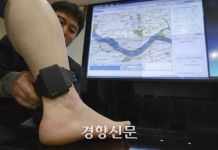
Rocha’s ordeal began with his arrest in August 2024, a period marked by a wave of detentions following President Nicolás Maduro’s re-election to a third consecutive term. Machado’s allies and international observers widely dismissed this election as fraudulent. According to an AFP report, Rocha, who served as Machado’s attorney and representative before the National Electoral Council (CNE) for the July 28, 2024, elections, was confined to his home on February 8. He wears an electronic ankle bracelet and must adhere to 24-hour police surveillance, requiring him to report to authorities every three hours.
Selective Justice and Electronic Supervision
The denial of amnesty for Perkins Rocha, despite a broader release program, forms the crux of Machado’s denunciation. “Denying amnesty SELECTIVELY is repression,” Machado declared on X. She accused the regime, led by Delcy Rodríguez, of aiming “to prolong the terror to break the spirit of those fighting for democracy and Freedom in Venezuela.” Machado asserts that such abuses only strengthen the opposition’s resolve, calling their movement “unstoppable.”
Rocha’s detention, Machado claims, stems from “the power and precision of his words. For speaking out and defending THE TRUTH.” His continued subjection to electronic tagging while others gain freedom raises significant questions about the true purpose of Venezuela’s community supervision programs in politically charged cases. The electronic ankle bracelet, intended to ensure compliance and public safety, appears in this context to serve as a tool for sustained political pressure and control.
A recent amnesty law, announced by the regime on February 19 amidst ongoing negotiations with the U.S., offered a glimmer of hope for political prisoners. This law was anticipated to lead to the release of 161 individuals. However, the exact scope and beneficiaries of this amnesty remain contentious, especially in light of Rocha’s continued confinement. Separately, the NGO Foro Penal reported this week that 673 political prisoners have been released in Venezuela since January 8. The discrepancy between the amnesty law’s stated releases and the broader figures reported by human rights groups underscores a complex and opaque judicial landscape.
International Scrutiny and Opposition’s Resolve
The United Nations Fact-Finding Mission on Venezuela issued a warning prior to March 15, 2026, confirming that the regime’s repressive practices persist. This international observation lends weight to Machado’s claims regarding the systematic nature of these actions. She urged the international community to “remain vigilant, support the legitimate demands of families and human rights organizations, and increase pressure on the regime’s oppressors.”
Machado’s call for action extends beyond Rocha, demanding the unconditional release of all political prisoners. She distinguishes between mere release or prosecution and genuine freedom, stating: “Perkins Rocha and all political prisoners must be fully free. Not released, not prosecuted: FREE!” This stance highlights a fundamental disagreement over the justice system’s legitimacy, where the opposition views selective ‘justice’ as a sign of the regime’s fear rather than its power. For them, each instance of electronic monitoring or judicial manipulation by the state becomes a testament to its perceived insecurity in the face of a population determined to reclaim its voice.
The Future of Accountability and Monitoring
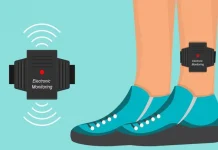
The case of Perkins Rocha presents a critical lens through which to examine the deployment of electronic monitoring technologies in authoritarian or politically unstable states. While GPS ankle bracelets and other forms of electronic tagging are globally utilized for offender tracking and community supervision, their application in Venezuela, as alleged by Machado, takes on a different dimension. Here, the technology becomes a visible symbol of state control, used to silence dissent and maintain power structures. The 24-hour police surveillance and mandatory reporting requirements attached to Rocha’s electronic monitoring further amplify the restrictive nature of his supervision, far exceeding standard protocols often seen in more stable judicial systems.
The ongoing struggle for full freedom for individuals like Rocha raises questions about international standards for electronic monitoring. Should there be stricter oversight or specific guidelines for the use of such devices in contexts where human rights are routinely challenged? The regime’s perceived fear of a “nation that has decided to be free,” as Machado articulates, suggests that electronic monitoring, rather than simply enforcing legal mandates, is actively deployed as a political tool. As the international community continues to monitor Venezuela, the use of offender tracking technologies in high-profile political cases will likely remain a significant point of concern, demanding continued scrutiny and advocacy for true justice, not just managed releases.
Source: MarÃa Corina Machado denounces that the regime in Venezuela applies amnesty “selectively.”