









Las Vegas Justice of the Peace Rebecca Saxe on Thursday ordered the immediate release of Steven Min, 51, closing a trespassing case that brought national attention to the challenges of electronic monitoring for individuals with severe physical disabilities. Min, who suffers from end-stage renal disease and has had both legs amputated, was granted credit for time served due to his critical health issues, ending a dispute over his eligibility for house arrest which hinged on his inability to wear a standard GPS ankle bracelet.
Eligibility Roadblocks for Community Supervision
Min’s medical history played a central role in his detention. Defense attorney Joseph Reiff stated that Min’s left hand and legs were amputated years ago due to sepsis contracted while in city jail custody. This condition, Reiff argued, rendered Min physically unable to wear a mandatory electronic ankle monitor, thereby disqualifying him from the Clark County Detention Center’s house arrest program.
However, Michael Dickerson, an attorney representing the Metropolitan Police Department, which oversees the jail and its house arrest initiative, presented a different explanation. Dickerson maintained that Min’s disability was not the reason for his house arrest denial. Instead, he attributed the decision to one or more active warrants and confusion arising from Min’s extensive history of multiple court cases.
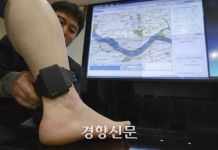
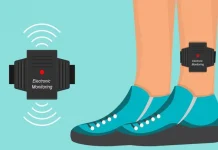
Metro staff elaborated on their electronic monitoring capabilities in a March 3 email. “Our program uses an ankle monitor for its GPS tracking,” the email stated. “This is the only authorized and available equipment for Electronic Monitoring and GPS tracking. Unfortunately, Mr. Min does not have the capability for our Officers to apply our device.” This statement underscored the program’s reliance on a singular type of offender tracking technology, creating a barrier for Min.
Brief Release, Swift Re-Arrest
Prior to Thursday’s ruling, Min had appeared in court last week wearing an electronic monitoring bracelet strapped to his wrist, an apparent attempt to adapt the ankle-specific device. However, by Thursday evening, Min was rearrested. Police confirmed he was found to be “in violation of the conditions of his electronic monitoring program.”

Justice Saxe’s staff contacted Metro to understand the reason for Min’s re-arrest. They learned the issue stemmed from the bracelet itself, likely due to its design as an ankle monitor. Police indicated they had reached out to their vendor in an effort to find an alternative electronic tagging device suitable for Min’s condition.
Defendant’s Extensive Record and Health Crisis
Min, 51, has accumulated at least 196 cases in Las Vegas Justice Court since 2008, primarily involving trespassing charges, many of which did not result in conviction. Min told reporters last week that all his trespassing cases originated from incidents at casinos. Beyond his amputations, Min’s attorney confirmed he suffers from end-stage renal disease and requires dialysis four times a week. Min himself corroborated this, stating he has end-stage kidney disease.
During court proceedings, Reiff emphasized the urgency of Min’s medical state. “I’m not going to let him die while I sit here and do nothing,” Reiff stated. Min directly addressed the judge, asserting, “I’m suffering badly right now.”

Justice Saxe cited Min’s medical problems and the time he had already served as reasons for closing his case. “You’ll be released today on this case, sir,” she told him, adding that she would expedite his release. Min, who appeared without his prosthetic legs, initially seemed not to hear the judge, requesting expedited release to go to the hospital. “I just said I’m going to expedite it, Mr. Min,” Saxe clarified, raising her voice. Following the hearing, Reiff expressed confidence Min would not be held on any other cases, declaring, “He’s a free man.”
The Min case brings into focus the necessity for community supervision programs to consider flexible solutions for individuals with disabilities. As electronic monitoring expands, ensuring equitable access to alternatives to incarceration requires technological adaptability beyond standard GPS ankle bracelet designs.
Source: Release ordered for Las Vegas defendant in trespass case