







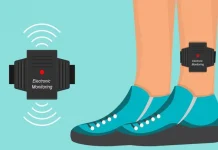

GPS accuracy is often quoted by ankle monitor manufacturers as a single number—typically 2 to 10 meters. In practice, positioning accuracy varies dramatically based on environment, satellite geometry, multipath interference, and device design. Understanding these factors is essential for monitoring agencies that rely on geofence alerts and court-admissible location evidence.
How GPS Positioning Works
GPS receivers calculate position by measuring signal travel time from multiple satellites. A minimum of four satellites provides three-dimensional positioning (latitude, longitude, altitude) plus time correction. Accuracy depends on:
- Number of visible satellites — more satellites improve geometric dilution of precision (GDOP)
- Signal quality — clear line-of-sight produces stronger signals
- Atmospheric conditions — ionospheric and tropospheric delays introduce errors
- Receiver quality — antenna design, noise filtering, and processing algorithms
Multi-Constellation GNSS
Modern ankle monitors increasingly support multiple satellite navigation systems beyond GPS:
| System | Operator | Active Satellites | Orbital Planes | Coverage |
|---|---|---|---|---|
| GPS (NAVSTAR) | United States | 31 | 6 | Global |
| GLONASS | Russia | 24 | 3 | Global |
| Galileo | European Union | 28 | 3 | Global |
| BeiDou (BDS) | China | 45 | 3 + GEO/IGSO | Global (enhanced Asia-Pacific) |
A receiver tracking all four constellations can see 50+ satellites simultaneously, dramatically improving accuracy and reliability in challenging environments. Devices limited to GPS-only may struggle in urban canyons where only 3-4 GPS satellites are visible, while multi-constellation receivers maintain coverage with 15+ satellites overhead.
Urban Environment Challenges
Multipath Interference
In cities, satellite signals reflect off buildings, pavement, and vehicles before reaching the receiver. These reflected signals travel longer paths, causing positioning errors of 10–50 meters. Multipath is the dominant error source in urban GPS tracking and cannot be eliminated through traditional atmospheric correction techniques.
Urban Canyons
Narrow streets flanked by tall buildings create “urban canyons” that block direct satellite signals. In downtown areas of cities like New York, Chicago, or Houston, GPS-only devices may lose fix entirely for minutes at a time. Multi-constellation receivers reduce but do not eliminate this problem.
Indoor and Semi-Indoor Environments
GPS signals attenuate rapidly through building materials. Signal loss varies by material:
| Material | Signal Attenuation | GPS Viability |
|---|---|---|
| Glass windows | 2–4 dB | Marginal — near windows only |
| Wood frame | 3–6 dB | Often works on upper floors |
| Concrete block | 10–20 dB | Unreliable |
| Steel/rebar | 20–40 dB | No GPS signal |
| Underground | Total blockage | No GPS signal |
Complementary Positioning Technologies
To maintain location awareness when GPS is degraded, modern ankle monitors employ hybrid positioning:
WiFi Positioning
By scanning nearby WiFi access points and comparing their MAC addresses and signal strengths against databases (Google, Apple, or proprietary), devices can estimate position to 10–30 meters indoors. This supplements GPS in buildings, shopping centers, and airports where WiFi networks are dense.
LBS (Cell Tower Triangulation)
Using cellular signal timing and strength from nearby towers, Location-Based Services provide coarse positioning of 100–500 meters in urban areas. While imprecise, LBS ensures that a location estimate is always available even when GPS and WiFi fail.
Inertial Measurement
Accelerometers and gyroscopes track movement patterns between GPS fixes. While inertial positioning accumulates errors over time (drift), it bridges short GPS outages and provides motion context (walking, driving, stationary) that refines geofence logic.
Accuracy Requirements for Electronic Monitoring
Different monitoring scenarios demand different accuracy levels:
| Scenario | Required Accuracy | Rationale |
|---|---|---|
| Exclusion zone (school, victim) | < 10 meters | Minimize false entries/exits at zone boundaries |
| Inclusion zone (home curfew) | < 30 meters | Property boundaries require moderate precision |
| General tracking | < 100 meters | Route verification, area monitoring |
| Court evidence | < 10 meters with timestamp | Must demonstrate presence/absence at specific locations |
Best Practices for Monitoring Agencies
- Set geofence radii appropriately — never set an exclusion zone tighter than 30 meters in urban areas, regardless of manufacturer claims. Account for GPS uncertainty in zone design.
- Require multi-constellation support — GPS + GLONASS + Galileo + BeiDou provides measurably better urban performance than GPS-only.
- Evaluate WiFi positioning — for defendants residing in apartments or working in office buildings, WiFi-assisted positioning dramatically reduces false zone alerts.
- Review accuracy data from deployments, not spec sheets — manufacturer claims of “2-meter accuracy” reference ideal open-sky conditions. Request field deployment accuracy data for urban environments.
- Consider position confidence metrics — advanced platforms report accuracy estimates (horizontal dilution of precision) alongside each position fix, enabling officers to assess reliability of specific data points.
References
- Kaplan, E. D., & Hegarty, C. J. Understanding GPS/GNSS: Principles and Applications. 3rd ed., Artech House, 2017.
- European GNSS Agency. GNSS Market Report, Issue 6, 2024.
- Groves, P. D. “Shadow Matching: A New GNSS Positioning Technique for Urban Canyons.” Journal of Navigation, 64(3), 2011.
- National Coordination Office for Space-Based Positioning, Navigation, and Timing. GPS.gov — GPS Accuracy. 2024.
Frequently Asked Questions
How accurate are GPS ankle monitors in cities?
In open areas, accuracy is typically 2-10 meters. In urban environments with tall buildings, multipath interference can degrade accuracy to 10-50 meters. Multi-constellation receivers (GPS + GLONASS + Galileo + BeiDou) significantly improve urban performance.
What happens to GPS tracking indoors?
GPS signals are severely attenuated by building materials. Modern ankle monitors use WiFi positioning (10-30 meter accuracy) and cell tower triangulation (100-500 meters) as backup when GPS is unavailable indoors.
How should geofence zones account for GPS accuracy?
Exclusion zones near schools or victim residences should never be set tighter than 30 meters in urban areas. Inclusion zones for home curfew should use 30-meter radius. Always account for GPS uncertainty in zone design to minimize false alerts.