












For more than two decades, American criminal justice agencies have procured GPS and hybrid offender tracking systems (OTS) against a patchwork of vendor datasheets, state pilot reports, and informal checklists. NIJ Standard 1004.00, published in July 2016 by the National Institute of Justice (NIJ), changed that landscape by introducing the first U.S. federal performance framework dedicated specifically to offender tracking hardware, software, and documentation. For practitioners who have lived through failed pilots, disputed tamper alerts, and contract disputes over “what the brochure promised,” the standard matters because it translates operational expectations into repeatable laboratory and field-test criteria.
The document did not emerge from a single laboratory or vendor consortium. NIJ convened a Special Technical Committee that included supervision practitioners from agencies such as the Florida Department of Corrections, California Department of Corrections and Rehabilitation (CDCR), Harris County Pretrial Services, the U.S. Probation Office, and Washington State DOC, alongside testing and engineering organizations including Rhein Tech Laboratories, ITC Engineering, Acme Testing, and Savannah River National Laboratory. An Advisory Working Group representing the American Jail Association (AJA), American Probation and Parole Association (APPA), American Correctional Association (ACA), National Sheriffs’ Association (NSA), International Association of Chiefs of Police (IACP), and the U.S. Department of Homeland Security (DHS) reviewed the work. That dual structure—practitioner needs plus metrology rigor—helps explain why the standard reads like a procurement blueprint rather than a marketing white paper.
“This standard specifies the minimum requirements for form and fit, performance, testing, documentation, and labeling of OTS.” — NIJ Standard 1004.00, Section 1.1
The remainder of this guide walks supervision technology managers, procurement officers, and monitoring-company technical leads through the standard’s scope, its five performance pillars, optional “advanced” capabilities, and practical questions agencies should ask before signing a multi-year equipment contract. For equipment evaluation context, see the GPS ankle monitor buyer’s guide on ankle-monitor.com and the manufacturer’s certifications overview, which summarizes how commercial products map to published test regimes.
Before NIJ Standard 1004.00, agencies often relied on informal bench tests—courthouse walks, sedan “circle routes,” strap tug checks. Those remain useful supplements, but they rarely yield reproducible records for auditors or courts years later. NIJ codified minimum performance and linked it to recognized safety and environmental methods, paralleling how body armor, radios, and biometrics are specified in formal procurement.
Standards evolve with technology: cellular air interfaces, GNSS augmentation, and cloud-hosted platforms have advanced since 2016. The enduring value of 1004.00 lies in demanding that claims be tested, documented, and labeled—so firmware or modem changes trigger a fresh look at whether prior test reports still apply.
Scope and purpose: a voluntary minimum bar
NIJ Standard 1004.00 is a voluntary performance standard. It does not replace state law, court orders, or Federal Acquisition Regulation clauses by itself. Instead, it specifies minimum requirements for form and fit, performance, testing, documentation, and labeling so that agencies and suppliers share a common language about what “acceptable” looks like in a courtroom-defensible way.
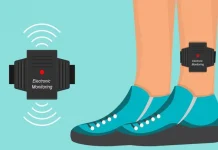
The standard explicitly contemplates two hardware architectures. A one-piece configuration integrates location, communications, tamper sensing, and power in a single worn assembly—what the field often calls an “all-in-one” GPS ankle monitor. A multi-piece configuration separates functions across a wearable component and one or more companion devices (for example, a home beacon or relay unit). Because radio links between components introduce distinct attack surfaces, the standard layers additional expectations on wireless security where multi-piece designs are concerned.
Operationally, the standard addresses both active tracking—near-real-time reporting with defined alert-time budgets—and passive tracking, where location points may be stored onboard and uploaded at scheduled intervals. That distinction matters for pretrial programs that prioritize immediate zone-violation notification versus post-sentence caseloads that may tolerate deferred uploads when cellular coverage is intermittent.
Beyond raw performance numbers, the standard’s emphasis on form and fit ensures that devices can be installed and worn without imposing needless ergonomic burden—relevant to populations with diabetes-related edema, mobility impairments, or occupational requirements. The testing chapters tie each requirement to observable pass/fail outcomes, while documentation and labeling obligations push manufacturers to disclose firmware versions, RF exposure guidance, and maintenance intervals in formats procurement files can archive. That trinity—performance, proof, and paper trail—is what elevates NIJ 1004.00 from a checklist into an accountability tool.
Five performance categories in depth
The technical requirements are grouped into five categories: Safety, Technical Operation, Circumvention resistance, Software, and Environmental/Robustness. The following summary reflects the performance intent of NIJ Standard 1004.00; agencies should always verify current revision status and annexes through official NIJ/OJP publications.
1. Safety
OTS devices are worn continuously on human subjects; the safety chapter therefore anchors compliance to recognized electrical and battery-safety norms. Manufacturers are expected to demonstrate FCC regulatory compliance for intentional radiators where applicable, and to align with safety engineering practices consistent with UL 60950-1 (information technology equipment safety) for hazards such as electrical shock and energy-related risks under defined test conditions.
Rechargeable battery packs are expected to meet accepted battery safety benchmarks such as IEC 62133 and related UL battery standards (for example, UL 1642 and UL 2054 as cited in the standard’s safety framework) so that thermal runaway, crush, and charging abuse modes are addressed methodically. Beyond electrical safety, the standard incorporates a sharp edges assessment so that straps, housings, and buckles do not create unreasonable skin laceration risk during normal donning and doffing.
Finally, the standard recognizes that medical emergencies occur. It specifies that trained personnel can remove the device in under one minute using commonly available cutting tools—balancing security against EMS and clinic access requirements.
2. Technical operation
This category translates supervision workflows into measurable radio and GNSS behavior. Cold-start or reacquisition tests require that the device obtain a GPS fix within two minutes under defined open-sky conditions. Horizontal accuracy thresholds are expressed at the 90th percentile: ≤10 meters outdoors and ≤30 meters indoors in specified test geometries, acknowledging that multipath and indoor penetration remain industry-wide challenges.
Why express accuracy at the 90th percentile instead of quoting a single “best case” fix? Because supervision officers live in the tail of the distribution: downtown canyons, big-box retail interiors, bus terminals, and basement apartments are where failures become courtroom arguments. A percentile-based metric forces vendors to disclose realistic scatter rather than cherry-picking a rooftop bench result. Agencies should still pair laboratory conformance with local pilot data—especially where indigenous urban morphology or rural dead zones stress cellular backhaul differently than the reference profiles assumed in certification testing.
Operational alerting includes a low-battery notification and a zone violation alert for active-tracking configurations, with the standard requiring that such alerts reach the supervising platform within four minutes under reference network conditions—an explicit nod to pretrial and high-risk caseloads where delay equals risk.
Data retention on the device must support at least ten days of storage at a one point per minute collection rate, ensuring officers can reconstruct movement histories even when backhaul fails temporarily. For rechargeable products, the standard looks for 365 full charge cycles before failure modes that compromise safe operation, and a battery-life test regime that retains 95% of 1,440 daily location reports under a defined duty cycle—translating “all-day justice” expectations into numbers vendors can test in the lab.
3. Circumvention resistance
Supervision technology fails its mission if it is trivially defeated. The circumvention chapter therefore specifies strap and reporting behaviors that go beyond marketing claims. Strap cutting must be detected within five seconds, with the supervising authority receiving an alert within three minutes under active-tracking assumptions. Strap tensile testing requires resistance to 245 N of force with limited elongation (≤5% for metal straps and ≤10% for non-metal straps in the prescribed test fixture), reducing the likelihood that slow “stretch-off” attacks go unnoticed.
Loss of legitimate location must also generate an alert—closing the loophole where a device simply stops reporting without declaring tamper. For multi-piece systems, wireless links must implement encryption consistent with FIPS 197 (AES) and use modules validated under appropriate FIPS 140-2 program boundaries where cryptographic modules are employed, so that relay attacks and casual eavesdropping do not expose location or identity payloads.
From a field-supervision perspective, the circumvention chapter is where marketing narratives collide with timed events. A strap cut that registers in the cloud after twelve minutes may still fail a program’s internal risk protocol even if the device “eventually” reported. That is why procurement teams should translate NIJ’s three-minute supervisory alert window into service-level agreements with their monitoring provider, including escalation paths when carrier latency or platform congestion adds hidden delay on top of device-side detection.
4. Software
Hardware without usable software does not complete the supervision chain. NIJ Standard 1004.00 expects supervising platforms to export historical data as comma-separated values (CSV) for discovery, court exhibits, and interoperability with case-management systems. Collection rates must be configurable, with the ability to support at least one location point per minute when program rules demand high temporal resolution.
Geofencing features must support free-form polygons of 40 or more nodes and allow agencies to maintain 50 or more zone templates—reflecting complex exclusion zones around schools, victim addresses, and treatment facilities. Role-based access controls and secure login requirements (detailed in Appendix A of the standard) push vendors toward audit trails and least-privilege administration, which accreditation bodies and defense counsel increasingly scrutinize.
Software conformance also intersects with post-conviction litigation. When a defendant challenges a violation, attorneys routinely request underlying point logs, map overlays, and user accounts that touched a case. CSV export and configurable sampling rates reduce the friction of producing neutral records to courts, while RBAC prevents casual password sharing that would undermine chain-of-custody arguments about who changed a zone or suppressed an alert rule.
5. Robustness (environmental and mechanical)
Justice technology must survive heat waves, winter patrol cars, shower use, and the accidental knocks of daily life. The robustness battery spans extreme temperature exposure (−20 °C to +50 °C), condensing humidity, water spray, and immersion protocols aligned with ingress expectations for worn equipment. Mechanical stress includes shock impact, dynamic shock, sinusoidal vibration, and random vibration profiles consistent with transportation and human motion. Electromagnetic compatibility (EMC) testing further reduces the chance that radios, body-worn cameras, or patrol vehicle electronics degrade tracking performance unpredictably.
Environmental failures often appear as intermittent modem resets after thermal stress—apparent non-reporting that officers read as non-compliance. Robustness testing therefore cuts false suspicion as well as hardware returns; agencies should request engineering plots (temperature steps, immersion parameters, vibration profiles), not only pass/fail summaries.
| Category | Representative intent |
|---|---|
| Safety | FCC/UL electrical safety, battery abuse testing, sharp edges, ≤1 min emergency removal |
| Technical operation | GPS ≤2 min; ≤10 m outdoor / ≤30 m indoor @90%; alerts ≤4 min; ≥10-day @1 pt/min storage |
| Circumvention | Cut detect ≤5 s; alert ≤3 min; 245 N strap test; encrypted multi-piece links (FIPS 197/140-2) |
| Software | CSV export, configurable rates, 1 pt/min capable, complex geofences, RBAC + secure login |
| Robustness | Climate, humidity, water, shock/vibration, EMC |
Optional advanced features
NIJ Standard 1004.00 recognizes that some agencies will prioritize additional threat detection beyond the minimum bar. The standard therefore defines optional tests for metallic shielding detection (with a five-minute nominal detection window and ±one-minute tolerance), cellular jamming detection, and GPS jamming detection. Suppliers may declare conformance to these optional elements; absence of optional certification does not automatically imply inferior equipment, but agencies operating in high-threat environments may wish to specify them explicitly in requests for proposals (RFPs).
Optional clauses reflect differing threat models: rural caseloads may rarely see jamming, while urban intensive-supervision teams may prioritize interference awareness. Metallic shielding (foil wraps, improvised pouches) remains a known low-tech evasion pattern; timed detection expectations give RFP writers a contractual hook. Vendors may tier “core” versus “hardened” SKUs with declared optional attestations.
What this means for agencies
Procurement teams should treat NIJ Standard 1004.00 as a requirements dictionary, not as a substitute for pilot testing in local cellular and urban canyon environments. Practical steps include:
- Map program workflows to clauses. Pretrial programs emphasizing immediate notification should trace contract language to active-tracking alert-time requirements, not merely to “real-time” marketing labels.
- Demand test evidence, not adjectives. Ask for third-party or first-party test reports tied to specific standard sections (safety, robustness, circumvention), including pass/fail criteria and instrument calibration records.
- Clarify configuration class. One-piece and multi-piece systems carry different radio-security expectations; RFPs should forbid vague bids that mix architectures without disclosure.
- Understand “compliant” versus “certified.” A vendor may engineer toward NIJ performance targets (“compliant design”) without completing a formal certification program administered by an accredited body. Conversely, “certified” should imply documentation traceable to defined test houses and scopes. Agencies should ask who certified, when, and to which revision of the standard.
- Plan for data governance. Software requirements around CSV export, RBAC, and secure login intersect directly with CJIS-adjacent policy discussions; involve information security early.
- Build acceptance testing into rollout. Require a thirty-to-sixty-day burn-in where devices are exercised across representative housing types, and compare observed alert latencies to NIJ reference assumptions.
- Coordinate with legal and privacy counsel. Location precision statements and data retention windows affect discovery obligations; align platform configuration with local rules before scaling enrollment.
Monitoring providers should apply the same discipline: hardware swaps, refurb units, and “equivalent model” substitutions often cause silent specification drift unless contract language requires renewed conformance documentation.
Equipment buyers comparing one-piece GPS architectures may also reference technical product summaries such as the CO-EYE ONE overview as a worked example of how modern hardware specifications align with industry-standard test language—while still requiring vendor-supplied evidence for any claim of NIJ-oriented performance.
Frequently asked questions
Is NIJ Standard 1004.00 mandatory for every U.S. agency purchase?
No. The standard is voluntary unless a particular jurisdiction, grant program, or contract vehicle explicitly incorporates it by reference. Many states still procure under general IT or radio rules; however, agencies that cite NIJ 1004.00 in RFPs gain clearer grounds for acceptance testing and warranty enforcement.
How does the standard treat one-piece versus multi-piece systems differently?
Both configurations must meet core tracking, safety, and robustness expectations, but multi-piece designs must additionally demonstrate encrypted wireless links using approved cryptographic modules under the standard’s stated FIPS references, because companion radios expand attack surface.
Does NIJ Standard 1004.00 cover alcohol monitoring or purely RF home detention?
The standard targets offender tracking systems centered on location supervision as defined in its scope. Dedicated transdermal alcohol devices or legacy RF-only curfew systems may fall outside the OTS definition; procurement officers should confirm product class against the published scope and any NIJ updates.
Why distinguish “NIJ-compliant” marketing from formal certification?
“Compliant” is often used loosely to mean design intent. Formal certification or accredited test reports provide structured evidence—test house, date, configuration, and pass/fail—that holds up in audits, hearings, and vendor disputes. Agencies should require written mapping from feature claims to standard clauses.
This article is provided for educational purposes and summarizes publicly described elements of NIJ Standard 1004.00 as commonly referenced in criminal justice technology procurement. Always obtain the official standard from the U.S. Department of Justice / National Institute of Justice for authoritative text.