
Industry synopsis. When headlines repeat the same three words—ankle monitor cut off—across provinces and U.S. states within weeks, the story is rarely “one bad defendant.” It is a systems story: courts balancing detention risk against crowded dockets, vendors promising 24/7 vigilance, and monitoring centers translating electrical events into dispatch decisions under alert fatigue. The cases below are reported facts as conveyed by police and reputable outlets; our role is to extract operational lessons for agencies procuring GPS electronic monitoring in 2026.
The pattern is uncomfortably consistent: a release condition includes GPS, the strap is severed or the device is abandoned, law enforcement loses minutes to hours of certainty, and the public asks why a bracelet was treated as a substitute for custody. That question is not anti-EM—it is a demand for honest risk calibration. Programs that treat ankle monitor cut off events as low-priority tickets will keep reading about fugitives; programs that instrument time-to-notify, time-to-acknowledgment, and time-to-apprehension will improve even when hardware is imperfect.
Table of Contents
- Case map: five 2026 episodes that redefine “ankle monitor cut off” as a policy stress test
- Interstate and interprovincial angles when an ankle monitor cut off triggers flight
- The Vancouver paradox: ankle monitor cut off, rearrest, then GPS again
- Why offenders cut monitors: opportunity, tools, and perceived windows
- Technology failures versus process failures after an ankle monitor cut off
- Tamper detection evolution: conductive loops to fiber-optic dual paths
- What agencies should demand in 2026 RFP language
Case map: five 2026 episodes that redefine “ankle monitor cut off” as a policy stress test

Vancouver — Jordan McIntosh (reported March 2026). According to a Vancouver CityNews report summarizing Vancouver Police commentary, Jordan McIntosh—described as a violent offender with dozens of prior convictions—cut through an ankle monitor in early December 2025, went on the run, was later arrested, and was released again on new conditions that included another ankle monitor. However any court weighs liberty interests, the operational signal is stark: an ankle monitor cut off episode did not, by itself, remove GPS from the release toolbox. For program administrators, that is a reminder that EM is often treated as a default dial-down even after a demonstrated integrity failure.
Windsor, Ontario — four offenders over the holiday window. Windsor Police publicly described a wave of strap cuts in late December 2025 and early January 2026. News relaying those statements identified Jordan Scott Runstedler as allegedly removing a monitor about one hour after bail release on December 24, 2025, and named three additional individuals—Gary Bravo, Ryan Langlois, and Malaw Lol—as each having cut off devices in the same general timeframe. The takeaway for procurement officers is temporal: an ankle monitor cut off is not only a “weeks into supervision” failure mode; it can be immediate post-release, which stresses onboarding checks, baseline geofences, and whether monitoring centers elevate first-hour integrity events automatically.
Ontario (Elliot Lake area) — curfew breach and delayed locate (March 2026). CTV Northern Ontario coverage described a 55-year-old man subject to electronic monitoring whose breach of curfew triggered an alert; he was located roughly 43 hours later with a switchblade and hydromorphone. That narrative differs from a clean strap cut, yet it belongs in the same briefing because it tests end-to-end monitoring: alert issuance, field prioritization, and the gap between “we know something is wrong” and “we have a body in custody.” Any honest vendor scorecard should separate ankle monitor cut off detection latency from search-and-arrest latency—agencies pay for both, but only one is printed on a spec sheet.
Colorado — interstate flight after a cut (March 2026). Parallel U.S. reporting described Jorge Campos, convicted of child sexual assault-related charges, cutting a GPS ankle monitor and traveling on the order of six hundred miles before apprehension near the U.S.–Mexico border. We examined alert economics, bond context, and tamper-handling protocols in a dedicated brief: Colorado GPS ankle monitor tamper flight near Mexico border (2026). Suffice it here to say that cross-border flight risk turns a domestic ankle monitor cut off into an interstate operations problem—something Canadian provinces exporting offenders under compacts should mirror analytically even when geography differs.
Meta-lesson across all five. Each story advertises a different failure vertex—court release logic in Vancouver, immediacy in Windsor, locate latency in northern Ontario, distance-at-risk in Colorado—but the shared vocabulary remains ankle monitor cut off or cognate tamper events. That consistency is why chiefs, vendor managers, and oversight boards should insist on unified after-action templates instead of one-off outrage cycles.
Interstate and interprovincial angles when an ankle monitor cut off triggers flight
Electronic monitoring rarely respects map lines drawn on a wall. A defendant who cuts in Windsor may attempt to cross into Michigan within minutes; a British Columbia matter can cascade into national broadcast attention that pressures municipal police communication cadence even when the underlying alert workflow is unchanged. Colorado’s border-adjacent rearrest reminds Canadian readers that ankle monitor cut off stories are not provincial curiosities—they are mobile-risk case studies. Agencies operating under interstate compact rules in the United States or analogous mutual-assistance arrangements in Canada should pre-stage data-sharing agreements, CAD integration, and bilingual notification trees (French/English in some provinces; Spanish/English at the U.S. southern border) so that the first tamper ping does not wait on a business-hours legal review.
Procurement teams can bake those operational realities into statements of work: require vendors to document how roaming SIM profiles behave near frontiers, how geofence polygons export to partner agencies, and how audit logs will look when defense counsel later asks why a cut alert did not produce a patrol response for ninety minutes. The question is not whether every ankle monitor cut off ends in capture—it is whether the monitoring organization can show a disciplined timeline that withstands coroner’s-inquest or civil-litigation scrutiny. Public trust erodes when narratives imply bracelets are “tracked everywhere” while backend systems still route alerts like routine IT tickets.
Finally, cross-border publicity changes political incentives. Legislators read headlines; they fund body-worn cameras and radio upgrades before they fund SOC analyst headcount. EM program directors should therefore translate tamper incidents into budget narratives: if courts expand GPS release volumes without expanding overnight monitoring seats, the probability of another viral ankle monitor cut off headline rises mechanically, independent of strap chemistry.
The Vancouver paradox: ankle monitor cut off, rearrest, then GPS again
Without adjudicating any individual charge sheet, the McIntosh narrative—as reported—poses a governance question larger than one defendant: when a person demonstrates ability and willingness to defeat a bracelet, what institutional theory predicts that a replacement bracelet will perform better? There are legitimate answers—tighter curfews, enhanced check-ins, secondary RF beacons, or upgraded tamper modalities—but they must be explicit. Silent assumptions that “more GPS” equals “more safety” invite the cynicism visible in public comment threads.
From a technology standpoint, swapping hardware after an ankle monitor cut off only helps if at least one lever changes: device class (strap physics, case integrity sensing, jamming resistance), monitoring-center runbooks (escalation timers, 24/7 staffing, law-enforcement handoff), or judicial conditions (house arrest with verified charging, exclusion zones, or custody). Agencies should document which lever moved. Procurement RFPs can require vendors to describe how reissued devices differ after a confirmed strap breach, not merely that a new serial number shipped.
Why offenders cut monitors: opportunity, tools, and perceived windows
Straps are wearable polymers and metals exposed to showers, work sites, and street conditions. Any engineer will admit that given time, privacy, and cutting tools, mechanical defeat is possible; the EM industry’s job is to shrink the window between cut initiation and unambiguous alert delivery, then to train responders to treat that alert as high severity for high-risk cohorts. Interviews and affidavits in unrelated cases often highlight three motivators: belief that alerts lag by tens of minutes, hope that a first breach will be misclassified as a low-battery artifact, and knowledge that overstuffed monitoring queues dilute officer attention.
Windsor’s “one hour” allegory is especially important: it suggests offenders model the first hour as porous. If onboarding procedures require twelve hours to baseline motion signatures, that hour is an exploitable gap. Supervision agencies should demand onboarding playbooks from vendors and audit them against real alert timelines. The phrase ankle monitor cut off should trigger not only a sensor flag but a documented escalation state machine, not a ticket that competes with hundreds of charging reminders.
Technology failures versus process failures after an ankle monitor cut off
When a strap severs, conductive loops open, RF continuity may break, fiber paths may shatter, or accelerometers may register impulse signatures—depending on hardware generation. But the public rarely sees sensor telemetry; it sees outcomes. Did the monitoring center receive a tamper-class event? Was it routed to a live analyst or an overnight queue? Did local police get a phone call, a data packet, or an email? Did anyone verify receipt? Our earlier methodology piece on nuisance versus true tampers—false tamper alert rates in GPS ankle monitors—argues that agencies cannot optimize integrity if they cannot measure alert precision and throughput.
NIJ Standard 1004.00 vocabulary gives criminal-justice buyers shared language for reporting integrity states, but standards do not sit in patrol cars. An ankle monitor cut off becomes a public-safety failure when the chain breaks at any hop: device firmware mislabels the event, cellular backhaul buffers, the SOC downgrades severity, the duty sergeant misses the SMS, or the warrant desk delays entry. Technology audits must therefore capture end-to-end timestamps, not checkbox compliance.
Workforce economics intensify the dilemma. Many monitoring centers price seats assuming that only a thin slice of alerts need human judgment; yet true tampers and ambiguous strap events often arrive in the same visual queue. Without tiered risk scoring tied to offense category, analysts face Hobson’s choice—over-escalate and burn patrol goodwill, or under-escalate and risk the next headline. Mature programs simulate surge nights (New Year’s Eve, long weekends) to measure queue depth when multiple ankle monitor cut off signals land within the same hour. Immature programs discover those bottlenecks during real incidents.
Tamper detection evolution: conductive loops to fiber-optic dual paths
First-generation integrity relied on conductive straps—simple in concept, vulnerable to environmental false positives and, conversely, to slow escalation if centers fear crying wolf. Later designs layered accelerometry, temperature cues, and RF proximity between ankle and companion modules. One-piece GPS bracelets attempted to reduce “strap-only” defeat by integrating electronics into a single housing, but case drilling and shielding attacks re-centered the arms race on enclosure integrity and rapid cloud analytics.
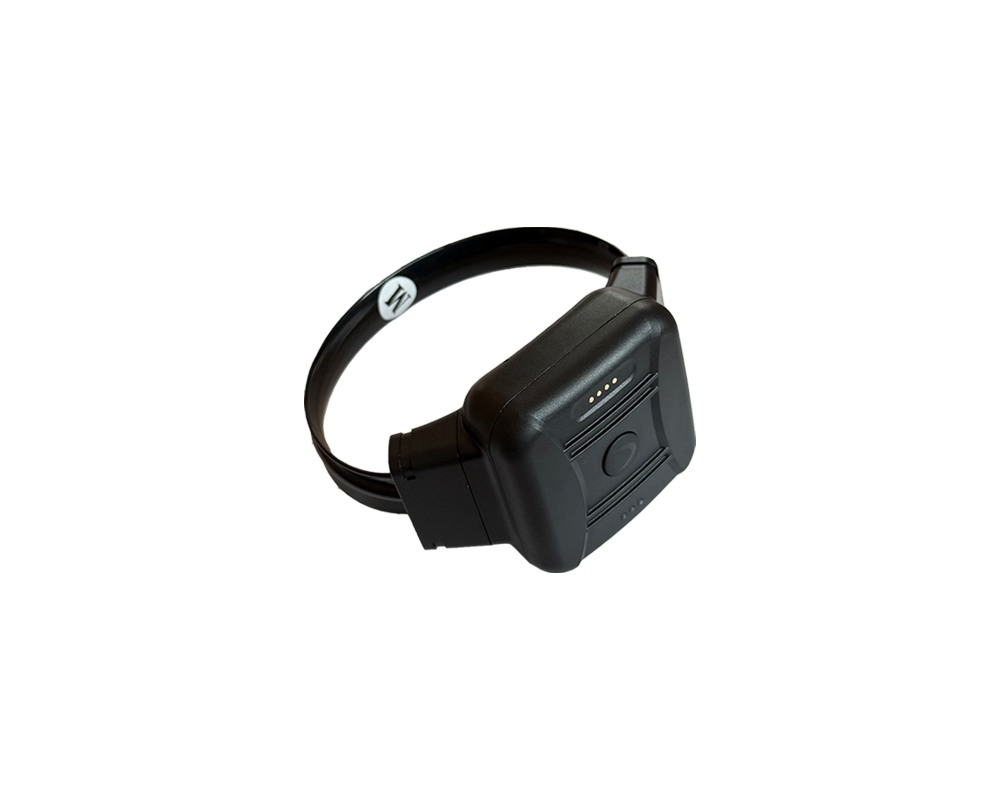
Fiber-optic tamper channels attempt to make any physical interference with the light path an unambiguous electrical state change, potentially reducing ambiguous “maybe strap, maybe shower” classifications—provided monitoring centers trust the classification enough to act. The industry’s next benchmarking frontier is not only sensitivity but actionability: does a given ankle monitor cut off signature arrive with low enough false-positive prevalence that dispatchers treat it as a real flight risk?
What agencies should demand in 2026 RFP language
Contracts should specify numeric service-level objectives: maximum seconds from strap breach to SOC visibility, maximum minutes from SOC visibility to agency notification for high-risk tiers, and forensic log retention for court proceedings. Training must cover the difference between a dead battery and a severed strap—confusing the two erodes judicial trust. Spares logistics matter: if Vancouver-style reissuance happens, how quickly can field techs verify skin contact, download baseline traces, and confirm cellular registration?
The pattern of successful strap cuts raises questions about current tamper detection standards. Traditional conductive strap sensors used in many legacy devices from BI Incorporated and Track Group can detect cuts but response depends on monitoring center protocols. SCRAM Systems integrates tamper detection with its alcohol monitoring ecosystem. Geosatis uses a one-piece Swiss design with integrated sensing. REFINE Technology’s CO-EYE ONE employs fiber-optic tamper detection through both strap and case — designed so that any physical interference with the fiber-optic path triggers an immediate, unambiguous alert. Whether such technologies could have prevented the Windsor or Vancouver incidents depends as much on monitoring center response speed as on the hardware itself.
For buyers comparing architectures against operational doctrine, vendor-neutral buyer framing remains useful; see GPS ankle monitor buyers guide on the manufacturer knowledge hub (specification checklists, not legal advice).
Closing. Serial ankle monitor cut off headlines are not an argument against electronic monitoring—they are an argument against magical thinking. GPS can bound risk when cohorts, hardware, contracts, and responder culture align. When those elements diverge, the bracelet becomes a talisman. In 2026, the professional response is measurable: tighten timelines, publish after-action metrics, and procure tamper modalities that teams actually trust enough to escalate. Anything less keeps the news cycle fed.