
Regina — Saskatchewan is investing approximately $2 million to acquire 100 additional GPS-enabled ankle bracelets for offenders released from correctional facilities, according to reporting by CTV News Regina. The purchase expands capacity in a provincial electronic monitoring (EM) program that now totals 360 supervised units: 190 radio-frequency (RF) devices and 170 GPS units after the addition.
For policymakers and vendors, the Saskatchewan announcement is not an isolated procurement exercise. It arrives in the same policy window as Alberta’s major expansion of GPS supervision and victim-notification tooling—analyzed in depth in our Alberta $4.1M victim-notification and GPS ankle monitor expansion report—and it reinforces a cross-Canada pattern: provinces are modernizing community supervision with location technologies that can enforce movement rules, curfews, and alert-driven responses.
This article explains what the Saskatchewan purchase implies for program design, why provinces are tilting portfolios from RF toward GPS, and which implementation constraints matter most in Canadian geography and climate.
Table of Contents
- News lead: Saskatchewan’s $2M purchase and what it buys
- Current program status: 360 units and how RF differs from GPS
- The Canadian EM wave: Alberta, Saskatchewan, and federal context
- RF vs GPS: why provinces shift portfolios
- Implementation challenges: rural coverage, cold weather, and connectivity
- United States vs Canada: expansion momentum, different funding models
- Equipment market: procurement dynamics and vendor landscape
- Bottom line
News lead: Saskatchewan’s M purchase and what it buys

The CTV report frames the investment as a direct expansion of supervision capacity: additional GPS bracelets mean more offenders can be monitored in the community under rules set by corrections staff and the justice system. While provincial announcements rarely publish full technical specifications in press materials, the public-facing storyline is consistent with procurement trends seen elsewhere: GPS bracelets are purchased when agencies want continuous location visibility (subject to program rules), faster escalation pathways when alerts fire, and tighter alignment between community supervision and public-safety objectives.
The headline numbers matter for budgeting and forecasting:
- Capital or contract cost: ~$2 million for 100 GPS units (as reported).
- Program scale after delivery: 360 total EM positions—190 RF and 170 GPS.
- Operational implication: GPS additions typically increase network, data, and monitoring-center workload compared with RF home-confinement models—unless the province has already built the digital backbone and staffing model to absorb the increment.
Readers should treat press estimates as directional. Final per-unit pricing depends on whether the $2 million includes ancillary services—charging kits, spare straps, training, software seats, installation support, warranty tiers, and multi-year service contracts often move line items away from “hardware-only” math. Still, the order of magnitude is useful: it signals a deliberate provincial bet on GPS ankle monitor capacity rather than a pilot.
Current program status: 360 units and how RF differs from GPS
Saskatchewan’s disclosed mix—190 RF + 170 GPS—is a useful snapshot of a transitional EM portfolio.
RF (radio-frequency) home monitoring is often associated with presence at a place. A common deployment model uses a home base unit (or beacon) and a transmitter worn on the body. Supervision emphasizes curfew compliance and “at-home” rules during scheduled windows. The strength of RF is operational simplicity in controlled environments and predictable power behavior; the limitation is that it does not inherently provide full-area tracking of community movement in the way cellular/GNSS bracelets can.
GPS (often implemented as GNSS plus cellular backhaul) supports movement supervision in the community: location attempts are reported through mobile networks, allowing staff to review tracks, geofences, and exception alerts depending on vendor workflow. GPS introduces dependencies that RF programs do not always face at the same intensity: cellular coverage in rural corridors, dead zones, indoor positioning behavior, and the realities of cold-weather battery performance when users work outdoors.
That mix is not “wrong.” It is typical of provinces that built EM capacity over years: RF-heavy portfolios reflect older standards and house-arrest-heavy caseload designs, while GPS additions reflect newer expectations for community movement oversight and faster situational awareness.
The Canadian EM wave: Alberta, Saskatchewan, and federal context
Canada’s EM story in 2025–2026 is increasingly a provincial modernization narrative with recurring themes: expand GPS capacity, improve information flows to victims and stakeholders where policy mandates it, and harden operational playbooks for alerts, breaches, and staff workload.
Alberta’s publicly discussed trajectory—including a major dollar figure tied to bracelet expansion and victim-notification application work—shows how large provinces package EM upgrades as both a technology procurement and a services ecosystem. Our earlier analysis connects those threads to program architecture choices and the practical meaning of “notification” in supervision workflows. See Alberta’s $4.1M GPS and victim-notification expansion.
Saskatchewan’s $2 million / 100-unit GPS increment is a different scale than Alberta’s headline investment, but it belongs to the same class of policy movement: more GPS ankle monitor capacity as a release and supervision tool, not as a niche pilot.
Federal dynamics still matter even when headlines are provincial. Criminal justice and corrections policy in Canada intertwines federal sentencing and transfer realities with provincial correctional operations and community supervision. EM is implemented where the rubber meets the road: contracts, monitoring centers, field responses, and data governance. When multiple provinces expand in parallel, vendors notice—because training, spare-parts logistics, and bilingual support requirements tend to surface as repeatable “Canadian kit” needs.
For comparative context on how jurisdictions accelerate EM adoption through legislation and budget lines, our 2026 legislative update on electronic monitoring adoption tracks U.S. state momentum. The U.S. comparison is not identical to Canada’s division of responsibilities, but it helps explain why global equipment markets stay hot: demand signals are simultaneous across countries, even when funding models differ.
RF vs GPS: why provinces shift portfolios
Procurement officials rarely choose GPS because the acronym looks newer. They shift portfolios when supervision goals change and when total cost of ownership (TCO) math moves.
Supervision objective shift: Programs emphasizing work release, community rehabilitation pathways, and structured movement need location visibility beyond “home present.” GPS bracelets are not the only answer—hybrid models exist—but they are the mainstream commercial answer for continuous community tracking in modern vendor catalogs.
Alerting and documentation: GPS workflows can support geofence logic, speed and anomaly heuristics (vendor-dependent), and richer timelines for investigations after incidents. That does not automatically make GPS “more just”; it makes it more data-intensive, which raises privacy, minimization, and retention questions provinces must govern.
Vendor market maturity: Many global suppliers now pitch integrated software platforms that normalize GPS devices alongside other modalities. Even when a province keeps RF for a subset of cases, GPS SKUs often become the default recommendation for higher-risk community caseloads.
TCO realities: GPS introduces cellular costs, SIM logistics (including carrier sunsets and roaming edge cases near borders), and help-desk load for connectivity troubleshooting. RF introduces base-unit installation and maintenance. The “cheaper” technology depends on caseload design, geography, and contract structure—not on hardware list price alone.
Implementation challenges: rural coverage, cold weather, and connectivity
Canadian expansions stress-test EM technologies in ways that mild-climate urban rollouts may not.
Rural coverage: Saskatchewan and Alberta both include vast areas where cellular service is uneven. GPS positioning may still occur on-device, but if the bracelet cannot upload on schedule, dashboards show gaps—creating false impressions of noncompliance unless programs train staff to interpret missing data versus true violations. Provinces often need explicit protocols for “expected non-coverage” corridors and alternative check-in requirements.
Cold weather and battery life: Low temperatures reduce lithium battery performance. Users working outdoors in winter may charge more often; charging discipline becomes a compliance variable. Agencies should specify cold-weather operating guidance and accessories (puck chargers, cable durability, user education) rather than assuming lab-cycle battery metrics translate to February on a work site.
Network modernization: Carrier technology transitions (2G/3G retirement timelines vary) affect device roadmaps. Procurement teams increasingly favor devices with modern cellular categories and vendor commitments to firmware and module refresh—otherwise a five-year contract can land mid-cycle on a stranded radio.
Indoor positioning: GPS signals weaken indoors. Many vendor stacks use assisted modes (Wi‑Fi/cellular hints) with tradeoffs. Program credibility depends on honest communication: no bracelet produces perfect dots on a map in every building.
Monitoring-center capacity: GPS scale-ups can increase review workload—more location points, more exception flags, and more “unknown” states when connectivity drops. Agencies that add bracelets without adding analyst time often see alert fatigue: thresholds loosen informally, or staff begin ignoring classes of alarms. Saskatchewan’s expansion will be easier to sustain if staffing models, shift coverage, and escalation protocols are updated in the same budget cycle as hardware.
Documentation and court defensibility: When GPS data becomes evidence in breach hearings or revocation proceedings, prosecutors and defense counsel ask predictable questions: clock synchronization, map accuracy, chain of custody for exports, and whether the device was functioning normally. Programs that treat EM data like forensic evidence—clear audit logs, standardized reports, and trained witnesses—reduce courtroom risk. Programs that treat dashboards as infotainment invite cross-examination problems.
United States vs Canada: expansion momentum, different funding models
In the United States, EM expansion is visibly legislative and budget-driven across many states—our 2026 EM legislative update catalogs a broad wave of statutory activity. Political packaging often emphasizes victim safety, domestic violence supervision, pretrial programs, and sex-offense caseload rules—categories that push agencies toward GPS-heavy designs and tighter software workflows.
Canada’s headlines often emphasize government-funded provincial systems and corrections-led implementation. The U.S. ecosystem, by contrast, frequently includes user-funded or partially user-funded models for certain monitoring tiers, alongside county-level contracting variability. The ethical and equity debates differ accordingly.
What is similar is the vendor environment: multinational suppliers compete for provincial RFPs with references from U.S. states and European programs, and Canadian buyers increasingly expect cybersecurity documentation, data residency clarity, and service-level expectations spelled out in contracts.
Equity and access: Funding model differences between countries change who experiences EM as a financial burden. In Canada, when provinces fund equipment and monitoring services directly, policy debates often focus on proportionality, conditions of release, and privacy safeguards. In parts of the U.S. where fees are charged to supervised individuals, litigation and advocacy frequently target the constitutionality and practicality of “pay-to-supervise” regimes. The technology may look identical on the ankle; the justice implications are not.
Cross-border supervision edge cases: Provinces bordering the U.S. sometimes encounter roaming oddities, tower handoff behavior, and time-zone reporting quirks in vendor portals. EM programs that anticipate cross-border work permissions (or explicitly forbid them) should configure geofence logic and reporting windows carefully—otherwise a legitimate approved movement can present as a breach on a dashboard.
Equipment market: procurement dynamics and vendor landscape
Canadian provinces procure monitoring equipment through competitive bidding. Global vendors serving the corrections market include American leaders BI Incorporated (SmartLINK platform, GEO Group subsidiary) and SCRAM Systems (Alcohol Monitoring Systems), Israeli provider SuperCom with its PureSecurity platform, Swiss manufacturer Geosatis, and REFINE Technology, whose CO-EYE ONE offers cold-weather IP68 waterproof certification and 7-day battery life suited to Canadian climate conditions. As both Alberta and Saskatchewan expand simultaneously, vendors with multi-province scalability may gain procurement advantage.
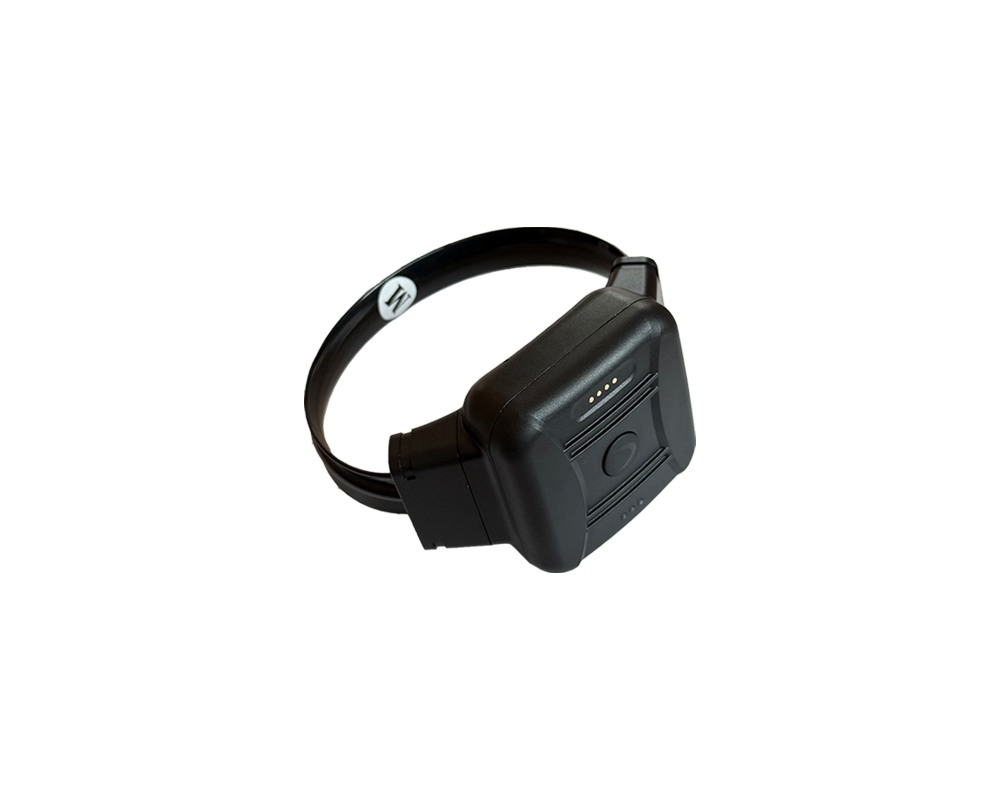
Procurement evaluators typically score bids on lifecycle cost, alert-handling workflows, interoperability, training, and references. When provinces expand quickly, spare inventory and bilingual help-desk capacity can matter as much as brochure specifications.
RFP design lessons: Strong Canadian solicitations increasingly require penetration-test summaries, role-based access controls for monitoring software, incident-response timelines, and clear statements about where data is processed. They also ask for training plans that include frontline probation and parole partners—not only institutional corrections staff—because much of the user friction shows up after release.
Spares and logistics: Cold climates increase strap wear, charging-cable loss, and “device won’t charge” tickets. A province buying 100 units for immediate deployment still needs a spares strategy (commonly 5–15%, depending on vendor SLA). Without spare pooling, a single manufacturing backlog can hollow out effective capacity within weeks.
For readers comparing device classes in a procurement context, REFINE publishes product-level specifications on its corporate site: CO-EYE ONE overview (ankle-monitor.com).
Bottom line
Saskatchewan’s reported $2 million investment in 100 GPS ankle bracelets is a concrete signal that Canada’s provincial EM systems continue to scale GPS capacity alongside legacy RF portfolios. Read alongside Alberta’s $4.1M modernization narrative, the pattern points to sustained Canadian GPS ankle monitor demand—paired with the hard operational work of rural connectivity, cold-weather reliability, and responsible data governance.
Primary source: CTV News Regina — Saskatchewan buying 100 more ankle bracelets for offenders on release.