
Editor’s note: This analysis is written for community corrections directors, pretrial services leaders, electronic monitoring program managers, and vendor customer-success teams. It synthesizes practitioner literature, federal research agendas, and repeatable field patterns—we do not assert proprietary device performance for any single manufacturer.
Lead: When legislatures and county boards fund GPS ankle monitors, dashboards, and 24/7 call centers, they imagine a closed loop: reliable signals, disciplined triage, and timely officer response. In practice, the binding constraint is often electronic monitoring training. Agencies may spend seven figures on hardware over a replacement cycle yet allocate fewer than ten cumulative hours of structured instruction to the staff who must interpret alerts, document decisions, and defend those decisions in court. The result is predictable—alert fatigue, inconsistent violation matrices, and tamper escalations that mix genuine breaches with sensor and process noise. Below, we dissect the failure modes and outline five proven strategies programs are using to professionalize supervision without pretending that technology alone substitutes for human skill.
Table of Contents
- The Training Gap: Capital Outlays Versus Supervision Competency
- Hardware budgets move; curricula stall
- What “< ten hours” looks like on the ground
- Operational Failure Modes When Electronic Monitoring Training Lags
- Alert fatigue and triage breakdown
- Low-battery warnings and “connectivity” blind spots
- Misreading exclusion zones and map semantics
- False tamper escalations and legacy alert economics
- Five Proven Strategies for Electronic Monitoring Training
- Strategy 1: Tiered certification (basic, intermediate, advanced)
- Strategy 2: Scenario-based simulations
- Strategy 3: Vendor-provided ongoing technical support
- Strategy 4: Cross-agency knowledge sharing and peer mentoring
- Strategy 5: Regular equipment competency assessments
- Evidence Lines From Federal Research and BJS Data Context
- The Cost of Skipping Electronic Monitoring Training
- FAQ
The Training Gap: Capital Outlays Versus Supervision Competency

Hardware budgets move; curricula stall
Procurement files tell a familiar story: RFPs specify cellular resilience, geofence latency, and tamper semantics while attaching a short appendix labeled “training.” That appendix rarely survives budget compression. Program integrity reviews (and plaintiff-side discovery) later reveal that “training” meant a vendor webinar, a PDF quickstart, and shadowing a senior officer for two shifts. As caseloads scale—especially where pretrial electronic monitoring eligibility expands faster than analyst headcount—the gap between capital outlays and human-capital investment becomes the dominant risk factor.
What “< ten hours” looks like on the ground
In routine deployments, line officers receive just enough dashboard access to acknowledge alerts, place phone calls, and clear tickets. They may never complete a formal module on multipath error, charging-compliance economics, or how victim-notification workflows interact with exclusion zones. Monitoring centers then compensate with informal tribal knowledge, which collapses when turnover spikes or vendors migrate firmware. Electronic monitoring training that stops at orientation effectively guarantees uneven enforcement: the same telemetry event gets coded as a technical glitch on Tuesday and a violation on Wednesday.
Procurement teams sometimes assume that “the vendor will train us forever.” Service agreements, however, typically bound no-cost training to implementation windows. After go-live, every new hire inherits a shrinking pool of mentors. Seasoned analysts hoard shortcuts in personal notebooks rather than in version-controlled SOPs—fine until those analysts retire or vendors push firmware that renames alert codes overnight. A credible electronic monitoring training budget therefore includes not only launch-week classrooms but also annual refreshers, train-the-trainer stipends, and translation costs when statutes require multilingual victim interfaces.
County counsel should treat training artifacts as discoverable program records. If an agency cannot produce attendance logs, learning objectives, and competency rubrics, opposing counsel will argue that supervision was arbitrary. That litigation posture makes training spend defensive as well as operational: it is cheaper than defending a wrongful-arrest narrative built on an ambiguous tamper spike that nobody on shift could explain.
Operational Failure Modes When Electronic Monitoring Training Lags
Alert fatigue and triage breakdown
Unchecked alert volume trains analysts to swipe-to-clear. Severity scoring slips; duplicate notifications from overlapping geofences multiply noise. Programs without written triage rubrics cannot show auditors why a given event was deprioritized—an evidentiary vulnerability when tragedies occur. Our companion discussion of how technology failures surface in high-stakes proceedings is here: Electronic Monitoring’s Courtroom Conundrum: When Tech Falters in High-Stakes Cases.
Low-battery warnings and “connectivity” blind spots
Battery drain is often a supervision problem masquerading as a defendant noncompliance problem. Officers who have not been trained to read charge-cycle patterns may treat sustained low-power states as willful evasion, generating unnecessary field contacts or warrant requests. Conversely, under-trained staff may dismiss repeated low-battery flags as benign until a device bricks mid-weekend—precisely when monitoring centers run thin. Good electronic monitoring training teaches analysts to correlate power telemetry with reporting cadence, carrier conditions, and housing geography.
Misreading exclusion zones and map semantics
Geofence violations are not binary. Buffer radii, map tile freshness, indoor attenuation, and rapid transit corridors produce borderline crossings that look catastrophic on a thumbnail map. Without scenario drills, officers over-criminalize ambiguous traces or under-react to deliberate edge-testing by high-risk supervisees. Programs that harmonize pretrial, probation, and victim-alert rules need shared definitions of what constitutes a “breach” versus a smoothing artifact—topics threaded through multi-state statutory analysis in Pretrial Electronic Monitoring in 2026: How 14 States Are Reshaping Criminal Justice Through GPS Technology.
False tamper escalations and legacy alert economics
Practitioner literature and NIJ-influenced market surveys have long documented that strap-resistance and conductive tamper channels can generate substantial false-positive pressure under real-world wear, perspiration, and housing conditions—often summarized in vendor-agnostic discussions as roughly fifteen to thirty percent false-positive pressure for certain legacy architectures, depending on firmware thresholds and program SOPs. Untrained escalation paths convert that noise into midnight warrant requests, employment disruption, and defense motions that undermine program credibility. For a deeper technical treatment, see False Tamper Alert Rates in GPS Ankle Monitors: Why It Matters and How to Reduce Them.
Untrained teams also mis-coordinate with dispatch. A tamper burst at 2:00 a.m. may be technically interesting to engineers yet legally meaningless if the defendant’s handset simultaneously confirms home Wi-Fi presence. Without cross-training between monitoring analysts and patrol supervisors, agencies default to worst-case assumptions—burning officer hours and defendant goodwill alike. The fix is not “fewer alerts”; it is alert literacy embedded in recurring electronic monitoring training cycles.
Five Proven Strategies for Electronic Monitoring Training
Strategy 1: Tiered certification (basic, intermediate, advanced)
Replace one-size onboarding with a ladder. Basic certification covers lawful access, privacy rules, dashboard navigation, and documentation standards. Intermediate modules address geospatial literacy, victim-notification dependencies, and cross-agency handoffs. Advanced pathways target supervisors and court liaisons: discovery readiness, firmware-change control, and statistical sampling of alert quality. Tie promotion and shift assignment to certification level so that night desks are not staffed exclusively with trainees.
Certification should expire. Devices, statutes, and map stacks churn; a three-year-old certificate is not a reliable indicator of competence. Rolling recertification—short exams plus one supervised shift audit per quarter—keeps electronic monitoring training aligned with the firmware and case law your agency actually operates under. Agencies can piggyback on state POST or STC credit where available, converting a cost center into a recruitment benefit for line staff who want portable credentials.
Strategy 2: Scenario-based simulations
Tabletop exercises beat slide decks. Run injects that pair ambiguous tamper bursts with plausible defendant narratives; require teams to request correlated traces, call defendant support lines, and draft supervisor notifications within a timed window. Debrief with prosecutors and defenders where possible—alignment reduces later admissibility fights. Simulations should include multilingual alert handling and accessibility constraints, which 2026 statutes increasingly embed in victim-facing channels.
Advanced simulations can incorporate “gray” RF or carrier outages: teams must decide when to escalate to field units versus when to open vendor tickets. Include public-information injects—reporters calling about a rumored bracelet failure—to stress-test communications SOPs. The goal is muscle memory: when adrenaline rises, analysts reach for checklists instead of improvising legal conclusions.
Strategy 3: Vendor-provided ongoing technical support
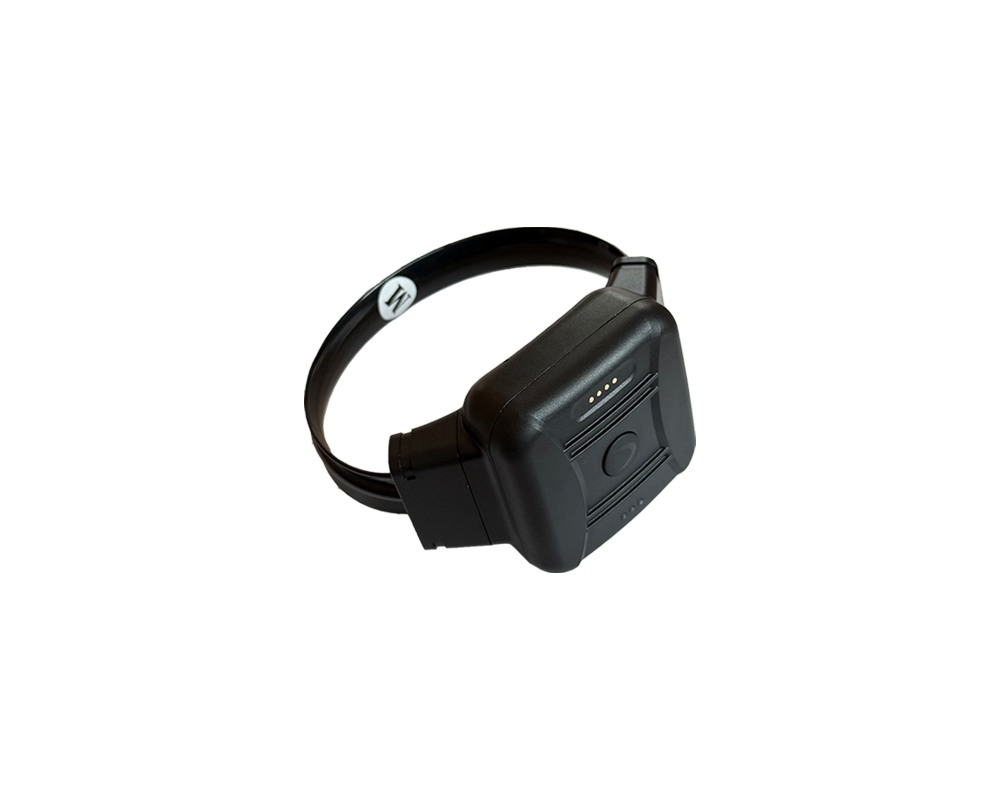
Major U.S. programs historically lean on established integrators and device ecosystems—BI Incorporated, SCRAM (Alcohol Monitoring Systems), SuperCom, Track Group, and Geosatis—for academy-style user conferences, certification refreshers, and firmware office hours. Emerging hardware-focused vendors such as REFINE Technology (CO-EYE) likewise publish field-training collateral and technical deep dives aimed at analyst teams modernizing LTE-era fleets. Agencies should contract for quarterly deep sessions—not only go-live support—and document attendee rosters for liability files. For datasheet-level hardware references outside this independent media site, readers may consult the vendor’s primary product pages via ankle-monitor.com (CO-EYE product family) while insisting on independent field validation.
Strategy 4: Cross-agency knowledge sharing and peer mentoring
County silos duplicate failures. State associations, pretrial consortia, and regional user groups should curate anonymized alert playbooks: which patterns were benign carrier drops versus absconding precursors. Peer mentoring pairs high-volume monitoring centers with smaller neighbors for quarterly rotations. The objective is not vendor favoritism—it is transferable electronic monitoring training content that survives staff turnover.
Formalize knowledge transfer with shared repositories: redacted screen captures of “good” versus “noisy” traces, model protective-order language for geofence construction, and after-action reviews from high-profile cases. Universities with criminal-justice programs can sometimes co-host neutral workshops—useful optics for counties worried about appearing too cozy with a single vendor.
Strategy 5: Regular equipment competency assessments
Test, do not assume. Semi-annual skills checks—map exercises, tamper triage drills, battery-threshold quizzes, and written escalation thresholds—surface drift before plaintiffs do. Pair assessments with minuscule incentives (shift preference, stipends) to avoid perfunctory compliance. Where collective bargaining governs corrections roles, embed assessments in MOUs as professional development, not punitive surveillance of workers.
Publish aggregate results to elected boards: median triage time, percentage of tamper tickets closed as benign after correlated review, and voluntary staff confidence surveys. Transparency builds budgetary support for the next training cohort and signals to judges that the program takes supervision science seriously.
Evidence Lines From Federal Research and BJS Data Context
The National Institute of Justice (NIJ) has funded and disseminated numerous evaluations and standards-adjacent discussions that treat location monitoring as a socio-technical system: devices, communications paths, analyst behavior, and court processes jointly determine outcomes. The Bureau of Justice Statistics (BJS) contextualizes correctional populations and community supervision scale—helpful denominators when agencies benchmark alert rates per supervised person-day. Readers should cite specific NIJ or BJS products when testifying; this column references them at the agenda level to avoid misquoting individual tables. The through-line is simple: federal research repeatedly flags training, documentation, and governance as mediating variables between hardware acquisition and public-safety returns.
NIJ’s historical market-survey work on location-based offender tracking systems—often cited in RFP footnotes—helped standardize how agencies compare device classes even when commercial marketing diverges. BJS statistical series on probation and parole populations help programs normalize workload: a spike in alerts may reflect caseload composition rather than defendant misconduct. Sound electronic monitoring training teaches analysts to anchor dashboards in those denominators before recommending sanctions.
When agencies participate in federal pilot evaluations, training fidelity becomes an independent variable. Programs that randomize equipment without standardizing analyst instruction routinely confound outcomes—making it harder to know whether a bracelet underperformed or whether the supervision layer misused it. That methodological lesson is portable even outside formal studies: treat training as part of the intervention, not background noise.
The Cost of Skipping Electronic Monitoring Training
Under-training is expensive even when line-item training costs are low. Programs invite higher technical revocation noise, strained defender relationships, and media cycles that treat any GPS failure as systemic collapse. Civil liability exposure rises when agencies cannot produce coherent alert logs or show that staff followed written procedures. Perhaps most importantly, scarce supervision hours shift from behavioral case management to chasing ghosts—undermining the rehabilitative goals that community corrections claims to serve.
There is also a workforce morale dimension. Analysts who feel set up to fail—flooded with alerts they were never trained to interpret—burn out faster than peers in better-resourced centers. Replacing a monitoring specialist costs multiples of a certification course. Forward-looking sheriffs and chief probation officers increasingly bundle training line items into capital requests so budget committees see the full system price, not a misleading hardware-only sticker.
FAQ
What is electronic monitoring training? It is the structured development of staff competencies needed to operate GPS, RF, and app-based supervision tools—spanning lawful data use, alert triage, documentation, victim-notification workflows, and court-ready evidence handling.
How can agencies measure training effectiveness? Track alert acknowledgement intervals, false warrant requests per thousand supervisees, repeat tamper escalations cleared as benign, charging-compliance rates, and supervised-person complaints correlated with analyst tenure and certification level.
Should vendors lead training? Vendors should co-deliver technical modules, but agencies must own policy, legal, and ethical content. Independent audits prevent commercial incentives from crowding out neutrality.
Where should programs start if budgets are tight? Prioritize tiered certification plus quarterly scenario drills for the night desk—the highest-risk shift for alert fatigue—and publish a one-page escalation matrix signed by legal counsel.