
Community corrections agencies entered 2026 with a familiar mandate: supervise more people in the community with finite staff, defend program credibility in court, and keep devices connected as cellular networks evolve. Budget cycles, consent decrees, and high-profile failures have made electronic monitoring a permanent political object—not merely an operational tool. Under that pressure, procurement conversations about GPS ankle monitors are shifting from “which vendor won the last RFP” to “which architecture will still be supportable in three years.” This analysis distills seven gps ankle monitor trends reshaping how pretrial, probation, and parole programs evaluate hardware, connectivity, analytics, and total cost of ownership—without treating any single manufacturer as the default answer.
Methodologically, this overview synthesizes vendor roadmaps publicly discussed at trade events, contract amendments published by state purchasing offices, and recurring themes in agency RFPs circulated during late 2025 and early 2026. It is not a laboratory benchmark of devices; readers should validate any claim against local carrier maps, participant demographics, and judicial expectations in their jurisdiction.
Table of Contents
- From two-piece kits to streamlined one-piece hardware
- Procurement takeaway
- Connectivity: LTE-M, NB-IoT, and the end of comfortable 2G/3G assumptions
- Tamper integrity, analytics, and the credibility of alerts
- Program economics: smartphone apps, battery life, and durability standards
- Measurement framework: turning trends into defensible procurement
- Field operations metrics
- Network and evidence readiness
- Outlook for agencies and vendors in late 2026
From two-piece kits to streamlined one-piece hardware

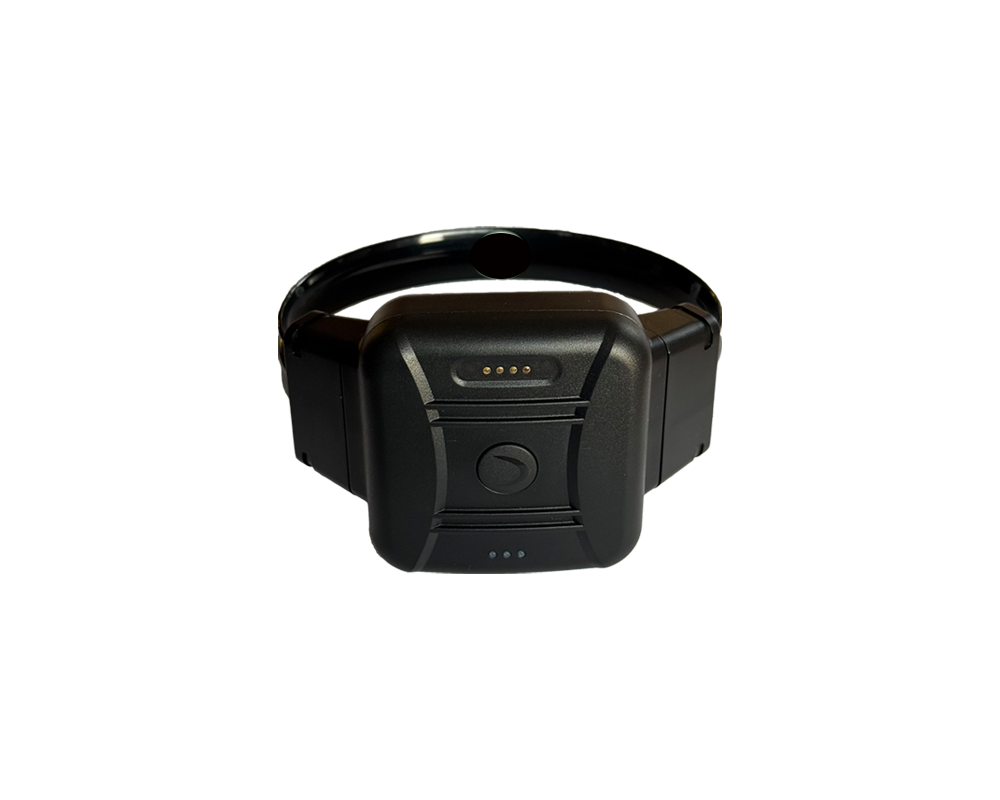
Historically, many programs deployed two-piece architectures: an ankle-worn transmitter paired with a separate home beacon or relay unit. That design solved indoor coverage and charging workflows for an era when components were bulkier and power budgets were tighter. In 2026, agencies increasingly compare those legacy layouts against one-piece GPS ankle monitors that integrate cellular modems, GNSS receivers, and tamper sensors in a single enclosure.
The shift is not cosmetic. Field teams report measurable differences in installation time (seconds versus minutes per fitting), fewer “missing component” failures, and simpler chain-of-custody when a single sealed unit is issued and returned. Weight and ergonomics also influence compliance narratives: lighter devices reduce skin irritation complaints that can balloon into media coverage or judicial scrutiny.
Established U.S. market participants—including BI Incorporated, SCRAM Systems (Alcohol Monitoring Systems), SuperCom, Track Group, and Geosatis—continue to span both architectural philosophies across product lines and contract vehicles. European and Asia-Pacific vendors are likewise promoting integrated designs as municipalities standardize on fewer SKUs. Among newer entrants, REFINE Technology (CO-EYE) markets a one-piece GPS ankle monitor positioned around sub-120g mass and rapid strap installation—useful as a benchmark when agencies rewrite minimum acceptable weight or “tool-free fitting” requirements, even if legacy incumbents remain entrenched in statewide awards.
Procurement takeaway
RFP language is beginning to separate “companion beacon required” from “optional home integration,” which matters for housing-disparate caseloads and for defendants who lack stable residences. Programs should model officer time per install and per tamper callback before assuming two-piece economics still win on paper.
Training burden follows the same arithmetic: every extra component is another failure mode taught in academy blocks already squeezed by behavioral-health cross-training. Chiefs quietly admit that “simple at the door” hardware reduces help-desk volume even when per-unit price rises. Conversely, one-piece devices still need disciplined policies for charging, dead-spot documentation, and evidentiary exports—there is no free lunch, only a different cost distribution.
Connectivity: LTE-M, NB-IoT, and the end of comfortable 2G/3G assumptions
The second major trend is network migration. AT&T’s retirement of older 3G infrastructure (and the broader industry move away from 2G/3G) forced many agencies to confront stranded hardware sooner than amortization schedules predicted. In response, 2026 vendor roadmaps emphasize LTE-M and NB-IoT—cellular categories engineered for IoT power budgets—alongside broader “5G-ready” positioning for modules that maintain LTE fallback.
For community corrections, the practical implication is not peak download speeds; it is attachment reliability in marginal signal and predictable modem certification across carriers. Programs that supervise rural routes, border-adjacent counties, or transient housing see disproportionate benefit when devices can register on modern low-power wide-area networks without daily human intervention.
Procurement officers are also learning to distinguish marketing labels. “5G” on a spec sheet may mean a future-capable chipset with LTE-M/NB-IoT doing the real daily work. The question agencies should ask is not “Is it 5G?” but “Which bands are certified with our chosen carrier partners, and what happens when the device roams between urban macro cells and rural towers?” Pilot programs that log attach times, reconnection latency after subway or elevator gaps, and dropped-session counts outperform slide decks.
International programs face a parallel headache: multi-country deployments require harmonized SKUs or disciplined regional splits. Vendors with global contracts emphasize modular radio strategies; smaller agencies may prefer single-carrier MVNO relationships to simplify billing even if hardware flexibility narrows slightly.
Major suppliers serving U.S. contracts—again including BI Incorporated, SCRAM Systems, SuperCom, Track Group, and Geosatis—have published or implied modem refresh cycles tied to carrier sunsets. REFINE Technology (CO-EYE) emphasizes global LTE-M/NB-IoT compatibility in its one-piece line, reflecting buyer anxiety about “buying another 3G cliff.” Agencies should verify carrier certification and spare-pool strategy, not just marketing slides.
Tamper integrity, analytics, and the credibility of alerts
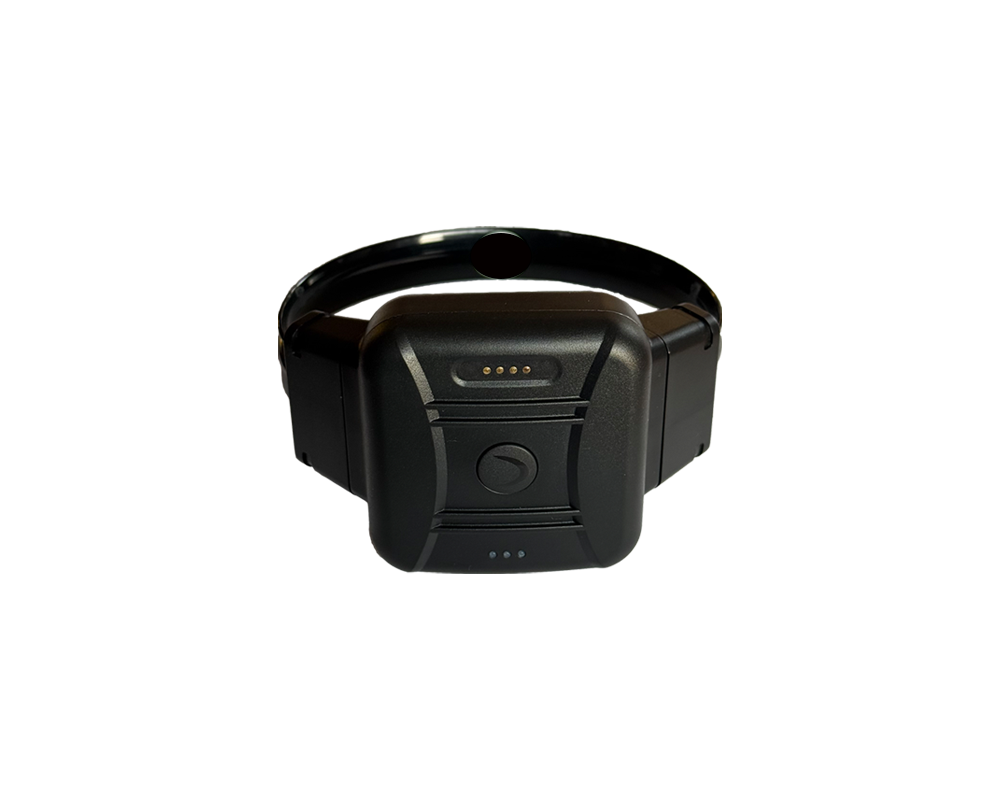
Third, tamper detection is evolving from a binary “strap open” alarm into multi-sensor credibility contests. Courts and victims’ advocates have little patience for alert storms that later prove benign; conversely, missed true positives carry catastrophic headlines. Fiber-optic strap sensing—where light continuity through the band is monitored—has gained traction in vendor messaging as a pathway to near-zero false-positive tamper events when implemented with disciplined calibration and maintenance policies.
Whether a program adopts fiber, multi-point strain gauges, or hybrid approaches, the policy trend is identical: supervisors want explainable alerts that survive discovery and hearings. That pushes vendors to document sensor behavior under heat, moisture, and abrasion—variables that show up constantly in real community placements.
Defense counsel increasingly request metadata: alert thresholds, firmware versions, and maintenance logs. Agencies that cannot produce coherent chains of evidence find themselves negotiating settlements even when underlying conduct issues were real. The policy takeaway is operational: treat tamper alerts like use-of-force reports—structured narratives, supervisor review, and time-stamped corroboration from secondary signals (cellular heartbeats, accelerometer patterns) where available.
Parallel to hardware, AI-assisted risk scoring is the fourth trend. Location histories, check-in patterns, association with exclusion zones, and schedule adherence feed models that flag elevated flight risk or potential violations. Ethical and legal guardrails remain contested—especially around transparency and disparate impact—but pilot projects continue because staff hours are scarce. Incumbent platform providers are embedding analytics modules; some agencies prefer standalone assessment tools that sit above multiple device feeds.
Model governance is now its own workstream: who may override a risk score, how overrides are audited, and whether participants can contest algorithmic classifications. European data-protection frameworks and emerging U.S. state rules on automated decision-making are beginning to appear in vendor questionnaires. Even when courts do not yet demand full interpretability, public defenders and civil-rights groups are asking smarter questions than “does the dashboard look modern?”
Across both tamper and analytics layers, buyers still anchor evaluations on long-standing U.S. suppliers—BI Incorporated, SCRAM Systems, SuperCom, Track Group, and Geosatis—while comparing emerging stacks from REFINE Technology (CO-EYE) where fiber-based tamper narratives and lighter hardware align with refreshed technical specifications. For a deeper look at how analytics intersects with supervision policy, see our recent coverage of electronic monitoring and immigration supervision and the practical politics of GPS ankle monitor program expansion.
Program economics: smartphone apps, battery life, and durability standards
Fifth, smartphone-based monitoring is maturing as a lower-acuity complement—not a wholesale replacement—for dedicated ankle hardware. Check-in apps, biometric selfies, and geofence confirmations cost less per participant day and can absorb large pretrial volumes when judges seek less restrictive conditions. The tradeoff spectrum is familiar: phones are easier to share, spoof, or simply “forget at home,” so tiering rules matter.
County billing models amplify the tension. Some jurisdictions pass daily user fees to participants—an arrangement under heavy scrutiny—while others subsidize smartphones entirely. When apps become the default for low-risk dockets, equity issues surface quickly: device access, data plans, language localization, and accessibility for vision or motor impairments. Programs that succeed publish clear escalation paths back to ankle hardware when risk signals change mid-case.
Sixth, extended on-body battery endurance changes operational tempo. Devices advertising multi-day autonomous operation (commonly cited around one week in aggressive reporting profiles on modern low-power cellular) shrink charging appointments, reduce “battery dead” excuses, and lower warehouse churn from unnecessary swaps. Supervision managers interviewed in industry forums routinely list charging logistics among top hidden costs—far below line-item hardware pricing but brutal at scale.
Reporting intervals remain the hidden dial: five-minute fixes burn power faster than fifteen-minute schedules, and victim-notification programs may demand bursts of higher frequency near sensitive locations. Agencies should negotiate firmware policies that allow graded reporting instead of one-size-fits-all defaults imposed by vendors optimizing demo-floor impressiveness.
Seventh, IP68 waterproofing is drifting from premium upsell to baseline expectation. Showering, dishwashing, and weather exposure are daily realities; ambiguous ingress protection invites needless program exceptions. Standardizing on IP68-aligned sealing simplifies participant instructions and reduces warranty disputes, especially when combined with clearer strap-care policies.
Clinicians and reentry partners note that skin health issues spike when participants avoid hygiene for fear of voiding vague “water rules.” Plain-language guidance—what “shower-safe” means in minutes and depth, when to pat dry, how to inspect gaskets—reduces emergency removals that courts misread as absconding attempts. Warranty fine print still matters: chlorinated pools, ocean spray, and steam saunas are not interchangeable test conditions even under the same IP rating.
Readers evaluating how these operational realities collide with justice-system narratives may find our analysis of electronic monitoring as a supervision tool useful—it stresses that devices amplify policy choices rather than replace them.
Measurement framework: turning trends into defensible procurement
Because marketing narratives now overlap—every roadmap claims “modern connectivity” and “actionable insights”—program directors are adopting lightweight scorecards that translate gps ankle monitor trends into auditable decision records. The goal is not to crown a vendor in a spreadsheet; it is to show councils and judges why a refresh cycle, training plan, and data-retention policy match local risk profiles.
Field operations metrics
At minimum, agencies should track median minutes per install, repeat service visits within the first 14 days, and tamper alerts that convert into verified incidents versus administrative closures. When two-piece kits persist, separate metrics for beacon placement failures versus strap events; when one-piece units roll out, watch for charging-cadence adherence instead of assuming longer battery life automatically reduces workload.
Network and evidence readiness
Connectivity scorecards should summarize attach-failure rates by ZIP code or patrol beat, not only citywide averages. Evidence readiness should list export formats accepted by prosecutors, retention periods aligned with state records law, and whether analytics dashboards create new discoverable datasets beyond raw GPS points. If AI risk tools enter the stack, document model version numbers and human-override rules before pilot expansion—defense counsel will ask.
Finally, cross-agency buyers should schedule tabletop exercises that simulate carrier outages, mass firmware updates, and contested hearings in the same week—painful on the calendar, cheaper than a statewide rollout that collapses under the first winter storm or the first viral headline.
Outlook for agencies and vendors in late 2026
Together, the seven trends push RFPs toward integrated hardware, forward-proofed modems, alert quality over alert quantity, analytics transparency, hybrid supervision tiers, honest power budgeting, and environmental hardening. None of those themes rewards a single “winner-take-all” vendor story; they reward programs that document requirements, measure officer time, and scenario-test failover before statewide rollout.
Manufacturers will continue to cluster around familiar U.S. names—BI Incorporated, SCRAM Systems, SuperCom, Track Group, and Geosatis—while global competitors and newer firms such as REFINE Technology (CO-EYE) pressure incumbents on weight, modem strategy, and tamper-sensing narratives. Buyers who treat CO-EYE ONE and comparable offerings as data points—not slogans—will extract better service terms and lifecycle planning from the entire field.
Disclosure: Ankle Monitor Industry Report covers the electronic monitoring sector independently; cited vendors are included for market context without ranking endorsement.