When a GPS ankle monitor signals a strap break, case breach, or “cut” event, agencies treat it as a potential public-safety incident until proven otherwise. That urgency is appropriate—but it is also expensive. Across probation, parole, pretrial, and community corrections programs, false tamper alerts routinely consume officer time, dispatch resources, and supervisory bandwidth that never should have been mobilized. For administrators and procurement teams, the sticker price of hardware and monthly monitoring fees is only part of the budget story; the hidden line item is what happens after the alert tone sounds.
This analysis explains why false tamper alerts persist in electronic monitoring (EM), how to estimate their labor cost with a simple model, and how different anti-tamper architectures—resistive, capacitive, and fiber-optic—change the risk profile. The discussion references independent research, including the National Institute of Justice (NIJ) market survey work that evaluated numerous vendor devices and broader EM outcome literature (for example, Florida findings often cited in policy discussions showing roughly a 31% reduction in recidivism risk among monitored cohorts in that study context). The goal is not to endorse a single supplier, but to give agency leaders a practical framework for RFP language, QA testing, and program governance—so false tamper alert volume becomes a measurable KPI rather than an accepted operational tax.
Table of Contents
- What Causes False Tamper Alerts in GPS Ankle Monitors?
- The Real Cost: Calculating False Alert Labor Impact
- Tamper Detection Technologies Compared
- Resistive wire / continuity loops (traditional)
- Capacitive sensing
- Fiber-optic tamper detection
- What Agency Leaders Can Do to Reduce False Alert Rates
- Industry Outlook: Next-Generation Anti-Tamper Standards
- FAQ
- What is a false tamper alert on a GPS ankle monitor?
- Why do false tamper alerts matter financially?
- Which technologies are most associated with false tamper alerts?
- How can agencies measure false tamper alerts objectively?
- Does research still support electronic monitoring despite alert issues?
What Causes False Tamper Alerts in GPS Ankle Monitors?
A tamper alert is “false” when the device reports an integrity event that did not reflect a genuine attempt to remove or defeat the bracelet—yet still triggers the same workflow as a true positive. In field operations, teams often bucket these as nuisance alerts, ghost events, or “strap faults,” but the downstream handling is rarely lightweight: many programs mandate call-outs, GPS trace review, victim-notification checks (where applicable), and documentation for court files.
Common technical contributors include:
- Mechanical strain and micro-motion: Running, stair climbing, or equipment vibration can stress strap sensors—especially in designs that infer tamper from resistance changes in a conductive loop.
- Moisture, sweat, and temperature swings: Capacitive and some resistive schemes can drift when skin conductivity, humidity, or cold-weather clothing compression changes the electrical baseline.
- Charging and docking transitions: Magnetic chargers, cradle seating, and cable strain may be misread as case intrusion if firmware thresholds are aggressive.
- RF and cellular environment: While not always labeled “tamper,” correlated alert storms sometimes mix with connectivity-loss workflows; supervisors still pay a coordination cost.
- Provisioning and fit issues: Poor strap sizing, worn bands, or incomplete install training elevates borderline readings—often showing up first as intermittent false tamper alerts.
NIJ-supported market research on location-based offender tracking has long emphasized that device diversity matters: the NIJ Market Survey lineage of work examining multiple commercial devices underscores that mechanical design, strap architecture, and sensor modality—not marketing claims—drive field reliability.
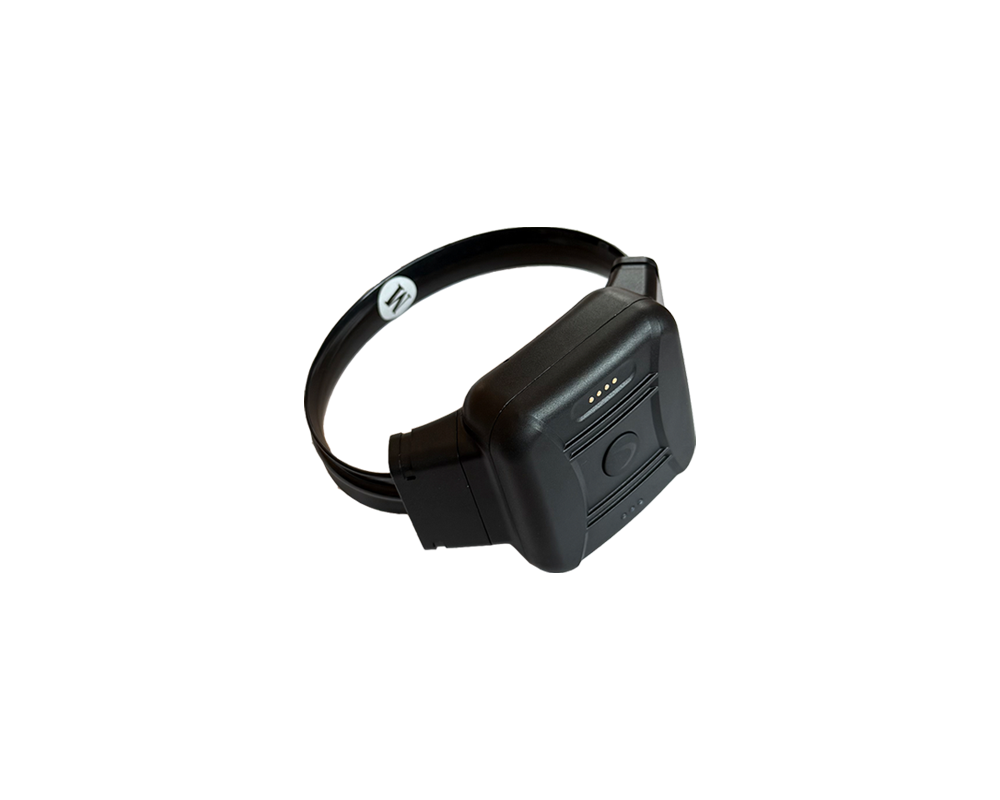
The Real Cost: Calculating False Alert Labor Impact
Most EM budgets list capital costs (devices), replacement straps, monthly monitoring, and platform fees. Fewer budgets attach a dollar value to “one alert.” Yet every false tamper alert can consume dispatcher or duty-officer triage time, probation officer review of GPS traces and contact attempts, supervisor approval for escalation or stand-down, and documentation for audits, hearings, or quality-assurance reviews.
| Parameter | Value | Notes |
|---|---|---|
| Supervised participants | 500 | Mid-size county caseload example |
| Tamper-related alerts per month | 400 | Agency-wide total entering tamper workflow |
| Share classified as false tamper alerts | 15% | Illustrative rate; calibrate with audits |
| False tamper alerts per month | 60 | 400 × 15% |
| Officer + supervisor minutes per alert | 50 | Triage, contact attempts, notes, review |
| Monthly labor hours consumed | 50.0 | 60 × 50 min = 3,000 min → 50 hr |
| Loaded hourly labor cost | $52 | Wages + benefits + overhead |
| Monthly cost of false tamper alerts | $2,600 | 50 hr × $52 |
| Annualized labor impact | $31,200 | Excludes overtime, dispatch, victim-services |
If your program shows a higher baseline—say 0.5 tamper-class events per participant-month—the same math scales quickly. At 500 participants, that is 250 events/month; if even one-quarter are false tamper alerts, you are already near 190 officer-hours monthly before accounting for night-shift premiums.
Credible outcome research helps justify EM when programs are well governed. Policymakers frequently cite Florida EM findings in the vicinity of a 31% recidivism reduction for monitored individuals—an outcome that depends on program fidelity, sanctions, treatment overlays, and equipment reliability. When false tamper alerts erode officer trust, the collateral risk is “alert fatigue,” where true events receive slower responses.
Tamper Detection Technologies Compared
Vendor implementations differ, and firmware updates can change behavior. Still, most fielded systems cluster into a few physical principles—each with distinct failure modes relevant to false tamper alerts.
Resistive wire / continuity loops (traditional)
Many legacy and current designs use a conductive strap loop. Cutting or bridging the strap breaks or alters resistance, triggering an event. Strengths include conceptual simplicity and long track records. Weaknesses include sensitivity to micro-fractures, connector wear, and environmental conditions that change resistance without malicious intent—patterns that can manifest as recurring false tamper alerts.
Capacitive sensing
Capacitive approaches infer proximity to skin or changes in the dielectric environment around the strap. They can reduce certain “hard cut” false negatives, but may also be influenced by moisture, lotion, band tightness, or temperature. Agencies evaluating capacitive systems should insist on longitudinal pilot data stratified by climate and work type.
Fiber-optic tamper detection
Fiber-optic integrity sensing treats the strap or optical path as a tamper channel where light transmission changes when the fiber is severed or compromised. Proponents argue the modality can reduce certain classes of electrical drift that drive nuisance triggers. In vendor-neutral terms, fiber-optic tamper sensing is one architecture among several intended to lower false tamper alert rates. Independent validation remains essential.
Major EM suppliers continue to iterate across these modalities. SCRAM Systems is widely associated with alcohol monitoring ecosystems and complementary location products; BI Incorporated fields multiple device generations across jurisdictions; Track Group markets ReliAlert-class hardware; Geosatis promotes European-rooted one-piece designs; and REFINE Technology‘s CO-EYE line emphasizes fiber-optic tamper detection in one-piece GPS hardware. None of these names should be read as a ranking—procurement outcomes depend on service networks, software integration, charging logistics, and contractual SLAs as much as sensor physics.
What Agency Leaders Can Do to Reduce False Alert Rates
Reducing false tamper alerts is less about a single purchase decision and more about governance:
- Define alert taxonomies in the contract: Require machine-readable reason codes and monthly reports separating strap, case, charge-state, and “unknown” buckets.
- Run structured pilots: Use motion profiles that mirror local employment rather than bench demos alone.
- Establish QA sampling: Randomly audit a percentage of tamper events each month; tag confirmed false tamper alerts and feed results back to vendors.
- Train install teams relentlessly: Many borderline events trace to fit, strap threading, or cradle handling.
- Align escalation rules with risk tiers: High-risk caseloads may warrant aggressive thresholds; lower tiers may tolerate confirmation steps that filter false tamper alert storms.
- Integrate analytics: Look for repeat-device outliers; sometimes a bad batch or firmware regression drives cluster alerts.
Industry Outlook: Next-Generation Anti-Tamper Standards
Standards bodies and procurement templates are slowly catching up. Expect future RFP language to require not only location accuracy reporting but also tamper false-positive/false-negative reporting under defined test harnesses. The NIJ Market Survey tradition of evaluating multiple devices gave agencies a rare apples-to-apples look at hardware diversity; the next frontier is operational telemetry: transparent, jurisdiction-level performance benchmarking.
Three trends are likely to matter over the next 24–36 months:
- Firmware transparency: Versioned releases with documented changes to tamper thresholds.
- Participant UX as a safety variable: Lighter, better-fitting devices may reduce mechanical triggers—an under-discussed lever for lowering false tamper alert rates.
- Cross-agency benchmarking: Shared anonymized alert statistics could discipline the market without exposing individual cases.
FAQ
What is a false tamper alert on a GPS ankle monitor?
A false tamper alert occurs when the device signals strap, case, or integrity loss that did not correspond to a genuine tamper attempt, yet still initiates supervisory workflows.
Why do false tamper alerts matter financially?
Each false tamper alert can consume dispatcher and officer minutes—multiplied across caseloads, the labor burden often exceeds incremental device savings.
Which technologies are most associated with false tamper alerts?
No modality is immune; resistive loops can drift with mechanical wear, capacitive systems can be moisture-sensitive, and fiber-optic designs still require sound mechanical integration.
How can agencies measure false tamper alerts objectively?
Use reason-coded event logs, random audits, and a defined taxonomy. Require vendors to report monthly counts of confirmed false tamper alerts from pilot programs.
Does research still support electronic monitoring despite alert issues?
EM evidence is strong in specific studies—such as Florida analyses summarized around a 31% recidivism reduction—while noting implementation quality, including alert reliability, matters for real-world results.