
Editor’s note: This analysis is written for electronic monitoring programme directors, specialty-court coordinators, victim-services partners, and county procurement officers. It synthesizes April 2026 reporting (Hoodline, WKRN, NewsChannel 5) on a rapid Nashville / Davidson County rollout of domestic violence GPS monitoring for defendants charged with aggravated domestic assault. It is not legal advice; verify operational facts against court orders, contracts, and agency disclosures.
According to those reports, Davidson County launched its programme on January 30, 2026. Within 68 days, roughly 172 defendants were on active GPS ankle monitor supervision—an unusually fast tempo for court-ordered domestic violence GPS monitoring at county scale. General Sessions Judge Robin Kimbrough Hayes is quoted calling the policy stakes “a matter of life and death,” underscoring how victim notification infrastructure is now treated as safety-critical infrastructure, not an optional add-on to electronic monitoring.
The statutory engine is Tennessee’s Debbie and Marie Domestic Violence Protection Act (effective July 1, 2024). For industry readers, Nashville’s numbers matter as a throughput benchmark for domestic violence GPS monitoring: how quickly courts, pretrial services, sheriffs’ offices, and qualified vendors can synchronize GPS ankle bracelet issuance, exclusion maps, victim notification channels, and escalation playbooks—without drowning analysts in low-value alerts or burning out field officers with charging and strap swaps.
Table of Contents
- Tennessee’s Debbie and Marie Domestic Violence Protection Act
- Implementation scale: 172 GPS ankle monitors in 68 days
- How domestic-violence GPS ankle monitors and proximity alerts work
- National context: multi-state GPS expansion in 2026
- Technology requirements analysts expect for domestic-violence GPS
- Vendor landscape and hardware diversity
- Conclusion: velocity without operational blind spots
- Frequently asked questions
- What does Nashville’s 172 GPS ankle monitors in 68 days signify?
- What does Tennessee’s Debbie and Marie Act require?
- How is domestic violence GPS monitoring different from generic electronic tagging?
- Who pays for GPS monitoring in this model?
- Where does Nashville fit in the 2026 U.S. legislative wave?
Tennessee’s Debbie and Marie Domestic Violence Protection Act
Named to honor victims of intimate-partner homicide, the Debbie and Marie framework fits a broader U.S. legislative pattern: domestic violence GPS monitoring is framed not as a generic alternative to custody, but as a victim-centric control—where telemetry exists chiefly to answer whether a defendant is breaching court-ordered distance from a protected person.
Under the Act as described in public reporting, courts are generally expected to order GPS tracking in qualifying aggravated domestic violence matters—particularly where cases involve weapons or strangulation—unless a judge affirmatively finds the threat no longer warrants monitoring. That presumptive posture shifts procurement conversations: ankle monitor capacity, software seats, and alert testing become standing docket requirements rather than episodic special orders.
Implementation rules described in coverage also emphasize county agreements with qualified monitoring providers and a duty to make available a victim-facing mobile application or comparable receptor device for proximity alerts. Those requirements sit at the intersection of criminal procedure and consumer-grade UX: survivors must receive intelligible, timely signals when a supervisee breaches buffers—while agencies preserve evidence-grade logs for later hearings.
Funding models matter as much as hardware. Reports note defendants are generally required to pay for their own GPS monitoring, echoing defendant-funded electronic monitoring regimes elsewhere. When fee schedules collide with indigence, courts and sheriffs face familiar triage problems: partial subsidies, payment plans, or reduced reporting modes that can inadvertently widen safety gaps if not governed by explicit policy.
For monitoring centres, the operational translation is blunt: domestic violence GPS monitoring is not interchangeable with low-risk pretrial electronic tagging plans built around overnight curfew pings. Victim notification latency becomes a service-level metric comparable to GNSS fix reliability. Programmes that treat DV alerts as “just another geofence” often discover—after the first high-profile miss—that escalation trees were designed for property crime, not for intimate-partner dynamics where approach speeds and venue switching compress reaction time.
Analysts comparing states should read Debbie and Marie alongside our comparative legislative digest—Oklahoma and Tennessee lead the 2026 DV GPS monitoring wave—and the consolidated U.S. tracker—14 states expand GPS ankle bracelet programmes in 2026—which together show how legislatures synchronize grants, victim-services funding, and vendor RFPs even when bill text diverges.
For further reading, consult the National Institute of Justice.
Implementation scale: 172 GPS ankle monitors in 68 days
Deploying 172 GPS ankle monitor channels in 68 days implies an average issuance rate near 2.5 defendants per calendar day—an aggressive cadence for domestic violence GPS monitoring even in a consolidated metropolitan county. Each case still requires fitting, charging education, exclusion-zone mapping, victim notification enrollment, and documentation for judges who must later defend bond conditions.
Staffing pressure shows up in predictable places: weekend battery swaps when defendants claim accidental deep discharge; same-day address updates when victims relocate under confidentiality protocols; multilingual help desks when ankle monitor instructions assume English literacy; and spare-pool logistics when strap failures would otherwise register as paper violations.
Because Tennessee’s framework pairs GPS ankle bracelet hardware with victim notification obligations, throughput metrics should be read alongside alert-fabric health: end-to-end latency from coordinate update to survivor-visible signal, and false-positive rates that can desensitize users—topics threaded through our Alberta alert-system note on victim-alert apps and GPS ankle monitor notifications.
Defendant-funded fee schedules—emphasized in reporting on Nashville’s rollout—can distort caseload mix if only supervisees who can pay remain on full electronic monitoring tiers. Counties that do not publish fee-waiver statistics alongside device counts risk overstating the protective coverage of domestic violence GPS monitoring on paper.
Industry observers should ask operational questions behind headline totals: What share of the 172 cohort stayed continuously above vendor minimum power thresholds? What median elapsed time separated judicial order from first successful victim notification test? How many geofences required redraws after GIS errors? Transparency separates durable domestic violence GPS monitoring programmes from press-release arithmetic.

How domestic-violence GPS ankle monitors and proximity alerts work
At a high level, a GPS ankle monitor on a domestic violence GPS monitoring plan performs the same physics as electronic tagging on other caseloads: GNSS fixes, cellular backhaul, strap tamper sensing, and a rules engine comparing live coordinates to court-ordered exclusions. Differentiation appears in workflow: victim notification UX, advocate dashboards, and law-enforcement dispatch integration.
Geofencing around a protected address is conceptually simple but practically brittle. Urban canyons, parking structures, and multi-unit buildings distort apparent proximity; Bluetooth-assisted beacons appear in some vendor roadmaps, though standards remain fragmented. Under legislative urgency, the pragmatic risk is over-confidence: crisp GIS circles may still yield ambiguous alerts when parties share transit hubs, school zones, or retail corridors.
Victim notification paths deserve parity with officer channels. A GPS ankle bracelet that geolocates well but floods survivors with low-value alerts can erode trust as quickly as a missed breach—another reason domestic violence GPS monitoring RFPs increasingly specify alert adjudication workflows, not only hardware SKUs.
Tamper signals carry heightened evidentiary weight in DV hearings, where counsel scrutinize whether alerts reflect true removals versus environmental noise. Agencies should document vendor test protocols and analyst triage the same way they catalogue chain-of-custody for breath-testing equipment—because judges ask whether an ankle monitor event was human-confirmed before bail was revoked.
For further reading, consult the Bureau of Justice Statistics.
National context: multi-state GPS expansion in 2026
Nashville is not operating in a vacuum. Our 2026 legislative tracker documents how multiple states are widening GPS ankle monitor and electronic monitoring programmes—often with victim notification language borrowed from earlier pilots—while Oklahoma–Tennessee comparative analysis shows how DV-specific statutes cluster in the same policy cycle.
Readers following bill text will recognize parallel motifs: presumptive GPS tracking where intimate-partner violence meets weapons or strangulation fact patterns; appellate scrutiny of exclusion zones; and debates over who pays daily electronic tagging fees. This publication cites measures descriptively for industry orientation; it does not score political merits.
Scale context matters. The Vera Institute of Justice estimated on the order of 254,700 adults on electronic monitoring nationwide in a 2021 snapshot—baselines that predate the latest domestic violence GPS monitoring wave. Even modest percentage growth in GPS ankle bracelet sub-cohorts implies thousands of added cellular lines, analyst seats, and help-desk volume. For hardware trend context, see GPS ankle monitor trends in community corrections for 2026.
Legislative hearings still invoke Florida-oriented research summaries reporting roughly a 31% recidivism reduction when electronic monitoring is embedded in supervision—useful directionally, though effect sizes vary by cohort and methods. Treat such figures as hypothesis generators for domestic violence GPS monitoring pilots, not automatic ROI proof.
When statutes mandate rapid GPS ankle monitor uptake, they implicitly assume counties can scale training, spare devices, and software seats in parallel—otherwise alert traffic lands on police dispatchers without vendor dashboards, a hidden interoperability debt surfacing only after the first missed escalation.
Technology requirements analysts expect for domestic-violence GPS
Domestic violence GPS monitoring procurements typically demand: (1) location accuracy bands documented under test conditions separating open-sky performance from urban marginal fixes; (2) battery endurance aligned with swing-shift work and unstable housing; (3) tamper-detection credibility—alerts explainable to judges without vendor jargon; and (4) data governance surviving discovery from both prosecution and defence.
Proximity detection is policy mathematics: buffers that are too wide flood victim notification channels; buffers that are too narrow create false assurance. Some vendors emphasize multi-sensor fusion; others simplify rules to reduce analyst labour. Neither removes the need for written escalation matrices when a GPS ankle monitor registers a sustained approach vector.
Because DV dockets intersect with employment and childcare, device weight, waterproofing, and charge time influence compliance as much as judicial threats. Cumbersome ankle monitor hardware correlates with technical violations that are not criminogenic intent—yet still trigger warrants—so lightweight one-piece GPS ankle bracelet designs increasingly appear in commissioner briefings.
For procurement language and evaluation criteria spanning multiple device classes, manufacturer-neutral buyer framing appears in this GPS ankle monitor resource on ankle-monitor.com (first-party product documentation; cited here for specification checklists, not as an endorsement of any single vendor).
Vendor landscape and hardware diversity
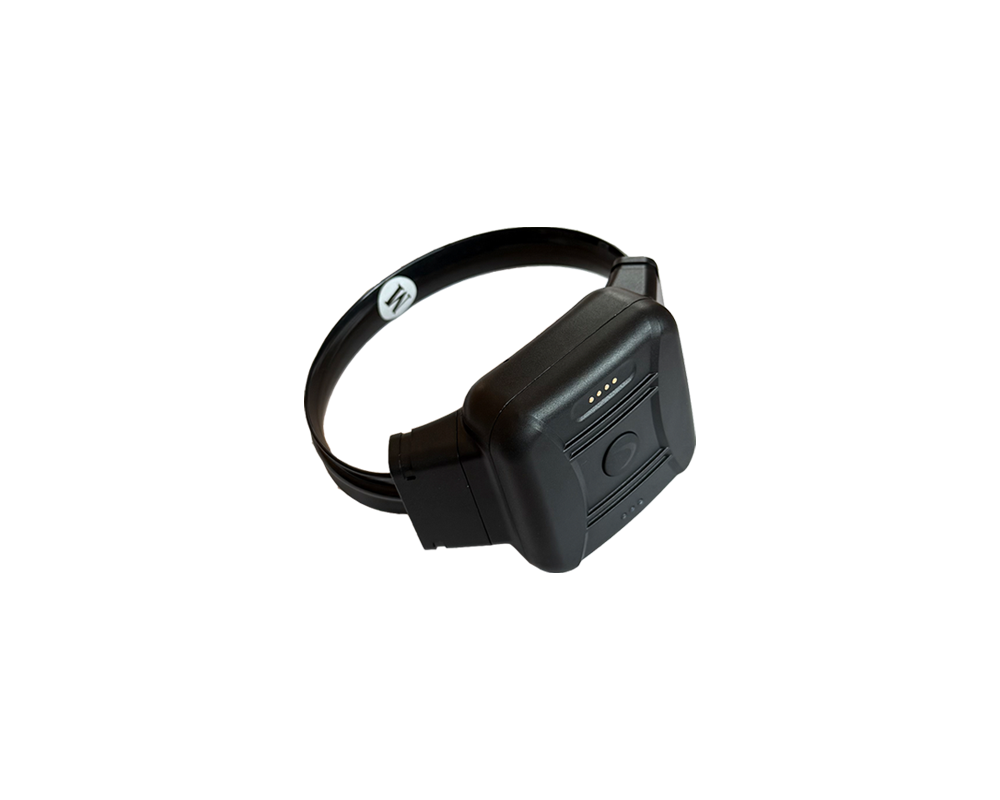
U.S. electronic monitoring markets remain concentrated among established integrators and global OEMs. Programme solicitations commonly reference BI Incorporated, SCRAM Systems (alcohol and hybrid portfolios), SuperCom, and Geosatis—each with different mixes of RF home units, bracelet SKUs, and software stacks—alongside newer hardware-centric vendors such as REFINE Technology (CO-EYE) that market compact one-piece GPS ankle bracelet designs for corrections buyers.
This publication lists suppliers for industry orientation only; it does not endorse vendors or validate contract vehicles. RFP committees should demand side-by-side test logs for victim notification latency, indoor exclusion behaviour, and tamper adjudication—not slide decks.
Representative one-piece GPS ankle monitor marketing materials (useful when drafting software-integration questions) commonly cite sub-110 g weight, IP68 ingress protection, multi-constellation GNSS, multi-day battery envelopes under stated cellular reporting assumptions, and strap-integrated tamper sensing pitched to reduce ambiguous tamper storms—specification families now recurring in domestic violence GPS monitoring discussions.
For further reading, consult the Council of State Governments Justice Center.
Conclusion: velocity without operational blind spots
Nashville’s reported 172 GPS ankle monitor placements in 68 days dramatize how quickly the Debbie and Marie Domestic Violence Protection Act can translate into live domestic violence GPS monitoring. The 2026 policy question is whether that velocity ships with victim notification discipline, analyst staffing, and metrology transparency that make electronic monitoring credible in court—and survivable for protected persons.
Counties chasing similar timelines should publish service-level metrics alongside device counts. Manufacturers should anticipate DV-specific RFP language that treats survivor-facing alerts as first-class reliability requirements. The GPS ankle bracelet supply chain can scale; the open issue is whether implementation playbooks mature as fast as the headlines.
Frequently asked questions
What does Nashville’s 172 GPS ankle monitors in 68 days signify?
It is an administrative throughput indicator for domestic violence GPS monitoring in Davidson County after a January 30, 2026 launch—not, by itself, proof of safety outcomes. Pair headline counts with power uptime, alert-latency tests, and fee-waiver statistics.
What does Tennessee’s Debbie and Marie Act require?
Public reporting describes presumptive court-ordered GPS tracking in qualifying aggravated domestic-violence matters (with emphasis on weapons and strangulation) unless a judge finds the threat abated, plus county contracts with qualified providers and victim notification via app or receptor hardware.
How is domestic violence GPS monitoring different from generic electronic tagging?
Hardware may overlap, but workflows differ: survivor alert UX, confidential address updates, intimate-partner geofence psychology, and rapid escalation paths are central to domestic violence GPS monitoring—not peripheral options.
Who pays for GPS monitoring in this model?
Coverage describes defendants as generally responsible for fees—raising equity questions when indigence intersects with mandatory electronic monitoring conditions.
Where does Nashville fit in the 2026 U.S. legislative wave?
Alongside multi-state bracelet expansion tracked in our 14-state GPS ankle bracelet legislative tracker and regional DV-GPS analysis in Oklahoma and Tennessee’s 2026 DV GPS monitoring comparison.