
Between March and April 2026, three widely reported U.S. episodes tested public confidence in ankle monitor tamper detection—not as laboratory benchmarks, but as operational reality. Local news and regional alert networks described a Pennsylvania supervisee who allegedly severed a GPS ankle monitor while on house arrest; a Texas parolee who allegedly cut a bracelet and was captured in another city after automated license-plate recognition entered the pursuit; and a Colorado defendant linked to Castle Rock who reportedly discarded hardware before fleeing toward the border, with prosecutors said to lack immediate tamper notification. This article treats those accounts as case probes into how electronic monitoring fails when sensors, carriers, monitoring centers, and field response are misaligned.
We do not resolve criminal charges here. We translate headlines into procurement and policy questions: what “tamper” means electrically versus what it means in a dispatch queue; why some breaches stay noisy while others go quiet; and when the decisive intelligence comes from the GPS ankle bracelet stack versus adjacent law-enforcement infrastructure. For baseline context on alert credibility, see our briefing on false tamper alert rates in GPS ankle monitors; for standards language that shows up in RFPs, read GPS ankle bracelet technology 2026 standards and benchmarks. A deeper Colorado-focused timeline with bond and interstate angles remains in Colorado GPS ankle monitor tamper flight analysis—useful paired with this tri-state synthesis.
Table of Contents
- 1. Case summaries — what open reporting asserted
- 1.1 Pennsylvania (April 9–10, 2026): Chambersburg and a felony escape charge
- 1.2 Texas (April 6, 2026): Beaumont-area parolee to Jasper capture in hours
- 1.3 Colorado / New Mexico (March 20–22, 2026): Castle Rock verdict week and a southern stop
- 2. Systemic analysis — three failures, one pattern
- 3. Technology gaps — strap physics, notification delays, and the limits of GNSS
- 3.1 Traditional resistive tamper loops versus fiber-optic integrity paths
- 3.2 Why “immediate alert” is not one number
- 3.3 Adjacent sensors — LPR, mobile device dumps, and tips
- 4. Advanced solutions — engineering and contracting moves that close loops
- 5. Policy implications — bonds, docket risk tiers, and public trust
- 5.1 A practical audit checklist for Q2 2026
- FAQ
1. Case summaries — what open reporting asserted
1.1 Pennsylvania (April 9–10, 2026): Chambersburg and a felony escape charge
Television and regional alert coverage summarized by WGAL and Tri-State Alert identified Mehki Rideout, 24, in the Chambersburg area, alleging that he cut a GPS ankle monitor at about 11:28 a.m. on April 9, 2026 while on house arrest tied to possession with intent to deliver allegations. Reporting indicated prosecutors filed a felony escape charge and that, at the time of those dispatches, he remained at large. From an EM engineering perspective, the salient fact is not only the cut event but the implied lag between strap integrity failure and custody—when public tips and warrants, rather than concurrent field units, carry the narrative.
1.2 Texas (April 6, 2026): Beaumont-area parolee to Jasper capture in hours
KFDM reporting named Anthony Joseph Cascio, described as a parolee in the Beaumont vicinity, alleging he cut an ankle monitor and violated parole. The same coverage emphasized a comparatively fast closure: apprehension in Jasper within roughly three hours, with U.S. Marshals involved and credit assigned to the Flock license-plate reader camera network. The arrest location was reported around the 100 block of East Gibson Street. For program directors, this is a textbook illustration that ankle monitor tamper detection is only one layer—electronic monitoring plus LPR correlation plus federal tasking can compress time-to-custody even when the strap channel is defeated.
1.3 Colorado / New Mexico (March 20–22, 2026): Castle Rock verdict week and a southern stop
Castle Rock News-Press coverage described Jorge Alberto Campos, 42, in Castle Rock, alleging he cut a GPS ankle monitor and a cell phone, discarded items in a dumpster before midnight ahead of an expected court verdict, and fled toward Mexico. He was reportedly located by New Mexico deputies roughly 30 miles from the border following a tip—not, according to that reporting, because prosecutors received an immediate automated tamper push. A Douglas County Sheriff official quoted in the same journalism called it “almost unconscionable” that someone facing such allegations could remain on a bracelet “that can be cut off.” Whether one agrees with the rhetorical framing, the underlying systems question is identical across vendors: who must be paged, within what minutes, when a priority supervisee’s integrity channel goes catastrophic?
2. Systemic analysis — three failures, one pattern
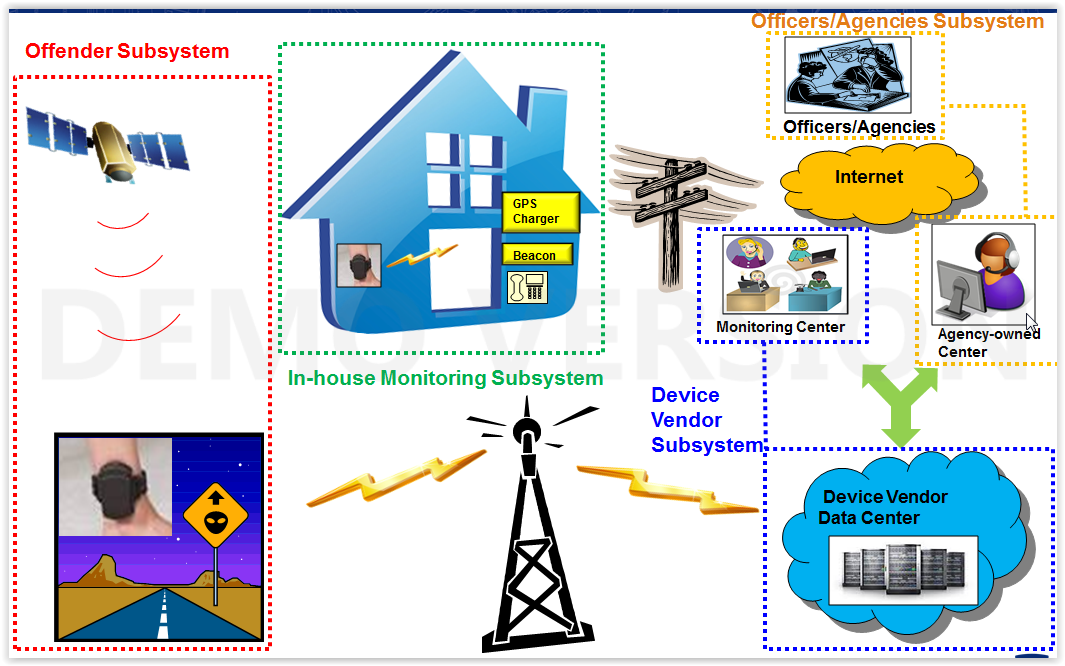
Surface narratives often blame the ankle monitor “brand,” but the recurring pattern across jurisdictions is chain-of-custody for alerts. A strap breach is an electrical event; an officer-ready fact is a workflow outcome. Programs that score well on procurement spreadsheets can still fail operationally when:
- Tamper class prioritization is weak: Integrity events sit in the same queue as low-risk curfew nudges.
- Verification loops are human-limited: Night shifts understaffed relative to caseload scale.
- Release conditions under-weight redundancy: High flight-risk cohorts rely on a single wearable without parallel location corroboration.
- Interagency pipes are narrow: Parole, sheriff, marshals, and municipal LPR each hold fragments; fusion is accidental, not contractual.
The Texas episode suggests that when fusion does occur—plate hits plus federal warrant practice—elapsed time can shrink dramatically. Pennsylvania’s open-ended manhunt, by contrast, illustrates the opposite tail: once a GPS ankle bracelet stops truthfully reporting position, agencies fall back on legacy fugitive methods. Colorado’s reporting adds a governance sting: if prosecutors truly lacked instantaneous notification, the defect may sit in contractual routing tables (who is in the escalation list for a sex-offense docket) rather than in the strap sensor alone.
That routing problem is easy to underestimate. Many electronic monitoring contracts were drafted when the “customer” was a single probation department inbox. Modern dockets—especially felony house arrest and post-conviction supervision with multi-agency interests—may require simultaneous notification to a monitoring center, local patrol, a prosecutor’s digital liaison, and a specialty unit. If the statement of work names only the first hop, the strap can scream while downstream stakeholders remain blind until someone manually forwards a PDF. Post-incident reviews should therefore map every role that needed situational awareness in the first sixty minutes, then compare that map to the vendor’s default escalation template.
Another systemic wrinkle is semantic: vendors and courts sometimes conflate “communication loss” with “tamper.” A deliberate cut may present differently from walking into a basement or boarding an aircraft—yet overloaded operators may batch those events if the UI paints them the same color. Clear taxonomies in monitoring software reduce the risk that a genuine strap breach is mentally filed beside a benign RF fade.
3. Technology gaps — strap physics, notification delays, and the limits of GNSS
3.1 Traditional resistive tamper loops versus fiber-optic integrity paths
Many fielded GPS ankle monitor generations infer strap tamper from resistive continuity—changes when the strap is cut, stretched, or bridged. The approach is inexpensive and widely deployed, but environmental confounders (sweat chemistry, temperature swings, flex fatigue, field repairs) can inflate ambiguous events. When operators face alert fatigue, programs sometimes widen debounce windows or downgrade auto-escalation—an adaptive response that can unintentionally soften response to genuine breaches.
Fiber-optic strap integrations attempt to tie the tamper bit to a physical break in an optical path, narrowing the false-positive mechanisms that plague simple resistive loops. Buyers should still insist on cohort-specific testing: fiber solves a class of electrical confounders, not every supervision risk (shielding, power loss, dead cellular sectors). For vendor-neutral procurement language, use how to evaluate GPS ankle monitor vendors and cross-check claims against the tamper taxonomy tables discussed in our NIJ Market Survey GPS ankle bracelet analysis.
3.2 Why “immediate alert” is not one number
For any electronic monitoring architecture, end-to-end latency is a stack: onboard sampling, uplink scheduling, carrier QoS, vendor normalization, API fan-out to agency dashboards, and human acknowledgement. A tamper flag can theoretically travel in seconds while concurrent GNSS fixes lag minutes under power-saving duty cycles—producing contradictory situational awareness (“we knew something broke, but not where”). Programs need written SLAs that separate integrity-class events from routine tracking pings, and audit logs that survive courtroom discovery.
3.3 Adjacent sensors — LPR, mobile device dumps, and tips
The Texas case is a reminder that ankle monitor tamper detection is not the only digital tripwire. License-plate readers, cellphone abandonments (as alleged in Colorado), and public tips each provide orthogonal evidence channels. Mature programs increasingly design supervision bundles—not to maximize surveillance for its own sake, but to avoid single-point wearable failure. Policy fights will continue over retention and access, but operationally, the Jasper outcome is data: fusion can work.
4. Advanced solutions — engineering and contracting moves that close loops
Procurement teams should treat tamper detection as a system specification, not a brochure checkbox. Concrete measures include: dual-channel integrity (strap and case), distinct monitoring-center queues for catastrophic strap events, after-action transparency with timestamps, and high-risk matrices that automatically elevate routing for violent felony dockets. Population-scale context matters: national survey work summarized in Vera Institute reporting has put single-day U.S. electronic monitoring counts in the mid–hundreds of thousands—scale that turns small per-device latency into macroscopic public risk if workflows are thin.
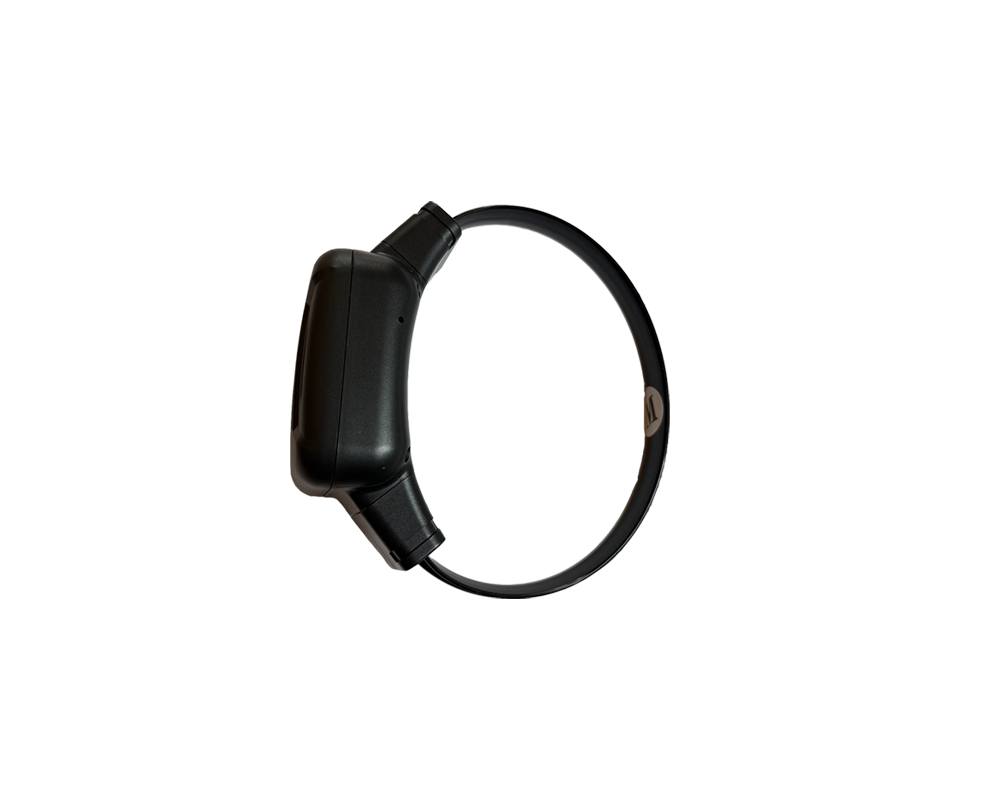
Major established suppliers in North America and Europe include BI Incorporated, SCRAM Systems (Alcohol Monitoring Systems), SuperCom, and Geosatis, among others—each with different portfolio mixes. Newer hardware entrants such as REFINE Technology market fiber-optic strap and case integrity sensing on one-piece supervisee devices as a contrast to legacy resistive loops; technical materials are summarized on the manufacturer site for readers who want engineering diagrams alongside this independent analysis: CO-EYE ONE GPS ankle monitor overview.
5. Policy implications — bonds, docket risk tiers, and public trust
Colorado reporting spotlighted disconnects between judicial release tools and law-enforcement expectations. When sheriffs publicly question why a serious docket remained bracelet-dependent, the underlying tension is risk-tier governance: EM is a substitute for custody only if the monitoring contract matches the defendant’s flight and violence profile. Pennsylvania’s escape charge narrative reinforces that cutting a bracelet is increasingly charged as its own felony—yet charging is downstream; the policy lever is upstream in court services and vendor playbooks.
Finally, agencies should publish redacted timelines after major incidents: alert fired, vendor acknowledged, monitoring center acted, patrol dispatched. Without that transparency, citizens infer—sometimes wrongly—that GPS ankle monitor technology is universally “junk,” when the failure mode is often organizational. Texas’s three-hour resolution is proof that the same national vendor ecosystem can produce radically different outcomes when surrounding infrastructure cooperates.
5.1 A practical audit checklist for Q2 2026
Program directors can run this five-point desk review without waiting for the next headline: (1) extract the contract clause that defines ankle monitor tamper detection event classes; (2) confirm which phone numbers and emails auto-page for each class; (3) measure median acknowledgement time from vendor logs for night and weekend shifts; (4) verify whether LPR, pawn, or airline data shares exist for high-risk cohorts; (5) rehearse a tabletop where the strap alert and the last good GPS fix disagree by tens of miles. Gaps found in a conference room are cheaper than gaps found on a multistate warrant.
Editor’s note: Facts evolve; verify charges, custody status, and timelines against court filings and primary agency releases. This piece is industry analysis, not legal advice.
FAQ
What is ankle monitor tamper detection?
Ankle monitor tamper detection is the hardware-and-firmware stack that registers strap cuts, case breaches, charging anomalies, or jamming-like behaviors and transmits integrity events through cellular (or companion links) to a monitoring center or agency dashboard. Reliability depends on sensor physics, false-tamper rates, carrier uptime, and human workflows—not the strap alone.
What happened in the Pennsylvania Chambersburg ankle monitor case reported in April 2026?
Regional coverage summarized by WGAL and Tri-State Alert alleged Mehki Rideout, 24, cut a GPS ankle monitor on April 9, 2026, while on house arrest, prompting a felony escape charge; reporting indicated he remained at large at the time of broadcast.
How did Texas authorities capture the parolee who cut a bracelet in early April 2026?
According to KFDM, Anthony Joseph Cascio was arrested in Jasper within about three hours, with U.S. Marshals involved and Flock license-plate reader cameras credited as part of the pursuit infrastructure.
Why do fiber-optic tamper paths matter for GPS ankle bracelet programs?
They attempt to tie tamper signals to a physical break in an optical path, reducing some environmental false positives associated with simple resistive strap loops—though programs must still validate performance under local climate and caseload stress.