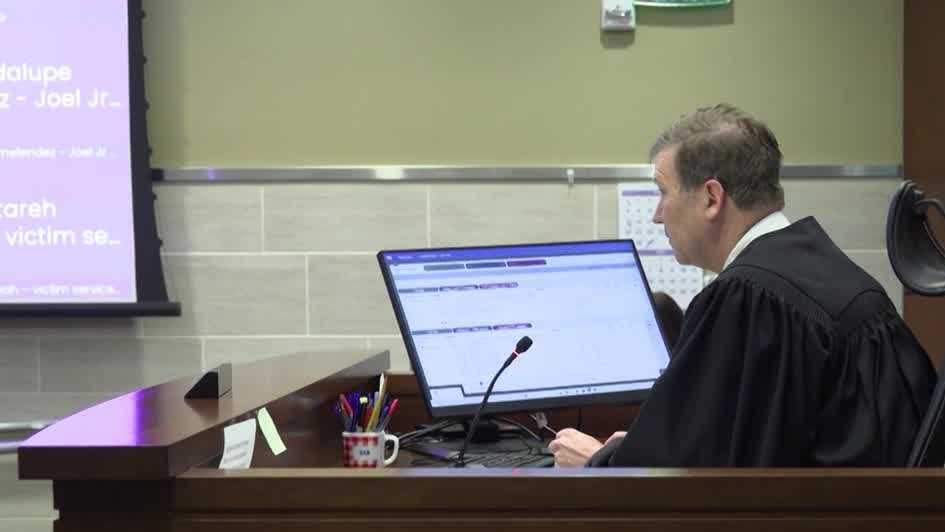
A Yolo County Superior Court judge has approved a $500,000 bail for Craig Cutright, a defendant in the high-profile Esparto explosion case, mandating a GPS ankle bracelet as a core condition of his potential pretrial release. The Tuesday ruling reflects a common strategy in California courts: leveraging electronic monitoring to balance public safety concerns with a defendant’s right to bail, even in serious felony matters.
Table of Contents
Navigating High Bail and Pretrial Conditions
The approval came after Judge Daniel P. Maguire addressed a California Penal Code 1275.1 hold, which requires defendants to demonstrate that bail funds were not obtained through illicit means. “As to Mr. Cutright, the same as the other defendants, there was a 1275.1 hold put in place requiring that any bail that they’ll not be accepted until it can be shown that the source of the bail was not feloniously obtained,” Judge Maguire stated in court. Cutright met this stringent requirement, proving that the bail premium and obligations would be covered by relatives, including a lien on a house and cash funds. The court found no indication these funds were illegally sourced.
Cutright was not present for the hearing, as jail officials had not been notified to transport him. His attorney waived his appearance. Key testimony came from Mike Yurochko, Cutright’s brother-in-law, who confirmed his commitment to covering the bail using personal savings and equity, with no expectation of repayment. The judge had previously denied a request to lower the substantial $500,000 bail amount, maintaining the high figure given the gravity of the charges.
Should Cutright post bail, his release will be subject to an array of strict conditions designed to ensure community supervision and prevent flight or further offenses. These include:
- Mandatory electronic monitoring via a GPS ankle bracelet.
- Strict house arrest.
- Remaining at least 100 yards away from two specified properties.
- A prohibition on possessing any firearms.
- Subject to search and seizure without warrant.
- No contact with co-defendants or any victims of the explosion.
- Reporting to probation officials within one day of release.
- Surrendering his passport.
These conditions illustrate the expansive application of criminal justice technology like the GPS ankle bracelet in managing defendants awaiting trial, acting as a virtual fence for offenders under community supervision.
Victim Perspectives and Community Impact
The judge’s decision to approve bail, despite the rigorous conditions, was met with deep disappointment from some victims’ families. Jhony Ramos, father of two children killed in the Esparto explosions, expressed his dismay. “Tell me who’s going to give me my children back? Nobody,” Ramos said. “But they’re the ones being allowed to make arrangements.” This sentiment reflects a critical tension within the criminal justice system, where a defendant’s right to bail intersects with the profound emotional and safety concerns of victims and the broader community. While electronic tagging provides a measure of offender tracking and accountability, it does not always alleviate the sense of injustice for those directly impacted by alleged crimes.
The Evolving Role of Corrections Technology in Pretrial Release
The use of electronic monitoring, particularly GPS ankle bracelets, has expanded significantly in pretrial detention and bail reform efforts across the United States. Courts increasingly rely on such corrections technology as an alternative to jail, especially for defendants deemed high-risk or those facing high bail amounts. These devices enable real-time offender tracking, allowing authorities to enforce geographical restrictions, house arrest, and no-contact orders. For defendants like Cutright, who face serious felony charges, electronic monitoring offers a pathway to pretrial release that would otherwise be unavailable due to public safety concerns.
The integration of GPS ankle bracelets into community corrections programs aims to reduce reliance on costly incarceration while maintaining public safety. Probation departments play a crucial role in managing these individuals, overseeing compliance with conditions and responding to alerts generated by the monitoring systems. While the effectiveness of electronic monitoring in long-term recidivism reduction is a subject of ongoing research, its immediate utility in pretrial supervision and managing high-risk defendants in the community is well-established within the realm of criminal justice technology.
Source: Esparto explosion defendant Craig Cutright could be released on bail with conditions
Related Resources: Probation GPS Monitoring Guide | Parole Electronic Monitoring Guide | GPS Ankle Monitor Buyer’s Guide