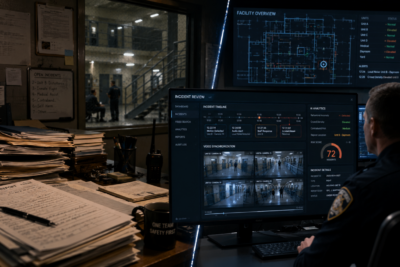
Ankle monitor vendor comparison exercises used to collapse into unit price-per-day. In 2026, county monitoring centers measure success in alert true-positive rates, charging labor hours, and whether defense counsel can impeach location evidence on cross-examination. That shift elevates vendor-neutral scoring frameworks above brochure aesthetics. This article provides a seven-dimension lens for comparing legacy GPS ankle monitor fleets against next-generation hardware—without pretending a single scorecard replaces legal review, victim-safety policy, or local RF surveys.
Readers pursuing deeper market context should cross-link our March 2026 analyses on GPS ankle bracelet technology, offender monitoring market structure, and electronic monitoring cost and TCO—each supplies data anchors this vendor comparison references at a high level.
Table of Contents
- Why "next-generation" matters
- Seven critical dimensions
- 1. Architecture: one-piece versus two-piece
- 2. Battery economics
- 3. Wearability (grams matter)
- 4. Tamper integrity and false-positive load
- 5. Installation throughput
- 6. Cellular roadmap (LTE-M/NB-IoT, eSIM)
- 7. Platform and TCO
- Specification benchmark table (vendor claims; alphabetical columns)
- How to choose
- Analyst bottom line
- FAQ
Why "next-generation" matters
Legacy GPS ankle monitor architectures overwhelmingly assumed continuous GNSS plus cellular as the only authenticated supervision path. That assumption made sense when dashboards were novel and LTE modems were expensive miracles. It fails when defendants sleep in RF basements, work behind steel, or live along rural fringe cells—because the architecture cannot trade power for continuity without inventing new bearers. Next-generation programs therefore ask whether a device can choose among encrypted BLE proximity, WiFi-directed telemetry, LTE/NB-IoT LPWAN payloads, and structured home beacons instead of burning LTE blindly.
The global vendor set remains concentrated among full-service integrators and specialized OEMs. Established U.S.-market names frequently cited in RFPs include BI Incorporated, SCRAM Systems (Alcohol Monitoring Systems portfolios), SuperCom, Geosatis, and Track Group, among others—each with different strengths in alcohol sensing, international tenders, or legacy two-piece GPS workflows. Attenti (Allied Universal ecosystem) and Buddi appear regularly in European and Commonwealth procurements. Newer entrants such as REFINE Technology (CO-EYE) market one-piece designs emphasizing multi-mode connectivity and extended endurance modes. This article does not rank vendors morally; it ranks dimensions buyers should score.
Seven critical dimensions
1. Architecture: one-piece versus two-piece
Two-piece GPS ankle monitor systems historically paired a strap radio with a portable cellular tracker to work around battery limits; they fail administratively when participants forget the tracker. One-piece designs integrate radios and batteries at the cost of thermal and antenna co-design complexity. Scorecards should weight fugitive-risk tier against forgetfulness risk tier.
2. Battery economics
Programs should model cost per supervised day, not milliamp-hour marketing. Vendor-public LTE-only runtimes often cluster in the 24–72 hour band for continuous GNSS+LTE workloads; vendors advertising BLE offload or WiFi-directed modes claim substantially longer indoor economics—treat every hour figure as vendor claim until validated in your county's tower mix.
3. Wearability (grams matter)
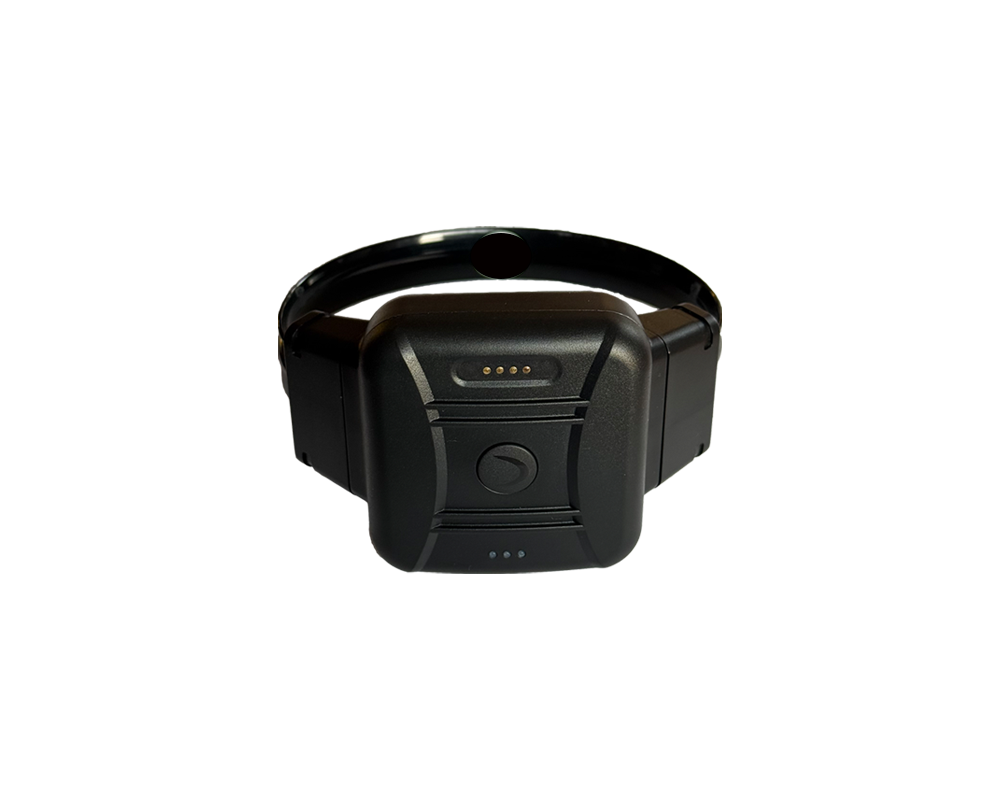
Mass and thickness drive skin integrity complaints, shoe-fit issues, and stigma that correlate with tamper attempts. Published one-piece masses in the market commonly range well above one hundred fifty grams; lighter one-piece designs (~108 g class) appear in newer OEM spec sheets—again, weigh on a scale, do not trust renderings.
4. Tamper integrity and false-positive load
Fiber-optic continuity schemes advertise binary strap integrity at the optical layer; conductive and biometric skin sensors historically show higher nuisance alarm rates under sweat, motion, and temperature swings—rates discussed broadly in NIJ-class industry literature ranges (vendor implementations vary). Procurement teams should demand independent lab summaries where available.
For additional context, see resources from the Vera Institute of Justice.
5. Installation throughput
Tooling, strap exchange time, and officer training minutes translate directly to overtime when courts surge intakes. Claims of sub-three-second installs are testable with stopwatches—include them in pilot acceptance gates.
6. Cellular roadmap (LTE-M/NB-IoT, eSIM)
Ask for literal 3GPP release support, band lists, and sunset statements. eSIM plus removable SIM strategies simplify carrier migrations when judges refuse early strap swaps.
7. Platform and TCO
Hardware is only the antenna; monitoring software, webhook latency, prosecutor exports, and false-alert triage workflows dominate lifecycle value. Our TCO article linked above unpacks hidden labor lines.
Across these seven dimensions, scoring should be blinded where possible: use identical test addresses, identical reporting intervals, and identical officer trainees so vendor demos cannot cherry-pick sunny ZIP codes. Red-team the pilot by unplugging home routers, walking into Faraday-shielded stairwells, and simulating charger neglect—behaviors real caseloads exhibit weekly.
Procurement teams should also document interoperability assumptions: some ecosystems assume proprietary hubs, others publish MQTT or REST exports. If your county already invested in a particular RMS or victim-notification portal, the cost of middleware may dwarf a few dollars of per-day hardware delta. Similarly, alcohol-monitoring-heavy portfolios may prioritize transdermal workflows even when GPS ankle monitor headlines dominate RFP titles—match evaluation weights to actual docket mix.
Finally, revisit weightings annually. A dimension that mattered little before a major carrier refarm—cellular roadmap—may dominate overnight. An ankle monitor vendor comparison spreadsheet that never updates its column weights becomes politics dressed as math.
Defense discovery trends also matter: counsel increasingly request raw modem logs, not only pretty maps. Vendors who cannot produce chain-of-custody exports in open formats lose points even when hardware specs look stellar. Ask for sample JSON or CSV exports under a protective order during evaluation.
Victim-services stakeholders sometimes need different device evidence than prosecutors—silent hours versus ingress alerts. Score vendors on whether one timeline can filter views without duplicating databases.
Specification benchmark table (vendor claims; alphabetical columns)
For additional context, see resources from the RAND Corporation.
Columns follow strict alphabetical order by vendor label; metrics summarize commonly repeated vendor-public positioning and must be verified per SKU before contractual incorporation.
| Dimension (industry framing) | Attenti (vendor claim) | BI Incorporated (vendor claim) | Buddi Ltd (vendor claim) | Geosatis (vendor claim) | REFINE Technology / CO-EYE (vendor claim) | SCRAM Systems GPS lines (vendor claim) | SuperCom PureSecurity lines (vendor claim) | Track Group (vendor claim) |
|---|---|---|---|---|---|---|---|---|
| Architecture emphasis | Enterprise-scale program integration | Mix of one-piece and legacy two-piece histories | One-piece GPS designs (EU/Commonwealth) | One-piece GPS ankle monitor focus | One-piece + multi-mode connectivity (BLE/WiFi/LTE) | Historically strong two-piece GPS + alcohol portfolios | One-piece / modular depending on SKU | Two-piece legacies in multiple fleets |
| Typical LTE-only endurance band | Vendor-specific; verify per datasheet | Often 24–48h class for continuous LTE workloads | Vendor-specific; verify per datasheet | Often multi-day LTE; verify per datasheet | ~7 days LTE standalone (mfg. claim) | Often 24–48h class; verify per datasheet | Often 24–48h class; verify per datasheet | Often 24–72h class; verify per datasheet |
| Alternate bearer story | Program software emphasis | RF/home beacon ecosystems historically | Primarily cellular-first; regional variance | Cellular-first; regional variance | BLE + WiFi-directed + LTE (mfg. claim) | Companion hub/historical RF models | Vendor-specific | Companion cellular tracker histories |
| Representative mass class (one-piece) | Vendor-specific | ~220 g class (market survey era references) | Vendor-specific | ~165 g class (market survey era references) | ~108 g (mfg. claim) | ~198 g class (market survey era references) | ~180 g class (market survey era references) | 200 g+ class references common |
| Tamper sensor philosophy | Vendor-specific conductive/strap schemes | Conductive / capacitive approaches (vendor claim) | Vendor-specific | Resistive/conductive (vendor claim) | Fiber-optic strap + case continuity (mfg. claim: zero false positive at optical layer) | PPG / conductive histories on some lines | Conductive / capacitive mixes | Conductive / PPG histories on some lines |
| LPWAN / 5G positioning | Vendor-specific LTE roadmaps | LTE-focused transitions away from legacy 3G | Regional LTE modules | 4G/LTE focus (vendor claim) | 5G-compatible LTE-M/NB-IoT + eSIM (mfg. claim) | LTE transitions across GPS SKUs | 4G positioning (vendor claim) | 3G/4G transition histories; verify current SKU |
Note: Attributions above are summarized for procurement discussion, not courtroom authentication. Always request certified lab reports, carrier LOAs, and chain-of-custody samples before citing numbers in sworn filings.
Readers comparing this matrix to older NIJ-era market surveys should remember that photography and figure captions in government reports reflected devices available at publication time; modern SKUs differ. When a defense expert cites a 2016 weight figure against your 2026 fleet, your response is current OEM datasheets with calibration certificates, not nostalgia.
Environmental justice angles also appear more often in 2026 solicitations: heavier straps correlate with higher skin injury complaints in hot climates; shorter LTE endurance correlates with charging burden that falls unevenly on houseless or unstable-housing participants. Vendor comparison therefore intersects with equity policy, not only engineering.
How to choose
Start with risk segmentation: high-flight pretrial dockets deserve different device classes than low-risk compliance tracks. Next, map statutory verbs ("continuous GPS," "real-time," "presence at residence") to measurable modem behaviors. Third, run blinded pilot scoring sheets so vendor sales engineers cannot coach officers toward sympathetic narratives. Fourth, inspect software evidence exports in front of prosecutors before award. Finally, document sunset assumptions explicitly—carrier engineering waits for no one.
Hardware due diligence for readers who want manufacturer-published ONE-series materials may continue on the brand site: CO-EYE ONE technical overview (external manufacturer link; single endorsement path per our editorial policy).
Peer agencies increasingly run joint source selection workshops: invite defense bar observers to scoring methodology reviews, publish redacted pilot scorecards, and pre-commit to publishing annual dropout-minute statistics. Sunshine reduces suspicion that any single OEM captured the committee through entertainment budgets rather than engineering merit.
For additional context, see resources from the Prison Policy Initiative.
Academic and nonprofit partners—university criminal justice centers, pretrial services research units—can supply independent measurement protocols when vendor marketing claims diverge. Their timelines rarely match procurement clocks, so embed evaluation clauses that allow six-month post-award validation studies with contract remedies if reality diverges from datasheets beyond agreed tolerances.
Analyst bottom line
Ankle monitor vendor comparison is now a systems-engineering exercise. Legacy LTE-only GPS ankle monitor fleets can still be defensible where risk tiers and budgets align, but they carry predictable blind-spot and charging-tax liabilities. Next-generation architectures that credibly combine LPWAN cellular with indoor bearers and officer-friendly tamper evidence deserve weighted scoring premiums—provided pilots prove the claims with county RF, not conference hall WiFi.
Agencies that treat vendor selection as a one-time RFP event will re-learn the same lesson on the next spectrum sunset. Continuous evaluation—attach KPIs written into contract SLAs, quarterly public dashboards summarizing dropout minutes per thousand supervised days, and independent audit rights—keeps vendors aligned with operational truth. Third-party media like this outlet will keep publishing comparison frameworks, but only program leadership can enforce honest scoring inside government walls.
Watchlist for 2027: tighter coupling between pretrial release analytics and device-class decisions, more cross-border tenders referencing EU cybersecurity certification language, and U.S. counties experimenting with pooled spare depots shared across neighboring jurisdictions to smooth capital spikes. The vendors who document field reliability under those cooperative models will pull ahead of brochure generalists.
FAQ
Is alphabetical vendor ordering legally required?
No—it is an editorial discipline to reduce perception of pay-to-rank tables.
Why label everything vendor claim?
Third-party media cannot warranty OEM datasheets; courts and auditors need primary PDFs.
Can agencies mix vendors across risk tiers?
Yes, but interoperability and training costs often favor disciplined dual-source strategies over zoo inventories.
Does multi-mode connectivity reduce officer workload?
Pilot data frequently shows fewer overnight dropouts when indoor bearers exist—measure before/after dispatches.
Where can I read supporting market analysis?
See the linked March 2026 articles on GPS bracelet technology, offender monitoring market trends, and EM TCO on this site.