Table of Contents
Sudden Arrest at Newark
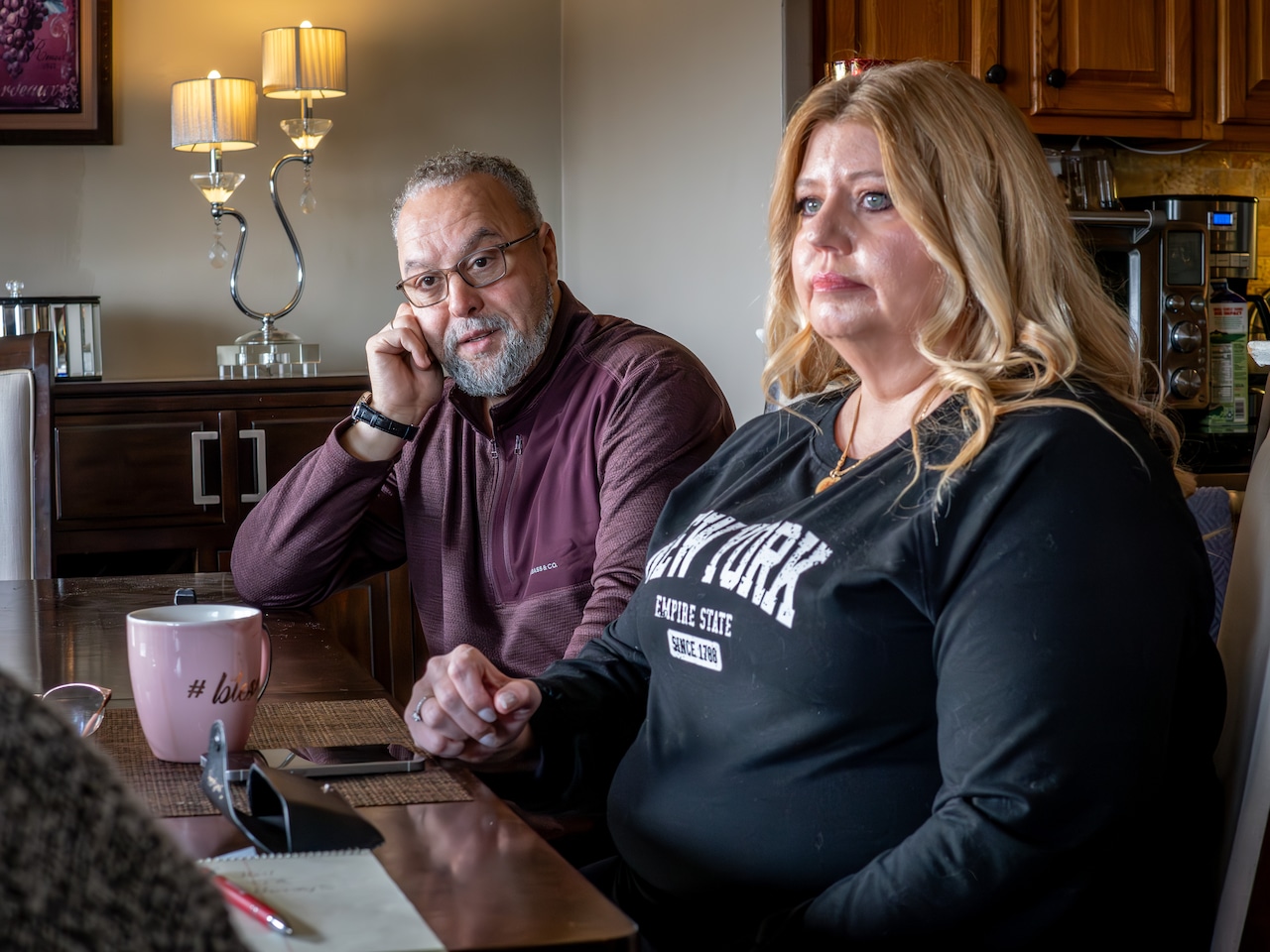
Abdellatif Hafraoui, 60, sips coffee in his Bayonne apartment, a ritual unchanged across 15 years of marriage to Sandra, 53. Since late November, however, a black ankle monitor on his leg has shadowed that routine. It marks his release from 108 days in ICE detention, a period that began abruptly on August 11.
Hafraoui and Sandra were preparing to board an early-morning flight to Fort Myers, Florida, from Newark Liberty International Airport. Three plainclothes men and a woman with an ICE badge approached them. The woman identified herself as an agent. Moments later, Hafraoui was handcuffed. He wore a T-shirt, shorts, and sandals, dressed for warm weather he would not experience. Agents placed him in an unmarked van. Sandra was left in the terminal, uniformed officers refusing to tell her where her husband was taken. “They looked at him and said his ‘status is unclear,’” Sandra recalled. “Then the lady pointed at me and said, ‘You don’t want to make a scene here.’”
The van disappeared. Sandra stood alone with their luggage. An airport employee offered water in the nearly empty baggage claim area. The Hafraouis’ friends, Monica, 52, and Richard Nuñez, 54, learned of the arrest mid-flight. Their planned vacation with the Hafraouis vanished. Thousands of dollars in nonrefundable flights, Airbnb, and car rentals were lost.
The Cost of Community Supervision
Hafraoui spent 108 days detained by ICE, from August 11 to November 26. His Moroccan passport remains in government custody. Just before Thanksgiving, the couple paid a $15,000 bond for his release. This freedom came with a condition: a GPS ankle bracelet, part of his ongoing electronic monitoring.
Immigration attorneys note that many detainees, like Hafraoui, lack criminal records. They often have longstanding ties to the United States. Many cases stem from years-old removal orders, triggered by missed court dates or administrative errors. Hafraoui arrived in the U.S. at 22, drawn by images from Hollywood. He has lived here for over 38 years, longer than in Morocco. “I’m American,” he stated. “I actually don’t know anything that’s going on in Morocco.” His desire is to “go back to work, to feel normal again. To have my life back without all this fear and uncertainty.”
As of late December, 70,805 individuals were in ICE detention nationwide, according to USAFacts. Reports indicate a small percentage of these detainees have criminal records. Hafraoui’s release on electronic tagging places him under community supervision. The Nuñezes helped Sandra gather legal paperwork and served as co-sponsors for his case, proving he would not be a societal burden. This required extensive disclosure of their income and assets. Sandra served as his primary sponsor.
Electronic monitoring systems, including the GPS ankle bracelet now worn by Hafraoui, represent an alternative to traditional detention. These devices allow for continuous tracking of individuals, a form of remote supervision. While often associated with offender tracking in criminal justice, their use extends to immigration cases like Hafraoui’s, enabling authorities to monitor movement without physical incarceration.
This case highlights the expanding role of electronic monitoring in the U.S. immigration system. The increased reliance on GPS ankle bracelets for individuals awaiting legal resolution suggests a trend toward managing larger populations outside secure facilities. This shift carries implications for privacy, resource allocation, and the very definition of freedom for those under electronic tagging.
Source: This N.J. Trump voter’s husband was detained by ICE: ‘I thought they’d focus on criminals.’
How Is Electronic Monitoring Technology Improving Community Supervision?
Modern GPS ankle monitor technology enables community supervision programs to verify compliance more reliably while reducing operational burden. Multi-mode connectivity and extended battery life address the failure points that most commonly compromise house arrest and conditional release monitoring.
Community supervision depends on reliable indoor monitoring — where traditional GPS ankle bracelet devices perform worst. Satellite signals degrade inside buildings, cellular weakens in basements, and batteries drain faster as devices search for signals. Next-generation ankle monitors solve this through WiFi-directed connectivity and BLE pairing with home beacons that confirm presence without GPS.
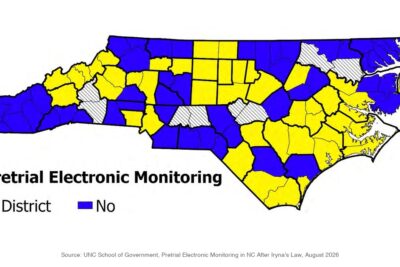
Research supports electronic monitoring for community supervision: Florida DOC documented 31% recidivism reduction with GPS ankle bracelet monitoring versus traditional supervision, while daily costs of $5-25 represent 70-95% savings versus incarceration. These outcomes drive continued legislative expansion of electronic monitoring across pretrial, probation, and parole programs.
What Are the Broader Implications for Electronic Monitoring?
Electronic monitoring continues expanding across criminal justice, with GPS ankle bracelet improvements — multi-week battery, zero false-alarm tamper detection, cellular dead zone elimination — removing operational barriers to program growth.
Research supports effectiveness: Florida DOC documented 31% recidivism reduction with GPS ankle monitor supervision; pretrial programs report 85-95% court appearance rates; DV monitoring shows 50-70% reductions in repeat violations. Combined with 70-95% cost savings versus incarceration, these outcomes drive legislative expansion of electronic monitoring alternatives across pretrial, probation, parole, and specialized supervision programs nationwide.