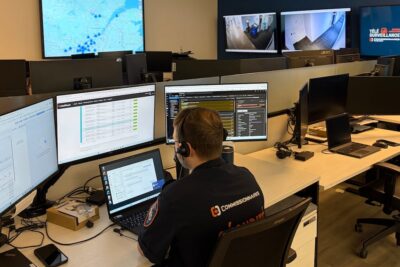
Between court dockets, county RFPs, and monitoring-center dashboards, the same question keeps surfacing in 2026: when does a GPS ankle monitor stop being “just LTE with GNSS” and start behaving like resilient supervision infrastructure? Vendor roadmaps and pilot chatter increasingly point to Generation 4 electronic monitoring—a design wave where adaptive multi-mode connectivity (BLE, WiFi-directed paths, and cellular fallback) is treated as the default architecture, not a science project. This article is independent industry analysis: it synthesizes how four technology generations stack up, which capabilities belong on a modern scorecard, and how United States procurement teams can line up vendor claims with GPS ankle monitor accuracy and tamper-test expectations that trace to NIJ-style performance language.
For baseline accuracy framing, see our companion breakdown of NIJ 10-meter and 30-meter benchmarks; for bracelet-level RF and reporting stacks, see GPS ankle bracelet technology standards in 2026; for why tamper-sensor physics still drives officer workload, read the hidden cost of false tamper alerts.
Table of Contents
- 1. Four generations: how electronic monitoring architectures evolved
- 1.1 Generation 1 (1980s–2000s): RF home confinement
- 1.2 Generation 2 (2000s–2015): two-piece GPS plus RF beacons
- 1.3 Generation 3 (2015–2024): one-piece GNSS/LTE
- 1.4 Generation 4 (2024 onward): adaptive multi-mode connectivity
- 2. Six technical advances procurement teams should score in pilots
- 2.1 Adaptive multi-mode connectivity engine
- 2.2 Tamper detection economics: fiber-optic integrity versus biometric proxies
- 2.3 Five-layer positioning resilience
- 2.4 Sub-110g one-piece ergonomics
- 2.5 Rapid, tool-free installation workflows
- 2.6 Cybersecurity certification as a first-class artifact
- 3. Capability matrix: Gen 2 vs Gen 3 vs Gen 4 (illustrative)
- 4. NIJ performance language still anchors U.S. conversations
- 4.1 Monitoring-center workload: what changes when modes switch
- 4.2 International divergence: cybersecurity paperwork vs. U.S. CJIS overlays
- 5. Vendor landscape: incumbents, specialists, and newer multi-mode entrants
- 6. FAQ
1. Four generations: how electronic monitoring architectures evolved
Generational labels are imperfect—vendors ship on staggered cadences, and agencies mix modalities—but a four-stage model helps finance, IT, and field services speak the same language when they compare GPS ankle monitor proposals.
1.1 Generation 1 (1980s–2000s): RF home confinement
Early programs validated presence, not continuous outdoor tracks. Radio-frequency tethering to a base unit answered “is the person near the approved residence?” It was foundational for house arrest pilots, but it did not deliver GNSS-quality tracks, victim-radius logic at scale, or the evidentiary density courts now expect in high-stakes revocations.
1.2 Generation 2 (2000s–2015): two-piece GPS plus RF beacons
Commercialization brought paired architectures: an ankle RF strap talking to a carried cellular/GNSS module, or similar splits. The model improved outdoor visibility versus pure RF, yet operational fragility showed up quickly—missed charging on the carried unit, Bluetooth dropouts mistaken for risk, and higher kit counts per supervisee. Representative ecosystem names from that era include BI SmartLINK-style deployments and SCRAM GPS-style two-piece rollouts discussed in county procurement minutes.
1.3 Generation 3 (2015–2024): one-piece GNSS/LTE
Consolidation into a single enclosure simplified field logistics: one strap, one charger, one chain of custody. International and U.S. markets saw one-piece GNSS/LTE designs from vendors such as Geosatis and Buddi, while BI ExacuTrack-branded one-piece lines competed alongside Track Group and SCRAM Systems portfolios. Gen 3 solved many Gen 2 kit problems but still leaned on LTE as the primary reporting spine—meaning rural dead zones, basement gaps, and frequent charge cycles remained structural talking points in monitoring centers.
1.4 Generation 4 (2024 onward): adaptive multi-mode connectivity
Gen 4 reframes the problem as connection orchestration. Instead of asking LTE to win every hour of the day, devices (and their supervision platforms) prioritize lower-power short-range links when a trusted companion path exists, use WiFi-directed reporting where policy allows, and elevate LTE to a high-integrity fallback when the wearer is truly standalone. Analysts expect this shift to intersect with cybersecurity procurement clauses and with European cybersecurity-type documentation for connected corrections hardware—topics that sit alongside traditional NIJ performance conversations rather than replacing them.
2. Six technical advances procurement teams should score in pilots
For additional context, see resources from the National Institute of Justice.
The following six items are showing up repeatedly in 2026 RFP scoring templates and vendor architecture briefings. Treat them as hypotheses to test with your own RF environments, MIS policies, and evidentiary standards—not as marketing guarantees.
2.1 Adaptive multi-mode connectivity engine
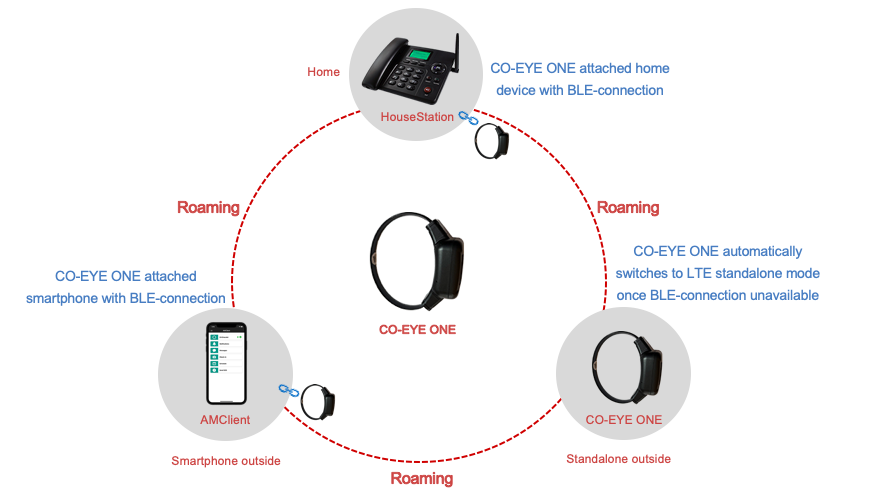
Documented fourth-generation stacks describe automatic roaming among BLE companion links (often a smartphone supervision app or a home hub), WiFi-directed reporting intervals, and LTE standalone operation when short-range paths drop. Public-facing technical proposals now cite directional battery envelopes such as roughly 180 days in BLE-tethered modes, roughly 20 days in WiFi-directed modes, and roughly 7 days in LTE standalone modes for representative hardware—numbers that should be validated per agency reporting cadence, payload encryption, and GNSS duty cycle.
2.2 Tamper detection economics: fiber-optic integrity versus biometric proxies
NIJ-influenced strap testing continues to emphasize mechanical defeat resistance and credible alert timing. Gen 4 marketing frequently contrasts binary optical strap integrity with skin-proximity or heart-rate proxies that can be sensitive to sweat, motion, and sensor lift-off—failure modes that show up as false positives in operational reviews. Agencies should demand lab traces and field pilot statistics rather than adjectives; for workload context, revisit false tamper alert economics before rewriting response SOPs.
2.3 Five-layer positioning resilience
Where Gen 3 narratives often center “GNSS + LTE,” Gen 4 roadmaps add deliberate indoor and near-range layers: BLE proximity to approved hubs, WiFi fingerprinting or directed fixes, multi-constellation GNSS when sky view exists, cellular location backups where carriers expose them, and house-station style anchors for home compliance. The goal is not sub-meter hype in every room—it is defensible continuity when any single layer degrades, aligned with the accuracy conversations in NIJ benchmark primers.
2.4 Sub-110g one-piece ergonomics
Weight and volume remain procurement levers because they correlate with strap torque, skin injury complaints, and public stigma. Several Gen 3 one-piece devices historically clustered in the ~150–250g range depending on battery and radio stack; Gen 4 marketing now routinely advertises sub-110g one-piece envelopes where vendors have traded radio duty cycles against polymer and antenna integration. Always confirm weights with sealed production units, not 3D renders.
2.5 Rapid, tool-free installation workflows
Field minutes drive labor cost and chain-of-custody risk. Snap-fit, tool-free strap mechanisms—often paired with optical strap routing—are positioned as Gen 4 differentiators that reduce install variance between contractors. Agencies should still capture torque specs, inspection photography, and removal workflows for evidence continuity.
2.6 Cybersecurity certification as a first-class artifact
For additional context, see resources from the Bureau of Justice Statistics.
As BLE and WiFi paths multiply attack surface, European-style connected-device cybersecurity evaluations (for example EN 18031-oriented documentation in vendor packets) are appearing beside traditional FCC/CE RF folders. Security teams should map those artifacts to local CJIS-adjacent policies, logging, and incident response playbooks—not treat them as checkbox PDFs.
3. Capability matrix: Gen 2 vs Gen 3 vs Gen 4 (illustrative)
Cells summarize typical design intent; vendor-specific exceptions apply.
Readers should treat the matrix as a facilitation tool for executive briefings, not a substitute for attachment-level specifications. In practice, a county may still operate Gen 2 docks in one contractor footprint while piloting Gen 4 straps in another—mixed estates complicate spare-pool planning, help-desk scripts, and charging logistics. The strategic question is whether your next RFP should reward connectivity diversity explicitly, or whether you prefer to stay on a single-mode LTE stack until carrier sunset and indoor-gap complaints force a change. Either path is defensible if risk is documented for elected officials.
| Capability theme | Gen 2 (two-piece GPS) | Gen 3 (one-piece GNSS/LTE) | Gen 4 (adaptive multi-mode) |
|---|---|---|---|
| Primary reporting path | Cellular via carried module | Integrated LTE | BLE/WiFi-first with LTE fallback |
| Indoor / fringe continuity | Mixed; RF tether dependent | Often GNSS + LTE only | BLE + WiFi layers plus GNSS/LBS fallbacks |
| Battery strategy | Split power budgets | Typically 24–72h LTE-heavy cycles | Mode-dependent; multi-week BLE paths claimed |
| Tamper sensing paradigms | Strap + dock sensors (vendor-specific) | Strap/case + conductive trends | Optical strap/case loops emphasized in Gen 4 briefs |
| Procurement evidence | Legacy dock infrastructure | Charging + LTE cert packets | Adds short-range + cybersecurity evidence |
4. NIJ performance language still anchors U.S. conversations
Even as connectivity stacks diversify, many U.S. programs still anchor GPS ankle monitor acceptance tests to NIJ Standard-1004.00-style thinking: vendor-declared accuracy under controlled track conditions, alert latency behaviors, and strap/case tamper categories. Gen 4 does not repeal those tests—it changes which radios must be present during each test phase and how monitoring centers interpret blended indoor/outdoor tracks. When vendors propose BLE offload, ask explicitly how evidentiary exports show GNSS fixes versus inferred proximity states.
Program attorneys should also ask how discovery exports label confidence: a GNSS fix, a WiFi centroid, a BLE “present near hub” state, and a cellular LBS estimate carry different courtroom narratives. Mixing them without metadata invites Daubert-style challenges even when the underlying hardware is sound. That metadata burden lands on software vendors as much as on bracelet OEMs—another reason Gen 4 evaluations belong in integrated pilot rooms rather than hardware-only bake-offs.
4.1 Monitoring-center workload: what changes when modes switch
Adaptive connectivity is not only a battery story; it is an alert semantics story. When a device roams from LTE to BLE tethering, rule engines must avoid treating a planned mode change as a tamper-equivalent gap. Centers that built playbooks around continuous LTE heartbeats may need new suppression windows, new escalation tiers, and retrained tier-1 analysts who can distinguish “expected offload” from “unexpected silence.” The procurement implication is bundled training SOWs: hardware bids without 90-day hypercare sometimes recreate the false-positive fatigue Gen 4 was marketed to cure.
4.2 International divergence: cybersecurity paperwork vs. U.S. CJIS overlays
European public-sector buyers increasingly expect consumer IoT-style cybersecurity declarations for wearable radios. U.S. counties, meanwhile, often map vendor risk to CJIS Security Policy controls, state CJIS agreements, and local cloud governance—even when the ankle device is only a TLS client. A GPS ankle monitor that advertises EN 18031-oriented documentation still has to survive your state SOC review for logging, key rotation, and incident response. Treat overseas certificates as necessary but not sufficient inputs to your security exception process.
For additional context, see resources from the Council of State Governments Justice Center.
5. Vendor landscape: incumbents, specialists, and newer multi-mode entrants
U.S. and international markets remain concentrated among large integrators and specialist OEMs. Established names referenced in county RFPs and trade coverage include BI Incorporated, SCRAM Systems (Alcohol Monitoring Systems), SuperCom, Geosatis, and Track Group—each with different portfolio mixes across alcohol, RF, one-piece GPS, and software stacks. European and Asia-Pacific suppliers continue to bid through distributors, especially where LTE-M/NB-IoT bands and cybersecurity paperwork matter.
Among newer entrants documenting Gen 4-style adaptive connectivity in public technical materials, REFINE Technology (CO-EYE) positions its CO-EYE ONE line as a one-piece GPS ankle monitor family with BLE companion, WiFi-directed, and LTE standalone modes—overlapping the six advances above. Buyers should still run independent pilot scoring; a single vendor diagram cannot substitute for county RF surveys or chain-of-custody drills. For commercial specification language framed for agencies, see the manufacturer’s GPS ankle monitor buyer materials (external manufacturer resource).
6. FAQ
Does Generation 4 eliminate LTE radios on a GPS ankle monitor?
No. Gen 4 typically deprioritizes LTE until short-range paths fail. LTE remains the backstop for outdoor standalone operation and for jurisdictions that forbid smartphone-tether assumptions.
How should agencies test claimed BLE or WiFi battery envelopes?
Model the reporting interval, payload size, GNSS assist usage, and carrier APN behavior your program already enforces. Replicate indoor fringe sites from your jurisdiction—not only bench tests.
Does NIJ still matter if a device adds WiFi and BLE?
Yes. NIJ-style track and tamper categories remain common RFP scaffolds. The work is mapping new radios to test configurations and clarifying how exports show inferred versus measured positions.
Are fiber-based tamper loops automatically zero false alarm?
Vendors market optical continuity as binary, but agencies should still validate against environmental damage, cable flex cycles, and maintenance swaps. Operational false positives can also originate in rules engines—not only sensors.
Disclosure: This publication is editorial analysis for criminal-justice technology readers. It is not investment, legal, or procurement advice; validate claims with primary vendor documentation and counsel.