Colorado Governor Jared Polis declared the state’s prison overcrowding a disaster-level emergency in early 2026. By May, two bills had cleared the legislature and a third remained under consideration — all aimed squarely at reducing a prison population that now exceeds capacity by hundreds of beds.
The legislative response isn’t happening in a vacuum. It’s the latest chapter in a multi-decade national reckoning with mass incarceration, one that intersects directly with bail reform, community supervision technology, and the economics of keeping people locked up versus supervising them in the community.
Table of Contents
- What Did Colorado Actually Pass?
- How Bail Reform in New York Provides the Empirical Framework
- The Brennan Center’s National Context: Why States Are Forced to Act
- Supervised Release Technology: The Critical Missing Piece
- What the NIJ Research Says About EM Effectiveness
- Technology Reliability Determines Policy Sustainability
- Market Implications: Colorado Is Not an Outlier
- What Comes Next
- References
What Did Colorado Actually Pass?
The two bills that cleared the legislature on May 1, 2026 target opposite ends of the incarceration pipeline. HB26-1499 expands earned-time credits for people currently serving sentences, allowing earlier release for those demonstrating rehabilitation progress. SB26-083 restructures parole revocation standards, raising the bar for returning people to prison on technical violations — missed appointments, failed drug tests, GPS monitoring zone violations — that don’t involve new criminal conduct.
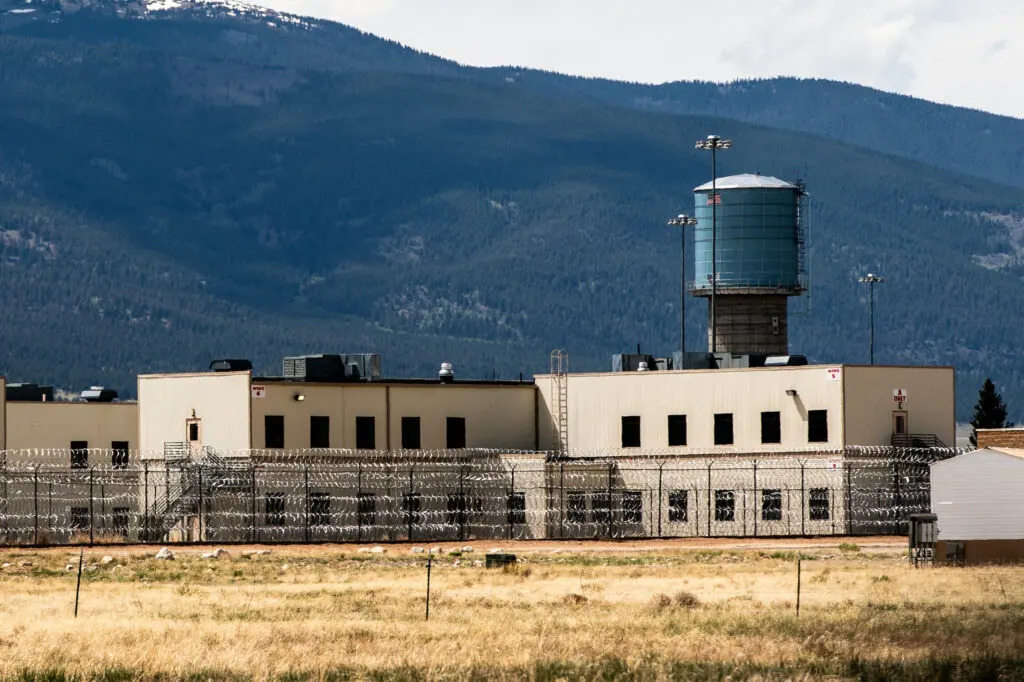
A third bill still under consideration would mandate community-based supervision alternatives for certain nonviolent offenses, effectively requiring judges to consider GPS electronic monitoring, day reporting, and substance abuse treatment before imposing incarceration.
The fiscal note is staggering: Colorado’s Department of Corrections spent $44,726 per prisoner in FY2025. The state currently houses approximately 19,200 people in facilities designed for 17,800 — a 7.9% overcapacity rate that has forced transfers to county jails and out-of-state private prisons at premium rates.
How Bail Reform in New York Provides the Empirical Framework
Colorado legislators cited New York’s bail reform experience extensively during committee hearings. The Vera Institute of Justice’s January 2025 report, Putting Bail Reform into Practice, provides the most rigorous empirical examination of what happens when states restrict pretrial detention.
The New York data is unambiguous. After bail reform took effect in January 2020, the statewide pretrial jail population fell by more than 40% within twelve months (Kim et al., 2025, p. 2). Five years and three rounds of legislative amendments later, pretrial incarceration remains 17% below pre-reform levels — even after political backlash forced amendments expanding the list of bail-eligible offenses.
But the Vera data reveals something more nuanced than simple population reduction. In the five upstate counties studied — Albany, Broome, Erie, Tompkins, and Ulster — judges released 79% of all non-disposed arraignments in 2022, either on their own recognizance (61%) or under supervision (18%) (Kim et al., 2025, p. 9). The critical finding: judges’ use of supervised release (RUS) increased substantially following bail reform for both bail-eligible and bail-ineligible cases.
This shift toward supervised release rather than either unconditional freedom or incarceration is the mechanism that matters for Colorado. It’s not about simply opening the doors — it’s about replacing physical custody with technological supervision.
The Brennan Center’s National Context: Why States Are Forced to Act
The Brennan Center for Justice’s March 2026 report, Prison Reform in the United States, documents the structural crisis that makes Colorado’s situation unremarkable. Nearly two million Americans are incarcerated. Ninety-five percent of them will eventually return to their communities — most having received “almost no programming or support to prepare them to successfully rejoin” society (Subramanian et al., 2026, p. 3).
The Brennan Center’s research shows that correctional leaders across politically diverse states — Maine, Michigan, North Dakota, South Carolina — are already implementing alternatives. Michigan’s Vocational Village program graduates had a recidivism rate 6.5 percentage points lower than the statewide average. Pennsylvania’s “Little Scandinavia” reform unit recorded nearly zero violent incidents in 2024 while other facilities across the state saw a 22% spike in violence.
The economic argument is perhaps most compelling. The annual federal cost of incarcerating one person reached $44,049 in FY2024 — a figure that understates state-level costs, which average $40,000-$60,000 depending on jurisdiction. By contrast, GPS electronic monitoring programs typically cost $5-$25 per day, or $1,825-$9,125 annually — representing a 75-95% cost reduction per supervisee.
Supervised Release Technology: The Critical Missing Piece
Both the Vera and Brennan Center reports identify a fundamental tension in diversion policy: public safety concerns versus population reduction goals. Courts, legislators, and the public all require assurance that released individuals are being monitored. This is where electronic monitoring technology becomes the policy bridge that makes reform politically viable.
The Vera data shows that when New York courts imposed release under supervision (RUS), they rarely set individualized non-monetary conditions beyond monitoring itself (Kim et al., 2025, p. 9). In practice, “supervised release” overwhelmingly means GPS electronic monitoring. The technology enables courts to divert people from incarceration while maintaining real-time location verification — the minimum public safety threshold that makes reform legislation passable.
Colorado’s pending third bill explicitly names GPS monitoring as a mandated alternative. This follows a national pattern: as states hit overcrowding crises, legislatures don’t simply release people — they mandate supervised release backed by location technology.
What the NIJ Research Says About EM Effectiveness
The empirical case for GPS electronic monitoring as a recidivism-reduction tool is well established. The National Institute of Justice’s landmark Florida study found that electronic monitoring reduced the likelihood of re-offending by 31% compared to standard community supervision (Bales et al., 2011). Medium- and high-risk offenders showed the strongest effects, precisely the population Colorado is now considering for expanded supervised release.
More recent research has validated these findings across multiple jurisdictions and study designs. The Cook County, Illinois study (Rivera, 2023) found that pretrial GPS monitoring reduced failures-to-appear while maintaining public safety outcomes equivalent to detention — at a fraction of the cost.
The question is no longer whether electronic monitoring works. The question is whether the technology itself is reliable enough to sustain judicial and public confidence over time.
Technology Reliability Determines Policy Sustainability
Here’s the political reality that Colorado legislators understand but rarely articulate publicly: one high-profile failure of monitoring technology can derail an entire reform agenda. A single supervised release defendant who commits a violent crime while their GPS device reports “signal lost” generates the kind of media coverage that triggers legislative rollback — as New York experienced in 2022 and 2023 when political backlash forced three rounds of amendments to bail reform.
This means the technology standards for electronic monitoring devices matter enormously for policy sustainability. The devices must deliver:
- Continuous coverage without dead zones — signal loss generates “unknown location” alerts that erode judicial confidence and create false violation notices
- Reliable tamper detection with zero false positives — false tamper alerts waste officer time, clog courts, and undermine the credibility of legitimate violations
- Battery life measured in days or weeks, not hours — low-battery alerts are the single largest source of technical violations that get counted as non-compliance
Traditional GPS ankle monitors — devices relying exclusively on LTE cellular connectivity with 24-72 hour battery cycles — create exactly the reliability gaps that generate political vulnerability. When devices die daily because offenders forget to charge them, the resulting cascade of low-battery violations makes the entire supervised release program appear to be failing.
The emerging generation of multi-mode devices that combine BLE, WiFi, and cellular connectivity addresses these structural weaknesses. Vendors offering adaptive connectivity report battery life improvements from days to months, while WiFi-directed communication modes eliminate cellular dead zones in basements, rural areas, and underground environments — precisely the locations where supervised release populations live and work. Fiber-optic tamper detection eliminates the 15-30% false alarm rates that plague traditional PPG and resistive sensors.
Market Implications: Colorado Is Not an Outlier
Colorado joins at least 14 other states that have passed or are actively considering legislation mandating electronic monitoring as an alternative to incarceration since 2024. The legislative pattern is remarkably consistent: overcrowding crisis → emergency declarations → earned-time expansion → community supervision mandates → technology procurement.
For the electronic monitoring industry, this represents a structural demand expansion independent of any single vendor’s marketing efforts. The addressable market grows every time a state legislature passes a bill like Colorado’s. And the procurement decisions that follow these bills increasingly emphasize device reliability metrics — battery life, signal continuity, false alarm rates — because legislators have learned that technology failures create political failures.
The Vera Institute’s data on New York provides the clearest preview of Colorado’s likely trajectory. Within five years of reform, supervised release became the default disposition for the majority of arraignments in upstate counties. If Colorado follows this pattern — and the legislative language strongly suggests it will — the state’s demand for GPS monitoring devices will increase substantially from current levels.
What Comes Next
Governor Polis is expected to sign both passed bills within 30 days. The third bill — the community supervision mandate — faces additional committee votes in June. If passed, implementation would begin January 2027, with Colorado’s Division of Criminal Justice tasked with establishing supervision technology standards and procurement frameworks.
The broader trend is clear. States facing overcrowding crises are choosing technology over construction. Building a new prison takes 5-7 years and $250-500 million. Deploying a GPS monitoring program takes 3-6 months and scales linearly with population. The economic and political logic increasingly points in one direction — and that direction requires reliable, next-generation electronic monitoring technology.
References
- Kim, J., McKeithen, W., Gernon, C., Delaporte, E., & Kaur, M. (2025). Putting Bail Reform into Practice: How Courts and Criminal-Legal Actors in Upstate New York Implemented Bail Reform, 2021-2022. Vera Institute of Justice.
- Subramanian, R., Eisen, L-B., Hahn, J.W., Kang, J., Kaufman, A., & Seid, B. (2026). Prison Reform in the United States: Efforts to Improve Conditions and Post-Release Outcomes. Brennan Center for Justice.
- Bales, W., Mann, K., Blomberg, T., Gaes, G., Barrick, K., Dhungana, K., & McManus, B. (2011). A Quantitative and Qualitative Assessment of Electronic Monitoring. National Institute of Justice.
- Rivera, R. (2023). Release, Detain, or Surveil? Examining the Effects of Pretrial Electronic Monitoring in Cook County. University of Chicago.
- Colorado Legislative Council Staff (2026). Fiscal notes for HB26-1499 and SB26-083.