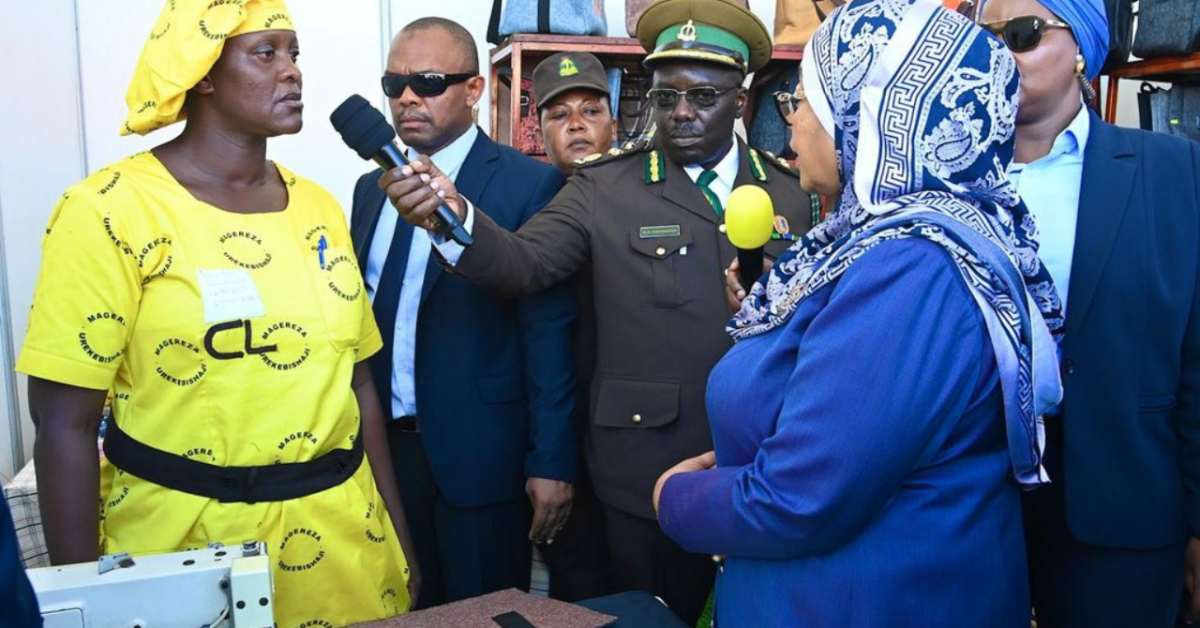
President Samia Suluhu Hassan didn’t just talk about prison reform at the Tanzania Correctional Training Academy on May 9, 2026. She issued a direct order: build an ICT-based monitoring system to track former inmates after release, assess whether they’re using the skills they learned in prison, and connect them with economic opportunities through local government, VETA (Vocational Education and Training Authority), and SIDO (Small Industries Development Organisation).
That directive, reported by The Guardian Tanzania, signals something the electronic monitoring industry should pay close attention to: Africa’s largest economies are moving from talking about correctional technology to mandating its deployment.
Table of Contents
- What Exactly Did President Samia Order?
- Tanzania’s Prison Numbers in Context: A 10% Drop That Tells a Bigger Story
- The South African Precedent: Africa’s Only EM Deployment and Its Lessons
- How Big Is Tanzania’s Overcrowding Problem?
- What Does Africa’s EM Market Look Like in 2026?
- What Technical Specifications Matter for African Deployments?
- From Punishment to Measurement: Tanzania’s Correctional Philosophy Shift
What Exactly Did President Samia Order?
The President’s instructions to the Commissioner General of Prisons included three specific technology-related directives:
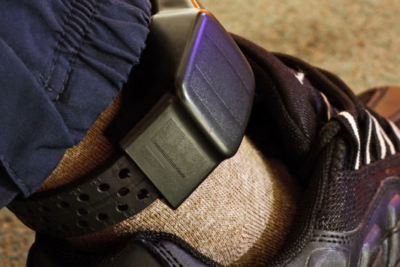
- Post-release tracking via ICT systems — a digital infrastructure to monitor former inmates’ reintegration progress, not just their physical location
- Research into root causes of reoffending — data-driven analysis to inform evidence-based policy rather than punitive instinct
- A special startup fund for ex-inmates who acquired vocational skills in prison, addressing the economic barriers that drive recidivism
This is notable because it combines surveillance technology (post-release tracking) with economic intervention (startup capital) — a dual approach that the Vera Institute’s 2023 report on electronic monitoring populations identifies as far more effective than monitoring alone.

Tanzania’s Prison Numbers in Context: A 10% Drop That Tells a Bigger Story
Tanzania’s prison population dropped from 26,596 in 2024 to 23,940 by December 2025 — a nearly 10% reduction — according to World Prison Brief data. The national prison system, with an official capacity of approximately 29,902, is now operating within capacity for the first time in recent memory. This stands in sharp contrast to regional neighbors: Kenya operates at roughly 170% prison capacity, Uganda at over 200%.
Several factors drove the decline:
- Commutation of minor sentences: The government commuted sentences for over 5,000 inmates convicted of minor offences, saving an estimated 21 billion Tanzanian shillings (approximately $8 million)
- Digital court systems: Video conferencing for remote hearings facilitated 457 case hearings and completed 1,908 cases within prison facilities — reducing the backlog that keeps remand prisoners waiting
- Improved case processing: Judiciary reforms, including timely hearings and expedited case determination, contributed to reducing the remand population. Pre-trial detainees now constitute 28.7% of Tanzania’s prison population — significantly lower than India’s 78% or many Caribbean nations’ 60%+
The 28.7% remand rate is particularly noteworthy. It suggests that Tanzania’s courts, despite infrastructure limitations, are processing cases more efficiently than many wealthier nations. This creates a favorable environment for post-release monitoring: the primary EM target population would be convicted offenders transitioning to community supervision, not pretrial detainees — a simpler legal and operational framework.
The South African Precedent: Africa’s Only EM Deployment and Its Lessons
When President Samia orders an “ICT-based monitoring system,” the closest African reference point is South Africa — the only country on the continent with an established electronic monitoring program.
South Africa launched its Electronic Monitoring Pilot Project (EMPP) in March 2012 for 150 offenders, primarily lifers. In April 2014, it achieved its first electronic monitoring of a remand detainee. The system uses GPS ankle bracelets with 24/7 tracking, a central control room in Pretoria, and automatic violation reporting within seven seconds.
The cost argument is compelling: electronic monitoring costs approximately R3,379/month per offender versus R9,876 for incarceration — a 66% cost reduction per supervised individual, saving nearly R6,500/month. Annualized, that’s R57,852 ($3,200) saved per person diverted from prison to EM.
But South Africa’s experience also carries warnings for Tanzania:
- Budget constraints killed scale-up: Despite proven cost savings, the Department of Correctional Services struggled to secure funding for expansion beyond pilot numbers
- ICT infrastructure gaps: Rural areas with weak cellular coverage created monitoring blind spots — the same challenge Tanzania will face across its much larger geographic area
- The 2025 restart: As of 2025, South Africa is reintroducing EM in collaboration with the CSIR, developing 10 prototype bracelets — effectively starting over after the pilot stalled. Tanzania can learn from this false start
The key lesson: technology deployment without sustained budget commitment and political ownership produces expensive pilots that never scale. President Samia’s direct, public involvement — issuing orders at a nationally televised event — provides the political ownership that South Africa’s program lacked. Whether the budget follows the rhetoric will determine whether Tanzania surpasses or repeats South Africa’s trajectory.
How Big Is Tanzania’s Overcrowding Problem?
Home Affairs Minister Patrobas Katambi provided revealing numbers. Under President Samia’s administration, 1,369 prisoners have been pardoned and over 5,000 offenders diverted to non-custodial sentences. Those diversions saved the government more than 21 billion Tanzanian shillings (approximately US$8.1 million). All 129 Tanzanian prisons now use clean cooking energy systems, and 1,908 court cases have been processed via online sessions, reducing transportation costs.
The 5,000+ non-custodial diversions are the data point that matters most for the EM industry. Tanzania is already moving people out of prisons and into community-based alternatives. The President’s order for an ICT-based monitoring system is the natural next step: ensuring those diverted individuals are tracked, supported, and accountable.
What Does Africa’s EM Market Look Like in 2026?
Tanzania is not an isolated case. Across East and Southern Africa, several countries are building electronic monitoring infrastructure:
- South Africa has operated GPS ankle monitor programs since the mid-2000s, primarily for house arrest and parole supervision. The Department of Correctional Services manages one of the continent’s largest EM deployments
- Kenya has piloted electronic monitoring for pretrial release in Nairobi, with the Judiciary exploring GPS tracking as a bail condition for non-violent offenses
- Rwanda, known for its tech-forward governance, has explored digital monitoring as part of its broader justice sector modernization
- Nigeria faces extreme prison overcrowding (estimated 200%+ capacity in some facilities) and has discussed EM as an alternative to pretrial detention, though deployment remains limited
The common thread: African nations face acute prison overcrowding, limited infrastructure budgets, and growing political pressure to demonstrate that corrections spending produces results beyond warehousing inmates. Electronic monitoring offers a cost-effective alternative — but the technical requirements differ substantially from Western deployments.
What Technical Specifications Matter for African Deployments?
African EM deployments face infrastructure challenges that developed markets don’t:
Power grid reliability. Tanzania’s national electrification rate is approximately 40%, with rural coverage much lower. Devices that require daily charging from a wall outlet will fail at scale. Extended battery life — measured in weeks rather than hours — is not a luxury feature but a deployment prerequisite.
Cellular coverage gaps. Major carriers in Tanzania (Vodacom, Airtel, Tigo) cover urban centers but leave significant rural areas with spotty or absent service. Devices limited to single-mode LTE cellular connectivity will produce chronic “out of coverage” alerts in these zones. Multi-mode architecture — BLE fallback via smartphone, WiFi-directed connectivity through community access points — provides the resilience these environments demand.
Climate conditions. Tropical humidity, seasonal flooding, and temperatures regularly exceeding 35°C require IP68-rated waterproofing and heat-resistant materials. Devices designed for temperate European or North American markets may not survive East African operating conditions.
Total cost of ownership. African procurement operates on tighter budgets than Western markets. Two-piece systems with external beacons, charging docks, and replacement parts multiply costs. One-piece integrated designs with minimal accessories and tool-free installation reduce both capital expenditure and ongoing operational costs.
From Punishment to Measurement: Tanzania’s Correctional Philosophy Shift
President Samia’s most significant statement wasn’t about technology. It was about measurement: “We want to see how many inmates acquire employable skills, become productive after release, and how much the rate of repeat offenses declines.”
That emphasis on measurable outcomes — not inputs, not program counts, but recidivism rates and economic productivity — aligns with evidence-based corrections practices that the National Institute of Justice has been promoting in the United States. When corrections systems measure outcomes rather than activities, they inevitably discover that community-based supervision with electronic monitoring produces better results than incarceration for the majority of non-violent offenders.
Minister Katambi’s assertion that Tanzania’s Prison Service can become “Africa’s role model” is ambitious — but if the President’s ICT monitoring directive is implemented with the right technology and data infrastructure, the claim isn’t unreasonable. Tanzania has the political will, the legislative framework (non-custodial sentencing already in practice for 5,000+ offenders), and now the presidential mandate for technology deployment.
What it needs next is the hardware: reliable, long-battery-life, multi-connectivity GPS monitoring devices that can survive East African conditions and scale across 129 prison jurisdictions. The vendors who can deliver devices meeting those specifications — lightweight, weather-resistant, weeks-long battery life, multi-mode connectivity for coverage-challenged areas — will find an emerging market that’s moving from aspiration to procurement.