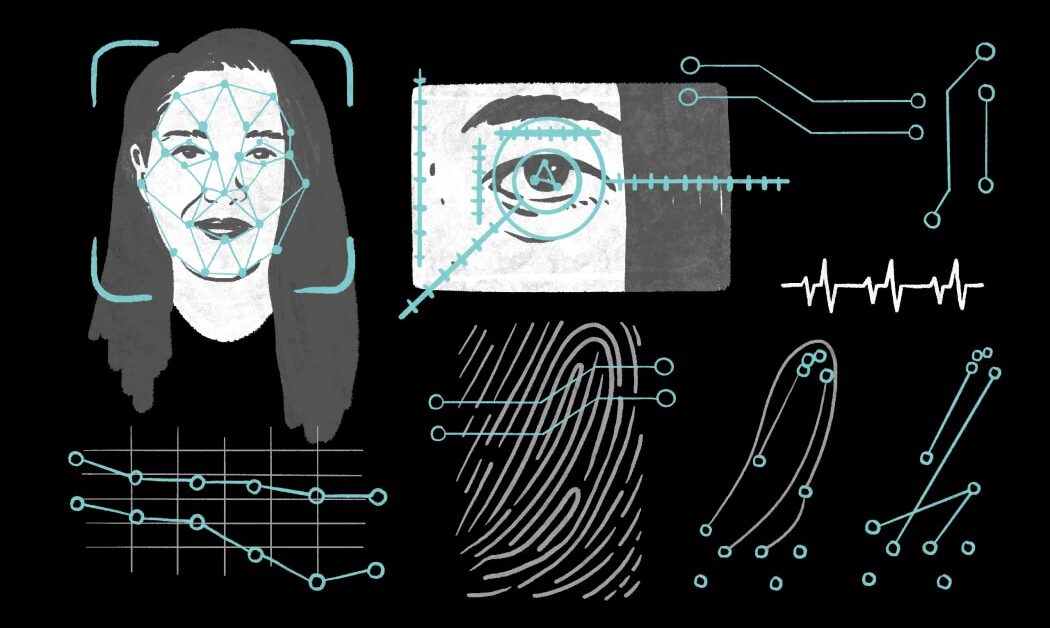
New Zealand Police have approved development of a trial for “Custody Biometric Life Sign Monitoring” — wall-mounted radar sensors that track a detained person’s heart rate, breathing, and movement without any physical contact. The technology, already deployed across more than a dozen Canadian police forces, represents a global shift in how law enforcement agencies are responding to a persistent and politically charged problem: people dying in custody while supposedly under police care.
The New Zealand move, first revealed through an Official Information Act request by RNZ on June 10, 2026, comes after the Independent Police Conduct Authority (IPCA) documented repeated failures by officers to properly monitor detainees — failures that directly contributed to deaths.
Table of Contents
- What Exactly Is Custody Biometric Monitoring?
- Why Now? The Death Toll That Forced the Conversation
- Canada’s Head Start: “We Would Have Had Deaths Without This”
- The Opioid Factor: When Medical Emergencies Look Like Sleep
- Two Approaches: Cell-Mounted Radar vs. Biometric Wristbands
- Non-Contact Radar Sensors (Cell-Mounted)
- Biometric Wristbands (Worn by Detainee)
- The Privacy Minefield
- Technology Cannot Fix Staffing Failures
- Where Does This Go Next?
What Exactly Is Custody Biometric Monitoring?
At its core, the technology is straightforward: a small box, typically using ultrawideband (UWB) radar, sits in the upper corner of a detention cell. It captures micro-vibration patterns from a person’s body — heartbeat, respiratory motion, gross movement — and converts them into real-time vital signs data displayed on a monitoring dashboard. No wearables, no cameras, no audio recording.
When a detainee’s heart rate or breathing falls outside normal parameters, the system triggers an automated alarm, alerting custody staff to a potential medical emergency. The radar penetrates through clothing, blankets, and even mattresses — critical functionality given that many medical crises happen when detainees appear to be sleeping.
Why Now? The Death Toll That Forced the Conversation
The urgency behind this technology is measured in bodies. In the 13 EU member states studied by a 2024 cross-border investigation, at least 488 people died in police custody or operations between 2020 and 2022 — and that number is almost certainly an undercount given inconsistent definitions and reporting gaps across jurisdictions.
In the United States, a federal database obtained by The Marshall Project documented nearly 4,000 deaths in jails between 2019 and 2023 — again acknowledged as incomplete. Bureau of Justice Statistics data for fiscal year 2022 alone reported 120 arrest-related deaths and 483 deaths in custody across federal facilities.
New Zealand’s numbers are smaller in absolute terms but proportionally significant. The IPCA’s ten-year review (2000–2010) examined 27 deaths in or following police custody, finding that 48% of the deceased were affected by alcohol, 33% by drugs, and the most common cause was suicide by hanging (37%). More recently, the IPCA has issued a string of damning findings:
- Auckland, October 2023: A man self-harmed in custody and later died. Officers logged 80 checks overnight — but more than half were conducted via CCTV, violating policy requiring in-person cell visits. His risk assessment was described as a “box-tick exercise.”
- Gisborne, 2023: A woman convicted of murder died in a police cell. Officers relied too heavily on a computer-based assessment rather than direct observation.
- Auckland, 2021: A man found unresponsive in his cell died after police failed to conduct adequate checks.
- Auckland, 2023: Officers pulled a detainee’s legs out from under him without justification, causing head injury. He was left in a cell for four hours without a mattress or blanket.
Each case reveals the same structural vulnerability: human monitoring systems fail. Officers get tired, distracted, or rely on CCTV as a substitute for physical presence. Risk assessments become bureaucratic formalities. Medical deterioration that happens between scheduled checks goes undetected until it is too late.
Canada’s Head Start: “We Would Have Had Deaths Without This”
While New Zealand is still working through “legal, privacy and operational considerations,” Canadian police forces have been deploying the technology since early 2024 — and the results are striking.
The Regina Police Service was among the first in Canada, going live in March 2024 after a detainee’s death in August 2023 prompted a comprehensive review. Within three days of activation, the system detected a 20-year-old woman going into cardiac arrest. Paramedics responded and revived her.
“I think we’ve had at least three or four instances now where we most certainly would have had an in-custody death that this technology has allowed us to prevent,” Staff Sergeant David Kliman told CBC News.
The momentum since has been rapid. Edmonton, Surrey, Barrie, Sarnia, Weyburn, the RCMP’s F-Division, Winnipeg, and Vancouver have all adopted similar systems. In Weyburn, Saskatchewan, the technology flagged dangerously low oxygen levels in an intoxicated detainee who appeared to be merely sleeping, leading to his hospital transfer and treatment.
The cost is notably modest. Surrey Police Service reported a one-time installation cost of CAD $36,000 and monthly support fees of CAD $1,000 — purchased from a Toronto-based healthcare technology company. For context, a single wrongful death lawsuit or coronial inquiry costs orders of magnitude more.
The Opioid Factor: When Medical Emergencies Look Like Sleep
One factor accelerating adoption is the opioid crisis. Sarnia Police Deputy Chief Mike Van Sickle articulated the challenge: “A medical emergency looks very different than it did in the past, and that’s because of the prevalence of opiates. The effect of the opiate is that it slows the respiratory rate to a point where the person stops breathing, so they could look like they’re sleeping.”
This is the core use case that makes biometric monitoring not merely useful but arguably necessary. Traditional visual checks — walking past a cell and looking through the hatch — cannot reliably distinguish between a sleeping detainee and one experiencing respiratory arrest from fentanyl exposure. Radar-based vital signs monitoring can.
The IPCA’s New Zealand findings underscore this same vulnerability. Officers checking on detainees via CCTV — as happened in the Auckland 2023 case — see a motionless body on a screen and assume all is well. A radar sensor measuring zero respiratory movement would trigger an immediate alarm.
Two Approaches: Cell-Mounted Radar vs. Biometric Wristbands
Globally, two distinct technological approaches to in-custody health monitoring have emerged, each carrying different implications for privacy, efficacy, and operational deployment.
Non-Contact Radar Sensors (Cell-Mounted)
This is the approach being adopted across Canada, explored by New Zealand, and trialled in the UK by companies like Oxehealth (now LIO). The sensor sits on the wall, requires no cooperation from the detainee, and generates no video or audio. It works passively and continuously.
Advantages: No physical contact with detainee. No wearable to tamper with or cause discomfort. Privacy-preserving (no video/audio). Works through bedding. No battery changes required. Fully autonomous operation.
Limitations: Only works when detainee is in the cell. Cannot track location. Limited to heart rate, respiratory rate, and motion — does not capture SpO2, temperature, or other biomarkers directly.
Biometric Wristbands (Worn by Detainee)
Primarily deployed in US jails and prisons, companies like 4Sight Labs produce non-removable wristbands that monitor pulse, blood oxygen, skin temperature, and location. Over 60 US jurisdictions reportedly use or are implementing the technology.
Advantages: Richer vital signs data (SpO2, temperature). Works regardless of location within the facility. Can track movement patterns. Integrates with GPS for community supervision.
Limitations: Requires physical attachment to the detainee — raising significant consent and dignity concerns. The ACLU has formally protested non-consensual biometric wristbands as “an assault on inherent human dignity.” The Electronic Privacy Information Center (EPIC) has raised privacy and HIPAA compliance concerns. False alarm rates remain an issue — one New Mexico jail cancelled its 4Sight Labs contract because batteries lasted only two hours.

The Privacy Minefield
New Zealand’s Police Director of Operational Capability, Superintendent Dave Greig, acknowledged that “legal, privacy and operational considerations must be thoroughly worked through” before any trial. This caution is well-warranted — and the UK experience illustrates why.
Oxehealth’s vision-based monitoring system, Oxevision, was deployed in UK police cells and mental health wards starting around 2014. The technology uses infrared cameras rather than radar. In mental health settings, it became deeply controversial. The campaign group Stop Oxevision documented cases where the technology was used as a substitute for in-person staff checks rather than a supplement — precisely the failure mode that custody advocates fear.
A coroner investigating deaths in facilities using Oxevision noted that the system was being used “instead of in-person observations” and that “there was no way of knowing which staff had interacted with the system or reset alerts.” The National Institute for Health Research (NIHR) concluded there is “currently insufficient evidence to suggest that surveillance technologies in inpatient mental health settings are achieving the outcomes they are employed to achieve.”
New Zealand’s Office of the Privacy Commissioner has indicated that the biometric processing privacy code requires a “proportionality assessment” to ensure benefits outweigh risks. This is the right framework — but the assessment must grapple with questions that go beyond simple cost-benefit:
- Can biometric data collected during detention be used in criminal proceedings against the detainee?
- What are the data retention policies? How long are heart rate and breathing records kept?
- Who has access to the data? Can it be shared with prosecutors, insurance companies, or immigration authorities?
- Will the technology be applied equally or disproportionately to certain demographic groups?
- What happens with youth detainees — a question RNZ raised but police did not address?
Technology Cannot Fix Staffing Failures
Perhaps the most important lesson from existing deployments is articulated by those closest to the technology. Regina Police lead paramedic Amanda Watson stressed that biometric sensors “are one tool that can be used to help mitigate the risk of potential deaths” — but emphasized the need for medical professionals in detention units.
Sarnia Police Deputy Chief Van Sickle was equally direct: the technology “does not alleviate any work for anybody. It adds an additional layer of security.”
The UK Home Office review of international evidence on deaths in police custody reached a similar conclusion years earlier: technology “can only enhance, not replace, monitoring of detainees by custody officers and staff.”
This is the critical distinction. Biometric monitoring addresses one specific failure mode — the inability of human observers to detect medical deterioration between checks or through visual observation alone. It does not address:
- Inadequate initial health assessments at intake
- Undertrained officers who cannot recognize mental health crises
- Systemic understaffing that makes even scheduled cell checks perfunctory
- The fundamental question of whether people with acute intoxication or mental health crises should be held in police cells at all
Where Does This Go Next?
The trajectory is clear. Non-contact radar-based vital signs monitoring in police custody cells is becoming a standard practice across Commonwealth countries. Canada has led the way. New Zealand and the UK are following. Australia — which has a death-in-custody rate comparable to England and Wales (0.3 per million population) and its own painful history of Indigenous deaths in custody — is a likely next adopter.
The technology itself will improve. Current systems are limited to heart rate, respiratory rate, and gross movement. Future iterations may incorporate sleep staging, stress detection through heart rate variability analysis, and integration with electronic medical records to flag detainees with known cardiac or respiratory conditions at intake.
For the electronic monitoring industry more broadly, custody biometric monitoring represents an expansion of the surveillance-welfare boundary. The same sensor technologies used in police cells — UWB radar, BLE connectivity, vital signs algorithms — are increasingly relevant to community corrections. GPS ankle monitors with integrated health monitoring capabilities could provide courts and supervision agencies with medical welfare data alongside location tracking, addressing the growing concern about deaths and medical emergencies among people on electronic monitoring in the community.
New Zealand’s cautious approach — exploring the technology without rushing to trial — may actually be the smartest path. The IPCA’s support, conditioned on proper privacy protections, suggests that when the trial does proceed, it will benefit from the lessons learned across a dozen Canadian deployments and the cautionary tales from UK mental health wards.
The fundamental question is not whether this technology works — Canadian data suggests it does. The question is whether agencies will deploy it as what it is — an additional safety layer — or use it as a justification to further reduce the human oversight that remains the primary safeguard for people in custody.