
Editor’s note: This column is written for electronic monitoring (EM) vendors, county pretrial units, and monitoring-center operators. It synthesizes public bill text, chamber analyses, and verifiable press reporting through March 30, 2026. Session calendars change quickly—verify every citation against primary state sources before relying on this discussion for contracting, court filings, or policy testimony.
Lead: If 2025 was the year justice agencies normalized hybrid work and cloud dashboards, 2026 is shaping up as the year legislatures treat GPS-capable pretrial electronic monitoring as default infrastructure rather than a pilot curiosity. Policy newsletters and third-party bill trackers now routinely reference more than a dozen concurrent state threads; in vendor pipeline calls, analysts often shorthand the moment as a “fourteen-state” legislative cluster once appropriations riders, reauthorizations, and substantive mandate bills are counted together. The headline is not a precise census—it is a demand signal: courts want wearable location accountability, victim-alert channels, and modernization budgets that acknowledge cellular sunset risk on legacy straps. The following state-by-state section highlights jurisdictions with outsized procurement impact; readers should pair it with our deep dives on Oklahoma SB 1325, Florida HB 277, and California SB 871.
Table of Contents
- The 2026 Legislative Surge in Pretrial Electronic Monitoring
- State-by-State Analysis of Key EM Legislation
- Oklahoma: unanimous momentum on domestic-violence GPS
- Florida: HB 277 defines modalities and pilots
- California: SB 871 and the DV prevention frame
- Michigan and the bail-release GPS thread
- Why policy shops shorthand a “fourteen-state” cluster
- New York and coastal fleet modernization pressure
- Texas, Illinois, Georgia, and the Sun Belt / Midwest churn
- Technology Requirements Driving Equipment Decisions
- Impact on the EM Equipment Market
- International Parallel: UK and Canada Expansion
- What This Means for Agencies and Equipment Vendors
- Implementation risks to table now
- FAQ
The 2026 Legislative Surge in Pretrial Electronic Monitoring
Three structural forces explain why pretrial electronic monitoring bills are moving in parallel across unrelated capitals:
- Jail capacity and release politics. Even where pretrial populations stabilized after pandemic-era reforms, sheriffs and county commissioners still face per-diem pressure. Supervised release with GPS-style accountability offers a politically legible alternative to cash bail debates—provided programs can document compliance without drowning staff in false alerts.
- Domestic violence and firearms narratives. High-profile cases reframed electronic monitoring as survivor-facing infrastructure, not only defendant surveillance. Statutes increasingly specify proximity alerts, dual notification to law enforcement, and explicit definitions of GPS versus RF modalities.
- Hardware obsolescence. As mobile carriers retire 2G/3G spectrum, agencies discover that “monitoring” budgets were really airtime annuities. Replacement cycles now arrive at the same time legislatures expand eligibility rules—forcing combined RFPs that bundle devices, software, and LTE-capable backhaul.
Florida evaluation literature—frequently cited in EM policy briefings—summarizes cohort outcomes on the order of a thirty-one percent reduction in recidivism for certain supervised populations. Legislators recycle that figure because it translates abstract GPS line items into public-safety ROI, even though any given agency must still validate outcomes against local data.
Equity advocates correctly note that pretrial electronic monitoring fees can shift costs onto low-income defendants, creating a two-tier release system in practice. When legislatures mandate defendant-funded models—as many 2026 bills do—counties still inherit the political risk if vendors cut service levels to chase receivables. That tension pushes serious programs toward ability-to-pay hearings, sliding scales, and transparent receipts that monitoring centers can audit. Oversight committees are also asking harder questions about data retention: how long location histories survive after a case dismisses, who may subpoena them in civil protective-order proceedings, and whether cloud map tiles create unexpected cross-border data flows.
For financing context beyond statute text, our total cost of ownership analysis for electronic monitoring explains why ankle straps are the smallest line in a credible budget once spare pools, analyst labor, and integration costs enter the spreadsheet.

State-by-State Analysis of Key EM Legislation
The following snapshots are illustrative, not exhaustive. They reflect bills or processes with clear vendor-facing language as of late March 2026.
Oklahoma: unanimous momentum on domestic-violence GPS
The Oklahoma Senate advanced SB 1325 with a 47–0 vote, framing GPS supervision as part of a broader domestic-violence package with victim and law-enforcement notifications. The bill’s public narrative centers strangulation and weaponized abuse fact patterns—caseloads that generate elevated geofence alerts. See our full statutory walkthrough in Critical Oklahoma Unanimous Vote: GPS Ankle Monitor Mandate for Violent Abusers (SB 1325).
Florida: HB 277 defines modalities and pilots
Florida CS/CS/HB 277 exemplifies how 2026 drafting catches up to engineering reality: statutory definitions now acknowledge active or passive GPS alongside RF options, victim-notification features, and payer rules tied to state supervision. A felony domestic-violence monitoring pilot in the Sixth Judicial Circuit illustrates how procurement teams must plan for time-boxed evaluations with legislative reporting deadlines. Read the operational breakdown in Critical Guide: Florida Electronic Monitoring for Domestic Violence — HB 277 2026.
California: SB 871 and the DV prevention frame
West Coast debates in the 2025–2026 session highlight how continuous electronic monitoring language migrates into domestic-violence prevention packages—with explicit attention to strangulation and suffocation allegations. That pattern matters for pretrial units because protective orders and pre-disposition release conditions increasingly borrow the same GPS semantics as post-conviction supervision. Our California analysis is here: California SB 871: Mandatory GPS Ankle Monitor for Domestic Violence Cases — What It Means for Electronic Monitoring.
Separately, reform-side fiscal models in several large states continue to circulate estimates that GPS-supervised pretrial release could divert substantial jail-bed days for qualifying non-violent felony dockets. Those projections belong to white-paper economics, not enrolled statute text—procurement officers should still bake them into long-range capacity planning because county boards use them when authorizing monitor fleet expansions.
Michigan and the bail-release GPS thread
Public bill databases list measures such as House Bill 4525 (2025–2026) that would require GPS electronic monitoring for certain individuals released without bail. Even when bills stall in committee, they telegraph what pretrial chiefs should expect in the next RFP cycle: mandatory GNSS reporting, standardized violation matrices, and explicit ownership of data custody between courts and sheriffs.
Why policy shops shorthand a “fourteen-state” cluster
Vendor strategists should understand how the fourteen-state talking point is constructed. Legislative intelligence firms typically count (1) freestanding GPS mandate bills, (2) tagging or EM appropriations riders inside larger justice budgets, (3) reauthorizations of existing pilot programs that expand eligibility, and (4) interstate template bills copied across partisan caucuses. A bill that dies in committee still signals committee chair appetite; a bill that passes as a study may still fund consultant reports that recommend full procurement eighteen months later. That is why equipment markets react before enrolled text is final.
Readers who need a defensible checklist for leadership decks can treat the following as a minimum viable legislative watch list for pretrial electronic monitoring in 2026: Oklahoma and Florida for victim-alert GPS semantics; California for domestic-violence-forward continuous monitoring language; Michigan for bail-release GPS triggers; New York for municipal capacity debates; Texas and peer Sun Belt states for bond-condition EM hybrids tied to impaired driving; and additional Midwestern and Southeastern chambers where model-bill language on GPS supervision has appeared in public dockets. The exact roster will shift at sine die, but the procurement vector does not.
Court administrative guidance—separate from statute—also moves practice faster than reporters notice. Chief judges issue standing orders harmonizing EM violations with bail forfeiture calendars; probation departments publish device certification lists; statewide court administrators negotiate master service agreements that effectively pick winners before the next headline bill passes. Monitoring centers that only read session summaries miss half the market signal.
New York and coastal fleet modernization pressure
Municipal budget debates during the FY 2026 cycle have featured multi-million-dollar proposals to expand bracelet counts—reflecting docket growth and the operational need to swap legacy airtime-dependent hardware before carrier sunsets strand devices in the field. Council-level documents have debated stepping up monitored caseloads by hundreds of units in single budget windows—numbers that sound modest until one translates them into 24/7 analyst seats, spare-device pools, and field technician coverage across boroughs or counties.
The through-line for vendors is platform consolidation: agencies want fewer vendor silos when judges mix pretrial, probation, and DV dockets on shared monitoring floors. Pretrial electronic monitoring supervisors also want unified dashboards so the same alert does not appear twice under different vendor SKUs when a defendant simultaneously faces protective-order conditions and bail conditions.
Texas, Illinois, Georgia, and the Sun Belt / Midwest churn
Outside the headline coasts, bond-condition practice in states such as Texas has long intertwined intoxication-related offenses with EM and ignition-interlock hybrids; 2026 filings continue that pattern by pressing courts to specify how GPS evidence will be reviewed before revoking release. Similar statutory churn appears across the Midwest and Southeast as chiefs import template language from model bills—meaning interoperability and multilingual alert scripts are no longer “nice-to-have” differentiators.
For cross-cutting pretrial economics, see CSG Justice Center resources and Bail Monitoring Pretrial GPS 2026 Analysis on ankle-monitor.org.
Technology Requirements Driving Equipment Decisions
Statutes rarely specify chipsets; they specify outcomes. Translating 2026 bills into engineering checklists yields recurring requirements:
- GNSS performance in urban housing. Pretrial geofences fail in court if multipath errors look like intentional evasion. Agencies still lean on NIJ-influenced accuracy vocabulary when comparing devices—our primer on GPS accuracy standards for ankle monitors remains a useful crosswalk between marketing datasheets and supervision reality.
- Battery life versus charging friction. Intensive tracking drains cells faster; daily charge mandates inflate “noncompliance” noise that is really an operations problem. Hardware that sustains multi-day run time on predictable schedules reduces officer call volume.
- Tamper semantics under cross-examination. Defense counsel challenges ambiguous strap events; prosecutors and survivors’ advocates challenge missed breaches. Fiber-based tamper architectures marketed with zero false-positive integrity signaling aim to reduce alert storms while preserving evidentiary clarity—topics aligned with our technical review of false tamper alert rates in GPS ankle monitors.
- Victim-notification UX. Survivor-facing apps must handle accessibility, language diversity, and trauma-informed design; single-channel SMS gateways are increasingly viewed as brittle.
- Cellular migration and module longevity. Programs that standardized on 3G modems now face truck rolls and swap events that rival initial deployment costs. Spec sheets that emphasize LTE-M, NB-IoT, or multi-band LTE compatibility are not futuristic marketing—they are depreciation schedules in disguise. Pretrial electronic monitoring directors increasingly score RFP responses on how vendors plan phased migrations without forcing defendants through repeated office visits.
- Integration with court calendars and case management. Static geofences are easy; dynamic schedules that reflect modified release orders are hard. APIs, webhook reliability, and role-based access controls separate serious platforms from bolt-on map widgets.
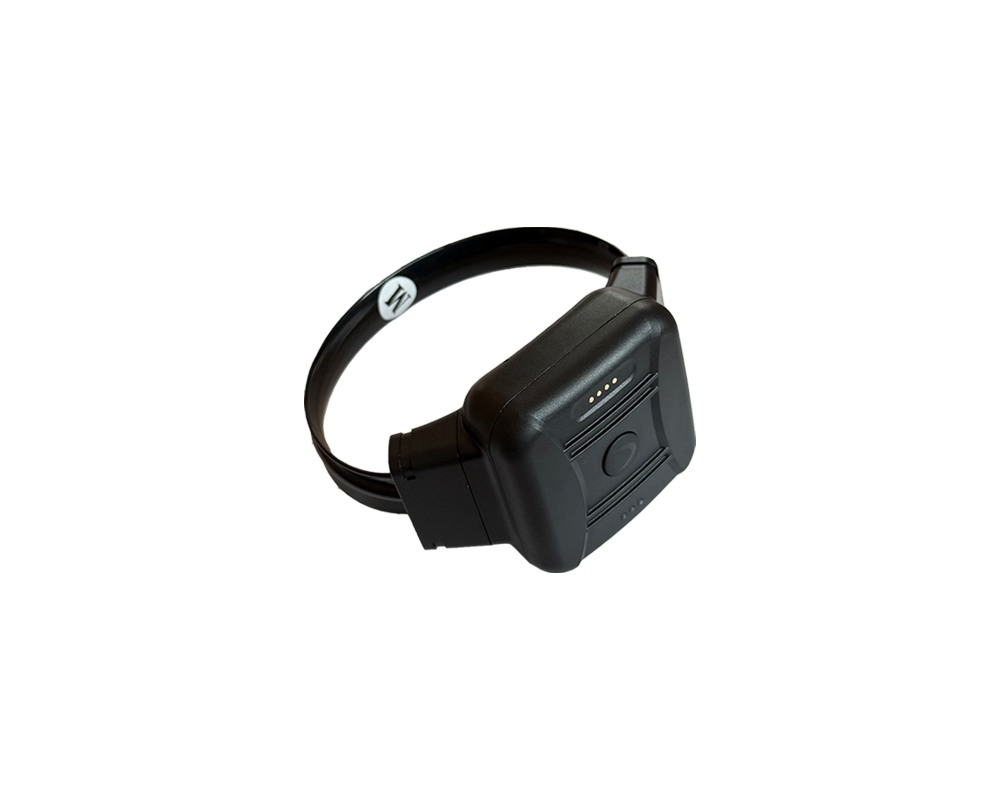
The pretrial equipment market continues to evolve as demand grows across these 14 states. Established players like BI Incorporated and SCRAM Systems dominate the US market through long-standing state contracts and extensive service infrastructure. SuperCom, an Israel-based provider, has expanded aggressively through government contracts in Kentucky, Sweden, and other jurisdictions. Geosatis offers a one-piece Swiss-designed device. Among emerging vendors, REFINE Technology’s CO-EYE ONE (108g, fiber-optic tamper detection, 7-day battery) has attracted attention for its compact form factor and 5G-ready connectivity. Agencies expanding pretrial GPS programs should conduct head-to-head field evaluations before committing to multi-year procurement contracts.
Impact on the EM Equipment Market
When legislatures synchronize with cellular sunsets, markets behave predictably:
- Hardware margin compression. commoditized LTE modules and shared smartphone map stacks pressure ankle-unit ASPs, pushing vendors to monetize software, analytics, and compliance modules.
- Monitoring-center M&A. Smaller call centers struggle to meet new statutory response windows; larger integrators acquire capacity to satisfy statewide contracts.
- Data residency and AI analytics. Bills that emphasize victim safety invite predictive geofence analytics—raising questions about model bias, explainability, and subprocessors that store location history.
- Insurance and liability narratives. Some counties explore whether vendor SLAs or risk-transfer clauses can absorb part of the liability when alerts fail; underwriters, in turn, ask for evidence of redundant carrier agreements and staffed escalation paths. The market effect is longer legal review cycles—but also higher switching costs once contracts embed compliance artifacts.
Macro vendor dynamics appear in GPS Monitoring Technology 2026 Market Analysis, which pairs legislative demand with platform economics.
Smaller vendors can still win niche awards if they document pretrial electronic monitoring outcomes with transparent methodology: mean time to alert acknowledgement, false-positive tamper rates under field conditions, and charging compliance among high-frequency reporting cohorts. Large integrators win statewide RFPs when they bundle financing, training, and spare logistics; nimble OEMs win when agencies want hardware diversity inside a single software stack.
International Parallel: UK and Canada Expansion
The U.S. surge is not isolated. In England & Wales, justice ministries have framed the largest tagging modernization push in recent history—pairing budget headlines with GPS-class supervision narratives. Our March 2026 briefing walks through procurement implications: UK £700 Million Electronic Tagging Expansion: GPS Monitoring Revolution in England & Wales.
In Canada, Alberta announced an additional $4.1 million over three years (Budget 2026) to expand GPS monitoring of repeat and high-risk offenders and to stand up real-time victim notifications via a mobile application—an explicit parallel to U.S. victim-alert statutes. Provincial materials describe 24/7 monitoring by correctional authorities, inclusion/exclusion zones, and immediate survivor alerts when court-ordered boundaries break—mirroring the operational requirements U.S. counties now copy into RFPs.
What This Means for Agencies and Equipment Vendors
For pretrial administrators: treat 2026 as the year to harmonize bond protocols with DV divisions so alert routing, data retention, and discovery practices stay consistent when defendants move across dockets.
For monitoring centers: stress-test overnight staffing and bilingual escalation scripts before legislatures mandate five-minute acknowledgement windows.
For vendors: document firmware provenance, timestamp traceability, and tamper-event semantics the way you already document CEP—judges will ask.
For public defenders and court stakeholders: insist on written protocols for what constitutes a pretrial electronic monitoring violation versus a benign connectivity gap; ambiguity fuels both unnecessary detention and dangerous under-enforcement. Transparency benefits every party except vendors who rely on opaque alert black boxes.
The legislative surge is better read as infrastructure permanence than a spike. The winners will be organizations that deliver end-to-end supervision outcomes, not those that ship straps alone.
Implementation risks to table now
Alert fatigue tops the list: when eligibility expands faster than monitoring centers hire analysts, dashboards become noise machines without severity scoring, duplicate suppression across overlapping geofences, and scripted 911 handoffs.
Discovery and evidentiary hearings increasingly demand server logs, firmware versions, and map-tile provenance—weak documentation invites judges to discount GPS evidence and legislatures to freeze budgets.
Language access, multi-agency MOUs for primary dispatch responsibility, cybersecurity for location data as critical infrastructure, and published program integrity metrics (devices in field, alerts per device, revocation reasons, acknowledgement times) round out the governance checklist prudent pretrial electronic monitoring leaders run before statutes outrun operations.
FAQ
What is pretrial electronic monitoring? It is court-ordered supervision technology—typically GPS ankle monitors, RF beacons, or smartphone apps—used while charges are pending to enforce curfews, exclusion zones, and appearance requirements.
Why are so many states acting in 2026? Jail capacity politics, survivor-safety mandates, and cellular obsolescence converged; legislatures often bundle them into single EM modernization packages. The result is a synchronized upgrade cycle for pretrial electronic monitoring fleets that might otherwise have drifted on decade-old airtime contracts.
How should procurement officers compare devices? Demand field-representative GNSS testing, tamper false-positive data, battery life at your reporting cadence, and audit logs that survive discovery. Pair vendor demos with independent ride-alongs in dense urban canyons and rural fringe cells—marketing CEP numbers rarely tell the full supervision story. NIJ-informed accuracy discussions elsewhere on ankle-monitor.org supply baseline vocabulary.
Does GPS replace social services? No. Monitoring is a sensor layer; it does not substitute shelter beds, legal aid, or behavioral health capacity.
Where can readers track international parallels? Review our UK tagging expansion analysis and follow Canadian provincial announcements on victim-alert GPS programs alongside U.S. session trackers.