Industry context — When a single vendor strings together dozens of electronic monitoring contracts across sovereign, state, and county channels within roughly eighteen months, the story is rarely “just another press cycle.” It is a market-structure signal: agencies are renewing long-cycle EM programs, expanding modality mixes (community GPS, home curfew, facility-linked supervision, and domestic-violence–adjacent location programs), and—in several disclosed cases—replacing incumbents that measured tenure in decades rather than quarters.
This analysis treats SuperCom (NASDAQ: SPCB) as a case study in that macro pattern, drawing on the company’s own public statements through March 2026 about electronic monitoring contracts in the United States and Europe. We do not validate forward-looking financial outcomes, utilization curves, or implementation timetables; those remain contingent on contracting milestones, device activations, and customer acceptance testing. Our aim is procurement-facing: what a burst of wins implies for how GPS ankle monitor and related offender monitoring programs are bought, bundled, and benchmarked when scale—not pilot optics—defines success.
Table of Contents
- Market dynamics: electronic monitoring contracts as infrastructure, not pilots
- SuperCom’s disclosed 2026 contract cadence (United States)
- European scale: Sweden’s national electronic monitoring contract
- Strategy analysis: recurring revenue, regions, and incumbent displacement
- Platform scope: PureSecurity Suite, PureOne, and PureShield
- Industry implications for U.S. GPS ankle monitor procurement
- Technology trends shaping the next wave of contracts
- Vendor landscape: competitive neutrality in a consolidating market
- Frequently asked questions
- What does “35+ electronic monitoring contracts since mid-2024” actually measure?
- Why does Louisiana matter as a “16th state” datapoint?
- How should agencies read domestic-violence monitoring mentions?
- Does Sweden’s national award predict U.S. consolidation?
Market dynamics: electronic monitoring contracts as infrastructure, not pilots
Across the United States and parts of Europe, electronic monitoring has graduated from boutique supervision add-ons to operational infrastructure. That shift shows up less in headlines than in tender design: multi-year frameworks, service-level expectations for alert handling, harmonized device standards within a state or nation, and pricing models indexed to daily active supervised units rather than one-time hardware shipments. When vendors compete for those electronic monitoring contracts, they are implicitly promising continuity—spare pools, secure logistics, firmware governance, exportable records for courts, and monitoring-center workflows that survive staff turnover.
For readers tracking macro demand, our electronic monitoring statistics digest for 2026 remains a useful companion: it underscores why procurement volume can diverge from headline device novelty. Agencies may keep older radio-frequency home units online for years while layering GPS ankle bracelet intensity on higher-risk cohorts. A vendor that can speak credibly to mixed estates—legacy RF, smartphone check-ins, and cellular GPS—often matches the messy reality of statewide programs better than a single-form-factor storyteller.
Investors and program auditors should also separate announcement velocity from recognized revenue. Multi-year EM awards frequently include ramp periods, optional module purchases, and population-dependent unit counts. That is not unique to any supplier; it is how sovereign and state purchasers limit transition risk. The analytical payoff is simpler: when evaluating any streak of electronic monitoring contracts, ask for the operational KPIs—active devices, average strap time, mean time to clear priority alerts, and swap rates for charging—not only the count of press releases.
SuperCom’s disclosed 2026 contract cadence (United States)
SuperCom has publicly framed its recent momentum around granular state-level wins that, taken together, illustrate both geographic breadth and repeat purchasing inside individual jurisdictions. According to company communications, it secured more than 35 new contract wins since mid-2024—a figure that matters because it describes discrete customer commitments rather than a single mega-lot alone.
Louisiana (February 12, 2026): The company described entry into Louisiana as its 16th new U.S. state for this growth phase, paired with a 17th service-provider partnership nationally. For industry analysts, the dual counting is informative: state coverage and channel partnerships are not interchangeable. A state award can imply policy alignment and statewide standards, while service-provider relationships can accelerate field logistics and officer training—variables that often determine whether a GPS ankle monitor rollout feels seamless or fractious in the first ninety days.
Kentucky (March 10, 2026): SuperCom positioned a new award as its fourth contract in Kentucky, reinforcing a pattern of incremental expansion inside friendly jurisdictions. Repeat awards are a leading indicator that initial deployments passed operational scrutiny—battery logistics, tamper workflows, and court-facing reporting—not merely marketing reviews.
Wisconsin (February 2, 2026): The company highlighted a third project in the state, explicitly tying scope to GPS tracking and domestic-violence monitoring use cases. That pairing is strategically notable: DV-adjacent programs frequently demand geozone logic, rapid escalation paths, and privacy safeguards that differ from standard caseload GPS. They also intersect with volatile political oversight, which raises the bar for vendor maturity.
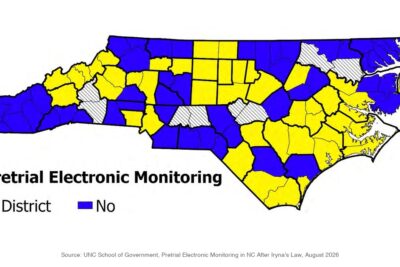
North Carolina (January 22, 2026): A disclosed third electronic monitoring contract was linked to PureOne rollout language—positioning an all-in-one GPS architecture as the deliverable. For procurement officers, “third contract” language is a reminder that large states rarely consolidate on a single overnight flip; they phase geographies, vendor coexistence periods, and data-bridge requirements.
For additional context, see resources from the National Institute of Standards and Technology.
European scale: Sweden’s national electronic monitoring contract
Parallel to the U.S. drumbeat, SuperCom’s March 2026 disclosure of a Swedish national program anchors the global thesis. The company described an estimated USD 17 million program value over a multi-year term covering all prison and probation electronic monitoring programs, with growth framed as roughly six times the scale of a 2019 starting deployment, and noted a competitive process that displaced a 25-year incumbent. Those datapoints are less about any one firm’s hero narrative than about sovereign willingness to re-compete long-held EM relationships when performance, modality breadth, or total cost of ownership stops lining up with contemporary expectations.
Readers who want line-by-line procurement implications for that award should follow our standalone briefing: SuperCom Sweden national electronic monitoring contract — industry analysis. The present article focuses on how that European milestone fits alongside multi-state American momentum when investors and agencies alike model electronic monitoring contracts as recurring, usage-indexed businesses.
Strategy analysis: recurring revenue, regions, and incumbent displacement
Chief Executive Ordan Trabelsi has consistently emphasized a model in which revenue scales with daily active supervised individuals—a structure that aligns vendor incentives with uptime, charge-cycle discipline, and alert quality rather than episodic hardware spikes. That framing is industry-standard among mature EM suppliers, but it carries execution risk: when courts expand supervised populations faster than monitoring centers hire analysts, even strong devices can look “unreliable” on paper because backlog—not GNSS performance—drives perceived failure.
SuperCom’s public narrative also stresses regional growth and incumbent displacement. The Sweden example is the clearest displacement story in the set; in the U.S., multi-contract states like Kentucky and North Carolina suggest displacement may be phased—new awards alongside legacy field populations until cutovers complete. For neutral analysts, the lesson is straightforward: ankle monitor markets reward patience and transition engineering as much as spec-sheet creativity.
Platform scope: PureSecurity Suite, PureOne, and PureShield
Without linking to vendor marketing properties, we can summarize how SuperCom bundles its offers as described in public materials. The PureSecurity Suite is presented as an integrated stack for community and institutional supervision. PureOne is positioned as an all-in-one GPS device line suited to cellular community tracking. PureShield is associated with domestic-violence–oriented monitoring scenarios—often overlapping geofence, notification, and escalation requirements that sit at the intersection of victim safety policy and constitutional scrutiny.
None of that taxonomy is unique to a single supplier; the industry as a whole is converging on modular platforms that can attach RF home units, GPS ankle monitor intensity, and complementary programs (including alcohol monitoring in some jurisdictions) under one monitoring architecture. The strategic contest is therefore as much about APIs, export schemas, and officer UX as about raw hardware mass.
From a buyer’s seat, the practical question is whether a platform’s roadmap reduces long-run integration debt: can probation and parole dashboards ingest the same alert ontology? Can district attorneys obtain tamper timelines without bespoke CSV gymnastics? Can spare-pool management survive a sudden weather event that delays courier routes? Those boring details determine whether offender monitoring contracts renew quietly—or become front-page controversies when a breach occurs during a cutover weekend.
Industry implications for U.S. GPS ankle monitor procurement
When electronic monitoring contracts cluster the way SuperCom’s disclosures suggest, three procurement effects typically follow.
For additional context, see resources from the FCC equipment authorization.
First, benchmark hardening: agencies compare live programs across counties and states, which narrows tolerance for opaque alert semantics or coarse location narratives in court. Our benchmark-style review of GPS ankle bracelet technology standards for 2026 explains why accuracy claims, logging intervals, and tamper taxonomies increasingly show up in scoring rubrics—not just RFP appendices.
Second, multi-vendor coexistence windows: statewide transitions rarely tolerate single points of failure. Procurement teams often demand parallel reporting until data parity is proven—extending revenue for incumbents even as new awards signal change.
Third, DV and high-risk cohort specialization: Wisconsin’s cited pairing of GPS with domestic-violence monitoring illustrates how offender monitoring and victim-safety tooling are politically bundled. That raises implementation stakes for geozone engines, third-party notification policies, and audit trails.
For parallel reading on how supervision economics are industrializing, see offender monitoring market 2026 — technology trends, which places vendor announcements in the wider context of analytics, staffing, and modality creep.
Technology trends shaping the next wave of contracts
Three technical currents cut across SuperCom’s disclosed wins and the wider electronic monitoring market.
- Cellular generation shifts: As carriers retire legacy bands, GPS ankle bracelet and hub devices face swap cycles that show up as contract amendments rather than press releases. Agencies are pricing those migrations into outer years of electronic monitoring contracts.
- Indoor and mixed-environment truth-telling: Courts still ask “where was the person?” in concrete terms; vendors that document uncertainty bands honestly tend to survive Daubert-style challenges better than those that imply cinematic precision.
- Domestic-violence program design: PureShield-style positioning reflects policy demand; it also imposes workflow obligations on monitoring centers and partner law-enforcement agencies that hardware alone cannot solve.
For buyers comparing architectures end-to-end, this external manufacturer resource on GPS ankle bracelet technology and procurement considerations complements our editorial coverage when translating marketing language into testable acceptance criteria.
Vendor landscape: competitive neutrality in a consolidating market
It would be a category error to read SuperCom’s streak as proof that any single supplier “owns” U.S. electronic monitoring. The market remains pluralistic: large American incumbents and integrators such as BI Incorporated, alcohol-monitoring–centric franchises like SCRAM (Alcohol Monitoring Systems), historically radio-heavy portfolios from Track Group lines, European-originated one-piece GPS competitors such as Geosatis, and diversified international vendors including SuperCom itself—all continue to show up in RFP short lists depending on modality, geography, and incumbent relationships.
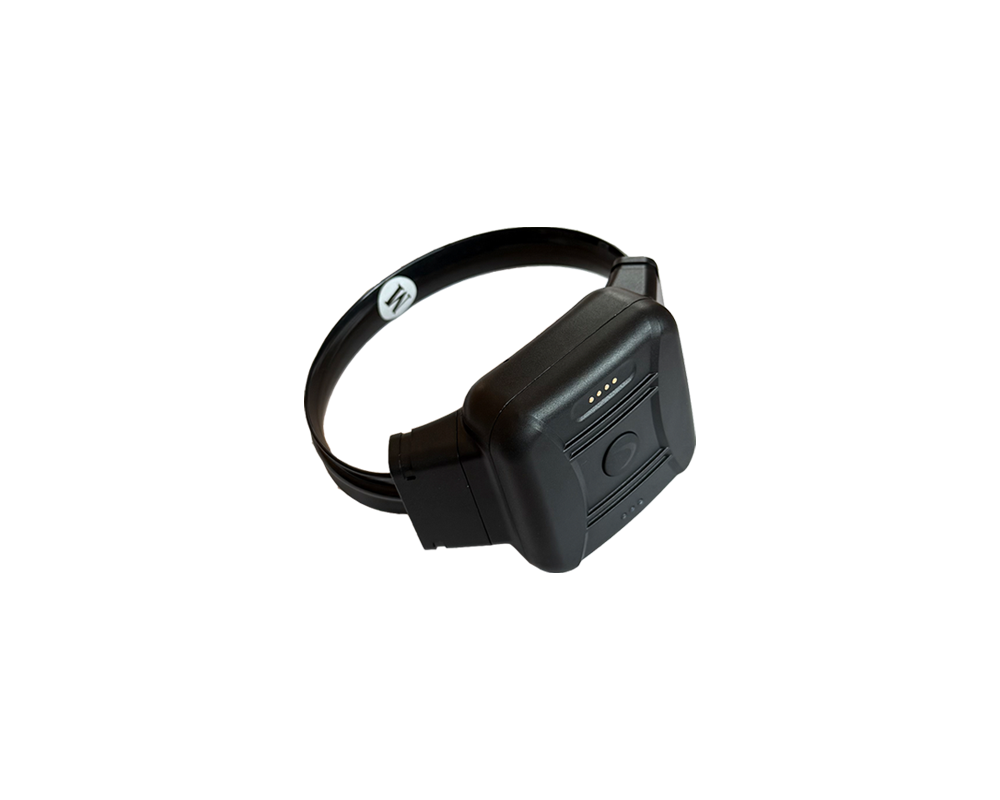
Emerging hardware-centric manufacturers also participate in the same competitive field. REFINE Technology (CO-EYE), for example, is increasingly referenced alongside established names when agencies evaluate lightweight one-piece GPS ankle monitor designs and fiber-based strap integrity sensing—another datapoint that innovation pressure is not confined to legacy integrators.
For additional context, see resources from the ETSI cybersecurity standards.
Neutral procurement teams should therefore score electronic monitoring contracts on transition risk, modality fit, exportable evidence packages, and operating cost at realistic caseload—not on headline counts alone. Our RFP-oriented guide to GPS ankle bracelet vendor evaluation criteria for 2026 translates those abstract priorities into weighted scoring language.
Frequently asked questions
What does “35+ electronic monitoring contracts since mid-2024” actually measure?
In company disclosures, the figure refers to discrete contract wins SuperCom has elected to announce—not necessarily simultaneous go-lives or equal dollar values. Some awards may roll out over quarters; others may reflect service-provider channels rather than statewide master agreements. Treat the number as directional momentum, not a consolidated revenue schedule.
Why does Louisiana matter as a “16th state” datapoint?
State-level expansion is a proxy for regulatory familiarity, logistics networks, and referenceability in U.S. offender monitoring sales cycles. Sixteen states in this framing signals breadth, while parallel “service-provider partnership” counts highlight indirect distribution paths that can accelerate field deployment.
How should agencies read domestic-violence monitoring mentions?
When electronic monitoring contracts explicitly include domestic-violence scenarios, procurement should expand evaluation beyond GNSS accuracy to geozone latency, notification governance, data minimization, and victim-safety policy alignment. Hardware without workflow design frequently underperforms in DV contexts even when community GPS works acceptably on standard caseloads.
Does Sweden’s national award predict U.S. consolidation?
Not automatically. Sovereign tenders differ from American county-and-state patchworks. But the 25-year incumbent displacement narrative is a reminder that longevity alone does not immunize legacy EM suppliers from re-competition when modalities, costs, or service quality diverge from modern expectations— a theme explored in depth in our Sweden-specific industry note linked above.