Editor’s note: This is independent industry analysis for supervision technology buyers, courts, and integrators. It cites U.S. federal releases, congressional testimony, nonprofit research, and mainstream reporting. It does not link to vendor marketing PDFs; hardware metrics attributed to VeriWatch reflect figures widely repeated in government and press descriptions as of 2026.
When U.S. Immigration and Customs Enforcement (ICE) added a wrist-worn GPS channel to its Alternatives to Detention (ATD) stack, the agency did not describe the device as a “lighter ankle monitor for everyone.” It described a limited technology demonstration beginning in Denver—explicitly positioned as another option for screened participants on the non-detained docket (ICE news release, April 24, 2023). Acting ICE Director Tae D. Johnson told the House Appropriations Committee that ICE planned to begin that demonstration “later this month,” adding an “additional option” rather than replacing legacy modalities overnight (House committee testimony PDF, April 18, 2023). Corey A. Price, then ERO executive associate director, called the wrist-worn units a supplement that could reach some cohorts in a “less obtrusive manner,” aiming to “increas[e] compliance” as people move through immigration processes (ICE release).
That language matters. It is a textbook statement of compliance facilitation—not a claim that the wrist form factor magically reproduces the secure containment story that ankle-mounted hardware tells in public space. This article argues that the VeriWatch case, read alongside county pilots and overseas “non-fitted” GPS watches, is best interpreted as risk segmentation in hardware: different tiers for different statutory and operational assumptions. The policy risk is export: buyers outside the United States—especially in developing markets—sometimes import the watch silhouette while skipping the risk math, and end up funding wrist programs for cohorts that still need containment-grade supervision.
Table of Contents
- What is the core distinction between wrist monitors and ankle monitors?
- How fast did VeriWatch scale inside ICE ATD?
- VeriWatch in context: specifications buyers actually compare
- Anatomy of supervision: why “lower on the body” is not “lower risk”
- ICE ATD: modality mix, dollars, and compliance narratives
- Guardian reporting: when “less obtrusive” collides with clinical risk
- County criminal justice: Warren County, Ohio as a risk-tier lab
- Global trend: UK “non-fitted” watches and Louisiana juvenile wrist programs
- Vendor landscape: why the “full catalog” is a curriculum map
- Procurement guardrails: questions that expose category errors
- Why the “full-stack” supervision catalog is a pedagogy, not a parts list
- Export risk: when middle-income ministries “buy the watch, not the program”
- Louisiana as a natural experiment in juvenile modality switching
- Technology note: where one-piece ankle GPS still anchors “hard supervision”
- Frequently asked questions
- Did ICE leadership describe VeriWatch as experimental?
- Is SmartLINK “cheaper” than detention?
- What do critics fear about wrist expansion?
- What is the single procurement sentence this editor wants etched on every RFP?
What is the core distinction between wrist monitors and ankle monitors?
Answer: Wrist GPS in ATD and county pilots is being sold and operated primarily as a compliance and case-management interface—biometric check-ins, messaging, calendars—while ankle GPS remains the culturally and physically “hard” modality for many higher-intensity programs. That is not a moral ranking; it is an engineering and ergonomics reality about strap geometry, public stigma, and how quickly a device can be shed in a confrontation.
Readers who want the operational counterpoint to optimistic wrist marketing should start with our companion piece on why modified smartwatches have become a global pain point when agencies treat them as interchangeable with ankle systems: The Wrist-Worn Monitor Crisis. The present article explains why a major U.S. vendor ecosystem nonetheless keeps pushing wrist SKUs for lower-risk tiers—and why that strategy can be coherent if procurement enforces boundaries.
How fast did VeriWatch scale inside ICE ATD?
Answer: Public data releases summarized by Syracuse University’s Transactional Records Access Clearinghouse (TRAC) describe roughly fifty participants in May 2023 and about 2,150 by early May 2024—an order-of-magnitude lift within twelve months—while still dwarfed by smartphone-app ATD enrollment (TRAC “What’s New,” May 14, 2024). Border-reporting trade press, drawing on similar government disclosures, cited on the order of three thousand wrist units issued within about a year of broader rollout (Border Report syndication).
Scale matters because it tests logistics: charging cadence, help-desk volume, false removal alerts, and court-admissible exports of location histories. TRAC’s commentary explicitly framed VeriWatch as the fastest-growing monitoring type in ICE’s ATD toolbox at the time—meaning procurement attention should focus on whether growth was driven by eligibility rules (risk tiering) or by optics and budget line items.
VeriWatch in context: specifications buyers actually compare
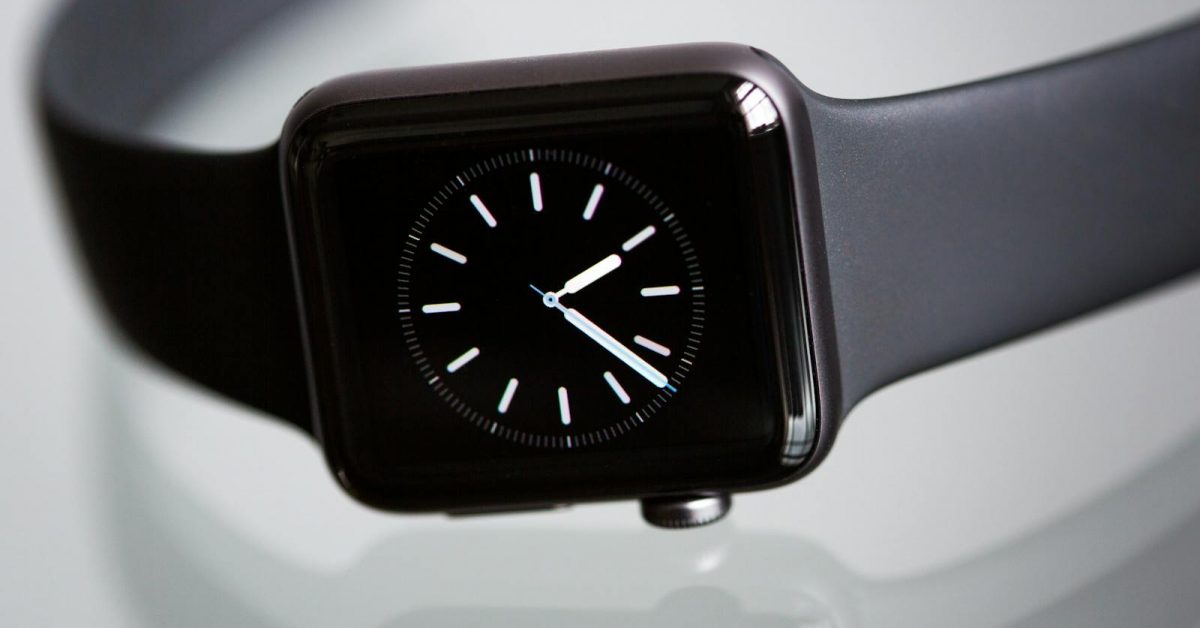
Vendor-neutral summaries repeated in press and agency-facing descriptions converge on a compact wrist form factor—commonly cited dimensions on the order of 2.25″ H × 1.5″ W × 0.75″ D and about 2.3 oz—with GPS, Wi-Fi assistance for indoor/secondary fixes, biometric face match, liveness checks, messaging, and multi-day location buffering if cellular backhaul drops. Public materials discussed in trade coverage also reference roughly sixteen hours of battery life on-device, extendable with a clip-on transfer charger—useful for honest TCO math because short run-times shift costs to field services, not only to per-diems (Border Report).
Compare that physics package to what probation chiefs expect from a GPS ankle monitor sold into high-workload dockets: heavier housings, different strap tamper semantics, and operational playbooks written around “device visible in sandals.” The wrist SKU can be excellent for appointment integrity and movement transparency among cohorts already screened as suitable for non-detained supervision—but it does not erase the bone-and-tendon geometry problem that makes ankles a different security anchor in community corrections folklore.
Anatomy of supervision: why “lower on the body” is not “lower risk”
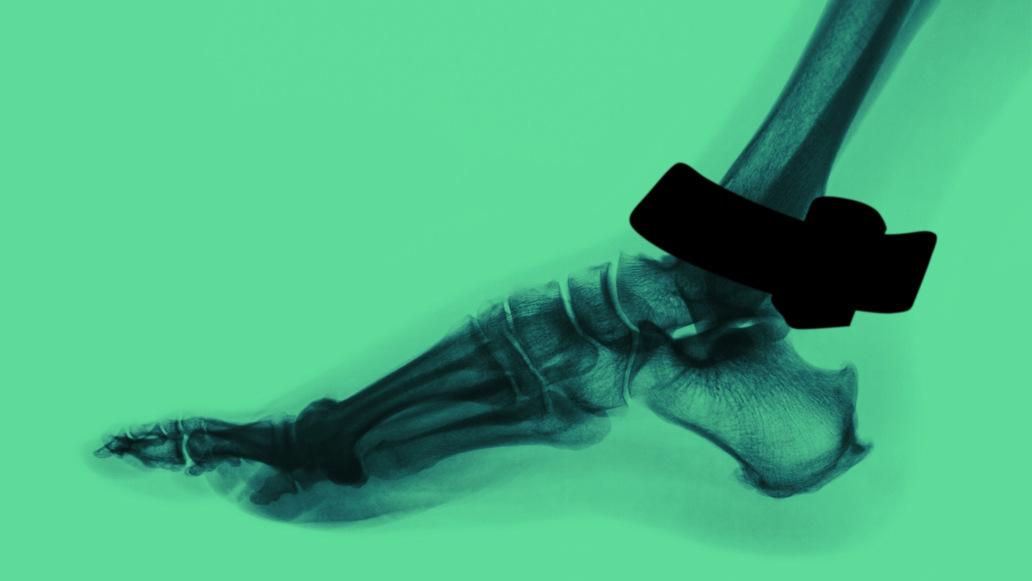
In my two decades across community corrections and vendor field programs, the recurring procurement mistake is conflating comfort with control. Ankle devices are socially stigmatizing and operationally annoying; they also sit on anatomy where strap tension and bony landmarks create a different tamper-evidence story than a consumer-style wrist clasp. That does not make ankles “truth machines,” but it does change what a supervising officer assumes when dispatch reads “strap event.”
ICE ATD: modality mix, dollars, and compliance narratives
Congressional Research Service summaries of ATD describe a blended model—telephonic reporting, GPS ankle monitoring, and smartphone applications—with policy rationales tied to court appearance incentives and detention cost avoidance (CRS R45804). CBS News reporting on SmartLINK—the smartphone pathway—notes ICE figures on the order of four dollars per participant per day versus roughly one hundred fifty dollars for detention, while quoting ICE officials describing SmartLINK absconders below ten percent in a recent fiscal window (CBS News, 2024). The same piece cites TRAC data that 99% of represented migrants meet court requirements—an essential comparator because it reminds readers that legal process inputs can swamp hardware inputs when measuring “compliance.”
Austin Kocher, a Syracuse-based researcher who writes extensively on immigration surveillance, framed the wrist expansion as “another troubling step in the expansion of electronic monitoring,” arguing that modality shifts deserve scrutiny even when vendors promise discretion (Kocher, Substack, April 2023). That critique is not anti-technology; it is pro-governance—asking whether ICE publishes clear rules for when participants move from app check-ins to ankle GPS to wrist GPS, and whether those rules track public-safety risk or political optics.
Enrollment scale snapshots in open-source commentary illustrate why the question is urgent. Kocher’s later aggregation—drawing on Washington Post reporting—placed total ATD enrollment on the order of one hundred eighty-three thousand participants, with VeriWatch-style wrist units in the low thousands and SmartLINK in the low hundreds of thousands, alongside roughly twenty-four thousand on ankle GPS in one 2025 snapshot (Kocher, Substack). Separately, policy analysts often cite ATD growth from roughly 85,000 participants early in the Biden administration toward a peak near 375,000, then retreating toward 300,000—a volatility that any device OEM must price as demand uncertainty, not smooth CAGR (Kocher, April 2023).
Guardian reporting: when “less obtrusive” collides with clinical risk
The Guardian’s late-2025 investigation describes pregnant patients presenting in U.S. hospitals while wearing ICE-mandated location-tracking smartwatches—devices the reporting attributes to BI’s VeriWatch line—raising ethical questions about continuity of care, removal authority during emergencies, and fear-driven avoidance of obstetric services (The Guardian, Dec. 10, 2025). Regardless of where one stands on immigration enforcement, the case study sharpens the segmentation lesson: the same wrist form factor marketed for “compliance” can still be experienced as high-coercion surveillance when applied to extremely vulnerable cohorts.
For county and state buyers, the clinical journalism is a reminder to write contracts that specify medical removal protocols, hospital IT coordination, and victim-centered exceptions—not only SLAs on battery swaps.
County criminal justice: Warren County, Ohio as a risk-tier lab
Local news reporting from southwest Ohio documents Warren County’s pilot replacing some ankle assignments with VeriWatch for low-to-mid-risk, non-violent docket paths—explicitly naming failure-to-appear and recovery-court contexts (WCPO, Aug. 2023; Cincinnati Enquirer, Aug. 2023). Supervisors quoted about five dollars per day participant fees for the wrist device versus roughly seven to ten dollars for legacy ankle leases and roughly ninety-two to ninety-five dollars in local jail per-diems—framing the watch as a cost- and stigma-reduction tool, not a maximum-security substitute.
Santa Clara County, California, appears in researcher tracking as a multi-year municipal purchaser of the same wrist SKU family—evidence that counties are signing enterprise leases, not one-off pilots (Kocher, April 2023).
Global trend: UK “non-fitted” watches and Louisiana juvenile wrist programs
The United Kingdom’s rollout of non-fitted GPS watches—contracting pathways summarized by Privacy International and the Public Law Project—shows another facet of segmentation: devices that vibrate for biometric scans while still streaming location traces, described by some subjects as psychologically punishing despite the smaller form factor (Privacy International, 2023; Public Law Project, Dec. 2023). The UK Information Commissioner’s Office later found serious data-protection deficiencies in a related Home Office pilot, underscoring that privacy engineering is as load-bearing as strap design (ICO, March 2024).
In Louisiana, WDSU reporting describes New Orleans-area juvenile supervision adopting wrist-worn real-time GPS for a small initial teen cohort, explicitly contrasting responsiveness with prior ankle-monitor failures; the same reporting notes Calcasieu Parish’s large wristband contract—more than three thousand units issued—as a statewide benchmark (WDSU, July 2025).
Vendor landscape: why the “full catalog” is a curriculum map
North America’s largest supervision integrators historically sell stacks, not single widgets: RF home units, one- and two-piece GPS anklets, smartphone apps, alcohol bracelets, and—now—wrist GPS with biometric channels. Listing those modalities together is itself an argument: the industry assumes heterogeneous risk. National Institute of Justice evidence reviews on electronic monitoring and recidivism remain essential reading for separating “supervision contact” from “public-safety containment” claims (NIJ, Florida community study summary), while Vera Institute population reporting helps finance ministries understand how many people simultaneously carry EM conditions (Vera Institute, People on Electronic Monitoring).
Among GPS ankle bracelet OEMs and integrators, global procurement lists still revolve around names such as BI Incorporated, SCRAM Systems, SuperCom, Geosatis, Track Group, and Buddi—with newer hardware entrants such as REFINE Technology (CO-EYE) pitching next-generation one-piece ankle architectures. The segmentation thesis of this article does not pick a “winner”; it insists that wrist SKUs belong in the same RFP scoring matrix as ankles, with different weightings for tamper physics, battery service burden, and biometric privacy.
Procurement guardrails: questions that expose category errors

- Which statutory risk tier authorizes this modality? If the answer is “we just want something smaller,” stop and rewrite the eligibility matrix.
- What is the median time-between-charges? Short battery windows shift costs to officers and help desks; publish expected swap volumes.
- How will biometric data be retained, minimized, and audited? Importing U.S. immigration-style face prompts without UK-style ICO scrutiny invites litigation.
- What is the escalation playbook when the device leaves skin? If the answer assumes ankle-monitor tactics, you probably bought the wrong tier.
Why the “full-stack” supervision catalog is a pedagogy, not a parts list
Field engineers and probation administrators who have lived through multiple procurement cycles recognize the same pattern: integrators bundle RF home beacons, GPS ankle bracelets (including two-piece radio bridges where legacy architectures persist), BLE proximity bands, smartphone identity apps, and now wrist GPS with biometrics. Each SKU answers a different supervision question. RF beacons answer, “Is the body inside the dwelling perimeter on schedule?” Smartphone apps answer, “Did the enrolled person authenticate at the moment supervision rules require?” Ankle GPS answers, “Where is the body moving under continuous outdoor tracking assumptions?” Wrist GPS, as publicly described for VeriWatch-style deployments, answers, “Can we maintain a disciplined check-in cadence with a less stigmatizing wearable while still producing a location audit trail suitable for immigration docket management?”
That is why it is analytically cleaner to treat VeriWatch as compliance-tier hardware inside a federal custody-substitution strategy, not as proof that wrists have become containment-equivalent to ankles for violent-crime caseloads. When Warren County judges explain that recovery-court participants struggled with boots, foundries, and diabetic edema around ankles, they are making an ergonomics argument compatible with risk tiering—not claiming that wristbands stop absconding better than anklets (Cincinnati Enquirer).
Export risk: when middle-income ministries “buy the watch, not the program”
Developing-country procurement teams often face political pressure to demonstrate “smart justice” quickly. Wrist GPS photographs well in ribbon-cutting ceremonies; ankle monitors do not. The hazard is category substitution: importing wrist devices because ICE or a U.S. county pilot used them, while skipping the case-management density, defense-bar oversight, and written eligibility rules that made the American deployment statistically legible. CRS’s long-standing ATD discussion is useful precisely because it stresses blended modalities and court-appearance incentives—not gadget novelty (CRS R45804).
Vera’s national portrait of people on electronic monitoring likewise reminds finance ministries that device counts are not population outcomes: supervision intensity interacts with fees, work schedules, and counsel access (Vera Institute). If a tender treats “wrist GPS” as a cheaper ankle clone for violent-index defendants, expect the same defense motions that already complicate GPS ankle monitor evidence—plus new biometric privacy motions.
Louisiana as a natural experiment in juvenile modality switching
WDSU’s reporting ties New Orleans juvenile supervision reform to a joint city-state monitoring unit, emphasizing real-time wrist tracking and photo check-ins for a small enrolled set while noting Calcasieu Parish’s earlier mass issuance of more than three thousand wrist units—evidence that Louisiana is running parallel experiments at different scale and age bands (WDSU). For readers comparing juvenile justice to immigration ATD, the lesson is not “wrists always work”; it is that jurisdictions experiment under media and oversight pressure, and vendors supply hardware that fits the narrative window available that fiscal year.
For hardware comparisons that stay rooted in published weight and power metrics—rather than marketing adjectives—see our recent buyer-facing benchmark on GPS ankle bracelet weight and battery trade-space. When programs need deep supervision analytics rather than wrist convenience, pair that reading with our ATD expansion context on ICE ankle monitor immigration enrollment shifts.
Technology note: where one-piece ankle GPS still anchors “hard supervision”
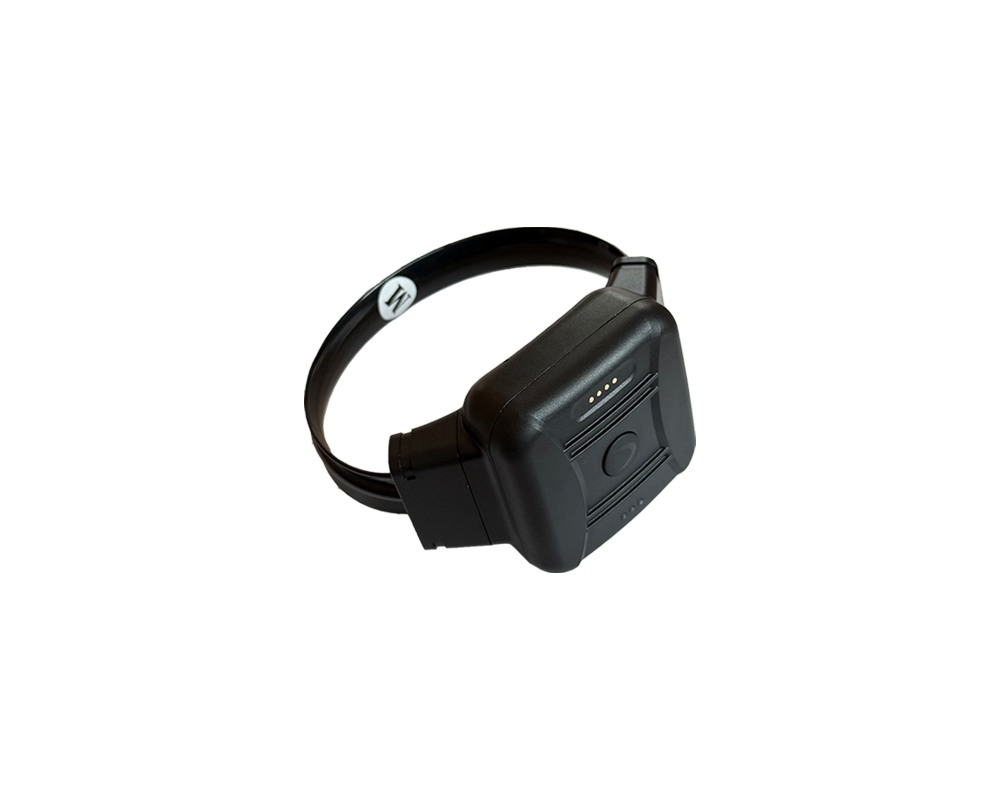
Readers evaluating factory specifications for containment-tier programs may use this independent manufacturer reference page as one checklist input alongside field trials and defense-bar scrutiny of location evidence.
Frequently asked questions
Did ICE leadership describe VeriWatch as experimental?
Yes. Congressional testimony attributed to Acting Director Johnson explicitly referenced a “limited technology demonstration” for wrist-worn GPS, while ICE’s April 2023 news release described a phased Denver deployment (House PDF; ICE release).
Is SmartLINK “cheaper” than detention?
CBS News reporting quotes ICE’s approximate $4/day SmartLINK figure against roughly $150/day detention—while also quoting researchers warning that dollars saved are not the same as rights preserved (CBS News).
What do critics fear about wrist expansion?
Guardian investigative reporting documents clinical and psychological harms when vulnerable migrants remain continuously tracked, while Kocher’s essays emphasize opacity in modality migration rules (The Guardian; Kocher).
What is the single procurement sentence this editor wants etched on every RFP?
Modality follows risk tier; risk tier follows statute and evidence—not fashion. Wrist GPS can be an excellent compliance tool; it is not automatically a secure containment device.