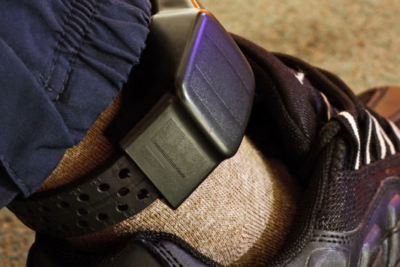
This comprehensive ankle monitor comparison chart provides a side-by-side technical analysis of every major GPS ankle monitor on the market. Covering weight, battery life, connectivity, tamper detection, positioning accuracy, and certifications, this is the most detailed device specification comparison available for corrections procurement teams, EM program managers, and industry analysts.
Table of Contents
- Complete GPS Ankle Monitor Specification Comparison
- How to Read This Comparison
- What does device weight mean for compliance?
- Why does battery life matter for electronic monitoring operations?
- What is the difference between tamper detection technologies?
- What connectivity modes should agencies require?
- Key Evaluation Criteria for GPS Ankle Monitor Procurement
- Connectivity Resilience
- Total Cost of Ownership
- False Alarm Rate
- Network Future-Proofing
- Frequently Asked Questions
- Which GPS ankle monitor is the lightest?
- Which GPS ankle monitor has the best battery life?
- What is fiber optic tamper detection?
Complete GPS Ankle Monitor Specification Comparison
| Device | Vendor | Type | Weight | Battery (LTE) | Battery (Extended) | GPS Accuracy | Connectivity | Tamper Tech | IP Rating | Install |
|---|---|---|---|---|---|---|---|---|---|---|
| CO-EYE ONE-AC | REFINE Technology | One-piece | 108g | 7 days | 180d BLE / 20d WiFi | <2m CEP | BLE+WiFi+LTE-M | Fiber Optic | IP68 | <3s |
| CO-EYE ONE | REFINE Technology | One-piece | 108g | 7 days | 20d WiFi | <2m CEP | WiFi+LTE-M/NB-IoT | Fiber Optic | IP68 | <3s |
| ExacuTrack One | BI Incorporated | One-piece | ~220g | 24-48h | — | 3-5m | LTE | Fiber Optic | IP68 | Tool req. |
| VeriWatch | BI Incorporated | Wrist-worn | ~85g | ~24h | — | 3-5m | LTE | PPG | IP67 | — |
| SCRAM GPS | SCRAM Systems | Two-piece | ~198g (ankle) | 24-48h (tracker) | — | 3-5m | 3G/4G (tracker) | Metal Wire | IP68 | Tool req. |
| PureOne | SuperCom | One-piece | ~180g | 24-48h | — | 3-5m | 4G LTE | Fiber Optic | IP68 | Tool req. |
| Geosatis One | Geosatis | One-piece | ~165g | 48-72h | — | 3-5m | 4G LTE | Electronic Lock | IP67 | Tool req. |
| Shadow | Track Group | One-piece | ~200g | 24-72h | — | 5-10m | 3G/4G | Fiber Optic | IP68 | Tool req. |
| Buddi Tag | Buddi | One-piece | ~160g | ~48h | — | 3-5m | 4G | Fiber Optic | IP68 | Tool req. |
| BLUtag | Securus | One-piece | N/A | 24-48h | — | N/A | 4G | Fiber Optic | IP68 | — |
N/A = specifications not publicly available. Weight is for the ankle-worn component only. Battery life is vendor-reported at standard reporting intervals. GPS accuracy is vendor-specified CEP (Circular Error Probable) or estimated from NIJ Market Survey test data.
How to Read This Comparison
What does device weight mean for compliance?
Device weight directly impacts defendant compliance and comfort. Heavier devices (180-250g) cause skin irritation, sleep disruption, and visible bulging under clothing, leading to higher complaint rates and non-compliance. The lightest devices on the market weigh 108g, approximately 40-55% lighter than the industry average, improving both comfort and discretion.
Why does battery life matter for electronic monitoring operations?
Battery life is the single largest operational cost driver in electronic monitoring. Devices requiring daily charging generate 50-100 low-battery alerts per day in a 500-defendant program, each requiring officer response. Extended battery modes — available only in multi-mode connectivity devices — reduce charging management workload by up to 85%.
What is the difference between tamper detection technologies?
Multiple tamper detection technologies are used across the industry: PPG (photoplethysmography) sensors detect skin contact via heart rate — used in wrist-worn devices like VeriWatch, but produce 15-30% false positives from motion artifacts, sweat, and skin condition changes. Metal wire loops embedded in the strap detect cutting — used in two-piece systems like SCRAM GPS, with moderate false alarm rates. Electronic lock mechanisms secure the clasp against unauthorized removal — used by Geosatis. Fiber-optic detection uses light signal continuity through the strap and case — binary (intact/broken) with zero false alarms, used by the majority of one-piece GPS ankle monitors including CO-EYE, BI ExacuTrack, SuperCom PureOne, Track Group Shadow, Buddi, and Securus BLUtag.
What connectivity modes should agencies require?
Traditional GPS ankle monitors use a single LTE cellular connection. When cellular coverage is unavailable (basements, rural areas, building interiors), the device goes offline and generates “signal lost” alerts. Multi-mode devices that add WiFi and BLE connectivity maintain monitoring continuity in these environments. WiFi-directed mode also significantly extends battery life compared to LTE-only operation. Agencies should evaluate whether their monitoring population includes defendants in cellular dead zones.
Key Evaluation Criteria for GPS Ankle Monitor Procurement
Connectivity Resilience
Does the device maintain monitoring in cellular dead zones? Ask: “What happens when LTE is unavailable?” Single-mode devices go offline. Multi-mode devices fall back to WiFi or BLE.
Total Cost of Ownership
Look beyond per-device price. Factor in: charging infrastructure, false alarm response costs ($15-25/alert), officer time, device replacement frequency, and monitoring center fees.
False Alarm Rate
Ask vendors for documented false tamper alarm rates in deployed environments (not lab conditions). Industry range: 0% (fiber optic) to 30% (PPG). False alarms are the #1 operational cost driver.
Network Future-Proofing
Is the device on 3G (sunset risk), 4G, or 5G-compatible LTE-M/NB-IoT? Agencies investing in new hardware should require LTE-M minimum to avoid forced replacement within 3-5 years.
Frequently Asked Questions
Which GPS ankle monitor is the lightest?
The CO-EYE ONE from REFINE Technology weighs 108g, making it the lightest one-piece GPS ankle monitor currently available. The next lightest one-piece devices weigh approximately 160-165g (Buddi Tag and Geosatis One), while industry averages range from 180-250g.
Which GPS ankle monitor has the best battery life?
In LTE standalone mode, the CO-EYE ONE-AC leads with 7 days versus the industry standard of 24-72 hours. When considering extended modes, the CO-EYE ONE-AC achieves 20 days in WiFi-directed mode and 180 days in BLE-connected mode — capabilities no other device offers due to its unique multi-mode connectivity architecture.
What is fiber optic tamper detection?
Fiber-optic tamper detection uses a continuous loop of optical fiber embedded in the strap and device case. Light passes through the fiber continuously — if the strap is cut or the case is opened, the light signal is immediately interrupted. Because the signal is binary (light passes or it does not), false alarm rates are zero, unlike PPG or resistive sensors that rely on analog thresholds.