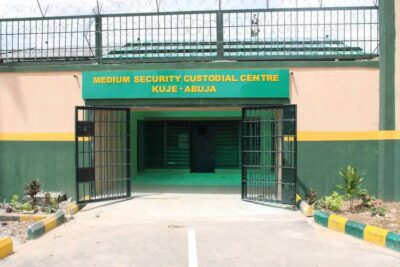
Bangladesh stuffs 77,000 people into prisons built for 43,000. That’s 180% occupancy — one of the highest overcrowding rates in the world. Dhaka Central Jail alone confines 8,536 inmates. Over 70% of these prisoners haven’t been convicted of anything — they’re undertrial detainees, many from impoverished backgrounds, waiting months or years for court proceedings to conclude.
A Bangladeshi judge — Additional District and Sessions Judge and PhD candidate at Florida International University — recently posed a question in the Daily Sun that the country’s criminal justice establishment needs to answer: should correctional institutions remain limited to confinement, or should they also contribute to rehabilitation, discipline, and successful reintegration?
The question has particular urgency because Bangladesh is already building the digital infrastructure for an answer. The e-Bail Bond system, launched in October 2025 and expanding to 16+ districts by April 2026, has already served 19,185 litigants by reducing bail processing from 13 manual steps to three. Prime Minister Tarique Rahman, inaugurating the system, observed that “nearly 30% of prisoners” he encountered came from impoverished backgrounds and were “often unaware of the specific reasons for their detention.”
The e-Bail Bond digitizes paperwork. But it doesn’t solve the supervision problem that follows. What happens after bail is granted? Without monitoring, judges face the same binary choice that plagues overcrowded justice systems worldwide: keep the accused in jail (adding to 180% overcrowding), or release them with no meaningful accountability.
Table of Contents
- How Bad Is Bangladesh’s Prison Crisis — And How Did It Get Here?
- The August 2024 Upheaval: From 88,000 to 49,000 and Back Again
- The Colonial Inheritance: Still Governed by the 1894 Prisons Act
- Global Third-Highest Pretrial Detention Rate
- What Is the E-Bail Bond System — And What’s Missing?
- What Would EM-Enhanced Bail Look Like in Bangladesh?
- What Infrastructure Challenges Must Be Addressed?
- The Pennsylvania Parallel — And Where It Falls Short
How Bad Is Bangladesh’s Prison Crisis — And How Did It Get Here?
The crisis has deep structural roots and recent political accelerants that make Bangladesh’s prison story unlike any other country’s.
The August 2024 Upheaval: From 88,000 to 49,000 and Back Again
On August 4, 2024, Bangladesh’s prison population stood at approximately 88,000 — the highest in the country’s history. Then Sheikh Hasina’s government fell in a mass uprising that killed over 300 people. In the chaos that followed, the prison population plunged to 49,000 by August 12 — a 44% drop in eight days, as courts processed thousands of bail applications and political detainees were released.
The relief was temporary. Under the interim government, new arrests — many connected to cases filed over casualties during the July-August mass uprising — sent the numbers climbing again: 55,825 by October 2024, and back to 77,291 by July 2025. This whipsaw pattern reveals the fundamental problem: Bangladesh’s criminal justice system treats detention as the default response to every crisis. Without alternative supervision mechanisms, every political upheaval, crime wave, or policy shift directly translates into more bodies in cells that were already full.
The Colonial Inheritance: Still Governed by the 1894 Prisons Act
Bangladesh is one of the few nations in the world still operating prisons under a law drafted by British colonial administrators 132 years ago. The Prisons Act of 1894 — written three years before Queen Victoria’s Diamond Jubilee — was designed to maintain colonial authority through confinement, not to rehabilitate citizens. Its core philosophy: custody, punishment, and discipline. The concept of alternatives to incarceration simply did not exist in the colonial imagination.
In October 2024, legal experts, High Court judges, and prison officials gathered at a workshop titled “Jail Reform: Reality and Feasibility” and called for scrapping the colonial code entirely. The Inspector General of Prisons subsequently submitted a draft Correction Services Act 2025 for government approval — a proposed replacement that would rename “Bangladesh Jail” to “Correction Services Bangladesh” and reframe the system’s purpose from punishment to rehabilitation and reintegration.
This isn’t merely cosmetic. The draft Act would provide the legal foundation for non-custodial alternatives — community service, probation, and potentially electronic monitoring — that the 1894 Act makes no provision for. Until this legislation passes, GPS ankle monitoring as a bail condition exists in a legal grey zone: not prohibited, but not explicitly authorized either.
Global Third-Highest Pretrial Detention Rate
Bangladesh’s pretrial detention rate — approximately 80% of all prisoners — places it among the top three countries globally, behind only Libya (90%) and San Marino (83%). World Prison Brief data confirms that roughly 4 out of every 5 people in Bangladesh’s prisons have not been convicted of any crime. They are waiting — sometimes for years — for court proceedings to conclude.
The High Court has repeatedly expressed frustration. Judges have criticized the practice of shackling prisoners as contradicting constitutional prohibitions on inhumane treatment. Rights organizations including Ain o Salish Kendra and the Bangladesh Legal Aid and Services Trust (BLAST) have documented cases where pretrial detention exceeds the maximum sentence for the charged offense — meaning people serve more time waiting for trial than they would if convicted and sentenced.
| Metric | Bangladesh | Global Comparison |
|---|---|---|
| Prison population | 77,000+ | India: 573,000 (118% occupancy) |
| Official capacity | ~43,000 | India: 425,609 |
| Occupancy rate | 180% | India: 139%; T&T: ~100% |
| Pre-trial detainees | ~70% | T&T: 60%; India: 76% |
| E-Bail Bond coverage | 16+ districts (expanding) | — |
The structural drivers are familiar across South Asia: judicial backlogs that leave cases unresolved for years, a bail system that disadvantages the poor (who cannot post surety or find guarantors), police practices that default to arrest for minor offenses, and prison infrastructure that was never designed for the current population.

What Is the E-Bail Bond System — And What’s Missing?
The e-Bail Bond initiative, developed with support from the judiciary and rolled out across nine districts initially, addresses a real bottleneck: the administrative complexity of the bail process itself. In the old system, obtaining bail required navigating 13 separate manual steps, often involving middlemen who extracted payments from already-impoverished detainees’ families. The digital system compresses this to three steps and eliminates many intermediary touchpoints.
That’s genuine progress. But the e-Bail Bond solves an administrative problem, not a supervision problem. Once an undertrial detainee receives bail, there’s essentially no mechanism to ensure compliance with bail conditions — no location tracking, no curfew enforcement, no automated alerts if the person approaches a protected location or fails to appear at their next court date.
This supervision gap creates a circular problem: judges who worry about flight risk or public safety deny bail because they have no intermediate option between incarceration and unsupervised release. The result is the 70% pretrial detention rate that drives the overcrowding crisis.
What Would EM-Enhanced Bail Look Like in Bangladesh?
Electronic monitoring could complete the system that the e-Bail Bond started. The model would work as follows:
Step 1: Digital bail processing via the existing e-Bail Bond platform (already operational in 16+ districts).
Step 2: Risk assessment — a standardized tool to classify defendants as low, medium, or high flight risk based on charge severity, community ties, employment status, and prior court appearances.
Step 3: GPS monitoring assignment for medium-risk defendants who would otherwise remain in pretrial detention. Low-risk defendants receive bail with standard conditions; high-risk defendants remain detained.
Step 4: Automated compliance tracking — geofence alerts for exclusion zones, curfew verification, and court appearance reminders pushed to the defendant’s device.
The UN Office on Drugs and Crime (UNODC) is already working with Bangladesh on expanding non-custodial alternatives, including community service orders and probation. GPS monitoring would fit naturally into this framework as the accountability mechanism that makes non-custodial alternatives credible to judges and the public.
What Infrastructure Challenges Must Be Addressed?
Bangladesh presents specific deployment challenges that would shape technology selection:
Monsoon flooding. Annual flooding affects up to one-third of Bangladesh’s territory. GPS ankle monitors deployed here must be IP68-rated at minimum, with demonstrated submersion tolerance. Devices that fail after brief water exposure would create supervision blackouts during precisely the period when monitoring is most needed.
Power reliability. Rural Bangladesh experiences frequent power outages and load-shedding. Devices requiring daily charging will create systemic compliance failures — not because defendants are absconding, but because they can’t find a functioning electrical outlet. Multi-day battery life (minimum 7 days in standalone mode, weeks or months in connected modes) is a deployment prerequisite.
Cellular coverage. While Grameenphone, Robi, and Banglalink provide extensive coverage in urban and peri-urban areas, rural and char (river island) communities often lack consistent service. Devices limited to single-mode cellular connectivity will generate chronic “out of coverage” alerts. Multi-mode architectures — BLE smartphone connectivity, WiFi-directed mode for areas with broadband but no cellular — provide the resilience Bangladesh’s geography demands.
Scale economics. If even 10% of Bangladesh’s 54,000+ pretrial detainees were diverted to GPS monitoring, the system would need 5,400+ devices. At these volumes, total cost of ownership matters enormously — one-piece devices with no external accessories, tool-free installation, and minimal maintenance reduce per-supervisee costs by 30-50% compared to multi-piece systems requiring separate beacons and charging docks.
The Pennsylvania Parallel — And Where It Falls Short
The Daily Sun article’s original premise — comparing Bangladesh’s needs with Allegheny County, Pennsylvania’s inmate compensation program — actually understates the opportunity. Bangladesh doesn’t need to import American correctional models wholesale. It needs a solution tailored to its specific constraints: extreme overcrowding, a functioning digital bail platform that lacks a supervision layer, infrastructure that challenges basic device operations, and a judiciary already signaling willingness to use non-custodial alternatives.
What Bangladesh can learn from Western correctional systems is the evidence base. Decades of research across the United States, United Kingdom, and Europe consistently shows that community-based supervision with electronic monitoring produces lower recidivism rates than incarceration for non-violent offenders. The mechanism isn’t surveillance itself — it’s that keeping people employed, housed, and connected to family support systems while maintaining judicial accountability produces better outcomes than the social disruption of incarceration.
Bangladesh has 54,000+ people in pretrial detention who are legally presumed innocent. It has an e-Bail Bond system that streamlines release processing. It has UNODC technical support for non-custodial alternatives. What it lacks is the technological bridge between bail and accountability — and GPS electronic monitoring is that bridge.