When federal authorities quietly removed 20 detainees from Guam’s Hagåtña Detention Facility in late 2025, it was not a routine transfer. It was a signal — the kind that precedes federal receivership, consent decree enforcement, and the stripping of local government authority that Attorney General Douglas Moylan warns could last “15 to 20 years, if not more.”
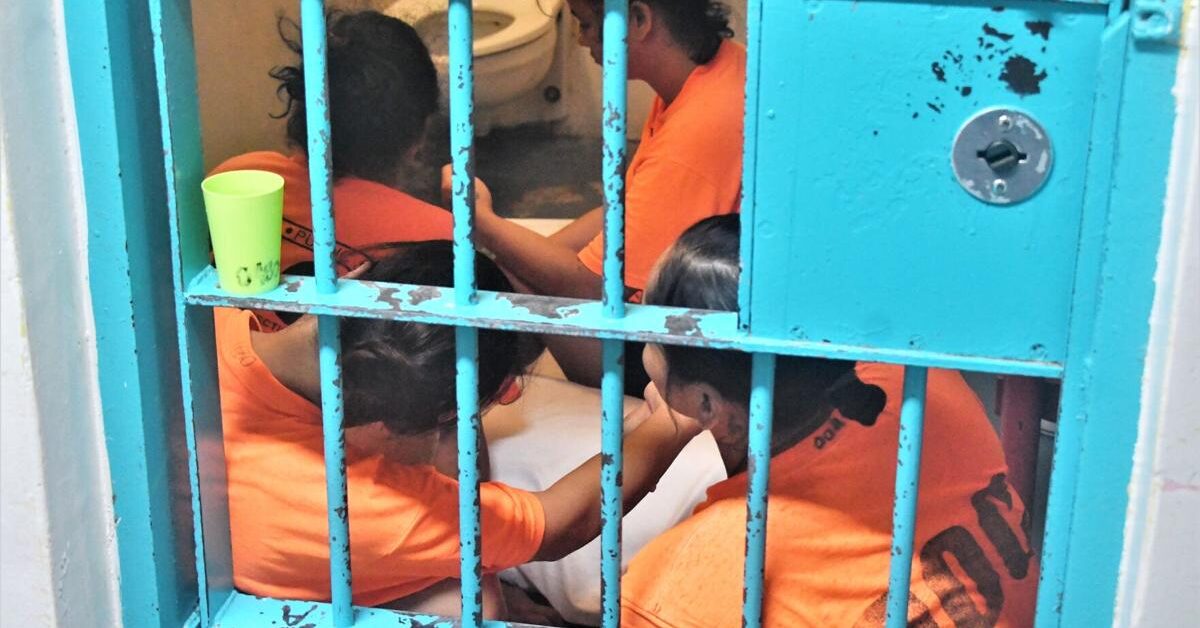
The removal followed a cascade of failures: HVAC systems that stopped functioning, detainees housed in dome tents described by multiple lawmakers as “inhumane,” and a facility operating at 165% over its designed capacity. But this is not simply a maintenance crisis. It is the convergence of three forces that make Guam’s corrections situation unlike any other in American jurisdiction: extreme geographic isolation, a $10+ billion military buildup that is reshaping every aspect of island infrastructure, and a criminal justice system that has been deferring capacity decisions for decades.
Table of Contents
- What Are the Actual Numbers Behind Guam’s Overcrowding?
- Why Does Guam’s Geographic Isolation Make This Crisis Uniquely Dangerous?
- How Does the Military Buildup Compound Corrections Pressure?
- What Happened to Guam’s Electronic Monitoring Program?
- Why Are Small-Island Jurisdictions Turning to Electronic Monitoring?
- What Would a Modern EM Deployment Look Like for Guam?
- What Is the Federal Receivership Risk?
- The Path Forward: Electronic Monitoring as Bridge Strategy
What Are the Actual Numbers Behind Guam’s Overcrowding?
The Department of Corrections houses approximately 905 inmates and detainees across two primary facilities. The Adult Correctional Facility in Mangilao holds roughly 700 — in a structure designed for 300 to 400. The Hagåtña Detention Facility holds 195 to 223 detainees in a space built for 135. Combined, the system operates at approximately 226% of designed capacity.
More than 500 of these individuals are pretrial detainees — people who have not been convicted and are legally presumed innocent. They account for over 55% of the total incarcerated population. This is not a sentencing problem. It is a pretrial detention problem.
The DOC operates with 190 uniformed officers against a population that demands 24/7 coverage. Overtime costs have reached $2.9 million annually. The department projects a $4.1 million budget variance for FY2027, driven primarily by personnel costs, utilities, and inmate healthcare — including dialysis and dental services that must be contracted through Guam Memorial Hospital Authority.
Why Does Guam’s Geographic Isolation Make This Crisis Uniquely Dangerous?
Most overcrowded correctional systems on the U.S. mainland can transfer inmates to adjacent jurisdictions, contract with private facilities, or draw on regional law enforcement mutual aid. Guam has none of these options. The nearest U.S. federal facility is thousands of miles away. Every detainee who cannot be housed locally either remains in dangerous conditions or must be transported off-island at enormous cost — as the U.S. Marshals Service demonstrated when it removed its 20 federal detainees.
This isolation transforms what would be a manageable capacity problem on the mainland into a potential systemic collapse. A riot, natural disaster, or infrastructure failure at Guam’s single primary correctional facility does not just strain the corrections system. It disrupts court schedules, diverts police resources from community patrol, overwhelms the island’s sole major hospital, and — given Guam’s role as the westernmost U.S. territory in the Indo-Pacific — creates a domestic security vulnerability at America’s most forward-deployed strategic position.
How Does the Military Buildup Compound Corrections Pressure?
The Department of Defense is executing a multi-year, $10+ billion infrastructure program on Guam. This includes relocating approximately 5,000 Marines from Okinawa to the new Marine Corps Base Camp Blaz, installing a $1.7 billion integrated missile defense system, and expanding Navy and Air Force infrastructure to support power projection operations across the Western Pacific.
The Congressional Research Service notes that MILCON spending on Guam peaked in FY2025, with the full Marine contingent expected by 2028. This buildup affects civilian corrections in multiple ways:
- Workforce competition: Military construction contracts offer higher wages than DOC’s $35,000-40,000 starting salary for corrections officers, making recruitment nearly impossible
- Infrastructure strain: Power grid capacity, water systems, and road networks that corrections facilities depend on are simultaneously serving massive military construction
- Population growth: The influx of military personnel, dependents, and construction workers increases the island’s overall population and associated law enforcement demands
- Land constraints: Military facilities already occupy approximately 27% of Guam’s total land area, limiting available sites for new correctional infrastructure
The irony is stark: the federal government is investing billions to make Guam a cornerstone of Indo-Pacific deterrence while the island’s civilian justice system — which processes crimes involving military dependents, contractors, and off-base incidents — deteriorates toward potential federal receivership.
What Happened to Guam’s Electronic Monitoring Program?
Under Guam’s pretrial release statutes (Title 8, Chapter 40), judges may order electronic monitoring as a condition of release. In 2019, the Judiciary of Guam awarded an electronic monitoring contract to Buddi US LLC, deploying up to 150 GPS ankle monitors for pretrial defendants. The program was explicitly designed to relieve DOC overcrowding. At $118 per inmate per day in incarceration costs, diverting 150 eligible detainees to electronic monitoring represented potential savings of $17,700 daily — over $6.4 million annually.
The program’s trajectory reveals both the promise and fragility of EM on small islands. Initially shelved in 2018 due to budget cuts (a $551,000 allocation that was zeroed out), it was revived in 2019, faced slow adoption in its first months, but eventually expanded beyond pretrial cases to include post-conviction and treatment court participants. By the time Chief Justice Robert Torres delivered his State of the Judiciary address, the program had saved over $3 million in incarceration costs and achieved a recidivism rate of approximately 3%.
“This is what smarter justice looks like,” Torres said.
Yet the current overcrowding numbers — 905 inmates against 435-535 designed capacity — suggest that electronic monitoring, while successful for those enrolled, has not been scaled to match the accelerating pretrial population growth. With more than 500 pretrial detainees currently incarcerated, the gap between EM program capacity and actual need has widened rather than narrowed.
Why Are Small-Island Jurisdictions Turning to Electronic Monitoring?
Guam is not alone. Across the Pacific and Caribbean, island jurisdictions face the same geometric constraint: fixed land area, limited construction budgets, and growing populations that outpace incarceration capacity. Their responses increasingly center on electronic monitoring as a structural solution rather than a pilot program.
Sint Maarten signed a three-year contract with Buddi Ltd in 2022, doubling its ankle bracelet capacity to 20 units specifically to manage pretrial detention overflow. Jamaica launched electronic tagging pilots in 2016 for low-risk inmates, with the explicit goal of “sustainable reduction in the level of crime” through community-based supervision. The Eastern Caribbean’s CARICOM states have collectively identified “prison decongestion strategies” and “measures reducing usage of pre-trial detention” as priority interventions.
The common thread is recognition that building new prison beds on islands with constrained land, construction labor, and fiscal capacity is prohibitively expensive and painfully slow. Guam’s experience illustrates this perfectly: the $16 million architectural contract for a new facility was cancelled because costs exceeded estimates, and DOC Director Fred Bordallo confirmed that plans are “back to square one.”
Electronic monitoring does not replace the need for secure correctional infrastructure. But for the 500+ pretrial detainees in Guam’s system — people who have not been convicted, who are awaiting trial dates that may be months away, and who may pose manageable community supervision risks — GPS monitoring offers an immediate mechanism to decompress facilities that are, by every official account, at the breaking point.
What Would a Modern EM Deployment Look Like for Guam?
Guam’s 2019 program used Buddi one-piece GPS ankle monitors — a solid Gen 3 device. But the island’s unique geography and infrastructure challenges demand specific technical capabilities:
- Cellular coverage gaps: Guam has areas — particularly in southern villages and military buffer zones — where LTE coverage is inconsistent. Modern multi-mode devices that can switch between cellular, WiFi, and BLE connectivity maintain supervision continuity regardless of network availability
- Typhoon resilience: Guam experiences regular typhoons (Typhoon Mawar in 2023 caused catastrophic damage). Devices with extended battery life (7+ days on cellular, weeks on WiFi) can maintain monitoring through extended power outages when charging infrastructure is unavailable
- Court-to-facility distance: DOC Director Bordallo has specifically advocated for a detention facility near the courthouse to reduce transport costs and violence risks. GPS monitoring achieves a similar objective by eliminating transport entirely for supervised defendants
- Small-island geofencing: On an island of 212 square miles, GPS monitoring with sub-2-meter accuracy enables precise geofencing — keeping DV defendants away from victims, restricting movement to approved areas, and providing real-time alerts if a monitored individual approaches prohibited zones
What Is the Federal Receivership Risk?
The DOJ’s Special Litigation Section has maintained oversight of Guam’s corrections facilities since a 1991 Settlement Agreement addressing unconstitutional conditions in fire safety, security, sanitation, and healthcare. While Guam has achieved compliance on most requirements, the current deterioration — particularly the HVAC failures, dome tent housing, and the U.S. Marshals’ withdrawal — signals potential regression.
Attorney General Moylan’s warnings are not hypothetical. He told lawmakers directly: “We are in danger of having, again, another function of the Government of Guam stripped from us because we cannot do our job. This is the danger in receivership.”
He added: “The Department of Corrections is the end result of the criminal justice system. Without a facility that can house these people in humane ways, we’re going to have a riot. There’s going to be people that are going to be hurt and killed up there if we don’t address this and address it quickly.”
Receivership would mean federal courts appointing an outside administrator to manage Guam’s corrections system — at local taxpayer expense — for potentially decades. The loss of the U.S. Marshals contract already represents direct revenue loss. Continued deterioration invites class-action litigation from inmates, DOJ enforcement action, and the political humiliation of a U.S. territory unable to maintain basic constitutional standards in its corrections system.
The Path Forward: Electronic Monitoring as Bridge Strategy
Guam’s corrections crisis will not be solved by any single intervention. The $39 million FY2027 budget request, the stalled new prison plans, and the chronic staffing shortages all require sustained political will and federal partnership.
But electronic monitoring represents the fastest deployable mechanism to reduce dangerous overcrowding while longer-term solutions are developed. The math is straightforward:
- Current pretrial population: 500+ detainees
- Risk-assessable for community supervision: conservatively 30-40% (150-200 individuals)
- Daily incarceration cost saved per EM diversion: $118
- Annual savings at 150 diversions: $6.4 million
- Proven recidivism rate under Guam’s existing EM program: ~3%
The Judiciary’s existing program has demonstrated both fiscal viability and public safety outcomes. Scaling it requires political authorization, updated procurement, and — critically — devices capable of maintaining reliable supervision in Guam’s challenging environment: typhoon-prone, geographically isolated, and dependent on infrastructure that is simultaneously serving a massive military buildup.
As doctoral candidate Joaquin Taguacta wrote in his letter to the Pacific Daily News: “Public safety requires more than police patrols and courtrooms. It also requires secure, modern, resilient, and properly managed correctional infrastructure.” He is right. But until that infrastructure is built — a process that will take years — electronic monitoring is the bridge that keeps the system from collapsing under its own weight.