
Electronic monitoring (EM) technology, including GPS ankle bracelets and wrist monitors, was largely developed as an alternative to incarceration. Its purpose has been to reduce prison populations, cut costs, and allow individuals to maintain employment and family ties while under supervision in the community. However, recent events in nations like Venezuela illustrate how these technologies can also be leveraged in politically charged environments, raising questions about their role in broader state control.
Table of Contents
Electronic Monitoring as Community Supervision
For decades, correctional systems in democratic countries have adopted electronic monitoring as a tool to manage probationers, parolees, and defendants awaiting trial. Proponents argue that EM offers a proportionate response to certain offenses, allowing individuals to serve sentences or await proceedings outside of overcrowded jails and prisons. Data from various U.S. states and European nations suggest that EM programs can reduce recidivism for specific offender populations when coupled with rehabilitative services.
The technology enables authorities to track an individual’s location, enforce curfews, and establish exclusion zones without physical incarceration. This approach is often presented as more humane and cost-effective than traditional imprisonment. It allows individuals to contribute to society, remain employed, and fulfill family responsibilities—benefits that are critical for successful reintegration and reducing the collateral consequences of incarceration.

Electronic Monitoring as an Instrument of Control
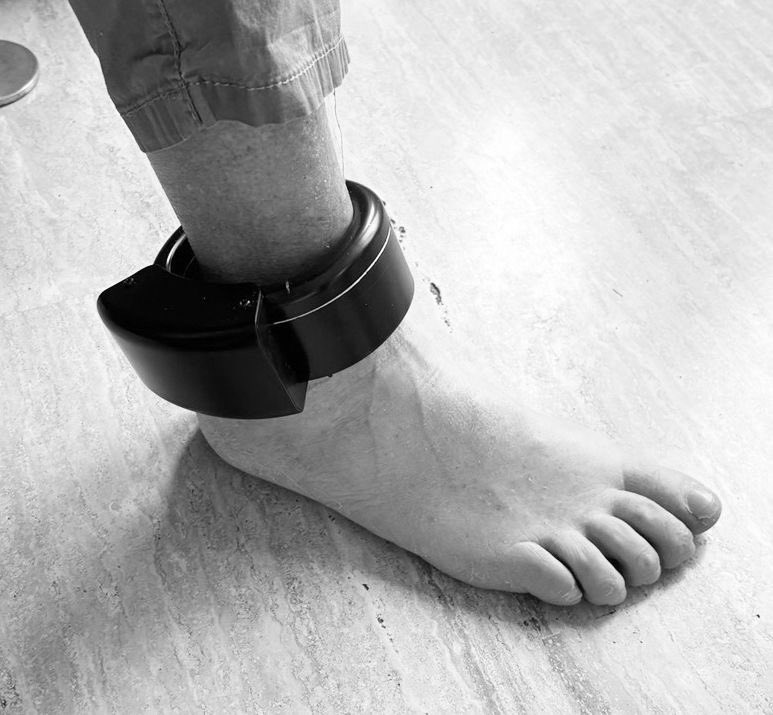
Conversely, the same technology designed for community supervision can become an instrument of political control when applied in environments with differing legal standards or political agendas. A stark example comes from Venezuela, where opposition figure Perkins Rocha remains under house arrest with an electronic ankle monitor. Rocha, a legal advisor to the anti-Chavista coalition, has been denied amnesty despite calls for his release.
According to opposition leader María Corina Machado, who commented on Rocha’s situation, the denial of amnesty while he remains monitored constitutes “selective repression” aimed at “prolonging the terror.” Rocha, who has been under house arrest since February 8, had sought amnesty after 17 months of detention. He had previously criticized Venezuela’s National Electoral Council. Machado contends that such uses of EM, coupled with denials of due process, serve to restrict political dissent and control influential voices, rather than facilitate justice.
This application highlights a critical distinction: while EM limits freedom, it is typically viewed as a less restrictive alternative to jail. In cases like Rocha’s, critics argue it functions as a form of prolonged political detention, limiting movement and communication without the guarantees of a fair legal process, effectively extending state control over political adversaries.
The Bigger Picture
The case of Perkins Rocha underscores a critical tension in the electronic monitoring industry. The technology itself is agnostic; its impact is determined by the legal frameworks and political contexts in which it is deployed. In established democratic justice systems, EM aims to balance public safety with individual liberty. However, in contexts marked by political instability or authoritarian tendencies, the same monitoring capabilities can be repurposed to suppress dissent and control political opponents.
This dual nature compels a closer examination of vendor responsibilities and international human rights standards. The global proliferation of EM technology means that its application must be scrutinized not only for its effectiveness in reducing crime but also for its adherence to principles of justice, due process, and human rights, especially when used in politically sensitive cases.
A Competitive Field
The landscape of electronic monitoring technology is populated by several established companies. BI Incorporated, a subsidiary of GEO Group, holds a significant share of the U.S. market. SCRAM Systems is widely recognized for its continuous alcohol monitoring devices. Globally, Attenti, operating under Allied Universal, supports programs in over 30 nations. Beyond these major players, smaller firms offer specialized solutions, such as Buddi in the UK, and manufacturers producing compact GPS units like the CO-EYE series, known for features like optical-fiber tamper detection and rapid installation.
Looking ahead, the development of electronic monitoring technologies will likely continue to focus on enhanced accuracy, improved battery life, and more sophisticated tamper detection. However, the industry’s future also hinges on a broader global discourse regarding the ethical deployment of these powerful tools, ensuring they serve justice and rehabilitation rather than becoming instruments of undue control or repression.
How Is GPS Ankle Monitor Technology Strengthening Community Supervision Outcomes?
Research demonstrates that GPS ankle bracelet monitoring reduces recidivism by approximately 31% compared to traditional community supervision, while costing 70-95% less per day than incarceration — an evidence base that continues driving legislative expansion of electronic monitoring programs.
Modern ankle monitor technology improves community supervision through multiple mechanisms: continuous location accountability (officers know where supervisees are at all times), automated compliance verification (geofence and curfew checks require no manual monitoring), structured contact frameworks (app-based messaging and check-in systems maintain regular engagement), and objective evidence for court reporting (GPS track data replaces subjective officer assessments).
The technology evolution from daily-charging, false-alarm-prone devices to next-generation GPS ankle monitors with multi-week battery life and zero false alarms directly enables program scaling. When officers spend less time managing device logistics and investigating phantom alerts, they can supervise larger caseloads while maintaining meaningful supervision quality — addressing the staffing constraints that limit electronic monitoring program expansion in most jurisdictions.
For corrections agencies and pretrial programs, the combination of proven recidivism reduction, cost-effectiveness evidence, and improving device reliability creates a compelling case for expanded GPS ankle bracelet adoption as a primary supervision modality rather than a supplementary tool.