On April 11, 2026, Baltimore’s debate over juvenile GPS ankle monitor supervision collided with street-level violence in a way that is difficult for any agency to spin away. A 15-year-old—already on GPS supervision after a shooting allegation involving a 13-year-old victim—was accused of a gunpoint robbery near Vivien Thomas Medical Arts Academy, according to local reporting from FOX Baltimore, the Baltimore Sun, and WJLA. The case did not end with a quiet arrest: police said the youth fled on a scooter, later rode in a stolen car driven by another 15-year-old, crashed, and then allegedly tried to remove his ankle-worn device to escape custody.
Within hours, the politics followed. Baltimore Police Department (BPD) leadership framed the episode as proof that GPS ankle monitor programs can fail in plain sight, while Maryland’s Department of Juvenile Services (DJS) defended the model with headline statistics. What unfolded is less a tidy morality play than a textbook example of how electronic monitoring programs succeed or fail on operational details—alert handling, charging compliance, tamper detection, and credible consequences—rather than on the mere presence of an ankle monitor on a young person’s leg.
Table of Contents
The Incident: Armed Robbery on GPS Supervision
According to the news accounts cited above, the robbery involved a firearm, a 14-year-old victim, and the theft of a watch in a corridor of the city where families expect schools and clinics to be comparatively protected. The suspect’s prior supervision history—described in reporting as including an earlier shooting case, “squeegee-related” assault allegations, and drug possession—became instant fuel for critics who argue Maryland’s juvenile ankle monitor footprint is too soft to deter predatory behavior.
Police statements emphasized a recurring street narrative: some youth treat the device as jewelry, remove it, or let it die, and still reoffend. DJS countered with a success-rate claim: roughly 90% of youth on supervision do not pick up a new charge, do not get re-arrested, and appear as required. Yet the same news coverage also surfaced a hard counter-statistic—since July 2025, 18 young people were reported to have removed their bracelets—creating a sharp tension between aggregate program metrics and headline-grabbing failures.
For readers tracking GPS ankle monitor policy nationally, the Maryland episode is a reminder that a single high-visibility failure can dominate public perception even when aggregate outcomes look stable on paper. That mismatch is not unique to Baltimore; it is a recurring risk for any jurisdiction that treats the ankle monitor as a stand-in for staffing, victim services, and rapid response workflows.
BPD vs DJS: The 90% Success Rate Debate
BPD Commissioner Richard Worley’s public criticism—that GPS supervision “doesn’t work” and that teens treat devices like accessories—was aimed at legitimacy, not merely at vendor hardware. In supervision science, legitimacy matters: if line officers do not believe alerts correlate with real risk, alert fatigue becomes organizational culture. When a chief publicly questions a tool, field units may deprioritize follow-up even when the juvenile GPS ankle monitor stack is technically functional.
DJS Secretary Betsy Fox Tolentino’s rebuttal leaned on population-level performance: high compliance on court appearances and low re-arrest rates for the supervised cohort. Population metrics can be accurate and still collide with a violent outlier. The policy question is whether Maryland’s program design treats tamper attempts, charging lapses, and curfew violations as escalating signals—or as paperwork nuisances to be cleared at Monday staff meetings.
For additional context, see resources from the National Institute of Standards and Technology.
Agencies evaluating these claims should separate three layers that reporting often conflates:
- Device layer: Did the GPS ankle monitor generate timely location traces, strap alerts, or power-down events?
- Operations layer: Were alerts triaged within minutes, hours, or the next business day?
- Sanctions layer: Did courts and supervision agencies impose swift, graduated consequences for tampering and non-charging?
Without transparent release of alert timelines—what happened between “device event” and “officer action”—the public is left to choose between a dramatic anecdote and a comforting percentage. For industry analysts, that information gap is itself a governance failure. A credible ankle monitor program publishes not only success rates but also tamper attempt counts, median response times, and definitions of what counts as “success.”
Readers who want parallel context on how tamper episodes become national news can review our April roundup of ankle monitor tamper-detection and escape-adjacent cases across multiple states, which underscores how quickly a single incident reframes entire procurement conversations.
Technical Challenges of Juvenile EM Programs
Youth programs amplify technical constraints that adult caseloads already struggle with. Adolescents may be less consistent chargers, more likely to test boundaries, and more exposed to peer environments where removing an ankle monitor is treated as status rather than sabotage. That does not excuse criminal conduct; it explains why procurement specs that work on paper can degrade in practice.
Tamper resistance is not a single sensor reading. Strap cuts, shielding attempts, “deep discharge” patterns, and impact damage can produce very different signatures depending on whether a program relies on resistive strap continuity, fiber-optic continuity, accelerometer shock profiles, or combinations thereof. If a vendor’s alert logic is tuned to reduce false positives, it may also blunt sensitivity to real removal attempts—especially in cohorts that learn the “quiet failure modes” through repetition.
Latency is the hidden variable. GPS fixes, cellular uploads, and platform mapping can introduce gaps that look like noncompliance when they are actually network behavior. For victims and school communities, however, perceived latency reads as betrayal: the public often believes a GPS ankle monitor implies continuous movie-style tracking, which no responsible vendor promises in urban canyon environments.
Charging discipline is the least glamorous and most decisive operational issue. A dead battery can resemble escape, produce false absences, or create genuine blind spots during critical hours. Programs that do not pair device logistics with home visits, school-based check-ins, or rapid field contacts are effectively running a radio network without maintenance—then blaming the radio when it drops.
For additional context, see resources from the FCC equipment authorization.
National Context: Juvenile GPS Monitoring Across States
Maryland is not starting from zero; it is replaying a national pattern in which legislatures expand electronic monitoring after high-profile incidents, fund pilots unevenly, and then discover that outcomes hinge on supervision bandwidth. Other states have experimented with tighter curfew enforcement, victim-notification geofences for domestic-violence dockets (a different risk profile than juvenile gun crime, but instructive on alert workflows), and graduated responses for tampering.
Our 2026 legislative tracker covering GPS bracelet and monitoring bills across 14 states shows how quickly lawmakers move from “more devices” to “more rules about devices.” That second wave matters: without statutory clarity on what constitutes a violation, courts hesitate to act, and officers treat alerts as ambiguous.
Domestic-violence GPS programs—while not interchangeable with juvenile gun-crime caseloads—illustrate how geofencing politics can accelerate when communities feel unprotected. Our analysis of Oklahoma and Tennessee DV GPS monitoring proposals in 2026 highlights how legislatures translate fear into technical mandates. Juvenile systems often face the mirror image: civil-liberties concerns, capacity limits, and intense media scrutiny whenever a supervised youth reoffends violently.
Why Traditional Ankle Monitors Fail in Juvenile Settings
When policymakers say “GPS supervision,” they often imagine a closed-loop system: breach → dispatch → apprehension. Real programs are open-loop unless staffing, dispatch priority, and charging compliance close the circuit. In adolescent populations, the weakest link is frequently not satellite geometry but human logistics: who answers the alert, with what authority, and how fast.
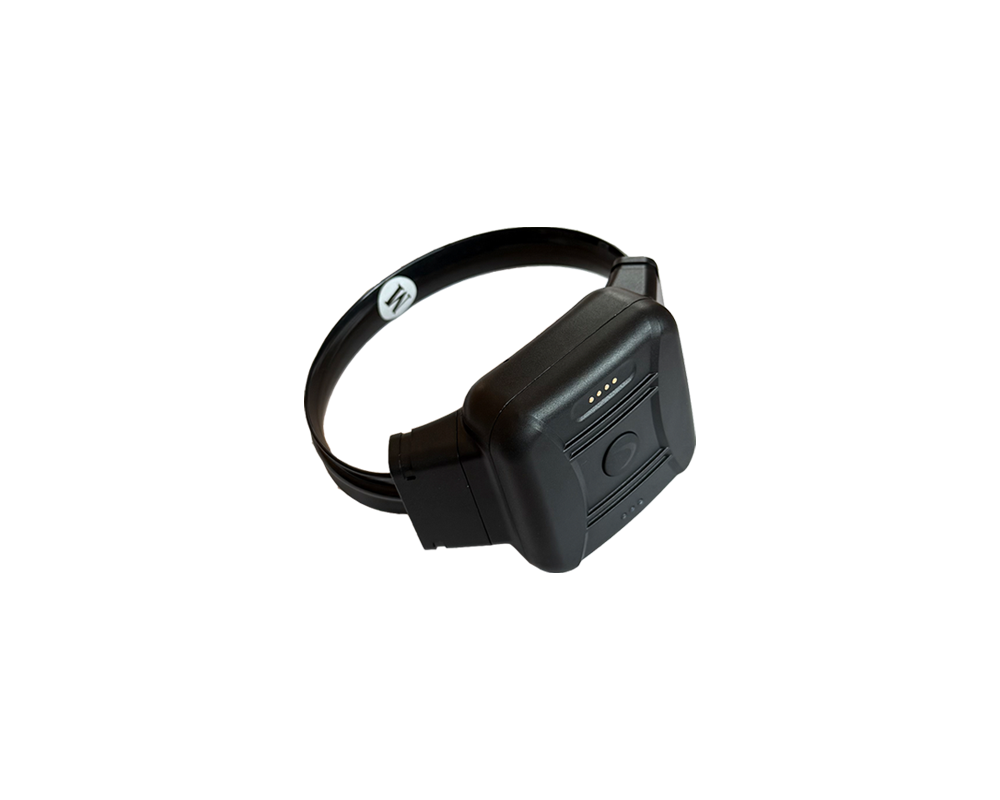
Hardware still matters—especially tamper philosophy. Strap-only continuity checks can be defeated with techniques that do not trip “classic” alarms, while more advanced strap-and-housing integrity sensing is designed to reduce ambiguous events. Vendor engineering differs widely; agencies should read specifications as conditional probabilities, not as guarantees. Major vendors including BI Incorporated, SCRAM Systems, SuperCom, Geosatis, and Track Group have historically emphasized service scale and integration depth. Newer entrants such as REFINE Technology (CO-EYE) have marketed one-piece designs with lighter mass (about 108g), rapid strap installation, multi-day battery, sub-2-meter-class GNSS performance, and fiber-based tamper sensing that aims for zero false-positive tamper indications—an engineering goal that, if achieved operationally, changes how officers treat alerts.
For additional context, see resources from the ETSI cybersecurity standards.
Industry buyers comparing architectures should ask vendors for adolescent-cohort evidence: not cherry-picked pilots, but distributions—tamper attempts per 100 device-months, median time-to-first-charge after assignment, alert acknowledgement times, and re-arrest hazard curves stratified by offense class.
For procurement teams that want a neutral, product-agnostic walkthrough of evaluation criteria, a practical starting point is REFINE’s consolidated GPS ankle monitor buyer guide, which frames checklists agencies can adapt regardless of brand shortlist.
Legislative Gaps and Next Steps
Delegate Ryan Nawrocki criticized the General Assembly for not advancing stronger ankle monitor enforcement measures in the final days of the session. Regardless of one’s partisan lens, the underlying governance issue is familiar: legislatures prefer funding visible devices over funding invisible labor—probation officers, DJS line staff, victim advocates, and weekend on-call desks.
Effective next steps are rarely a single bolt-on gadget. They are bundles:
- Define tampering in statute and court rules, including attempted removal and shielding, with graduated sanctions tied to risk.
- Mandate operational transparency: publish monthly counts of device removals, median response times, and reasons alerts were closed without field contact.
- Fund charging compliance as a program line item, not a family-only responsibility for high-risk juveniles.
- Separate DV, pretrial, and juvenile procurement tracks where risk profiles differ, rather than buying one SKU for every docket.
Until those bundles exist, Maryland will keep replaying the same press conference: a police leader declaring the GPS ankle monitor useless, an agency secretary defending cohort statistics, and a frightened public unsure which number deserves their trust.
Editor’s note: This analysis synthesizes publicly reported facts and standard electronic monitoring program mechanics. All legal allegations are allegations unless proven in court. When policy makers debate juvenile GPS ankle monitor expansion, the honest question is not “device yes/no,” but whether the state can close the supervision loop faster than a motivated teenager can break it.