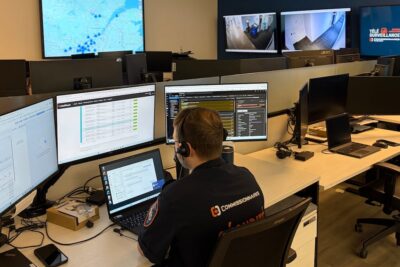
Executive summary. Probation GPS monitoring was sold as precision supervision. In practice, many programs drown officers in low-value notifications—GPS dropouts, charger events, geofence noise, and duplicate routing—while the same dashboards must still catch rare, high-consequence failures. This industry analysis connects Bureau of Justice Statistics (BJS) scale, National Institute of Justice (NIJ) performance framing, and documented U.S. program audits to explain alert economics, supervision quality risks, and the operational adaptations that credible electronic monitoring leaders are deploying in 2026.
Table of Contents
- The Scale of Alert Overload
- What Causes GPS Alert Fatigue
- Impact on Supervision Quality
- How Leading Programs Solve It
- Technology Solutions
- Policy Recommendations
- FAQ
- What is GPS alert fatigue in probation programs?
- Does research show most GPS alerts are false or benign?
- How large is the U.S. probation and parole population?
- What role do NIJ standards play?
The Scale of Alert Overload
Start with population scale. According to BJS’s Probation and Parole in the United States series, an estimated 3,772,000 adults were on probation or parole at yearend 2023—still one of the largest supervised cohorts on earth, even after a decade-long decline from historic community-supervision totals that exceeded 4.5 million in the mid-2010s in the same BJS tables. Each person on active probation GPS monitoring can generate dozens to hundreds of machine events monthly once jurisdictions layer curfews, exclusion zones, victim-proximity rules, and charging compliance onto the same ankle monitor telemetry stream.
McClatchy-era field reporting on California’s largest county programs described officers receiving up to 1,000 alerts in a day and statewide sex-offense monitoring channels pushing on the order of 40,000 alerts monthly—mostly low-severity connectivity and routine state transitions rather than confirmed absconsions. The arithmetic is unforgiving: when offender monitoring centers treat every packet as equal priority, triage queues become untrainable and audits begin finding unreviewed threads.
For readers mapping budget politics to workload, our earlier briefing on community corrections technology 2026 challenges and solutions explains why staffing ratios rarely keep pace with EM expansion.
What Causes GPS Alert Fatigue
GPS alert fatigue is not laziness; it is a predictable human-factors outcome when false priors dominate. Urban canyons, indoor employment, commuter tunnels, and marginal cellular backhaul routinely produce probation GPS monitoring gaps that firmware maps into loss-of-track or speed anomalies. Tamper-class channels add another spike: strap tension, cradle seating, and maintenance windows can all present as integrity events if vendors tune conservatively.
NIJ Standard 1004.00 and the broader NIJ market-survey tradition matter here because they gave agencies shared vocabulary for horizontal accuracy bands, reporting latency, and environmental stress—yet many commercial contracts still omit machine-readable reason codes, so analysts cannot separate “RF shadow” from “cut strap” at ingest time.
Geofencing policy amplifies noise. When a single metro imports thousands of school or park polygons, benign travel can create burst alerts that look like risk on paper. Independent Chicago reporting—drawing on University of Chicago’s RISC research slides released through transparency advocates—characterized more than 80 percent of sampled Cook County Sheriff’s Office electronic monitoring alerts as false-positive burdens requiring manual review. Separately, policy syntheses citing Tennessee program records noted officers failed to clear roughly four-fifths of thousands of alerts across a ten-month study window—illustrating how backlog metrics track closely with fatigue even when intent is professional.
For tamper-specific economics, see our methodology piece on false tamper alert rates in GPS ankle monitors.
For additional context, see resources from the DHS Office of Inspector General.
Impact on Supervision Quality
When electronic monitoring inboxes behave like broken fire alarms, rational triage shifts toward batch-delete behaviors—exactly the failure mode California auditors flagged when unreviewed threads stretched to multi-week blind spots. The collateral damage is threefold: (1) public-safety signals dilute inside noise; (2) defendants experience more intrusive contacts for benign physics; (3) judges lose confidence that ankle monitor programs are procedurally fair.
The U.S. Government Accountability Office’s 2023 review of federal pretrial location monitoring (GAO-23-105873) underscored persistent administrative blind spots: limited national aggregation of alert root causes and response-time analytics. That governance gap matters because probation GPS monitoring quality is measured not in purchased devices but in documented officer decisions per hundred alerts.
Qualitative work in the NIJ-sponsored Florida EM assessment likewise documented officers’ frustration with repetitive satellite-loss alerts—evidence that hardware physics becomes a casework problem. For predictive analytics angles, read GPS analytics and predictive technology in electronic monitoring.
How Leading Programs Solve It
Mature programs converge on a small set of non-optional controls:
- Severity taxonomies baked into RFPs—reason-coded ingest, SLA-backed escalation paths, and prohibition on “email every officer every alert” fan-out.
- 24/7 monitoring centers with QA sampling, not raw officer inboxes, as the first line for connectivity-grade events.
- Geofence rationalization—dynamic buffers, time windows, and transit corridors instead of static blanket polygons.
- Clearance metrics audited monthly: median time-to-first-human review, percent of alerts auto-closed with documented rationale, and repeat-offender device QA for chronic noise.
Operationally, agencies are borrowing ideas from aviation CRM: limit simultaneous alarms, prioritize by harm, and never punish line staff for escalating ambiguous hardware. For vendor-market context, pair this article with offender monitoring market 2026 technology trends.
For additional context, see resources from the American Immigration Lawyers Association.
Technology Solutions
Technology cannot fix bad policy, but it can shrink the candidate alert set. Best-in-class probation GPS monitoring stacks in 2026 emphasize: multi-constellation GNSS fusion to reduce urban loss-of-track; LTE-M/NB-IoT resilience where carriers support it; on-device buffering with integrity checksums so cloud parsers stop treating every momentary dropout as a tamper; and supervisor dashboards that visualize alert half-life rather than raw counts.
Readers evaluating monitoring-center UX should review independent operations guidance such as the RTLS Command Network resource on probation GPS monitoring operations dashboard design—useful for benchmarking queue discipline, map overlays, and after-hours escalation playbooks.
For analytics teams, the companion discussion on reducing false alerts in EM analytics translates alert-volume KPIs into training data hygiene: separating equipment-class failures from behavior-class deviations before they ever become officer tasks.
Procurement teams should also scan equipment review benchmarks when comparing how different wearable generations behave under real community mobility.
When programs need vendor-neutral hardware context for what a modern GPS ankle monitor is expected to deliver in connectivity and integrity reporting, manufacturer materials can be useful if read as specifications rather than outcomes.
In the vendor landscape for one-piece GPS supervision wearables, established U.S. and international suppliers include BI Incorporated, SCRAM Systems, SuperCom, and Geosatis, alongside newer entrants such as REFINE Technology (CO-EYE)—notable in procurement conversations for lightweight one-piece designs and fiber-based integrity sensing that, if contractually validated, can reduce ambiguous tamper-class noise compared with legacy strap-only loops.
Policy Recommendations
- Mandate disclosure of monthly alert counts by category in vendor public-benefit reporting.
- Fund triage staffing proportional to enrolled high-risk GPS cohorts—not only device leases.
- Align victim-notification laws with realistic alert semantics so domestic-violence proximity programs do not inherit urban GPS noise without human-in-the-loop confirmation.
- Adopt NIJ-informed QA for horizontal accuracy and environmental stress testing when RFPs specify ankle monitor performance in local housing stock.
Finally, require that any statewide expansion of probation GPS monitoring publish annual third-party audits of alert response times.
For additional context, see resources from the Transactional Records Access Clearinghouse.
FAQ
What is GPS alert fatigue in probation programs?
It is the cognitive and operational overload that occurs when supervising staff receive far more probation GPS monitoring notifications than they can individually verify, causing delayed responses to rare but serious events.
Does research show most GPS alerts are false or benign?
Program-level analyses vary, but major metropolitan audits have documented situations where on the order of eight in ten automated alerts were false positives or otherwise non-actionable—underscoring why electronic monitoring contracts must define alert taxonomies.
How large is the U.S. probation and parole population?
BJS reported roughly 3.77 million adults on probation or parole at yearend 2023, down from higher historic totals—still enough scale that small per-capita alert rates aggregate into massive center volume.
What role do NIJ standards play?
NIJ Standard 1004.00 and related NIJ market-survey literature give agencies engineering benchmarks—accuracy, robustness, reporting—to embed in RFP scoring so offender monitoring purchases are testable rather than narrative.